
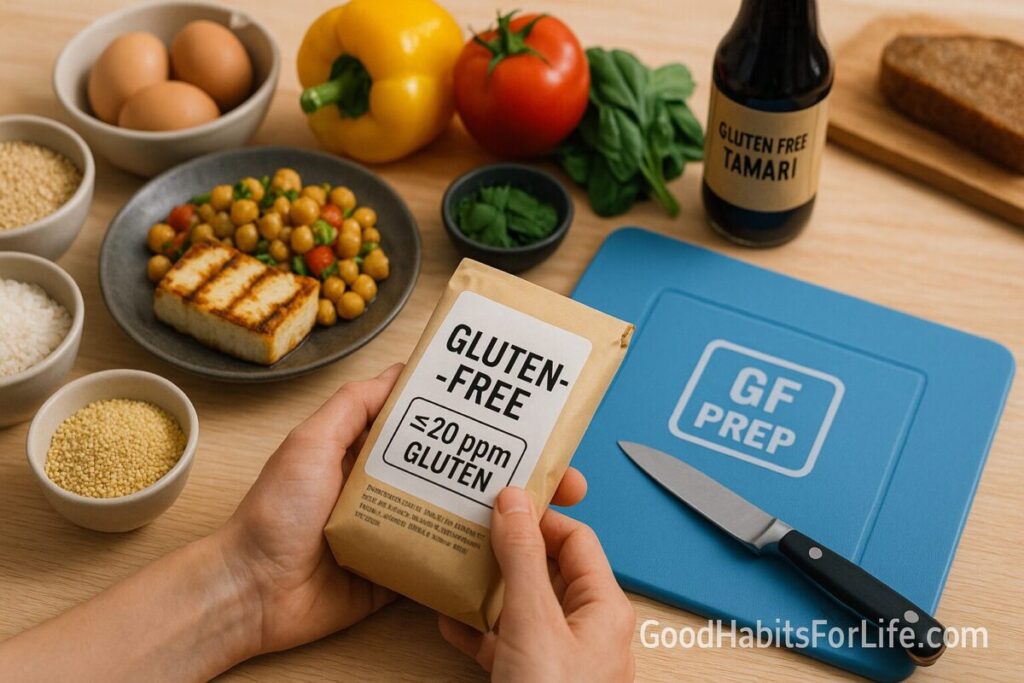
GlutenFree Basics: Labels, CrossContact & Confidence: Protein-Forward Plan (2025)
Gluten-Free Basics 2025: Labels, Cross-Contact & Protein
Table of Contents
🧭 What “Gluten-Free” Really Means (What & Why)
Gluten is a protein found in wheat, barley and rye (and their hybrids). A strict gluten-free (GF) pattern is essential for people with celiac disease and medically necessary for some with non-celiac gluten sensitivity. Many countries define “gluten-free” as containing less than 20 parts per million (ppm) gluten—a level considered safe for most people with celiac disease per international standards and regulation. Evidence shows a GF diet resolves symptoms, heals intestinal damage in celiac disease, and reduces long-term complications when followed consistently (see References).
Naturally gluten-free foods: meat, poultry, fish, eggs, dairy, legumes, nuts, seeds, fruits, vegetables, and GF grains/pseudocereals such as rice, corn/maize, quinoa, buckwheat, millet, sorghum, amaranth, and teff.
Avoid: wheat (atta/maida/semolina/durum/spelt/kamut), barley (malt), rye, triticale. Be cautious with beer (unless GF), malt vinegar, and sauces like traditional soy sauce (choose GF or tamari).
🏷️ Labels 101: Claims, Certifications & Oats
Gluten-free claims
-
“Gluten-Free” (legal): Must meet national rules (often <20 ppm).
-
“Wheat-Free”: Not the same as gluten-free—may still contain barley/rye.
-
“Very Low Gluten” (EU): 21–100 ppm (rare on shelves; not appropriate for all).
-
Allergen statements: “Contains wheat” is required in many regions, but barley/rye may appear in the ingredients list (e.g., malt). Always read the full list.
Certification programs (voluntary)
-
Third-party seals (e.g., GFCO) often use standards at or below 10 ppm, adding confidence beyond the baseline law.
Oats
-
Pure, certified gluten-free oats are tolerated by many with celiac disease; however, some people react to oats or to contamination in supply chains. Introduce certified GF oats cautiously, ideally after medical guidance.
Quick ingredient spotters
-
Likely gluten: wheat, durum, semolina, spelt, farro, bulgur, barley, malt, rye, brewer’s yeast.
-
Usually safe (verify labels): corn starch, potato starch, tapioca, dextrose, glucose syrup, distilled spirits (many are GF), vinegar (except malt).
⚠️ Cross-Contact: Kitchen, Dining Out & Travel
Cross-contact happens when GF food touches gluten (crumbs, dust, shared oil). It’s the top cause of accidental exposure.
At home
-
Create a GF zone: a shelf/bin + labeled airtight containers.
-
Dedicated tools: separate toaster, colander, wooden spoons, pastry brushes; color-code if possible.
-
Surface discipline: wipe counters, wash hands/tools, change dishcloths.
-
Bulk items: keep GF flour covered; avoid sharing scoops.
-
Fryers: shared oil = not GF.
-
Oats & grains: store separately from wheat flours to avoid airborne dust.
Eating out
-
Ask for GF menu or chef guidance; request “gluten-free, celiac order—please avoid cross-contact.”
-
Clarify: separate prep area, clean pan, fresh oil; no dusting with flour; GF pasta boiled in fresh water.
-
Red flags: shared fryers, pizza ovens without GF protocol, vague “no gluten ingredients” claims.
Travel
-
Pack GF snacks (bars, nuts, tuna pouches), a chef card in local language, and a compact cutting board.
-
Book rooms with mini-fridge/kitchenette when possible.
✅ Quick Start Today (30 Minutes)
-
Purge & Park: Move obvious gluten (bread, wheat flour, regular soy sauce) to a separate shelf; designate a GF shelf.
-
Read 5 labels: Pick common items (broth, sauces, sausage, oats, snacks). Keep/replace based on GF status.
-
Stock 1 protein, 1 carb, 1 veg: e.g., eggs + quinoa + spinach.
-
Set protein target: Most adults do well with 1.0–1.2 g/kg/day (e.g., 70–84 g if you weigh 70 kg). Split across 3–4 meals.
-
Make one meal now: 3-egg scramble (≈18–21 g protein) + quinoa (1 cup cooked ≈8 g) + veggies.
-
Save a note in your phone: “GF questions to ask when eating out” + your protein target.
🛠️ A Protein-Forward 7-Day Starter Plan
Approximate daily protein ~1.0–1.2 g/kg body weight; adjust to appetite/activity and medical guidance. Use GF labels/certifications. Portion protein across meals (20–40 g per meal).
Daily template:
-
Breakfast (20–30 g): Eggs or Greek yogurt (lactose-free if needed) or tofu scramble + fruit.
-
Lunch (25–35 g): Lean meat/fish/tofu/tempeh/beans + GF whole grain + veg.
-
Snack (10–20 g): Cottage cheese, protein shake (verified GF), roasted chana/soy nuts, peanut butter on GF crackers.
-
Dinner (25–35 g): Similar to lunch; add healthy fats.
-
Hydration: Water, tea, coffee; check flavors/syrups for GF.
Day 1: Omelet + cheese; Chicken quinoa bowl; Cottage cheese + berries; Salmon + potatoes + salad.
Day 2: Greek yogurt + chia + banana; Chana masala + rice; Roasted peanuts; Paneer tikka + millet roti (GF).
Day 3: Tofu scramble + avocado; Turkey/egg salad lettuce wraps; Protein smoothie (whey/pea, GF); Shrimp stir-fry + rice noodles (GF).
Day 4: Poached eggs on GF toast; Lentil soup + baked potato; Yogurt or soy yogurt; Beef or mushroom-tofu chili + corn tortillas (GF).
Day 5: Oats (certified GF) + milk + nuts; Grilled fish tacos on corn tortillas; Cheese stick + apple; Chicken curry + basmati rice + veg.
Day 6: Cottage cheese bowl + pineapple; Buddha bowl (tempeh/tofu + buckwheat); Roasted chana; Lamb/soy mince kebabs + quinoa tabbouleh (GF).
Day 7: Protein pancakes (GF mix) + peanut butter; Egg fried rice (GF soy/tamari); Protein shake; Paneer/haloumi & veg sheet-pan dinner + sorghum.
Shopping list (core): eggs, milk/yogurt or soy/pea options, cottage cheese/paneer, chicken/fish/legumes/tofu/tempeh, quinoa, rice, corn tortillas, certified GF oats, buckwheat/millet/sorghum, nuts/seeds, olive oil, fruits/veg, GF soy sauce/tamari, spices.
🧠 Techniques & Frameworks That Work
-
MEP (Meal-Element Pairing): Combine 1 protein + 1 GF carb + 1 veg at every meal.
-
Protein Anchors: Pre-cook 2–3 proteins on weekends (e.g., grilled chicken, roasted chickpeas, tofu) to speed weekdays.
-
Label Ladder: (1) Scan claim (“Gluten-Free”), (2) skim allergens, (3) scan for barley/malt/rye, (4) review may-contains, (5) choose certified when doubt is high.
-
Kitchen SOP: Simple “wipe-wash-swap” routine before GF prep: wipe surface, wash hands, swap to GF-only tools.
-
Plate Method (GF): ½ veg, ¼ protein, ¼ GF grain/starch; add healthy fat.
👥 Audience Variations
-
Students: Microwave-ready proteins (eggs, canned fish/beans), GF instant rice cups, frozen veg; keep a GF “dorm box.”
-
Parents: Color-coded GF kit (board, knives, toaster). Teach kids a 3-question script: “Is it labeled GF? Is the pan clean? Is the oil fresh?”
-
Professionals: Batch-cook proteins; keep desk snacks (roasted chana, nuts, shelf-stable shakes).
-
Seniors: Focus on soft proteins (yogurt, eggs, fish), vitamin/mineral adequacy, and simple one-pan meals; monitor weight and appetite with a clinician.
🚫 Mistakes & Myths to Avoid
-
“Wheat-free is GF” → False. Barley/rye may still be present.
-
“A crumb won’t hurt” → Even tiny amounts can trigger symptoms.
-
“All oats are GF” → Only certified GF oats are appropriate for many.
-
“Shared fryers are okay” → They are not safe.
-
“GF = healthy by default” → Many GF products are low in fiber/protein. Build meals around whole foods + protein.
🗣️ Real-Life Examples & Scripts
-
Restaurant: “Hi! I need my meal gluten-free due to celiac. Could you please prepare it in a clean pan with fresh oil, and avoid bread/flour? No shared fryer, please.”
-
Family event: “Thank you! I’ll bring a GF dish and serve myself first. Could we keep a spoon just for the GF tray?”
-
Work trip: “Could the hotel note ‘gluten-free, avoid cross-contact’ for breakfast? I’ll need sealed yogurt, fruit, eggs, and GF bread if available.”
🧰 Tools, Apps & Resources
-
Scanners/Guides: Official regulator pages for label rules; nonprofit celiac orgs for dining cards and cross-contact guides.
-
Cookbooks & Apps: Choose ones that filter by GF and provide grams of protein per serving.
-
Certifications: Look for recognized GF certification seals when shopping unfamiliar brands.
📌 Key Takeaways
-
Trust labels (and certifications), not assumptions.
-
Master cross-contact controls at home and when dining out.
-
Hit a protein target daily using whole, naturally GF foods.
-
Practice the Label Ladder and wipe-wash-swap routine.
-
Use the 7-Day Plan to build confidence and momentum.
❓ FAQs
1) Is “gluten-free” the same everywhere?
No. Many regions use <20 ppm as the threshold, but wording and enforcement can differ. Always read the full ingredient list and look for certification.
2) Are oats safe?
Only certified gluten-free oats are appropriate for many with celiac disease; some still react. Introduce cautiously with clinical guidance.
3) Do I need special supplements on a GF diet?
Not automatically. A balanced GF diet covers needs for most people. If you’ve had deficiencies or symptoms, talk to your healthcare provider.
4) What about beer and soy sauce?
Choose GF beer (sorghum, rice, or certified processes). Use GF soy sauce/tamari; traditional soy sauce contains wheat.
5) Are “may contain wheat” statements a deal-breaker?
Advisory statements aren’t regulated the same way as allergen declarations. When risk matters, choose certified GF products or contact the manufacturer.
6) How much protein do I need?
General minimum is 0.8 g/kg/day; many adults aiming for fullness/fitness do well at 1.0–1.2 g/kg/day (higher if very active—seek medical advice).
7) Can I use the same toaster as my family?
Use a separate GF toaster (or toaster bags as a backup). Crumbs are a real cross-contact risk.
8) Are chips/fries GF?
Only if ingredients are GF and they’re cooked in dedicated oil. Shared fryers aren’t safe.
9) Is vinegar gluten-free?
Most vinegars are GF except malt vinegar (made from barley).
10) Do I have to avoid cosmetics or shampoos with gluten?
Gluten must be ingested to cause intestinal damage. For lip products or hand-to-mouth items, choose GF to be extra cautious.
📚 References
-
U.S. Food & Drug Administration. Gluten-Free Labeling of Foods. https://www.fda.gov/food/food-labeling-nutrition/gluten-free-labeling-foods
-
European Commission. Regulation (EU) No 828/2014 on the requirements for the provision of information to consumers on the absence or reduced presence of gluten in food. https://eur-lex.europa.eu/eli/reg/2014/828/oj
-
Codex Alimentarius. Standard for Foods for Special Dietary Use for Persons Intolerant to Gluten (CXS 118-1979). https://www.fao.org/fao-who-codexalimentarius/
-
National Institute of Diabetes and Digestive and Kidney Diseases (NIDDK). Celiac Disease. https://www.niddk.nih.gov/health-information/digestive-diseases/celiac-disease
-
Health Canada. Gluten-Free Claims for Foods. https://www.canada.ca/en/health-canada/services/food-nutrition/food-labelling/claims/gluten-free.html
-
Coeliac UK. Avoiding Cross Contamination. https://www.coeliac.org.uk/information-and-support/living-gluten-free/avoiding-cross-contamination/
-
Beyond Celiac. Oats & the Gluten-Free Diet. https://www.beyondceliac.org/celiac-disease/gluten-free-diet/oats/
-
Gluten-Free Certification Organization (GFCO). Certification Standard. https://gfco.org/
-
NIH Office of Dietary Supplements. Protein Fact Sheet (Health Professionals). https://ods.od.nih.gov/factsheets/Protein-HealthProfessional/
-
Academy of Nutrition and Dietetics. Gluten-Free Diet Basics. https://www.eatright.org/health/diseases-and-conditions/celiac-disease/gluten-free-diet
Disclaimer: This guide is for general education and is not a substitute for personalized medical or nutrition advice; consult your healthcare professional for individual recommendations.