
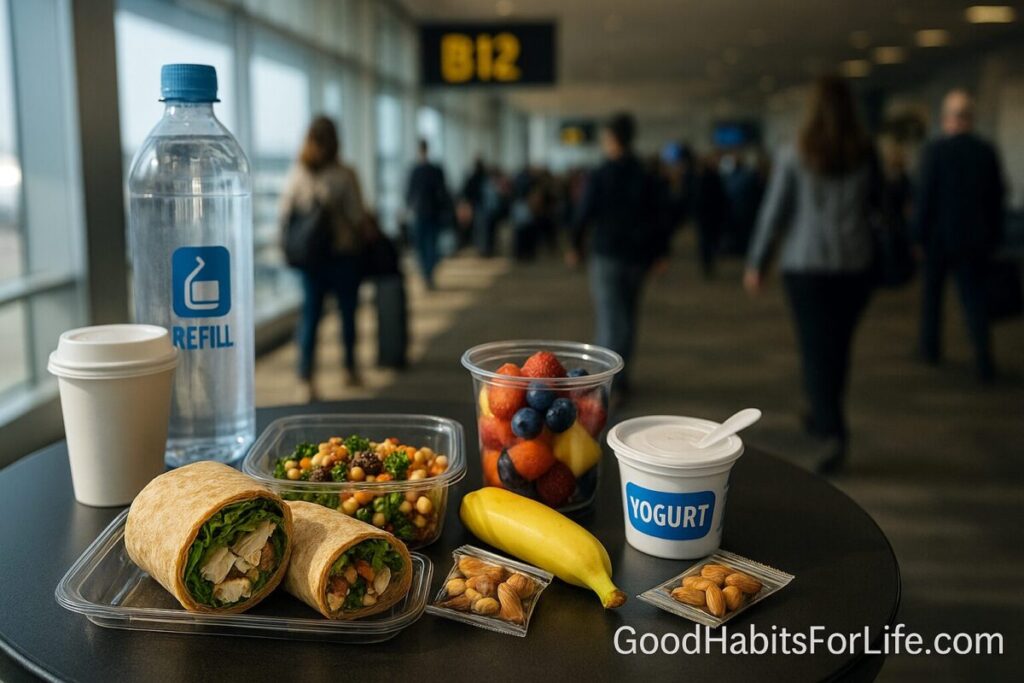
Airport Food 2025: Better Picks Before You Board
Airport Food (2025): Better Picks Before You Board
Table of Contents
🧭 What “Airport Food” Means in 2025
Definition. “Airport food” covers what you eat from curb to gate: packed snacks, security-side kiosks, quick-service chains, lounges, and duty-free drinks. In 2025, most major terminals offer water-refill stations, multiple “better-for-you” chains, and grab-and-go fridges with ingredient labels.
Why it matters.
-
Energy & focus: Balanced meals stabilize blood glucose so you board alert rather than sleepy.
-
Hydration & jet lag: Air travel dehydrates you; water and lower-sodium options help reduce fatigue and swelling.
-
Budget: Airports add a premium; smart swaps keep costs down without sacrificing nutrition.
TSA basics. Solid foods are allowed in carry-on. Liquids/gels (yogurt, smoothies, soups, peanut butter portions) must be ≤100 ml each and fit in the single quart-size bag (the 3-1-1 rule). Bring an empty bottle and fill after security; medically necessary liquids and baby food have special allowances. (See References.)
✅ Quick Start: Your 10-Minute Pre-Flight Plan
-
Check the terminal map (airport site/Google Maps) for outlets near your gate.
-
Pack a base kit (home or hotel):
-
1–2 protein options (roasted chickpeas, Jerky 30–40 g packs, protein bar).
-
1 whole fruit (banana, apple) + cut veg (carrots/cucumber) in a reusable box.
-
1 whole-grain wrap or small sandwich.
-
Empty 600–750 ml water bottle.
-
-
At security: Keep snacks accessible; liquids ≤100 ml in the clear bag.
-
At the terminal:
-
Fill bottle; sip 250–300 ml every 30–45 min.
-
If buying food, use the Airport Plate (below) and request sauces on the side.
-
-
Boarding buffer: Eat your main item 45–60 min before boarding; keep a small protein snack for mid-flight.
🛠️ 7-Day “Frequent Flyer” Habit Plan
Goal: Build a repeatable routine for any trip.
Day 1 (Plan): Add flight times and terminal to your calendar; star two healthy outlets near your gate.
Day 2 (Shop): Buy a 4-pack of protein bars, nuts, and a leak-proof bottle.
Day 3 (Prep): Assemble a travel snack kit in a small pouch.
Day 4 (Practice): On a normal workday, try the Airport Plate at lunch.
Day 5 (Hydrate): Hit 2 L (≈68 oz) water; note bathroom timing for travel day.
Day 6 (Dry Run): Pack a wrap + fruit; test eating 60 min before a long meeting to mimic boarding.
Day 7 (Travel Day): Execute: refill bottle post-security, order protein+veg, limit alcohol to zero or one.
Checkpoints (weekly if you fly often):
-
Did you drink ≥1.5–2 L water on travel day?
-
Did your meal include protein + veg + whole grain?
-
Did you avoid >1 alcoholic drink pre-flight?
-
Snack waste <1 item? Adjust quantities next time.
🧠 Techniques & Frameworks that Work
The Airport Plate (2–1–1)
-
½ plate veg/fruit (salad base, grilled veggies, side fruit).
-
¼ plate lean protein (eggs, grilled chicken/fish, tofu, Greek yogurt, cottage cheese).
-
¼ plate whole grains/starch (brown rice, quinoa, whole-grain wrap, oats, potatoes).
The SALT Check (for bloat & thirst)
-
Soups & sauces → ask for “on the side.”
-
Alcohol → limit to 0–1 before flying.
-
Labels → scan sodium (aim <700–800 mg per item if possible).
-
Toppings → skip bacon, extra cheese; add avocado/beans for satisfaction.
The SMART Order Flow
-
Start with protein, 2) add a vegetable, 3) choose a carb you love (prefer whole-grain), 4) sauce on side.
Caffeine Guideline
Cap at 3–6 mg/kg/day total; avoid high doses late-day to protect sleep on arrival. (See EFSA/NHS.)
🍽️ Best-Bet Choices by Outlet Type
Grab-and-Go Fridge
-
Best picks: Greek yogurt (check sugar), hard-boiled eggs, hummus + veg pack, pre-made salads with grilled protein, whole-grain wraps, fresh cut fruit.
-
Watch out: Large smoothies (sugar), parfaits with candy toppings, “energy” drinks.
Coffee Chains
-
Order: Oatmeal with nuts; egg-white bites or egg sandwich (ask for no butter/cheese or halve it); plain latte/cappuccino; Americano + milk.
-
Skip/modify: Frappes and mega muffins; swap syrup for cinnamon/cocoa; downsize.
Fast-Casual Bowls/Salads
-
Order: Greens base + grilled chicken/tofu + beans + brown rice/quinoa + vinaigrette on side.
-
Tip: Add a fruit cup; choose seeds/nuts over bacon/cheese for crunch.
Burger/Sandwich Counters
-
Order: Single patty or grilled chicken on whole-grain if available; extra lettuce/tomato; swap fries for side salad or fruit.
-
Hack: Ask for no mayo; add mustard, pickles, salsa.
Asian/Sushi
-
Order: Salmon/avocado rolls, edamame, miso soup, veggie stir-fry with steamed rice; request less sauce.
-
Avoid: Big tempura platters; creamy sauce bombs.
Breakfast All-Day
-
Order: Veg omelet, poached/scrambled eggs, whole-grain toast, fruit; or yogurt + granola (small portion) + nuts.
-
Avoid: Giant pastries and stacks drenched in syrup just before boarding.
Lounges
-
Strategy: Build an Airport Plate from buffet: veg + protein + whole-grain; pour water first, then coffee/tea.
-
Guardrails: Tiny desserts (2–3 bites), not a plateful.
Budget ideas (≤₹300–₹500 / $4–$6): Peanut chikki or nut pack + banana; yogurt + fruit; DIY wrap from home; oats sachet + hot water.
🧩 Special Diets & Audience Variations
Vegetarian/Vegan:
-
Protein: tofu, beans, edamame, hummus, nut butters (≤100 ml rule for liquids), lentil salads, plant-based patties (grilled).
-
Ask for double beans or extra tofu to hit 20–30 g protein.
Gluten-Free:
-
Choose rice bowls, salads, potatoes; verify soy sauce (often contains gluten); look for GF labels on snacks.
Low-Sodium/Hypertension:
-
Prioritize made-to-order over packaged; request no added salt and sauce on side; pick fresh items over cured meats/soups.
Diabetes/Low-GI:
-
Pair carbs with protein/fat; avoid large sugary drinks; time your meal 45–60 min pre-boarding to avoid spikes + bathroom rush.
Parents with Kids:
-
Bento trio: fruit + cheese or peanut butter sandwich + cucumber sticks; pack crayons; refill small bottles after security.
-
Avoid sticky sweets right before boarding; bring chewing gum for ear pressure (age-appropriate).
Students/Backpackers:
-
Keep a tiny “snack wallet” (2 bars + nut mix + tea bags). Refill water religiously to dodge impulse buys.
Professionals on Day Trips:
-
Oatmeal or egg sandwich + black coffee AM; salad/bowl PM; log receipts; aim for 2 L water across the day.
Seniors:
-
Emphasize hydration, softer textures (yogurt, oatmeal, soups in air-side cafés), and med timing with meals. Request seating while waiting.
⚠️ Mistakes & Myths to Avoid
-
Myth: “Salad is always the healthiest.” Loaded salads can exceed 800–1000 kcal with creamy dressings and extras.
-
Mistake: Chugging one litre right before boarding. Sip steadily from check-in onward.
-
Myth: “Smoothies are automatically great.” Many are large and sugary; choose small, add protein.
-
Mistake: “Saving calories to drink later.” Arrive ravenous → worse choices. Eat a balanced pre-flight meal.
-
Myth: “You can’t bring food.” You can bring solid foods through security; liquids/gels have the 100 ml limit.
🗣️ Real-Life Ordering Scripts
-
Buffet/Lounge: “Could I get extra grilled veggies and chicken, dressing on the side?”
-
Burger Counter: “Single grilled chicken, no mayo, extra tomato and lettuce; swap fries for a side salad.”
-
Asian Bowl: “Half rice, extra steamed veg, sauce on the side please.”
-
Coffee Shop: “Small latte and plain oatmeal; please add a side of nuts.”
-
Cashier (budget): “Any fruit cups or yogurt without added syrup?”
-
Special Diet: “Is the soy sauce gluten-free? If not, can I have salt-free and sauce on the side?”
📚 Tools, Apps & Resources
-
TSA App / ‘What Can I Bring?’ — check whether a food is allowed.
-
Airport websites / maps — find outlets and water stations near your gate.
-
Food labels — prioritize protein ≥15–20 g, sugar ≤10–12 g for snacks, and sodium ≤700–800 mg per item.
-
Nutrition apps (MyFitnessPal, Cronometer) — quick scan for macros when in doubt.
-
USDA FoodKeeper — storage guidance if you’re carrying food from home.
Pros/Cons Snapshot
-
Packing yourself: cheapest, healthiest / requires planning & a bit of space.
-
Grab-and-go: fastest, labeled / may be salty or sugary; read labels.
-
Made-to-order: freshest, customizable / queue time, higher cost.
🧾 Key Takeaways
-
Build the Airport Plate (2–1–1) and use the SALT and SMART frameworks.
-
Solid foods are allowed; liquids/gels follow the ≤100 ml rule; bring an empty bottle.
-
Choose grilled/baked, swap fries for veg/fruit, and keep sauces on the side.
-
Hydration first; limit alcohol and heavy-salt foods to feel better in the air and on arrival.
-
Make it a habit with the 7-day plan so you don’t think twice on travel days.
❓ FAQs
1) Can I bring homemade sandwiches or wraps through security?
Yes—solid foods like sandwiches and wraps are allowed in carry-on. Pack sauces/spreads thicker than gel in portions ≤100 ml or keep them separate.
2) Are protein powders allowed?
Yes. Powders are allowed; quantities >350 ml container size may require separate screening in the U.S. Pack neatly and be prepared to remove them.
3) What about yogurt, hummus, or peanut butter?
These are considered liquids/gels; containers must be ≤100 ml (3.4 oz) and fit in your liquids bag to pass standard security rules.
4) Is it worth eating before a short flight (<2 hrs)?
Have a light, balanced snack (fruit + nuts or yogurt) and hydrate. Heavy meals can cause discomfort with cabin pressure.
5) Do alcohol and salty foods worsen jet lag?
Alcohol disrupts sleep and contributes to dehydration; high-sodium foods increase thirst and may cause swelling. Both can worsen how you feel on arrival.
6) What’s the smartest coffee order pre-flight?
A small latte or Americano. Skip sugary blended drinks; keep caffeine moderate, especially if you’ll try to sleep soon after.
7) How can I keep costs down at airports?
Pack a base kit, choose single items over combos, and use water-refill stations. Oatmeal, egg bites, yogurt, and fruit are usually the best value.
8) I have a tight connection—what’s my fastest healthy option?
Grab a protein bar + fruit or yogurt + nuts from a fridge, and refill your water.
9) What if my terminal has only fast food?
Order a single (not double), go grilled over fried, add veg, skip mayo, and swap fries for salad or fruit.
10) How much water should I drink before flying?
Aim roughly 1.5–2 L across the day. Start sipping early; avoid chugging a litre at once before boarding.
References
-
Transportation Security Administration (TSA). What Can I Bring? and Liquids Rule (3-1-1). https://www.tsa.gov/travel/security-screening/whatcanibring
-
TSA. Traveling with Foods and Powders. https://www.tsa.gov/travel/travel-tips/food-and-powder
-
World Health Organization. Healthy Diet (updated guidance on balanced eating). https://www.who.int/news-room/fact-sheets/detail/healthy-diet
-
Harvard T.H. Chan School of Public Health. Healthy Eating Plate. https://www.hsph.harvard.edu/nutritionsource/healthy-eating-plate/
-
American Heart Association. Sodium and Your Health. https://www.heart.org/en/healthy-living/healthy-eating/eat-smart/sodium
-
European Food Safety Authority (EFSA). Scientific Opinion on Caffeine (safe intake ranges). https://www.efsa.europa.eu/en/efsajournal/pub/4102
-
NHS (UK). Jet Lag (hydration, caffeine, sleep advice). https://www.nhs.uk/conditions/jet-lag/
-
USDA. FoodKeeper App (food storage & safety). https://www.foodsafety.gov/keep-food-safe/foodkeeper-app
Disclaimer: This guide is educational and not a substitute for personalized medical or nutrition advice; consult a qualified professional if you have specific health conditions.