
UltraProcessed Foods 101: Labels & Smart Swaps: Protein-Forward Plan (2025)
Ultra-Processed Foods 101: Labels & Smart Swaps
Table of Contents
🧭 What counts as ultra-processed—and why it matters
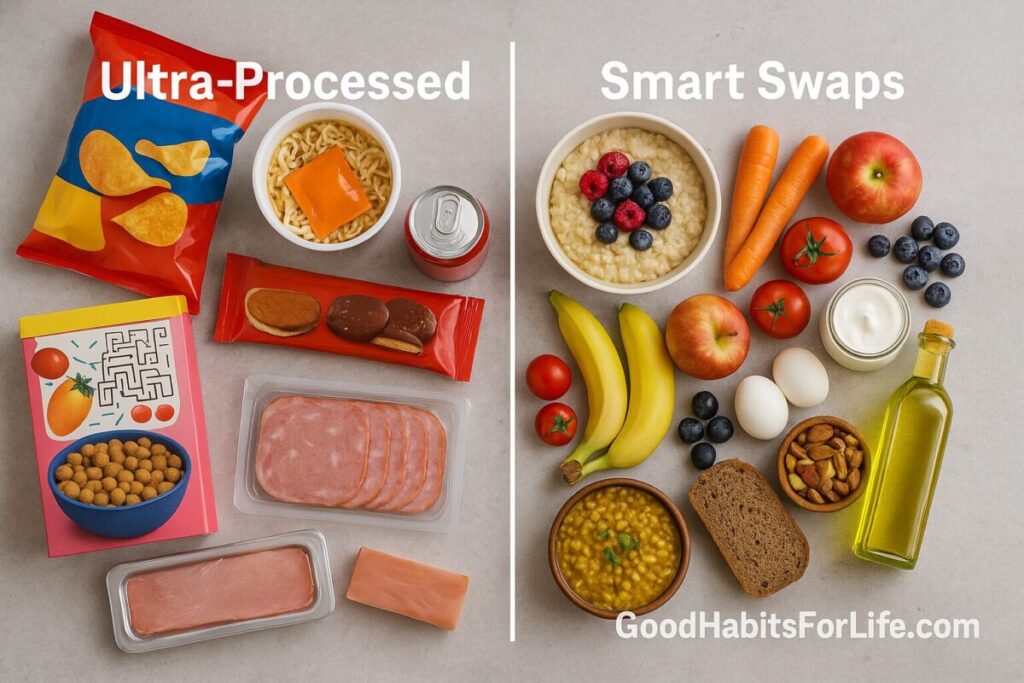
Ultra-processed foods (UPFs) are industrial formulations that combine refined ingredients (starches, sugars, isolated proteins), inexpensive oils, and additives (emulsifiers, sweeteners, color/flavor enhancers) that you wouldn’t use in home kitchens. The NOVA system (used by public-health bodies) places foods into 4 groups; UPFs are Group 4 (e.g., flavored chips, sweetened breakfast cereals, instant noodles with seasoning sachets, chocolate-filled biscuits, reconstituted meats, many “meal replacements”).
Why shift away from UPFs?
-
RCT evidence shows ad-libitum UPF diets can drive higher calorie intake and weight gain compared with minimally processed diets.
-
Observational syntheses link higher UPF intake with cardiometabolic, cancer, and mental-health risks (associations, not proof of causation).
-
UPFs often displace fiber-rich, protein-dense, micronutrient-rich foods—leaving you less full and more snack-prone.
What we’ll do here: keep convenience, raise protein and fiber, and reduce UPFs with smart swaps—no fear-mongering, just practical routines.
✅ Label reading: 30-second UPF check
Use this three-step scan when the package is in your hand:
-
Ingredients list
-
🚩 Many ingredients (8–15+) and things you don’t cook with (e.g., maltodextrin, xanthan gum, carrageenan, polyglycerol esters, “flavor,” “color,” high-intensity sweeteners).
-
🚩 First ingredients are refined flour, sugar(s), or oils.
-
✅ Short list featuring whole foods (e.g., milk, peanuts, salt) usually = minimally processed.
-
-
Nutrition Facts
-
Aim for ≥12–30 g protein per meal (or ~20–40 g if you train; adjust to body size) and ≥6–10 g fiber across meals.
-
Watch added sugars (keep most meals ≤5–8 g), sodium (≤600–700 mg/meal for everyday eating), and saturated fat.
-
-
Front-of-pack claims ≠ health
-
“High protein,” “multigrain,” or “zero sugar” can still be UPF if built on isolates/sweeteners. Always flip to the back.
-
🥗 Smart swaps (protein-forward)
| Common UPF → | Protein-Forward Swap | Why it’s better | Approx. protein* | Label clues to prefer |
|---|---|---|---|---|
| Sweetened breakfast cereal + flavored milk | Oats cooked in milk + Greek yogurt + nuts/fruit | More protein, fiber, fewer additives | 18–25 g | Oats: “whole oats”; yogurt: “milk, cultures” |
| Instant noodles + seasoning sachet | Whole-wheat pasta + olive oil + chickpeas + veggies | Fiber + plant protein; skip flavor enhancers | 14–20 g | Few ingredients; beans: “chickpeas, water, salt” |
| Chicken nuggets | Grilled chicken/paneer/tofu | Real protein, less refined batter/additives | 20–30 g | Single-ingredient proteins |
| Processed cheese spread on white bread | Paneer/cottage cheese on whole-grain toast | More protein and fiber, fewer emulsifiers | 14–20 g | Bread: “whole wheat flour” as #1 |
| Sugary yogurt dessert | Plain Greek yogurt + cocoa + berries | Protein + probiotics, minimal sugar | 15–20 g | “Milk, cultures”; ≤5–8 g added sugar |
| Protein bar with long list | Roasted peanuts/almonds + dates or boiled eggs | Fewer additives; satiating | 6–12 g (nuts) / 12 g (2 eggs) | Short, recognizable ingredients |
| Bottled milkshake/soft drink | Milk or unsweetened lassi / sparkling water + lemon | Protein or zero-sugar hydrating | 8–10 g (milk) / 0 g (water) | No sweeteners/colors list |
| Jarred creamy pasta sauce | Tomato-lentil sauce or yogurt-based raita | Adds fiber/protein; fewer stabilizers | 8–15 g (per cup) | Short ingredient list |
*Protein per typical serving; adjust by portion.
Rule of thumb: Build meals around 1–2 whole-food proteins + 1 high-fiber carb + veg + healthy fat.
⚡ Quick Start: Do this today
-
Audit one meal. Circle the biggest UPF culprit (cereal, bar, snack).
-
Swap just one thing. Use the table above.
-
Protein first. Start each plate with ~1 palm (women) or 2 palms (men) of protein.
-
Shop a mini list: eggs, Greek yogurt, dal/lentils/chickpeas, paneer/tofu, canned fish, oats, whole-grain bread, nuts, frozen veg, fruit.
-
Hydrate visibly: keep a bottle at your desk; swap one sweet drink for water or milk/lassi.
📅 30-60-90 Day Protein-Forward Plan
Days 1–30 (Foundations)
-
Breakfast anchor (1 choice, repeat): oats + yogurt; eggs + veg toast; paneer/tofu bhurji + roti.
-
Batch-cook weekly: 1 pot dal/beans + 1 tray grilled chicken/tofu.
-
Snack swap: roasted chana/peanuts, fruit + yogurt, boiled eggs.
-
Label habit: photograph ingredient lists of three frequent buys; replace one with a less-processed alternative.
-
Goal: ≥70% of meals minimally processed; 20–30 g protein/meal.
Days 31–60 (Build)
-
Upgrade lunch/dinner: add salad or cooked veg to 2 meals/day; use whole grains (brown rice, millet, whole-wheat pasta).
-
Sauce smarter: raita, tomato-lentil sauce, pesto; avoid cream-stabilized jars.
-
Weekend prep ritual (60 min): boil eggs; cook grain; portion nuts; cut veg; marinate protein.
-
Goal: ≥80% UPF-light days; 25–35 g protein/meal.
Days 61–90 (Automatic)
-
Restaurant strategy: start with protein + veg (grilled/gravy-light), swap fries for beans/salad, skip sugary drinks.
-
Travel kit: nuts, protein sachets/milk cartons, fruit; avoid emergency UPF binges.
-
Refine: replace last stubborn UPF (e.g., instant noodles) with fast-cook alternatives.
-
Goal: Default = protein-forward, minimally processed; UPFs as occasional treats.
🧠 Techniques & frameworks that make it stick
-
Plate Method (½ veg, ¼ protein, ¼ high-fiber carb): improves fullness and micronutrient coverage.
-
Habit stacking: “After I brew tea, I prep overnight oats.”
-
Environment design: keep ready-to-eat proteins visible (yogurt cups, eggs, paneer/tofu packs).
-
Batch + rotate: cook 2 proteins + 1 legume weekly; rotate flavors (Indian, Mediterranean, East Asian) to avoid boredom.
-
80/20 approach: perfection not required; aim for most meals UPF-light.
-
Protein pacing: spread protein across 3–4 eating occasions for satiety and muscle maintenance.
👥 Variations by audience
-
Students: dorm-friendly kit—oats, milk/yogurt, canned beans/tuna, eggs (if kitchen), nuts, microwaveable brown rice.
-
Parents: default dinner trio—(1) dal/beans + rice + veg, (2) paneer/tofu stir-fry + roti, (3) grilled chicken/fish + potatoes + salad. Keep fruit/yogurt at eye level.
-
Busy professionals: stock high-protein ready-to-eat (Greek yogurt, cottage cheese, rotisserie chicken), frozen veg mixes, microwavable grains.
-
Seniors: emphasize soft proteins (eggs, yogurt, fish, well-cooked dals), hydration, and vitamin B12-rich foods; mind sodium.
-
Teens: build snacks around protein + produce (peanut butter toast + banana; yogurt + berries).
⚠️ Mistakes & myths to avoid
-
Myth: “All packaged food is bad.”
Reality: Canned beans, frozen veg, milk, and yogurt can be minimally processed and very nutritious. -
Mistake: Chasing “high-protein” UPFs with long ingredient lists.
-
Mistake: Cutting all treats at once—often backfires. Use planned treats (e.g., weekend dessert).
-
Myth: “Zero-sugar automatically means healthy.” Some zero-sugar UPFs may still be low in nutrients and highly engineered.
-
Mistake: Ignoring portion sizes—overnight oats can become a sugar bomb if loaded with syrups.
💬 Real-life scripts & examples
-
Grocery swap ask: “We’re trading the sugary cereal for oats + yogurt this week. Pick any fruit topping you like.”
-
Restaurant order: “Could I get grilled chicken/fish with extra veg and potatoes instead of fries?”
-
Office snack plan: “I’m keeping roasted nuts and yogurt in my drawer/fridge so I don’t hit the vending machine.”
🧰 Tools, apps & resources (pros/cons)
-
Label guides: FDA “How to Use the Nutrition Facts Label” (great for basics; US-centric).
-
Ingredient checkers: Open Food Facts, FoodSwitch, Yuka (quick scans; accuracy varies; treat as guidance, not gospel).
-
Tracking: Cronometer/MyFitnessPal (helps hit protein/fiber; can feel tedious—use temporarily).
-
Prep aids: Rice cooker/Instant Pot/oven sheet pans (scale batch cooking with minimal active time).
📌 Key takeaways
-
Prioritize protein + fiber from minimally processed foods; UPFs become the exception.
-
Read labels fast: long lists + additives + refined bases = likely UPF.
-
Swap one thing at a time and batch-cook protein so better choices are effortless.
-
Use the 30-60-90 plan to turn this into a durable habit.
❓ FAQs
What is the simplest way to reduce UPFs without overthinking?
Stock ready proteins (eggs, yogurt, dal/beans, paneer/tofu) and one high-fiber carb; eat those first at meals.
Are all additives harmful?
Not necessarily. Many are safe within regulatory limits. The issue is dietary pattern: UPF-heavy diets tend to be lower in protein/fiber and higher in energy density.
How much protein should I aim for?
A practical target for many adults is ~20–40 g protein per meal, adjusted to body size and activity. Spread across the day.
Can I still have UPF treats?
Yes—use the 80/20 rule. Plan them (e.g., weekend dessert) rather than letting them creep into daily meals.
What about plant-based eaters?
Center plates on legumes (dal/lentils, chickpeas, beans), tofu/tempeh, nuts/seeds, and whole grains. Watch for highly processed meat substitutes.
Is freezing food “processing”?
Freezing, drying, and canning are processing methods but not necessarily “ultra-processing.” Frozen veg/fruit and canned beans/fish are convenient, nutritious staples.
Do “natural” claims mean non-UPF?
No. “Natural” is a marketing term in many regions. Always read the ingredients list.
📚 References
-
NIH Research Matters. Ultra-processed diet leads to eat more, gain weight (2019). https://www.nih.gov/news-events/nih-research-matters/ultra-processed-diet-leads-eat-more-gain-weight
-
Hall KD, et al. Cell Metabolism (2019). Ultra-Processed Diets Cause Excess Calorie Intake and Weight Gain. https://doi.org/10.1016/j.cmet.2019.05.008
-
Harvard T.H. Chan School of Public Health — The Nutrition Source. Ultra-Processed Foods. https://www.hsph.harvard.edu/nutritionsource/ultra-processed-foods/
-
UK Scientific Advisory Committee on Nutrition (SACN). Position statement on processed foods and health (2023). https://www.gov.uk/government/publications/processed-foods-and-health-position-statement
-
Pan American Health Organization (PAHO). Ultra-processed food and drink products. https://www.paho.org/en/topics/ultra-processed-foods
-
FDA. How to Understand and Use the Nutrition Facts Label. https://www.fda.gov/food/nutrition-education-resources-materials/how-understand-and-use-nutrition-facts-label
-
WHO/Europe. Ultra-processed food and drink products and health (fact sheet). https://www.who.int/europe/news-room/fact-sheets/item/ultra-processed-food-and-drink-products
Disclaimer: This article is for general nutrition education and is not a substitute for personalized medical or dietary advice.