
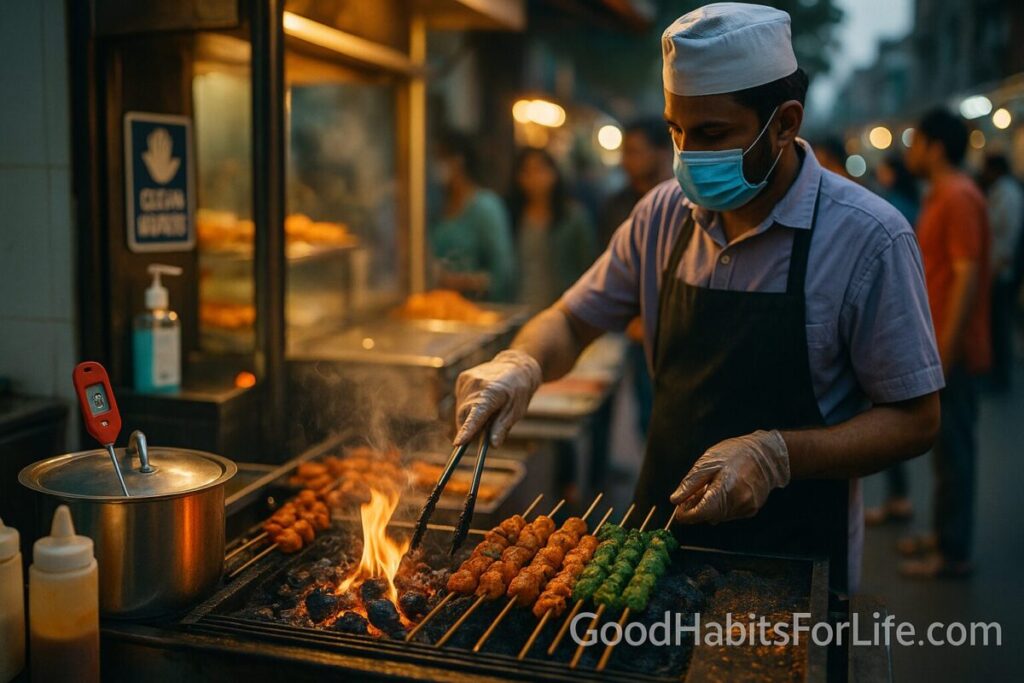
Street Food Smart: Hygiene, Heat & Happy Stomachs: Dopamine Detox (2025)
Street Food Smart: Hygiene & Heat for Happy Stomachs (2025)
Table of Contents
🧭 What “Street Food Smart” Means & Why It Matters
Street Food Smart is a simple system to enjoy local flavors without the post-meal regret. It blends three pillars:
-
Hygiene you can spot (clean hands, covered food, clean oil, separate raw/cooked).
-
Heat you can feel (food served sizzling; reheat till steaming).
-
Habits you repeat (becoming automatic so you don’t overthink).
Why it matters
-
Foodborne illness (bacteria, viruses, parasites) is common in informal settings. The biggest controllable factor is temperature: pathogens multiply fastest in the “danger zone” 4–60 °C (40–140 °F). Keeping foods hot or cold narrows risk.
-
Busy, hygienic stalls with high turnover offer fresher batches and hotter servings.
-
A light “dopamine detox” approach—occasionally choosing simpler, less ultra-processed options—can help reduce compulsive snacking and restore sensitivity to real hunger and satiety cues. (This isn’t a medical treatment; it’s a mindful eating strategy.)
✅ Quick Start: Safer in 60 Seconds
Use this one-minute checklist before ordering:
-
Scan the stall (10 s): Is it busy? Are ingredients covered? Is raw separated from cooked? Gloves/tongs? Handwashing visible?
-
Ask for heat (10 s): “Please reheat till piping hot.” Watch the sizzle; see steam.
-
Choose smarter items (20 s): Freshly cooked (grilled, stir-fried, steamed). Avoid pre-cut fruit, salads, sauces that sit open, and ice if water quality is uncertain.
-
Drink safe (10 s): Sealed bottled water or hot tea/coffee. Skip ice.
-
Self-care (10 s): Sanitise your hands; use your own tissues; avoid touching the rim of cups/plates.
If in doubt, walk away. A safer, equally tasty option is often a few steps away.
🛠️ 7-Day Street-Smart Habit Plan
Goal: Turn safe choices into muscle memory.
Day 1 — See the obvious:
-
Visit 3 stalls; order once. Choose the busiest with visible reheating. Note one good hygiene marker you saw.
Day 2 — Temperature rule:
-
Order an item that can be made to order (e.g., stir-fry, dosa, kebab). Ask for extra hot; wait for steam.
Day 3 — Sauce safety:
-
Skip watery chutneys/salsas kept at room temp. If you want sauce, prefer sealed packets or freshly cooked gravies.
Day 4 — Hydration:
-
Carry a small ORS sachet in your bag. Drink sealed bottled water or boiling-hot beverages.
Day 5 — Clean hands:
-
Make hand sanitiser a pre-meal ritual. Avoid touching the eating surface; use tissues as a placemat if needed.
Day 6 — Dopamine gentle reset:
-
Choose a simple, less oily item (steamed/grilled) and eat slowly (10–15 minutes). Notice fullness signals.
Day 7 — Review & upgrade:
-
Reflect: Which stalls passed your test? Bookmark them. Create a personal “safe stall” list in your notes app.
Weekly checkpoint: Fewer tummy upsets, quicker decisions, more enjoyment.
🧠 Techniques & Frameworks (H.E.A.T., 5 Keys, Danger Zone)
H.E.A.T. — Your pocket framework
-
H — Hot & Fresh: Ask for freshly cooked or reheated till steaming (aim ~≥74 °C / 165 °F internally).
-
E — Environment: Covered food, clean surfaces, separate raw/cooked, hair tied, tongs/gloves.
-
A — Active Turnover: Busy stall, small batches, no long-sitting trays.
-
T — Trusted Water: Sealed bottles or boiling-hot drinks; skip ice.
WHO “Five Keys to Safer Food” (adapted)
-
Keep clean (hands, utensils).
-
Separate raw and cooked.
-
Cook thoroughly.
-
Keep food at safe temperatures.
-
Use safe water and raw materials.
The “Danger Zone” (temperature)
-
4–60 °C (40–140 °F) = rapid bacterial growth.
-
Safer: Serve hot above ~60–63 °C (140–145 °F); reheat to ≥74 °C (165 °F). Keep cold foods ≤4 °C (≤40 °F).
Visual red flags
-
Oil that’s dark/burnt or smoking continuously.
-
Pre-cut salads/fruit at room temperature.
-
Open sauces attracting flies, no lids.
-
Same tongs/boards for raw and cooked.
🎯 Audience Variations
Students & backpackers
-
Opt for made-to-order foods; carry sanitiser and ORS.
-
Budget trick: choose veg dishes with high turnover and request extra hot.
Parents with kids
-
Avoid very spicy and raw salads; pick steamed/grilled items.
-
Bring a spill-proof bottle of safe water; split portions to cool safely (eat within 15–20 min).
Busy professionals
-
Save “safe-stalls” in Maps; pre-plan orders.
-
When in meetings after lunch, avoid heavy sauces and cream-based items that sat warm.
Seniors
-
Prefer easier-to-digest, freshly cooked items; keep hydration steady.
-
Watch medications that increase dehydration risk; choose hot soups/tea.
Travelers
-
First 24–48 h: be conservative—hot, cooked, no ice.
-
Carry ORS; know local emergency numbers and nearby clinics.
⚠️ Mistakes & Myths to Avoid
-
Myth: “Spice kills all germs.”
Reality: Spices don’t reliably kill pathogens once food is contaminated or temperature-abused. -
Myth: “A squeeze of lemon or a shot of alcohol makes it safe.”
Reality: Neither reliably disinfects unsafe food or water. -
Mistake: Trusting clear ice—it can still be contaminated if the water wasn’t safe.
-
Mistake: Thinking a quiet stall is safer; low turnover often means older food.
-
Mistake: Assuming vegetarian = safe. Cross-contamination and temperature abuse still apply.
-
Mistake: Buffet trays that are warm but not hot; ask for a freshly heated portion.
📣 Real-Life Scripts You Can Copy
-
Reheat request: “Could you please heat this till it’s piping hot? I don’t mind waiting.”
-
Sauce safety: “Can I have sealed sauce packets instead of the chutney?”
-
Water: “I’ll take a sealed bottle, please. No ice.”
-
Swap: “Can you grill instead of re-frying? And serve fresh off the pan?”
-
Walk-away (polite): “Thanks! I’ll come back later when it’s fresh.”
📚 Tools, Apps & Resources
-
Pocket gear: Small hand sanitiser, ORS sachet, a few tissues, and a zip bag for trash.
-
Notes/Maps: Create a “Street-Safe” list of stalls with high turnover and good hygiene; add photos and notes.
-
Posters & checklists: Print or save the WHO Five Keys poster for reminders.
-
Thermal cues: Look for visible steam, hear the sizzle, and notice hot plates/serving spoons.
-
When sick: Keep ORS and a digital thermometer at home to track fever.
Pros: Low cost, easy habits, better enjoyment.
Cons: Requires patience at busy stalls; sometimes your favorite sauce may be a no-go unless freshly made.
✅ Key Takeaways
-
Heat is king: Eat hot, avoid lukewarm.
-
Hygiene is visible: Covered food, clean tools, separate raw/cooked.
-
Turnover matters: Busy stalls, small fresh batches.
-
Water wisdom: Sealed bottles or boiling-hot drinks; skip ice if unsure.
-
Habits win: Use H.E.A.T. + 7-Day plan until it’s automatic.
-
Listen to your body: If you feel off, rest, hydrate, and watch for red-flags.
❓ FAQs
1) What’s the single safest rule for street food?
Eat freshly cooked and piping hot food. Heat sharply reduces many pathogens; lukewarm is riskiest.
2) How long can cooked food sit out safely?
In general, keep hot foods >60–63 °C (140–145 °F) and cold foods ≤4 °C (≤40 °F). Beyond 2 hours in the “danger zone,” risk rises quickly.
3) Are chutneys and sauces safe?
If they’re freshly cooked hot or sealed, they’re safer. Room-temp, watery sauces can be risky, especially if uncovered.
4) Is vegetarian street food automatically safer?
Not automatically. Cross-contamination, dirty water, or poor temperature control can affect any dish.
5) What should I do if I get traveler’s diarrhea?
Hydrate with oral rehydration salts (ORS), rest, and eat bland, simple foods. Seek medical care for high fever, blood in stool, severe dehydration, or symptoms lasting >48–72 h.
6) Does reheating always make food safe?
Reheating to ≥74 °C (165 °F) can reduce many pathogens, but toxins from some bacteria (e.g., Staph aureus) may persist—safer to avoid long-sitting food in the first place.
7) What’s a practical “dopamine detox” here?
Occasionally choose simpler, less ultra-processed street options (steamed/grilled), eat mindfully and slower, and take phone-free meals to tune into hunger/fullness.
8) What drinks are safest?
Sealed bottled water or boiling-hot drinks (tea/coffee). Skip ice and unsealed beverages if water quality is uncertain.
9) Are salads or fresh fruit safe from street vendors?
Only if you trust the water and prep hygiene. Otherwise choose whole fruit you peel yourself or hot veggies.
10) When should I absolutely avoid a stall?
When you see unclean oil, flies, open sauces, no handwashing, or mixed raw/cooked tools—and when food isn’t served steaming hot.
📚 References
-
World Health Organization. Five Keys to Safer Food. https://www.who.int/foodsafety
-
USDA Food Safety & Inspection Service. Danger Zone (40 °F–140 °F). https://www.fsis.usda.gov
-
U.S. FDA. Food Code & Safe Cooking Temperatures (consumer guidance summary). https://www.fda.gov/food
-
Centers for Disease Control and Prevention. Travelers’ Diarrhea. https://wwwnc.cdc.gov/travel/page/travelers-diarrhea
-
Centers for Disease Control and Prevention. Norovirus Prevention. https://www.cdc.gov/norovirus
-
National Health Service (UK). Diarrhoea and Vomiting: Rehydration & When to Get Help. https://www.nhs.uk
-
World Health Organization. Oral Rehydration Salts (ORS): Treatment of Dehydration. https://www.who.int/health-topics/diarrhoea
-
Food Safety and Standards Authority of India (FSSAI). Hygiene & Sanitation: Clean Street Food Initiatives/Guidelines. https://www.fssai.gov.in
🧾 Disclaimer
This article is for general information on food safety and hygiene and is not a substitute for professional medical advice.