
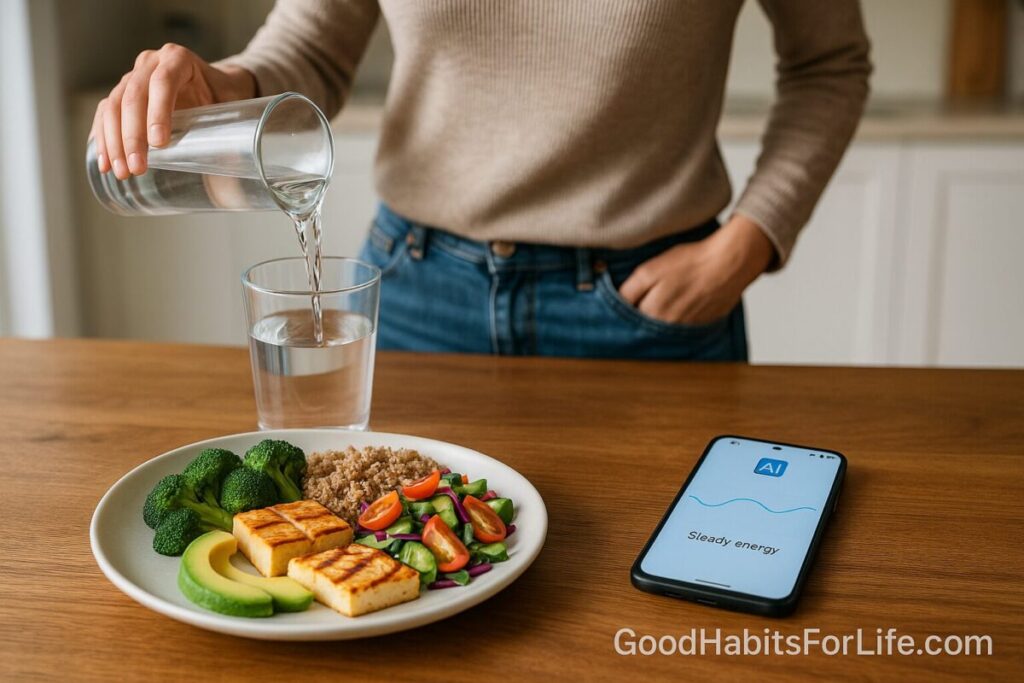
Energy Without Sugar Crashes: Steady Choices: AI workflows (2025)
Energy Without Sugar Crashes: Steady Choices + AI (2025)
Table of Contents
🧭 What Sugar “Crashes” Are & Why They Happen
A “sugar crash” is that post-meal dip—sleepiness, brain fog, irritability—often 60–180 minutes after a high-glycemic, low-fiber meal or drink. Spiky glucose → spiky insulin → quick fall. Flatten the curve and you stabilize energy, mood, and focus.
What works (evidence-aligned):
-
Lower glycemic index/load patterns reduce post-meal spikes and improve glycemic variability.
-
Fiber + protein + fat slow gastric emptying and carbohydrate absorption.
-
Short activity after meals (even 10 minutes) lowers post-prandial glucose.
-
Food order/meal sequencing (veg/protein first, starch last) blunts spikes.
-
Limiting liquid sugars (soda/juice/energy drinks) prevents rapid spikes.
-
Consistent sleep & hydration support stable appetite hormones and energy.
✅ Quick Start: Do This Today
-
Swap your carbs. Choose oats, brown rice, quinoa, lentils/chickpeas, whole-grain roti; limit white bread, sugary cereals, pastries.
-
Anchor every meal with 20–40 g protein (eggs, Greek yogurt/curd, tofu/paneer, fish/chicken, dal + dairy/soy).
-
Front-load fiber (≥25–30 g/day). Add 1–2 cups veg per meal + 1 fruit/day; include beans/lentils most days.
-
Sequence your plate: veggies → protein/fat → carbs.
-
Walk 10 minutes after meals. Stairs or a loop around the block works.
-
Time caffeine with food. Coffee/tea with breakfast or lunch; avoid on an empty stomach if you’re crash-prone.
-
Kill liquid sugars. Replace soda/juice with water, unsweetened tea/coffee, or sparkling water.
-
Smart snacks (200–250 kcal): pair slow carbs + protein/fat: apple + peanut butter; chana + peanuts; yogurt + chia; cheese + whole-grain crackers.
🛠️ 30-60-90 Habit Plan (with checkpoints)
Days 1–30: Stabilize the Basics
-
Breakfast target: 20–30 g protein + fiber (e.g., Greek yogurt + oats + berries; besan chilla + veg; egg bhurji + whole-grain toast).
-
Carb swaps: 1 high-GI staple → lower-GI (white rice → parboiled/brown; white bread → whole-grain; instant noodles → whole-wheat noodles).
-
Movement micro-habit: 10 min post-meal walk, 2–3× daily.
-
Hydration: 1 glass (250 ml) before each meal.
-
Checkpoint (weekly): Rate post-meal sleepiness (0–10); aim for −2 points vs. baseline.
Days 31–60: Build Consistency
-
Plate rule: ½ veg, ¼ protein, ¼ slow carbs; add 1–2 tsp oil/nuts/seeds.
-
Batch cook 2 proteins + 2 slow carbs each week (e.g., grilled chicken/tofu; boiled eggs; lentils; quinoa/brown rice).
-
Caffeine window: finish by 14:00–15:00 to protect sleep.
-
Checkpoint: 5-day average steps ≥7,000; crashes ≤2/week; fiber ≥28 g/day.
Days 61–90: Personalize & Automate
-
Refine portions using hunger/fullness logs; keep protein ~1.2–1.6 g/kg/day if active.
-
Add vinegar/leafy starter at lunch/dinner (salad or 1 tbsp vinegar in dressing) if helpful.
-
Automate with AI (see workflows) for rotating menus and grocery lists.
-
Checkpoint: crashes ≤1/week, steady focus 3–5 h after meals.
🧠 Techniques & Frameworks (GI/GL, sequencing, movement, caffeine)
Glycemic Index/Load—useful, not a religion
-
GI ranks how fast a carb food raises blood sugar. GL adds portion size context.
-
Emphasize whole/minimally processed carbs: oats, barley, legumes, sweet potato, whole grains, fruit.
-
Combine with protein/fiber/fat—you eat meals, not single foods.
Quick swaps
| High-GI / fast | Steadier alternative |
|---|---|
| Cornflakes, puffed rice | Steel-cut/rolled oats, muesli w/ nuts |
| White bread | 100% whole-grain/seeded bread |
| White rice | Parboiled/basmati/brown rice, quinoa, millet |
| Potato fries | Roasted sweet potato + olive oil |
| Juice | Whole fruit + water/sparkling water |
Food sequencing & preloading
-
Start with salad/veg and protein, finish with starch.
-
Vinegar-based dressings may further temper the glucose rise for some people.
Move after you eat
-
5–15 minutes of easy walking after meals significantly attenuates post-prandial glucose.
-
Desk hack: walk during calls, take stairs, or do 2–3 mini-loops in your building.
Caffeine timing
-
Caffeine can increase alertness but may worsen “jitters” if taken alone.
-
Have coffee/tea with food and trial a cutoff mid-afternoon to protect sleep (which itself affects glucose control and hunger).
🤖 AI Workflows: Fast Systems for Busy People
1) 7-Day “Steady Energy” Menu Generator (copy-paste prompt)
“Plan a 7-day menu for steady energy without sugar crashes. Include 3 meals + 2 snacks/day for a [vegetarian/omnivore] who works/studies 9–6. Use Indian + global options, budget-friendly, ≤20 min prep on weekdays. Each meal: protein ≥20 g; add fiber sources. Output a table and a consolidated grocery list by aisle.”
2) Snack Pairing Coach
“Suggest 20 200–250 kcal snacks that pair slow carbs + protein/fat (e.g., fruit + nuts, yogurt + chia). Include macros and why each is crash-resistant.”
3) Carb-Swap Brainstormer
“For these staples—[rice, roti, noodles, breakfast cereal, café drinks]—list lower-GI or higher-fiber swaps and how to cook them quickly. Add texture/flavor tips.”
4) Post-Meal Walk Nudger
“Create a friendly habit script and reminder schedule: 10-minute walk after lunch/dinner, with rotating messages and backup ‘indoor options’ for rain/heat.”
5) Café Order Optimizer
“Given this café menu [paste], propose 5 orders that hit ≥20 g protein and minimize sugar spikes. Add phrasing to request reduced syrups/sugar.”
6) Batch-Cook Blueprint
“Design a 2-hour Sunday cook-up: 2 proteins, 2 slow carbs, 3 veg sides, 2 sauces. Provide storage times and 10 mix-and-match weekday meals.”
👥 Audience Variations
Students
-
Canteen/café: eggs + toast; paneer/tofu wrap on whole-wheat; dal + chawal + salad.
-
Carry nuts, roasted chana, yogurt cups; keep water bottle visible on desk.
Professionals
-
Desk drawer: tuna/salmon pouches, nut mix, whole-grain crackers, protein bars (≤10 g added sugar).
-
Travel: request unsweetened drinks; pick bowls with greens + protein + whole-grain base.
Parents
-
Family-style bowls: base of brown rice/quinoa, tray of veg, separate proteins; let kids assemble.
-
Sweet treats with anchors: fruit + yogurt; pancakes made with oats/eggs/banana.
Seniors
-
Prioritize protein at breakfast; softer high-fiber foods (dal/legumes, oats, fruit).
-
Short walks after meals support glucose and mobility; mind medication interactions.
Teens
-
Sports snacks: yogurt + granola + fruit; milk + peanut butter sandwich; avoid energy drinks.
⚠️ Mistakes & Myths to Avoid
-
Myth: “No carbs = no crashes.” → The fix is smart carbs + fiber + protein, not zero carbs for most people.
-
Mistake: Skipping breakfast if you crash mid-morning—try a protein-rich breakfast first.
-
Mistake: Fruit fear. Whole fruit’s fiber/water blunt spikes; juice does not.
-
Myth: “Brown sugar/honey is ‘healthier.’” → They’re still free sugars.
-
Mistake: Drinking calories (juice, soda, “healthy” smoothies loaded with sugar).
-
Mistake: Massive coffee on an empty stomach.
💬 Real-Life Examples & Scripts
Café script:
-
“Could I get a cappuccino with no syrup, and the egg-veg wrap on whole-wheat? Please add extra spinach.”
Tiffin combo (balanced plate):
-
Dal (1 cup) + brown rice (¾ cup cooked) + mixed veg (1–2 cups) + raita (½ cup) + small ghee drizzle.
Convenience store picks:
-
Plain yogurt + nut sachet; roasted chana; cheese sticks + whole-grain crackers; unsweetened iced tea.
Dinner party strategy:
-
Start with salad/protein starters; add small portion of starch later; sip sparkling water/lime between courses; take a short walk after.
🧰 Tools, Apps & Resources
-
GI databases: University of Sydney GI Search; Glycemic Index Foundation.
-
Tracking: Cronometer, MyFitnessPal (watch added sugars).
-
Habit nudges: Phone Reminders/Shortcuts; wearables for post-meal walks.
-
Planning: Notion/Sheets meal planner linked to grocery list.
Pros/Cons (quick):
-
Trackers give awareness (pro) but can be tedious (con).
-
GI databases help with swaps (pro), but context matters—mix foods and mind portions.
📌 Key Takeaways
-
Anchor meals with protein + fiber + slow carbs; limit liquid sugars.
-
Sequence food and walk 10 minutes post-meal to flatten spikes.
-
Time caffeine with food and set an afternoon cutoff.
-
Use simple AI prompts to automate menus, grocery lists, and reminders.
-
Measure progress with post-meal sleepiness ratings, crash frequency, and weekly fiber intake.
❓ FAQs
1) Do I need to cut all sugar?
No. Focus on reducing free/added sugars and pairing carbs with fiber/protein. Whole fruit is fine.
2) Are low-carb diets the only way to avoid crashes?
No. Many people stabilize energy with balanced plates and lower-GI swaps without going very low-carb.
3) Does a 10-minute walk really help?
Yes—short, light post-meal activity reduces post-prandial glucose for many people.
4) Is coffee the problem or the syrup?
Often the syrup and sugar. If caffeine alone bothers you, take it with food and limit timing.
5) Best breakfast for steady energy?
Protein-rich + fiber (e.g., eggs + veg + whole-grain toast; Greek yogurt + oats + berries; besan chilla).
6) Are artificial sweeteners a fix?
They can reduce sugar intake but aren’t a free pass; some people notice cravings or GI issues. Prioritize whole foods.
7) What if I’m vegetarian/vegan?
Great options: tofu/tempeh, lentils/chickpeas/beans, soy yogurt, nuts/seeds, whole grains; combine for complete amino acids.
8) How much fiber per day?
Aim for ≥25–30 g/day from vegetables, fruit, legumes, whole grains, nuts, and seeds.
📚 References
-
Harvard T.H. Chan School of Public Health. Carbohydrates and Blood Sugar (GI/GL). https://www.hsph.harvard.edu/nutritionsource/carbohydrates/carbohydrates-and-blood-sugar/
-
University of Sydney. Glycemic Index Database. https://glycemicindex.com/
-
World Health Organization. Guideline: Sugars Intake for Adults and Children. https://www.who.int/publications/i/item/9789241549028
-
U.S. Departments of Agriculture & Health and Human Services. Dietary Guidelines for Americans, 2020–2025. https://www.dietaryguidelines.gov/
-
Hall KD, et al. Ultra-processed diets cause excess calorie intake and weight gain. Cell Metab. 2019. https://www.ncbi.nlm.nih.gov/pmc/articles/PMC6652284/
-
DiPietro L, et al. Interrupting sitting time with brief, light-intensity walking improves postprandial glycemia. Diabetes Care. 2013/2018 evidence. https://diabetesjournals.org/care/article/36/10/3220/38121
-
Shukla AP, et al. Food order has a significant impact on postprandial glucose and insulin. Diabetes Care. 2015. https://diabetesjournals.org/care/article/38/7/e98/37400
-
Harvard Health Publishing. Vinegar: Can it help control blood sugar? https://www.health.harvard.edu/blog/vinegar-can-help-control-blood-sugar-2018101815128
-
Leidy HJ, et al. The role of protein in weight loss and maintenance. Am J Clin Nutr. 2015; and high-protein breakfast studies. https://academic.oup.com/ajcn/article/101/6/1320S/4564492
-
CDC. How Sleep Affects Health. (sleep and metabolism) https://www.cdc.gov/sleep/about_sleep/how_sleep_works.html
Disclaimer
This article is for general education only and is not a substitute for personalized medical or nutrition advice; speak with your healthcare professional if you have a medical condition or take medication.