
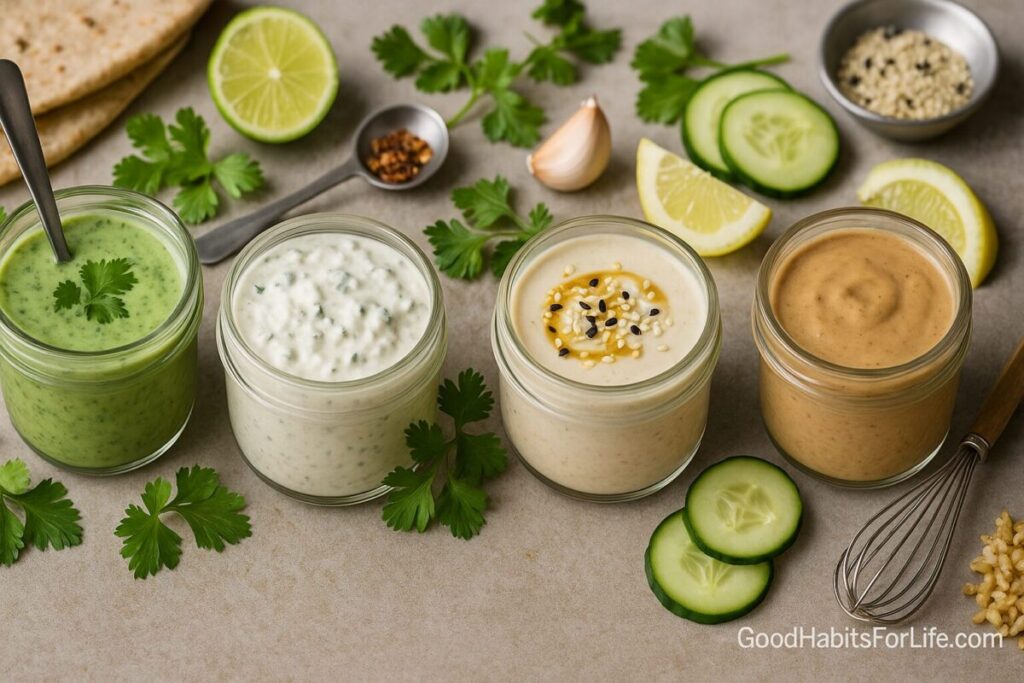
Sauce & Dressing Base Recipes: MixIns, Not Mayhem: Protein-Forward Plan (2025)
Sauce & Dressing Base Recipes (2025): Protein-Forward
Table of Contents
🧭 What & Why: Protein-Forward Sauces/Dressings
Protein-forward sauces and dressings are mix-and-match bases that add protein, flavor, and moisture to otherwise plain foods—think bowls, wraps, salads, grains, and reheated leftovers. Instead of cooking a whole new main, you batch a base and change its personality with mix-ins (herbs, spices, aromatics, heat, sweetness, umami) right before serving.
Why protein?
-
Protein supports satiety and appetite control, helping you feel fuller with fewer cravings.
-
Distributing protein across meals (not just at dinner) can support muscle maintenance and overall diet quality.
-
Plant and dairy protein bases (yogurt, cottage cheese, tofu, beans, nut/seed butters) deliver nutrients like calcium, iron, zinc, and fiber (for legumes).
Target 20–30 g protein per meal. A protein-forward sauce can contribute 6–15 g, letting the rest come from eggs, fish, chicken, tofu, tempeh, or legumes.
🛠️ The 5-Part Flavor Ratio (Base → Boosters)
Memorize this workhorse ratio and you’ll riff confidently:
Base (protein) 1 cup (≈240 ml)
-
Acid 1–3 tbsp (15–45 ml)
-
Fat 0–2 tbsp (0–30 ml)
-
Liquid 2–6 tbsp (30–90 ml) to thin
-
Flavor Boosters ½–2 tsp (2–8 g) total salt/umami/sweet/heat
Choose your Base (protein):
-
Dairy: Greek yogurt, skyr, cottage cheese
-
Soy: Silken tofu, firm tofu (blended)
-
Legume purée: White beans, chickpeas, lentils
-
Nut/seed butter: Peanut, almond, cashew, tahini
-
Hummus: Store-bought or homemade
Acid: Lemon/lime juice, cider/rice vinegar, yogurt whey, pickle brine
Fat (optional): Olive/avocado oil, sesame oil, ghee (for warm sauces)
Liquid: Water, milk/unsweetened plant milk, stock, pasta water
Flavor Boosters:
-
Salt/umami: Soy sauce/tamari, miso, parmesan, anchovy, fish sauce, nutritional yeast
-
Sweet balance: Honey, date syrup, maple, mirin
-
Heat: Chili flakes, gochujang, harissa, black pepper
-
Aromatics/herbs: Garlic, ginger, scallion, dill, basil, cilantro, mint, cumin, smoked paprika
Taste test in order: salt → acid → sweet → heat → aromatics. Stop when it “pops.”
🍲 Base Recipe Blueprints (No-Cook & Quick-Simmer)
Quantities yield ~300–400 ml (10–14 fl oz), ~8–12 servings (1–2 tbsp each). Protein estimates are per 2 tbsp (30 ml).
1) Greek Yogurt Ranch (no-cook) — ~4–5 g protein/serving
-
Base: 250 g Greek yogurt (plain)
-
Acid: 2 tbsp lemon juice
-
Fat: 1 tbsp olive oil (optional, silkier)
-
Liquid: 2–4 tbsp cold water
-
Boosters: ½ tsp salt, ½ tsp garlic powder, ½ tsp onion powder, 2 tbsp chopped dill/chives, black pepper
Method: Whisk smooth. Thin to drizzle. Great on bowls, roasted veg, wraps.
2) Silken Tofu “Caesar” (no-cook) — ~4–6 g/serving
-
Base: 300 g silken tofu
-
Acid: 2 tbsp lemon juice
-
Fat: 1 tbsp olive oil
-
Boosters: 2 tsp Dijon, 1 small garlic clove, 2 anchovy fillets or 2 tsp capers (veg), 2–3 tbsp grated parmesan, ¼ tsp salt
-
Liquid: 2–4 tbsp water
Blend until glossy. Toss with romaine or use as a creamy spread.
3) Cottage Cheese Alfredo (warm) — ~6–7 g/serving
-
Base: 300 g low-fat cottage cheese
-
Acid: 1 tsp lemon juice
-
Fat: 1 tsp butter or 1 tbsp olive oil
-
Boosters: 2 garlic cloves (sautéed), 30 g grated parmesan, pinch nutmeg, ½ tsp salt
-
Liquid: 60–90 ml warm milk/pasta water
Blend, then warm gently 1–2 min. Toss with hot pasta/veg noodles or spoon over chicken/tempeh.
4) Peanut-Sesame Satay (no-cook) — ~5–6 g/serving
-
Base: 60 g peanut butter + 15 g tahini
-
Acid: 1–2 tbsp rice vinegar or lime juice
-
Fat: (from nuts/seeds—no added needed)
-
Boosters: 2 tbsp soy/tamari, 1 tbsp honey or date syrup, 1 tsp grated ginger, pinch chili flakes
-
Liquid: 60–90 ml warm water
Whisk until pourable. Use for noodle bowls, tofu, steamed greens.
5) Miso-Tahini Lemon (no-cook) — ~3–4 g/serving
-
Base: 60 g tahini + 1 tbsp white miso
-
Acid: 2 tbsp lemon juice
-
Boosters: 1 small grated garlic clove, ½ tsp maple, ¼ tsp pepper
-
Liquid: 80–120 ml water
Whisk until creamy. Drizzle on grain-veg bowls.
6) Red-Lentil Tomato Simmer (quick) — ~4–5 g/serving
-
Base: 120 g red lentils (rinsed)
-
Liquid: 500 ml water + 400 g tomato passata
-
Acid: 1 tbsp red wine vinegar (finishing)
-
Fat: 1 tbsp olive oil
-
Boosters: 1 tsp each garlic & smoked paprika, ½ tsp cumin, ¾ tsp salt
Simmer 12–15 min until lentils break down. Finish with vinegar. Spoon over baked potatoes, fish, or eggs.
Mix-Ins Matrix (add at serve time—not into the whole batch)
-
Mediterranean: capers, olives, sun-dried tomatoes, oregano, lemon zest
-
Mexican-ish: chipotle, lime zest, cilantro, pickled jalapeños
-
Middle-Eastern: za’atar, sumac, parsley, pomegranate molasses
-
Indian-ish: garam masala, curry leaves, mustard seeds (tempered in 1 tsp oil), coriander
-
East/Southeast Asian: gochujang, sesame oil, furikake, scallion, yuzu, grated ginger
-
Kid-friendly mellow: cucumber/dill, mild paprika, tiny honey, finely chopped herbs
🚀 Quick Start: This Week’s 7-Day Plan
Batch on Sunday (60–75 min total):
-
Make Silken Tofu Caesar and Peanut-Sesame Satay (2 jars).
-
Pre-chop herbs, scallions, and aromatics; store separately.
-
Cook a pot of grains (quinoa/rice) and roast a sheet pan of veg.
Daily uses (copy/paste into your planner):
-
Mon: Caesar chicken wraps with romaine + parmesan.
-
Tue: Satay noodle bowls with edamame + cucumber.
-
Wed: Roasted veg + quinoa with miso-tahini swirl (make 5-min).
-
Thu: Lentil-tomato sauce over baked potatoes + steamed broccoli.
-
Fri: Yogurt ranch over salmon/tempeh + slaw.
-
Sat: Leftover bowl remix—use mix-ins matrix.
-
Sun: Reset: choose one dairy base and one legume/nut base for next week.
Checkpoint habit cues:
-
Place jars front-row in the fridge.
-
Keep a mix-ins tray (chili, lemon, herbs) at eye level.
-
Add “Sauce swipe” line item to your meal tracker.
🧊 Batch, Storage & Food Safety
-
Chill promptly: Store sauces/dressings ≤4 °C (40 °F) in clean, airtight jars.
-
Label: Name + date; plan 3–4 days for fresh dairy/garlic/herb blends; up to 5–7 days for more acidic, low-risk dressings (e.g., miso-tahini, high-acid vinaigrettes).
-
Cross-contamination: Don’t re-dip. Spoon out what you need.
-
Marinades: Always refrigerate; discard used marinade that touched raw meat/fish or boil it 1 minute before reusing as a glaze.
-
Reheat gently for warm sauces (avoid curdling).
-
Freeze? Yogurt and tofu sauces don’t freeze well; lentil/tomato sauces do. Freeze in 120 ml portions for up to 3 months.
👥 Audience Variations
Students: choose hummus + lemon and peanut-sesame (shelf-stable, cheap). Buy frozen veg and pre-cooked grains.
Busy professionals: batch two bases + chopped salad kits; keep cooked chicken/tofu for grab-and-go bowls.
Parents: mellow flavors (yogurt ranch, cottage-Alfredo). Offer heat/sour as table mix-ins so kids can opt in.
Seniors: emphasize softer textures (silken tofu, lentil-tomato), lower sodium (use herbs, citrus, vinegar for punch).
Vegetarian/vegan: tofu, tahini, bean purées; add nutritional yeast for cheesy umami.
Gluten-free: choose tamari; verify miso/stock labels.
⚠️ Mistakes & Myths to Avoid
-
Myth: “Dressings must be oily.” → Protein bases give body without relying on oil.
-
Mistake: Seasoning only with salt. → Balance acid and a hint of sweet; flavors “wake up.”
-
Mistake: Over-mixing the whole batch with intense spices. → Keep a mild base; add bold mix-ins per plate.
-
Myth: “Only meat provides meal protein.” → Dairy/soy/legume bases add meaningful protein.
-
Mistake: Skipping safety. → Follow cold storage & marinade rules.
💬 Real-Life Scripts & Shortcuts
-
5-minute desk salad: “2 tbsp tofu-Caesar + squeeze lemon + cracked pepper.”
-
Emergency noodle bowl: “1 tbsp satay + hot water to thin + chili + lime.”
-
Leftover rescue: “Warm 2 tbsp lentil-tomato + splash vinegar over roasted veg.”
-
Kid plate: “1 tbsp yogurt ranch for dipping veg/chicken.”
-
Company dinner: “Cottage-Alfredo tossed with hot pasta + peas; finish with lemon zest.”
🧰 Tools, Apps & Resources
-
Stick blender or mini-processor: faster, creamier blends.
-
Squeeze bottles/jars (250–350 ml): portion control & tidy drizzling.
-
Kitchen scale: repeatable ratios.
-
Apps:
-
Cronometer — detailed macro/micro tracking; precise but time-consuming.
-
MyFitnessPal — big database; watch for user-entry inaccuracies.
-
Paprika — recipe clipper + meal planner.
-
Yummly / Whisk — discover + grocery lists.
-
📌 Key Takeaways
-
Master Base + Acid + Fat + Liquid + Boosters and you can build endless, protein-forward sauces.
-
Batch 2 bases/week, keep them mild, and personalize with mix-ins at the table.
-
Hit 20–30 g protein/meal by letting the sauce contribute 6–15 g.
-
Respect cold storage and marinade rules for safety.
-
Make it a habit: visible jars, planned uses, and weekly reset.
❓ FAQs
1) How much protein should a sauce contribute?
Aim 6–15 g per serving from the sauce, then top up with protein foods to reach 20–30 g/meal.
2) Can I cut all oil?
Yes—many bases (yogurt, tofu, hummus) are creamy without oil. A teaspoon of quality oil can carry fat-soluble flavors; optional.
3) Best low-sodium swaps?
Use citrus, vinegars, garlic, herbs, and umami (miso, nutritional yeast) to reduce salt while keeping punch.
4) Are raw-garlic dressings safe?
Yes when refrigerated and consumed within 3–4 days; avoid room-temp storage. Oil-garlic mixtures must stay refrigerated.
5) What if my sauce splits or is too thick?
Split: whisk in a spoon of acid or water. Too thick: add 1–2 tbsp liquid at a time.
6) Can I premix bold flavors?
Better to keep a neutral base and add bold mix-ins per meal to avoid “flavor fatigue.”
7) Freezer-friendly options?
Lentil-tomato and other cooked legume bases freeze well; dairy/tofu dressings generally don’t.
8) How do I sweeten without sugar?
Try date syrup/paste, apple purée, or balsamic reduction—use ½–1 tsp just to round acidity.
📚 References
-
U.S. Department of Agriculture & HHS. Dietary Guidelines for Americans, 2020–2025. https://www.dietaryguidelines.gov
-
Harvard T.H. Chan School of Public Health. Protein: Moving Toward a More Plant-Based Diet. https://www.hsph.harvard.edu/nutritionsource/what-should-you-eat/protein/
-
Leidy HJ et al. The role of protein in weight loss and maintenance. Am J Clin Nutr. 2015. https://academic.oup.com/ajcn/article/101/6/1320S/4564499
-
WHO. Salt reduction (sodium & health). https://www.who.int/health-topics/salt
-
American Heart Association. Healthy Cooking Oils. https://www.heart.org/en/healthy-living/healthy-eating/cooking-skills/healthy-cooking-oils
-
USDA Food Safety & Inspection Service. Marinating Meat and Poultry. https://www.fsis.usda.gov/food-safety/safe-food-handling-and-preparation/meat/marinating-meat-and-poultry
-
CDC. Food Safety—Refrigerator & Food Storage Basics. https://www.cdc.gov/food-safety/food-safety-by-type/leftovers.html
-
North Dakota State Univ. Extension. Homemade Salad Dressings: Storage & Safety. https://www.ndsu.edu/agriculture/extension/publications/homemade-salad-dressings
-
Paddon-Jones D & Rasmussen BB. Dietary protein recommendations and the prevention of sarcopenia. Curr Opin Clin Nutr Metab Care. 2009. https://journals.lww.com/co-clinicalnutrition/Abstract/2009/01000/Dietary_protein_recommendations_and_the.10.aspx
Disclaimer: This article is for general nutrition education and is not a substitute for personalized medical or dietary advice.