
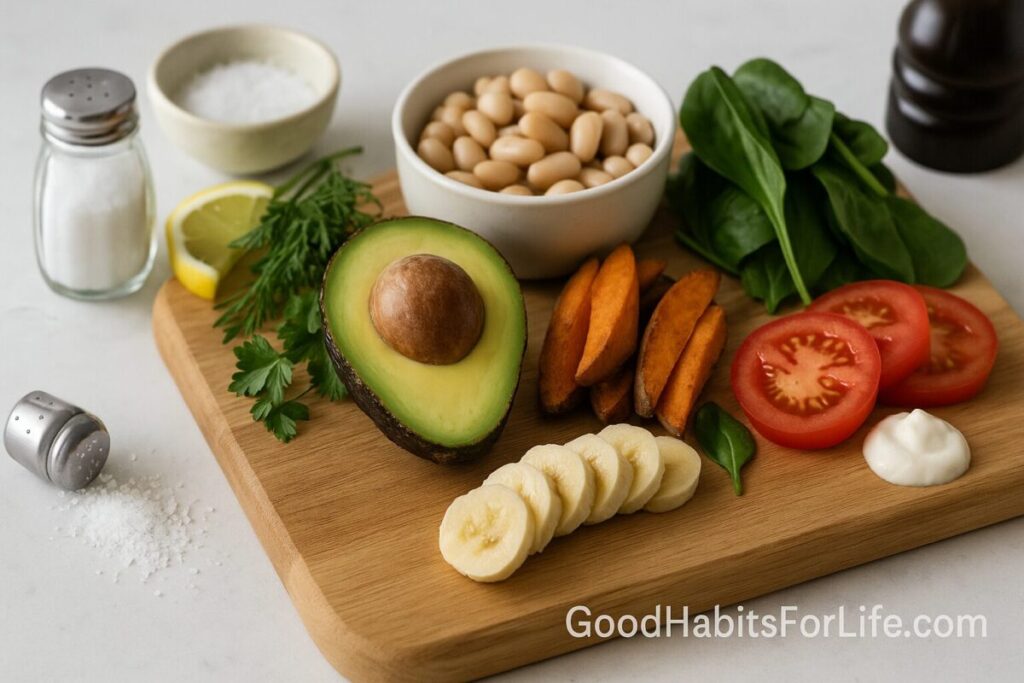
Salt & Potassium: Retrain Your Taste Buds
Salt & Potassium: Retrain Your Taste Buds
Table of Contents
🧭 What “salt vs potassium” really means
-
Sodium (Na) in salt (sodium chloride) raises blood pressure for many people. The World Health Organization recommends <2,000 mg/day sodium (≈5 g salt). World Health Organization
-
Potassium (K) helps your kidneys excrete sodium and relax blood vessel walls. WHO suggests ≥3,510 mg/day potassium for adults (from foods). NCBI
-
The sodium-to-potassium balance matters: a higher Na:K ratio is linked with higher cardiovascular and all-cause mortality in US adults. JAMA Network
-
DASH-Sodium evidence: Lowering sodium on top of a DASH-style diet drops systolic BP substantially—benefits appear across sexes, races, and BP statuses. New England Journal of MedicinePubMed
🧠 Why your taste buds adapt (fast!)
Your brain normalizes whatever level of salt you eat most. Reduce sodium intake and within weeks foods taste saltier at lower sodium levels.
-
In classic and modern studies, sustained sodium reduction increased perceived saltiness and acceptance of lower-salt foods (weeks to months). PubMedPMC
-
Gradual recipe reformulation also shifts liking without hurting enjoyment. PMC
✅ Quick Start: Do this today
-
Pick your daily caps:
-
Sodium: ≤2,000 mg (WHO); if you have hypertension, many orgs encourage targeting 1,500 mg. World Health Organizationwww.heart.org
-
Potassium: aim ≥3,510 mg from food unless your clinician says otherwise. NCBI
-
-
Swap 3 foods: choose unsalted nuts over salty snacks, plain yogurt over flavored, and no-salt-added beans over salted canned beans. (Check labels: mg sodium per serving.) CDC
-
Build one K-boosted plate: vegetables + beans/lentils + potatoes/sweet potatoes + a lean protein + herbs/acid (lemon, vinegar).
-
Taste-training sprinkle: set the salt shaker aside; finish with acid + umami (citrus, vinegar, tomatoes, mushrooms, Parmesan, nutritional yeast) before you reach for salt. MDPI
-
Consider a salt substitute (NaCl + KCl blend) if safe for you; avoid if you have kidney disease or are on potassium-raising meds unless cleared by your clinician. New England Journal of Medicine
🛠️ 30-60-90 Taste-Reset Plan
Days 1–30: Lower the baseline
-
Cut sodium by ~25–30%. Choose “no-salt-added/low-sodium” versions; rinse canned foods; cook 1–2 meals/day at home. CDC
-
Add 2 potassium-rich foods/meal: e.g., spinach, beet greens, beans, lentils, bananas, yogurt, potatoes, avocados. Evidence links higher potassium intake with lower BP and stroke risk. BMJ
-
Flavor training: use the AUA triangle—Acid, Umami, Aromatics—to replace saltiness perception.
Checkpoint (Day 30): Most people notice “regular” foods taste overly salty—your palate is shifting. PubMed
Days 31–60: Lock in the new normal
-
DASHify your week: 5–7 days of a DASH-style pattern with <2,000 mg sodium/day and plenty of fruits/veg, legumes, and low-fat dairy. Expect further BP lowering. New England Journal of Medicine
-
Strategic salt substitute (if appropriate): use a 70:30 NaCl:KCl blend at the table only; keep processed foods minimal. Large RCTs show fewer strokes and CV events with K-enriched salts. New England Journal of Medicine
Days 61–90: Personalize & future-proof
-
Identify trigger foods (soups, breads, sauces) and batch-prep low-sodium versions.
-
Restaurant rhythm: “sauce on the side, no extra salt” becomes your script.
-
Annual labs/med review if using salt substitutes or potassium supplements.
🍽️ Techniques & Flavor Frameworks
1) The “S+K” Plate Builder
-
Half plate: potassium-rich veg/fruit.
-
Quarter: legumes/tubers (beans, lentils, potatoes).
-
Quarter: lean protein.
-
Finishers: acid (lemon, vinegar), umami (tomato paste, mushrooms), aromatics (garlic, herbs), a scant pinch of salt or a K-enriched blend.
2) Umami for salt reduction
Monosodium glutamate isn’t required—naturally umami ingredients (tomatoes, mushrooms) enhance perceived savoriness so you can use less salt. MDPI
3) Label math (1-minute check)
-
Good: ≤140 mg/serving (“low sodium”).
-
Better: ≤5% Daily Value per serving.
-
Best for staples: “No salt added.” (US labeling guidance aligns with these terms.) U.S. Food and Drug Administration
4) Restaurant moves
-
Ask for no added salt in cooking; request lemon wedges and vinegar at the table; choose grilled, baked, steamed; avoid “smothered,” “cured,” “pickled.”
👥 Variations by audience
-
Students: stock “no-salt-added” beans, packets of brown rice/quinoa, frozen veg; carry a mini spice blend.
-
Parents: gradual swaps—half-salt stock cubes → low-sodium broth → homemade; kids accept changes better with flavor boosts, not lectures.
-
Professionals (desk workers): watch soups, sandwiches, and take-away—the top sodium sources; pack a K-rich side (fruit, yogurt, beans). CDC
-
Seniors: taste intensity can be lower with age—lean on aromatics/acid/umami and review meds before using K-based substitutes. Nature
⚠️ Mistakes & Myths to Avoid
-
Myth: “Food without lots of salt is bland.”
Reality: Palate adapts in weeks; flavor techniques restore satisfaction. PMC -
Mistake: Swapping to “sea salt” or “Himalayan salt.”
Fix: They’re still mostly sodium chloride; health impact ≈ table salt. -
Mistake: Relying on supplements first.
Fix: Increase dietary potassium (food sources) before pills; medical guidance needed if CKD or on RAAS-affecting drugs. BMJ -
Myth: “Only people with hypertension need to cut salt.”
Reality: Population sodium reduction and higher potassium improve BP and CV risk broadly. World Health Organization+1
💬 Real-Life Scripts
-
At a restaurant: “Could you cook this without added salt and leave sauces on the side? A couple of lemon wedges too, please.”
-
At the deli: “Which options are ≤300 mg sodium per serving? I’m watching my salt.”
-
At home: “Let’s try half the usual salt and finish with vinegar and herbs—tell me if you miss it.”
🧰 Tools, Apps & Resources
-
Food diary apps: Cronometer, MyFitnessPal (track sodium & potassium).
-
Label helpers: FDA’s Nutrition Facts explainer for sodium claims. U.S. Food and Drug Administration
-
Cookbooks/sites: DASH recipes; low-sodium cooking communities.
-
Grocery habit: keep a running list of no-salt-added staples you like.
🔑 Key Takeaways
-
Aim for <2,000 mg sodium and ≥3,510 mg potassium from food. World Health OrganizationNCBI
-
Your taste buds reset—stick with it for 2–8 weeks. PubMedPMC
-
DASH-style eating + sodium cuts delivers meaningful BP drops. New England Journal of Medicine
-
Consider potassium-enriched salt substitutes only if safe for you; they lower stroke/CV risk in trials. New England Journal of Medicine
-
Focus on whole, K-rich foods and smart flavoring—not just the salt shaker. BMJ
❓FAQs
1) How long until food tastes good with less salt?
Often 2–8 weeks. Studies show increased saltiness perception and acceptance after sustained sodium reduction. PubMedPMC
2) What are the top potassium-rich foods?
Beans, lentils, potatoes, leafy greens, tomatoes, bananas, yogurt, fish—prioritize food first. BMJ
3) Are salt substitutes safe?
K-enriched blends reduce stroke and major CV events in large trials, but check with your clinician if you have kidney disease or take medications that raise potassium. New England Journal of Medicine
4) Is “sea salt” healthier than table salt?
No—both are mainly sodium chloride; mineral differences don’t offset sodium effects.
5) I eat out a lot. Any quick wins?
Order grilled/steamed, ask for no added salt, sauces on the side, and add lemon/vinegar at the table; choose potassium-rich sides. CDC
6) How low should I go on sodium?
WHO sets <2,000 mg/day for adults; AHA’s ideal is 1,500 mg for most adults, especially with hypertension. World Health Organizationwww.heart.org
7) Does potassium really help with blood pressure?
Yes. Meta-analyses show higher potassium intake lowers BP and may reduce stroke risk. BMJ
8) What’s the big deal about the sodium-potassium ratio?
Higher Na:K ratios are associated with higher CVD and all-cause mortality in population studies. Aim to lower sodium and raise potassium. JAMA Network
📚 References
-
World Health Organization. Sodium reduction: Fact sheet (2025). https://www.who.int/news-room/fact-sheets/detail/sodium-reduction World Health Organization
-
WHO/NCBI Bookshelf. Guideline: Potassium intake for adults and children. https://www.ncbi.nlm.nih.gov/books/NBK132453/ NCBI
-
Sacks FM, et al. Effects on Blood Pressure of Reduced Dietary Sodium and the DASH Diet. NEJM, 2001. https://www.nejm.org/doi/full/10.1056/NEJM200101043440101 New England Journal of Medicine
-
Yang Q, et al. Sodium and Potassium Intake and Mortality Among US Adults. JAMA Intern Med, 2011. https://jamanetwork.com/journals/jamainternalmedicine/fullarticle/1106080 JAMA Network
-
Bertino M, et al. Long-term reduction in dietary sodium alters the taste of salt. 1982. https://pubmed.ncbi.nlm.nih.gov/7148734/ PubMed
-
Cattaneo C, et al. Restricted Mediterranean diet improves salty threshold (4-week). 2023. https://pmc.ncbi.nlm.nih.gov/articles/PMC10485378/ PMC
-
Aburto NJ, et al. Effect of increased potassium intake on cardiovascular risk factors and disease. BMJ, 2013. https://www.bmj.com/content/346/bmj.f1378 BMJ
-
Neal B, et al. Effect of Salt Substitution on Cardiovascular Events and Death. NEJM, 2021. https://www.nejm.org/doi/full/10.1056/NEJMoa2105675 New England Journal of Medicine
-
CDC. Tips for Reducing Sodium Intake. https://www.cdc.gov/salt/reduce-sodium-intake/index.html CDC
-
FDA. Sodium in Your Diet (label guide). https://www.fda.gov/food/nutrition-education-resources-materials/sodium-your-diet U.S. Food and Drug Administration
-
AHA. How Much Sodium Should I Eat Per Day? https://www.heart.org/en/healthy-living/healthy-eating/eat-smart/sodium/how-much-sodium-should-i-eat-per-day www.heart.org
-
Hoppu U, et al. Effect of Salt Reduction on Consumer Acceptance and Sensory Quality of Food. 2017. https://pmc.ncbi.nlm.nih.gov/articles/PMC5742771/ PMC
Disclaimer: This article is for general education only and is not a substitute for personalized medical advice; consult your clinician, especially if you have kidney disease or take medications that affect potassium.