
Protein Timing for Everyday Athletes: Zone 2 + NEAT (2025)
Protein Timing for Everyday Athletes: Zone 2 + NEAT (2025)
Table of Contents
🧭 What & Why: Protein Timing + Zone 2 & NEAT
Protein timing means distributing enough high-quality protein across the day to maximize muscle protein synthesis (MPS), support recovery, and maintain or build lean mass. Research shows daily total intake and per-meal dose matter most, with timing around exercise providing an additional nudge—especially if you train fasted or with long gaps between meals.
Zone 2 is easy-to-moderate steady cardio below your first lactate threshold (comfortable nose-breathing; talk test still easy; RPE ~3–4/10; ~65–75% HRmax for many). It trains your aerobic base and fat-oxidation machinery.
NEAT (Non-Exercise Activity Thermogenesis) is everything you do outside formal workouts (standing, steps, chores). It’s a powerful calorie-burn lever that also improves metabolic health.
Why pair them?
-
Zone 2 + high NEAT = strong fat-loss and metabolic benefits without crushing recovery.
-
Smart protein timing preserves muscle on a deficit, improves satiety, and speeds adaptation.
-
For busy “everyday athletes,” distributing protein across meals fits real life and makes consistency easy.
✅ Quick Start: Your 7-Step Protocol (Today)
-
Set your target: Start at 1.6 g/kg/day (e.g., 70 kg → ~112 g/day). In fat-loss phases or heavy training, use 1.8–2.2 g/kg/day.
-
Distribute it: Hit 0.3–0.4 g/kg per meal (≈25–40 g for most) 3–5×/day.
-
After Zone 2: If you trained fasted or >60 min, have 20–40 g complete protein within ~1–2 h post-session. If you ate <3 h before training, just take your next regular protein-anchored meal.
-
NEAT snacks: Pair steps with protein: a 15–25 g protein snack after a walk keeps distribution tight.
-
Evening option: 30–40 g slow-digesting protein (e.g., dairy/casein, paneer, Greek yogurt, tofu + soy milk) 60–90 min before bed if your daily total is short.
-
Hydrate + minerals: Especially if using Zone 2 in heat; add electrolytes with longer sessions.
-
Track for 7 days: Log meals and steps; adjust one lever at a time (total protein → distribution → timing).
🛠️ 30-60-90 Habit Plan
Days 1–30 — Foundation
-
Anchor every meal with protein first.
-
Template plate: ¼ plate protein, ½ veg/fruit, ¼ carbs + 1–2 tbsp healthy fats.
-
Zone 2: 2–4×/week, 30–50 min each.
-
NEAT: 7–9k+ steps/day (break up sitting each hour).
-
Distribution goal: Hit 0.3–0.4 g/kg at breakfast–lunch–post-training/dinner.
Checkpoints (weekly):
-
≥85% days hit protein target; ≥2 Zone 2 sessions; 7k+ daily steps average.
Days 31–60 — Optimization
-
Plug gaps: Add a pre-sleep 30–40 g protein if your daily total misses target.
-
Longer Zone 2 (optional): 1 ride/run 60–75 min weekly.
-
Protein timing tweak: If training early fasted, pre-pack a ready shake (25–30 g) or eat within 60 min after.
-
Micros: Ensure iron, calcium, B12 (vegetarians) via food or a clinician-guided supplement.
Checkpoints:
-
Daily protein variance <10%; RPE pacing consistent in Zone 2; steps at 8–10k.
Days 61–90 — Personalization
-
Fine-tune per-meal doses (e.g., 35–45 g at main meals if you’re larger/older).
-
Advance distribution: 4 feedings/day on training days (e.g., 35 g × 3 + 30 g pre-sleep).
-
Fat-loss block (optional): Small deficit (–250 to –400 kcal/day) while protein 1.8–2.2 g/kg + keep Zone 2/NEAT high.
-
Review biomarkers: Body measurements, performance (pace/HR), satiety, sleep.
🧠 Techniques & Frameworks that Work
-
Protein-First Rule: Start meals with your protein portion to curb overeating and hit targets.
-
0.3–0.4 g/kg Rule: Per meal/snack. Older adults may benefit from the upper end.
-
Talk Test for Zone 2: Full sentences = you’re in the right zone.
-
NEAT Triggers: After each meal, 5–10 min easy walk + “phone-only standing rule” for calls.
-
Batch-Cook Rotation: Rotate 3 breakfast, 3 lunch, 3 dinner protein anchors (e.g., eggs/Greek yogurt/tofu scramble; lentil bowls/chicken/paneer; fish/tempeh/soy-curd curry).
-
Vegetarian Protein Pairing: Combine legumes + grains (e.g., dal + rice, hummus + whole-wheat roti) to boost amino acid profile; add dairy/soy for leucine.
-
Pre-Sleep Strategy: Casein-rich foods (milk, paneer, Greek yogurt) or soy casein-like blends for overnight MPS.
👥 Audience Variations
Students & Busy Professionals
-
Keep ready-to-go 25–30 g options: Greek yogurt cups, paneer/cheese cubes, tofu wraps, tuna sachets, protein shakes.
-
Micro-work blocks: 25–40 min Zone 2 at lunch + brisk 5–10 min walks per 2–3 hours sitting.
Vegetarians / Plant-Forward
-
Target soy, dairy (if used), seitan, tofu/tempeh, lentils, chickpeas, milk/curd/paneer.
-
Per feeding: 30–45 g to ensure enough leucine; add soy/whey when convenient.
Seniors (50+)
-
Aim 1.2–1.8 g/kg/day; per meal 0.4–0.5 g/kg.
-
Zone 2 via incline walking or cycling; prioritize joint-friendly modes; keep NEAT high with frequent movement breaks.
Fat-Loss Emphasis
-
Use 1.8–2.2 g/kg/day, evenly split.
-
Keep Zone 2 volume steady and NEAT high; this preserves lean mass and makes the deficit more comfortable.
⚠️ Mistakes & Myths to Avoid
-
Myth: “You can only absorb 20–30 g protein at once.”
Truth: MPS plateaus around ~20–40 g for many, but larger meals still digest and support other needs; daily total and distribution are key. -
Myth: “You must slam protein within 30 minutes post-workout.”
Truth: The “window” is wider (~2 h+), but post-fasted sessions benefit from earlier intake. -
Mistake: Training Zone 2 while under-fuelled for long sessions.
Fix: If going >60–75 min, include carbs pre/during and keep your next protein meal on schedule. -
Mistake: Low NEAT on rest days.
Fix: Keep 7–10k steps and add 2–3 short movement snacks. -
Mistake: Skipping breakfast protein.
Fix: Make it automatic (eggs + toast; tofu bhurji + roti; Greek yogurt + fruit + nuts).
💬 Real-Life Examples & Copy-Paste Scripts
Example Day (70 kg person; target ~115–130 g protein)
-
07:00 Zone 2 (40 min, easy): Water + electrolytes.
-
08:00 Breakfast (30–35 g): 3 eggs + Greek yogurt + fruit.
-
12:30 Lunch (30–35 g): Lentil bowl (dal) + paneer + veg + rice.
-
16:30 NEAT snack walk (10 min) → Snack (20–25 g): Tofu wrap or whey/soy shake.
-
20:00 Dinner (30–35 g): Fish/tempeh + veg + potatoes.
-
21:30 Optional pre-sleep (30–40 g if short on daily total): Paneer/curd, or casein/soy shake.
Restaurant script:
“Can you add a double portion of paneer/chicken/tofu to that bowl? And a side of curd/Greek yogurt, please.”
Grocery script:
“I need five 25–30 g protein options I can eat in 2 minutes: Greek yogurt cups, milk cartons, tofu packs, cottage cheese/paneer cubes, protein sachets.”
🧰 Tools, Apps & Resources
-
Food logging: Cronometer, MyFitnessPal (track protein/meal distribution for 1–2 weeks, then go by habit).
-
Heart-rate tracking: Chest strap or reliable wrist HR to keep easy sessions truly in Zone 2.
-
Kitchen gear: Scale (accurate portions), insulated bottle (walks + hydration).
-
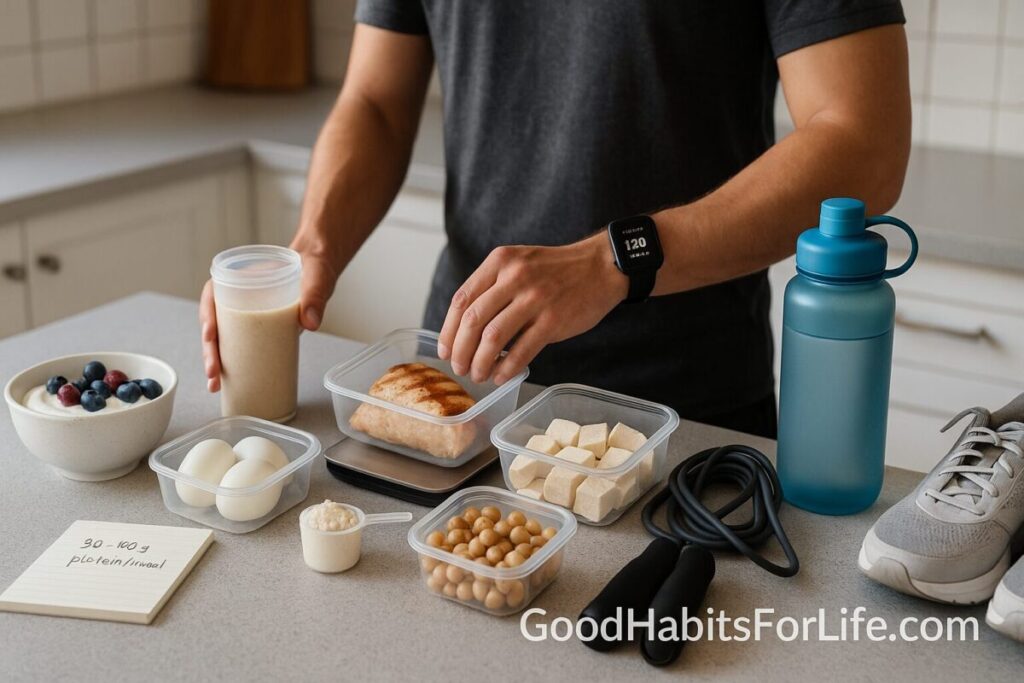
Prep aids: Pre-portioned protein packs (tofu/paneer/tempeh/eggs/yogurt), freezer proteins (fish fillets, edamame).
📌 Key Takeaways
-
Hit 1.6 g/kg/day (higher in cuts) and 0.3–0.4 g/kg per feeding.
-
Align a 20–40 g protein meal within ~2 h after Zone 2—earlier if fasted.
-
Keep NEAT high every day; pair movement with 15–25 g protein snacks.
-
Consider 30–40 g pre-sleep protein to close daily gaps.
-
Daily total and distribution drive results; timing is the refinement.
❓ FAQs
1) Do I need protein during Zone 2 workouts?
Not usually for sessions ≤60–75 min. Focus on water/electrolytes; take your next protein-anchored meal within a couple of hours.
2) What if I train first thing, fasted?
Have 20–30 g protein soon after (within ~60 min), then resume normal meal timing.
3) Is whey better than food?
Whey/soy are convenient complete proteins with fast digestion; whole-food proteins (eggs, dairy, tofu/tempeh, fish, paneer, legumes + grains) work equally well when dosed correctly.
4) How many protein feedings per day?
Most everyday athletes do best with 3–5 feedings of 0.3–0.4 g/kg each.
5) Do I need more protein when dieting?
Yes—1.8–2.2 g/kg/day helps preserve lean mass during calorie deficits.
6) Is pre-sleep protein necessary?
Not required, but 30–40 g slow-digesting protein can help if your daily total/distribution is low.
7) What exactly is Zone 2?
Easy-to-moderate effort below your first lactate/ventilatory threshold; you can talk comfortably. For many, that’s ~65–75% HRmax.
8) How many steps count as good NEAT?
Aim for 7–9k+ steps/day and break up sitting every hour.
📚 References
-
International Society of Sports Nutrition Position Stand: Protein and Exercise (JISSN, 2017). https://jissn.biomedcentral.com/articles/10.1186/s12970-017-0177-8
-
International Society of Sports Nutrition Position Stand: Nutrient Timing (JISSN, 2018). https://jissn.biomedcentral.com/articles/10.1186/s12970-018-0242-y
-
Morton RW et al. Protein supplementation and resistance training gains—meta-analysis (Br J Sports Med, 2018). https://bjsm.bmj.com/content/52/6/376
-
Areta JL et al. Timing and distribution of protein ingestion affect MPS (J Physiol, 2013). https://physoc.onlinelibrary.wiley.com/doi/full/10.1113/jphysiol.2012.244897
-
Moore DR et al. Dose–response of ingested protein after exercise (Am J Clin Nutr, 2009). https://pubmed.ncbi.nlm.nih.gov/19056590/
-
Trommelen J, van Loon LJC. Pre-sleep protein ingestion and overnight recovery (Nutrients, 2016). https://www.mdpi.com/2072-6643/8/12/763
-
Levine JA. Non-exercise activity thermogenesis (NEAT): environment & biology (AJP-Endocrinol Metab, 2004). https://journals.physiology.org/doi/full/10.1152/ajpendo.00562.2003
-
WHO. Guidelines on Physical Activity and Sedentary Behaviour (2020). https://www.who.int/publications/i/item/9789240015128
-
Achten J, Jeukendrup AE. Maximal fat oxidation and exercise intensity (Med Sci Sports Exerc, 2004). https://pubmed.ncbi.nlm.nih.gov/14707772/
-
Foster C et al. Talk test as marker of ventilatory threshold (J Cardiopulm Rehabil Prev, 2008). https://pubmed.ncbi.nlm.nih.gov/18799996/
Disclaimer: This article provides general fitness and nutrition information and is not a substitute for personalized medical advice; consult a qualified professional for your individual needs.