
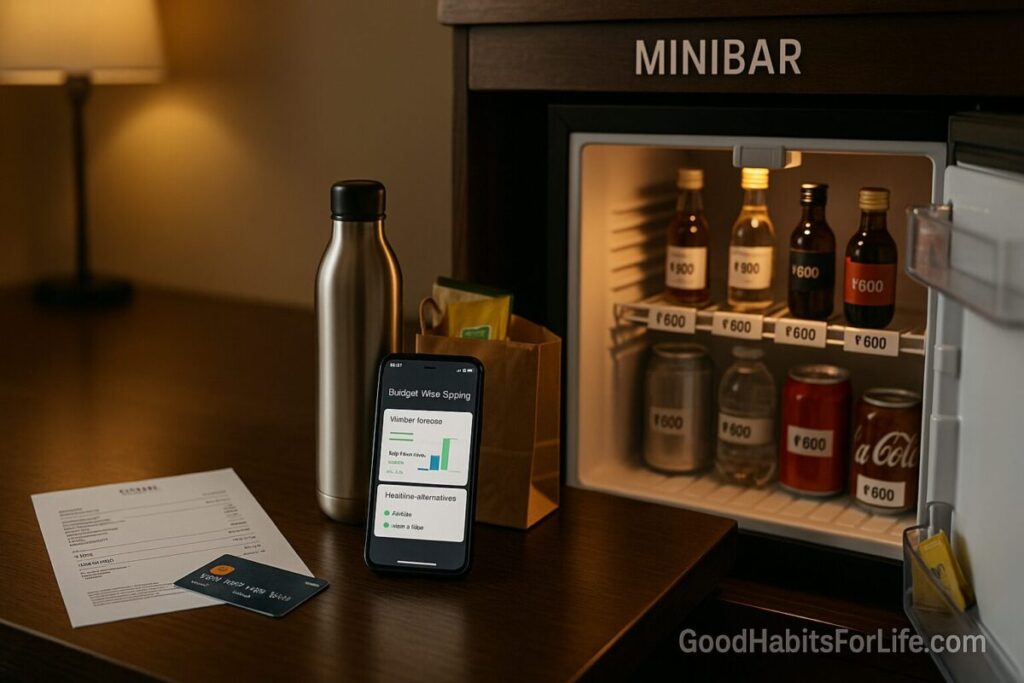
Hotel MiniBar Traps: BudgetWise Sipping: AI workflows (2025)
Hotel Minibar Traps: Budget-Wise Sipping with AI (2025)
Table of Contents
🧭 What This Guide Covers & Why It Matters
What: A practical system to avoid overpriced hotel minibar purchases, keep your budget on track, and make better drink choices—whether you’re on a work trip, family vacation, or solo adventure.
Why:
-
Financial: Minibars are designed for impulse convenience; prices are often many times higher than nearby stores. Small nightly splurges become large trip expenses, especially when not reimbursable.
-
Health & performance: Late-night sugary sodas or multiple alcoholic drinks reduce sleep quality and next-day focus.
-
Compliance: Work travelers must follow per diem or receipt rules; minibar charges are frequently declined by finance.
Outcome: You’ll build a Budget-Wise Sipping habit: plan ahead, stock smart alternatives, and use simple AI workflows to forecast needs, suggest healthier choices, and audit your bill.
✅ Quick Start: Do-This-Today Checklist
-
At booking: Choose rooms with a kettle or fridge. If the minibar is sensor-based, note it in your booking app.
-
On arrival:
-
Ask front desk to empty or lock the minibar (or provide a separate mini-fridge).
-
Confirm incidental hold amount placed on your card and how to avoid unexpected fees.
-
-
Stock up within 2 hours:
-
Buy 2–3 litres of water (or a reusable bottle + refill plan), electrolyte sachets, and 2–3 low/zero-alcohol options (or herbal teas).
-
Add protein snacks (nuts, yogurt, jerky) to prevent “I’ll just grab something from the minibar” moments.
-
-
Set rules: “No minibar purchases except medical/urgent needs.” Put it on a sticky note by the TV or set a phone reminder.
-
Audit nightly: Photograph receipts; check your folio in the hotel app; dispute errors early.
-
For work trips: Check your policy: per diem vs. itemized. Tag minibar as non-reimbursable unless allowed.
🧠 30-60-90 Budget-Wise Sipping Plan
Goal: Eliminate surprise minibar spending while maintaining hydration, comfort, and professionalism.
Days 1–30 (Foundation)
-
Rule: Zero minibar use.
-
Routine: Arrival stock-up + bedside hydration set (1 bottle + electrolytes).
-
Swap: Replace evening drinks with sparkling water + citrus or herbal tea.
-
Track: Note daily beverage spend and energy level (1–5).
-
Win: 80% of days with no minibar spend, morning energy ≥3.
Days 31–60 (Optimization)
-
Pre-plan: Use an AI packing/drinks checklist (template below).
-
Upgrade: Try alcohol-free beers or 0.0% cocktails for social evenings.
-
Finance: For work travel, align with per diem; move personal treats to personal card.
-
Win: Cut average trip beverage costs by 30–50% vs. month one.
Days 61–90 (Maintenance)
-
Automation:
-
Calendar prompt 24 hours pre-check-in: “Order water/snacks near hotel.”
-
Weekly template to review folios and dispute charges.
-
-
Health: Cap alcoholic drinks to low-risk levels; add two alcohol-free nights/week on trips.
-
Win: No surprise charges in three consecutive stays; consistent morning energy ≥4.
🛠️ Techniques & Frameworks (with AI Workflows)
1) The “Hydrate First” Protocol
-
Before room entry: Buy 1–2 litres of water or identify lobby water stations.
-
Room setup: Place a filled bottle at bedside; make tea options visible.
-
AI Workflow (Prompt):
-
“You are my travel hydration coach. I’m staying 3 nights in [city, hotel]. Create a simple hydration plan with total litres/day, convenient refill points nearby, and an evening routine that reduces cravings for sugary/mini-bar drinks.”
-
2) The “Two-Shelf” System
-
Top shelf (visible): Zero- or low-sugar options, herbal teas, protein snacks.
-
Bottom shelf (hidden): Any treats you choose to buy—out of immediate sight.
-
AI Workflow (Prompt):
-
“List 10 hotel-room snack and drink swaps under ₹150 (or $2) each, available at convenience stores near [hotel address]. Prioritize low sugar and 0.0% options.”
-
3) Expense-Safe Ordering
-
Per diem aware: Charge groceries to your personal card if your employer disallows minibar/grocery reimbursements.
-
Invoice capture: Photograph or download invoices, store in a trip-named folder.
-
AI Workflow (Prompt):
-
“Summarize this hotel invoice line by line and flag potential non-reimbursable items (minibar, room service fees, service charges). Output a CSV with date | item | amount | reimbursable? | reason.”
-
4) Night-Cap Alternatives
-
Sleep-friendly options: Chamomile, lemon-ginger, warm milk, 0.0% beer.
-
Micro-ritual: 10-minute wind-down: stretch, tea, 3 gratitude notes.
-
AI Workflow (Prompt):
-
“Create a 10-minute hotel bedtime ritual that supports early meetings. Include a caffeine cut-off time, a warm non-alcoholic drink, and a 3-step phone-free routine.”
-
5) Bill-Audit Guardrail
-
Check daily: Many hotels can show your running folio in the app or at the desk.
-
Compare: Match receipts/photos against folio; flag sensor errors (when items are moved).
-
AI Workflow (Prompt):
-
“Here are my nightly folio entries (paste text). Find minibar or duplicate charges and draft a polite 3-line dispute message for the front desk.”
-
📚 Audience Variations
Work Travelers / Professionals
-
Policy first: If you’re on per diem, minibar is usually personal—not reimbursable.
-
Meeting days: Prefer 0.0% options the night before early presentations.
-
Documentation: Keep digital receipts; submit within 48 hours of checkout.
Families
-
Kid-proofing: Request the minibar locked/emptied. Use it as a milk/yogurt fridge.
-
Room ritual: Family hydration check (everyone shows their water bottle before bed).
-
Budget lesson: Let kids compare store vs. minibar prices and choose the better value.
Students & Solo Travelers
-
Snack kits: Single-serve nuts, instant oats, green tea.
-
Buddy system: Share bulk buys with a travel partner; split costs in a notes app.
⚠️ Mistakes & Myths to Avoid
-
“It’s only one drink.” Repeated across several nights, it adds up quickly.
-
“Sensors don’t matter.” Some minibars auto-charge when items are moved; avoid storing personal items inside unless the hotel confirms it’s okay.
-
“Work will reimburse everything.” Many policies exclude minibar alcohol and snacks.
-
Skipping hydration. Dehydration mimics hunger and triggers late-night raids.
-
Not checking the folio. Dispute errors before checkout to save back-and-forth later.
🗣️ Real-Life Scripts & Examples
At Check-In (empty/lock minibar):
“Could you please empty or lock the minibar? I won’t be using it and would love to avoid any accidental charges. If possible, may I have a separate mini-fridge for my own items?”
Clarifying incidental holds:
“What’s the incidental hold on my card, and when is it released if there are no charges?”
Disputing a sensor charge:
“I noticed a minibar charge, but I didn’t consume anything. The minibar is sensor-based and an item may have shifted. Could you kindly remove the charge?”
Work-policy clarity (to manager/finance):
“Confirming our travel policy: minibar items are generally non-reimbursable, correct? I’ll keep beverage purchases to per diem and submit itemized receipts.”
Room-service alternative (late night):
“Is there a 24/7 water refill or vending machine on my floor?”
🧰 Tools, Apps & Resources
-
Maps & delivery: Google Maps, food-delivery apps for water/snacks upon arrival.
-
Note & receipt capture: Google Keep / Apple Notes / Notion templates for trip folios.
-
Sleep & wind-down: Calm, Headspace, or your phone’s built-in bedtime schedule.
-
AI helpers: Use your preferred AI assistant to run the workflows above (packing list, hydration plan, bill audit).
🧩 Key Takeaways
-
Decide once: Make “no minibar” your default; request an empty or locked unit at check-in.
-
Stock smart: Hydration + simple snacks remove the temptation.
-
Plan with AI: Pre-trip checklists, nearby store maps, and nightly bill audits keep you compliant and calm.
-
Know your policy: Per diem vs. itemized rules matter; many companies won’t reimburse minibar items.
-
Audit early: Catch sensor errors and surprise charges before checkout.
-
Protect your health: Prefer low- or no-alcohol options to preserve sleep and next-day performance.
❓ FAQs
1) Are minibar charges ever reimbursable on work trips?
Sometimes, but many policies exclude alcohol and snacks. Check your company’s travel policy and per diem rules before you go.
2) What if the minibar is sensor-based and I need fridge space?
Ask the hotel to empty/lock it or provide a separate mini-fridge. If you must use it, don’t move items you won’t buy.
3) How do I avoid unexpected card holds at hotels?
Ask at check-in about the incidental hold amount and release timing. Use a credit card instead of a debit card to avoid tying up cash balances.
4) Best healthy alternatives to minibar drinks at night?
Sparkling water + citrus, herbal teas, 0.0% beer, or warm milk. Pair with a small protein snack.
5) I was charged incorrectly—what’s the fastest fix?
Visit the front desk with your folio + receipts immediately. If unresolved, email the hotel with dates, amounts, and the specific item to remove.
6) Is one or two alcoholic drinks okay during a trip?
For adults who choose to drink, stick within low-risk guidelines and avoid alcohol before important early-morning commitments.
7) How much water should I aim for when traveling?
A simple target is ~2–3 L/day (adjust for heat/activity). Keep a refillable bottle visible in the room.
8) What if there’s no nearby store?
Use a delivery app to order water, tea, and snacks to the hotel lobby; pick them up within an hour of check-in.
9) Will hotels remove minibar charges after checkout?
They can, but it’s easier to resolve before you leave. Always review your folio nightly.
10) Do zero-alcohol beers help?
They can offer the ritual without alcohol’s downsides. Check labels for sugar; keep portions reasonable.
📚 References
-
U.S. General Services Administration (GSA). Per Diem Rates. https://www.gsa.gov/travel/plan-book/per-diem-rates
-
U.S. Internal Revenue Service (IRS). Publication 463: Travel, Gift, and Car Expenses. https://www.irs.gov/publications/p463
-
HM Revenue & Customs (UK). Expenses and benefits: travel and subsistence. https://www.gov.uk/expenses-and-benefits-travel-and-subsistence
-
Consumer Financial Protection Bureau (CFPB). Why do gas stations, hotels, and car rentals place holds on my card? https://www.consumerfinance.gov/ask-cfpb/why-do-gas-stations-hotels-and-car-rental-companies-place-holds-on-my-credit-or-debit-card-en-1265/
-
Centers for Disease Control and Prevention (CDC). Alcohol and Public Health: Drinking in Moderation. https://www.cdc.gov/alcohol/fact-sheets/moderate-drinking.htm
-
National Institute on Alcohol Abuse and Alcoholism (NIAAA). What Is a Standard Drink? https://www.niaaa.nih.gov/alcohols-effects-health/overview-alcohol-consumption/what-standard-drink
-
World Health Organization (WHO). Alcohol – Key facts. https://www.who.int/news-room/fact-sheets/detail/alcohol
-
NHS (UK). Alcohol advice and low-risk drinking guidelines. https://www.nhs.uk/live-well/alcohol-advice/
⚖️ Disclaimer
This guide includes general information on budgeting and low-risk alcohol use; it is not medical, financial, or legal advice. If you have health conditions, take medications, or have workplace policy questions, consult a qualified professional.