
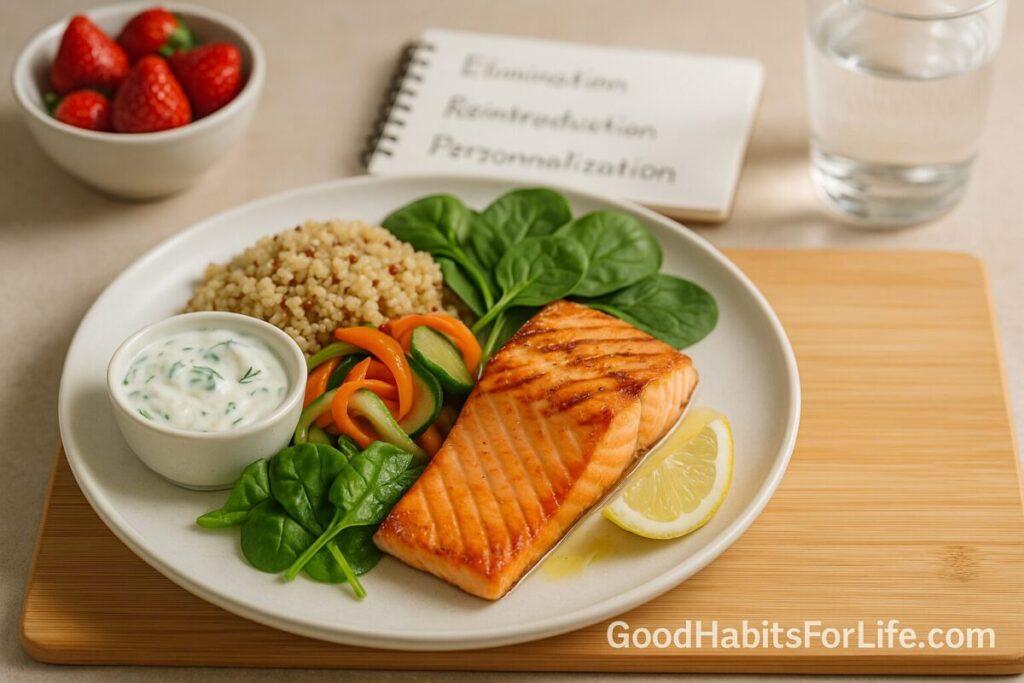
LowFODMAP Overview: Gentle on the Gut: Protein-Forward Plan (2025)
Low FODMAP Diet: Gentle, Protein-Forward Plan (2025)
Table of Contents
🧭 What is the Low FODMAP Diet?
Low FODMAP limits certain short-chain carbohydrates—Fermentable Oligosaccharides, Disaccharides, Monosaccharides and Polyols—that can pull water into the gut and are rapidly fermented by bacteria, producing gas and symptoms like pain, bloating, and altered bowel habits in many people with IBS.
Three Phases:
-
Elimination (2–6 weeks): Temporarily reduce high-FODMAP foods to calm symptoms.
-
Reintroduction (6–8+ weeks): Systematically “challenge” one FODMAP group at a time to discover personal tolerances.
-
Personalization (long-term): Build the widest diet you comfortably can, keeping symptom control and nutrition in balance.
Why not forever? Diversity is good for your microbiome and nutrients. The goal is to learn your triggers, not restrict indefinitely.
✅ Why a Protein-Forward Approach Helps
Protein-forward means you anchor each meal/snack with a meaningful protein source while keeping FODMAPs in check.
Benefits:
-
Satiety & appetite control: Protein helps you feel full and may reduce grazing that can aggravate symptoms.
-
Stable meals during elimination: Many common proteins are naturally low FODMAP.
-
Muscle & recovery: Supports activity and healthy ageing.
Targets:
-
Aim for ~1.0–1.2 g protein/kg/day (example: 70 kg person → 70–84 g/day), split into 20–35 g per meal. Adjust for age, activity, or clinical advice.
Low-FODMAP, Protein-Rich Staples:
-
Animal: Eggs, chicken, turkey, fish, shellfish, beef, pork; lactose-free yogurt/kefir, hard cheeses.
-
Plant: Firm tofu, tempeh (check portion), edamame (small portions), quinoa, peanut butter, chia, pumpkin seeds.
-
Protein powders: Whey isolate (lactose-free), soy isolate, pea/rice blends—choose unsweetened or low-FODMAP certified options.
🛠️ Quick Start: Do This in the Next 24 Hours
-
Download a trusted app (Monash FODMAP).
-
Pick 3 breakfasts, 3 lunches, 3 dinners from the menus below; shop only those.
-
Protein at every meal: Pre-cook chicken breasts/tofu and boil eggs.
-
Swap high-FODMAP triggers:
-
Garlic/onion → garlic-infused oil, green tops of spring onions/chives.
-
Regular milk → lactose-free or plant milks (almond, lactose-free soy).
-
Wheat bread → sourdough spelt (limited) or gluten-free.
-
-
Start a log: Note foods, portions, timing, symptoms (0–10 scale).
-
Set a timeline: 2–4 weeks elimination, then schedule reintros.
🧪 7-Day Gentle Starter Menu (Protein-Forward)
Portions are guides; tailor to appetite. Use garlic-infused oil instead of garlic. Serve veg in low-FODMAP portions (Monash list).
Day 1
-
Breakfast: 2 eggs + sautéed spinach + 2 rice cakes with peanut butter.
-
Lunch: Grilled chicken salad (lettuce, cucumber, tomato, olives, feta), olive oil/lemon.
-
Dinner: Baked salmon, roasted carrots & potatoes; side quinoa (¾ cup cooked).
-
Snack: Lactose-free Greek yogurt with strawberries.
Day 2
-
Breakfast: Overnight oats (gf oats, lactose-free milk, chia) + blueberries.
-
Lunch: Turkey lettuce wraps (carrot, cucumber, mayo, mustard).
-
Dinner: Firm tofu stir-fry (bok choy, bell pepper) over rice.
-
Snack: Orange + handful pumpkin seeds.
Day 3
-
Breakfast: Protein smoothie (whey isolate, lactose-free milk, banana ≤½ medium, cacao).
-
Lunch: Tuna-quinoa bowl (quinoa, tuna, cucumber, tomato, olives).
-
Dinner: Beef steak, green beans, roasted sweet potato (small portion).
-
Snack: Rice crackers + cheddar.
Day 4
-
Breakfast: Scrambled eggs with chives; gf toast; kiwi.
-
Lunch: Tempeh (portion-checked) + roasted veg bowl; tahini-lemon dressing.
-
Dinner: Baked chicken thighs, polenta, zucchini.
-
Snack: Lactose-free kefir.
Day 5
-
Breakfast: Chia pudding (lactose-free milk), raspberries.
-
Lunch: Shrimp rice-noodle salad (lime, fish sauce, peanuts—portion-check).
-
Dinner: Pork tenderloin, mashed potatoes (lactose-free milk), carrots.
-
Snack: Hard-boiled egg.
Day 6
-
Breakfast: Omelet with cheddar + tomatoes; gf sourdough.
-
Lunch: Sardines on gf crackers, cucumber, lemon.
-
Dinner: Turkey meatballs in tomato-basil sauce (no onion/garlic; use infused oil) over polenta.
-
Snack: Banana (≤½ medium) + peanut butter.
Day 7
-
Breakfast: Protein pancakes (gf oats, egg, lactose-free milk); maple drizzle.
-
Lunch: Chicken & rice soup (carrots, celery tops, chives).
-
Dinner: Grilled paneer (portion-check) or halloumi; quinoa-herb salad.
-
Snack: Dark chocolate (small) + strawberries.
Handy Swap Table
| High-FODMAP Favorite | Low-FODMAP, Protein-Friendly Swap |
|---|---|
| Chickpeas/beans | Firm tofu, tempeh (portion-checked), edamame (small) |
| Wheat pasta | Rice noodles, corn/quinoa pasta |
| Milk/yogurt | Lactose-free dairy, lactose-free kefir |
| Onion/garlic | Garlic-infused oil, chives, green onion tops |
| Granola bars (inulin/honey) | Oat-peanut butter balls with maple syrup |
🧠 Techniques & Frameworks that Work
1) The 3-Phase Method (with protein anchors):
-
Elimination: Build meals around protein + low-FODMAP grains + allowed veg/fruit.
-
Reintroduction: Challenge one FODMAP family per week (e.g., lactose → fructans → GOS → polyols), increase portion across 3 days, watch symptoms for 2–3 days.
-
Personalize: Keep tolerated foods, re-test borderline items later.
2) The Plate Template (½–¼–¼):
-
½ plate low-FODMAP veg; ¼ plate protein; ¼ plate low-FODMAP grains/starches; add healthy fats.
3) Symptom + Portion Log:
Track food, exact portion, prep method, and stress/sleep—IBS is multifactorial.
4) Flavor Without FODMAPs:
Infused oils, herbs (basil, thyme, rosemary), acids (lemon, vinegar), umami (tomato paste, parmesan).
5) Fiber Pace-Setter:
Keep soluble fiber (e.g., oats, chia, psyllium) steady; increase slowly with fluids.
👥 Audience Variations
Students: Batch-cook proteins (eggs, chicken, tofu); keep gf oats, rice, canned tuna; microwave-friendly frozen veg.
Parents: Cook “base” meals (protein + starch) and add family-specific sauces at the table; label portions for reintros.
Busy Professionals: Default lunch = protein bowl (rice/quinoa + veg + protein); use garlic-infused oil mini bottle.
Seniors: Prioritize 1.0–1.2 g/kg/day protein and hydration; consider lactose-free dairy for calcium; check meds for polyol sweeteners.
⚠️ Mistakes & Myths to Avoid
-
Staying in elimination forever. Move to reintroduction within 2–6 weeks if symptoms improve.
-
Cutting all fiber. Choose tolerated soluble fibers; avoid big, sudden changes.
-
Assuming “gluten-free” = low-FODMAP. Some gf products contain inulin/chicory/honey/sorbitol.
-
Ignoring portions. Many foods are low-FODMAP at small serves but high at larger ones.
-
Skipping protein. Leads to hunger swings and overeating trigger foods.
-
DIYing complex cases. If you have celiac disease, IBD, eating disorder history, pregnancy, diabetes, underweight, get dietitian guidance first.
💬 Real-Life Examples & Scripts
Eating Out:
-
Script: “Could I have grilled chicken with plain rice and salad—no onion or garlic? Olive oil and lemon on the side, please.”
-
Cuisine tips:
-
Indian: Tandoori meats; plain rice; ask to skip onion/garlic (use hing-free spices); coconut-based curries vary—check portion.
-
Japanese: Sushi with plain fish/rice, tamari; miso soup varies.
-
Mexican: Corn tortillas; grilled fish/chicken; pico de gallo without onion; lactose-free cheese if needed.
-
Reintroduction Week Example (Fructans—wheat):
-
Day 1: ¼ slice wheat bread → log.
-
Day 2: ½ slice → log.
-
Day 3: 1 slice → log.
-
Days 4–5: Hold steady; observe.
🧩 Tools, Apps & Resources
-
Monash FODMAP App: Gold-standard food database and portions.
-
Symptom tracker: Any notes app or spreadsheets; set 0–10 scale.
-
Nutrition tracker: Helps check protein/fiber/calcium (e.g., Cronometer, MyFitnessPal—verify ingredients).
-
Low-FODMAP cookbooks & blogs: Use those citing Monash testing.
-
Kitchen helpers: Garlic-infused oil, rice cooker, instant pot, lunchbox containers.
Label Watch List:
Inulin/chicory root, high-fructose corn syrup, honey, sorbitol/mannitol/xylitol, “natural flavors” (ask vendor if unclear), large amounts of cashews/pistachios.
🔑 Key Takeaways
-
The low FODMAP diet is a temporary, structured approach mainly for IBS.
-
A protein-forward plate calms meals, improves satiety, and simplifies choices.
-
Phased reintroduction is essential to expand your diet and support the microbiome.
-
Track portions + symptoms; get dietitian support for best results.
-
Keep fiber, fluids, sleep, and stress care in view—IBS has many drivers.
❓ FAQs
1) Is the low FODMAP diet suitable for everyone with tummy troubles?
No. It’s primarily for IBS. If you suspect celiac, food allergy, or IBD, see a clinician first.
2) How long before I feel better?
Many notice improvements within 1–3 weeks of elimination. If not, reassess with a dietitian.
3) Do I have to avoid garlic and onion forever?
Not necessarily. Many can tolerate small amounts or reintroduce with time; use garlic-infused oil meanwhile.
4) Can I be vegetarian or vegan on low FODMAP?
Yes—with planning: firm tofu, tempeh (portions), quinoa, seeds, lactose-free dairy (if not vegan), and suitable protein powders.
5) Is gluten the issue?
Low FODMAP isn’t a gluten-free diet. Fructans in wheat often drive symptoms, not the gluten protein.
6) What about coffee and alcohol?
Caffeine and alcohol may irritate some people—test tolerance; keep portions modest and avoid sweet mixers.
7) Do probiotics help?
Some people benefit, but strains matter and effects vary. Trial one product at a time for 4 weeks; track results.
8) How much protein is “protein-forward”?
Roughly 1.0–1.2 g/kg/day for most adults during elimination unless your clinician advises otherwise.
9) Are sweeteners safe?
Avoid polyols (sorbitol, mannitol, xylitol) during elimination; small amounts of sucrose or maple syrup are typically okay.
10) What if elimination doesn’t help?
Re-evaluate diagnosis, stress, sleep, fiber type, and non-FODMAP triggers (fatty/spicy meals). Seek a GI and dietitian review.
📚 References
-
Monash University. The Low FODMAP Diet & Food Guide (app and resources). https://www.monashfodmap.com
-
American College of Gastroenterology (ACG). Management of Irritable Bowel Syndrome Guideline (2021/2022). https://gi.org
-
National Institute for Health and Care Excellence (NICE). Irritable bowel syndrome in adults: diagnosis and management. https://www.nice.org.uk
-
NIDDK (NIH). Symptoms & Causes of Irritable Bowel Syndrome. https://www.niddk.nih.gov
-
British Dietetic Association. Food Fact Sheet: Irritable Bowel Syndrome & FODMAPs. https://www.bda.uk.com
-
Harvard T.H. Chan School of Public Health. Protein: Moving toward a plant-forward plate. https://www.hsph.harvard.edu
-
Cochrane Library. Low FODMAP diet for irritable bowel syndrome: systematic reviews. https://www.cochranelibrary.com
-
National Academies (US/Canada). Dietary Reference Intakes for Protein & Amino Acids. https://www.nationalacademies.org
Disclaimer
This article is general education, not medical advice; consult your healthcare professional (especially if pregnant, underweight, or managing medical conditions) before dietary changes.