
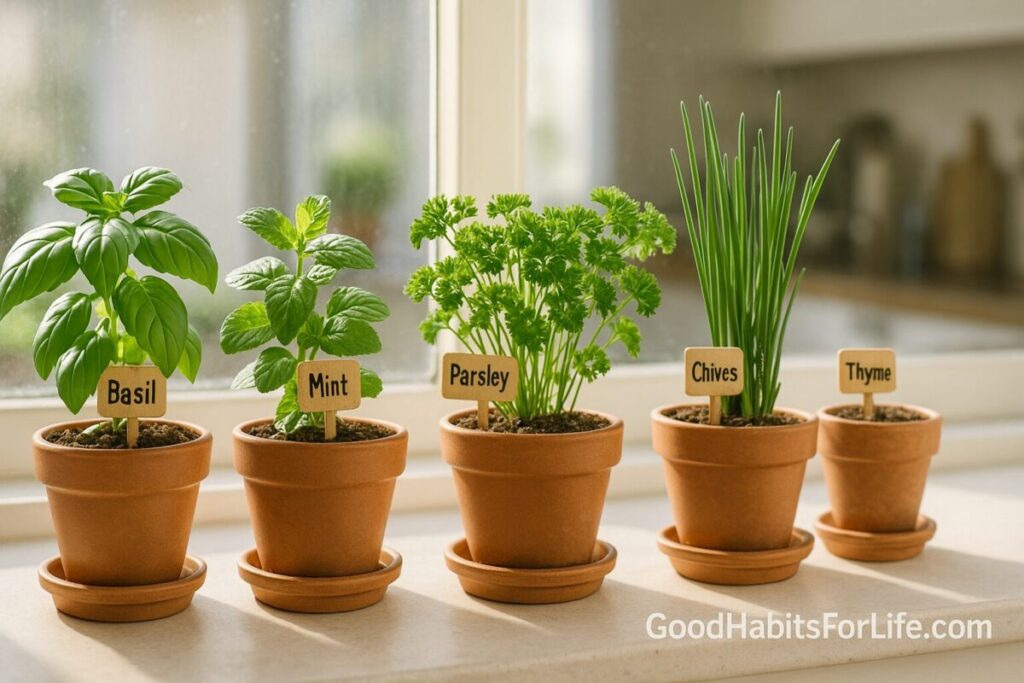
Kitchen Herbs at Home: Start with 5 Easy Pots: Protein-Forward Plan (2025)
Grow Kitchen Herbs at Home: 5 Easy Pots (2025)
Table of Contents
🧭 What & Why
Kitchen herbs are compact, fast-growing plants that deliver outsized flavor and aroma. Growing them at home saves money, trims food waste (you harvest only what you need), and helps shift recipes away from sodium because fresh herbs add brightness, bitterness, and umami without salt. The American Heart Association encourages using herbs and spices to reduce sodium and keep blood pressure in check. www.heart.org+1
Most common culinary herbs thrive indoors with strong light, well-drained pots, and consistent—but not constant—moisture. Plan on giving herbs about six hours (often more) of direct, strong light or supplementing with LEDs; choose containers with drainage holes; and water when the top layer of mix dries. Penn State ExtensionYard and GardenUniversity of Minnesota Extension
✅ The 5-Pot Starter Set (with care table)
These five herbs cover most cuisines and are forgiving in containers:
-
Basil – Mediterranean dishes, pesto, salads
-
Mint – Chutneys, raita, tea, fruit, Vietnamese bowls
-
Cilantro (Coriander leaves) – Salsas, curries, tacos, garnishes
-
Chives – Eggs, potatoes, dips
-
Thyme – Roasts, soups, beans
Care at a glance
| Herb | Pot size | Light target | Watering | Harvest notes |
|---|---|---|---|---|
| Basil | 15–20 cm pot | 6–8 h strong light | Keep evenly moist; don’t let wilt | Pinch tops weekly for bushy growth |
| Mint | 15–20 cm pot (own pot—spreads) | 4–6+ h; tolerates less | Moist but not soggy | Cut stems above node; regrows fast |
| Cilantro | 15–18 cm pot, cool spot | 4–6 h; bolts in heat | Even moisture | Sow every 3–4 weeks for steady supply |
| Chives | 12–15 cm pot | 6–8 h | Let top 1–2 cm dry between water | Cut 2–3 cm above soil |
| Thyme | 12–15 cm pot | 6–8 h | Let top dry; dislikes wet feet | Snip tips; woody stems okay |
Most herbs want ~6 hours of direct light indoors; containers dry faster than beds; and pots must drain well. Supplement with LEDs if windows are weak. Penn State ExtensionYard and GardenUniversity of Minnesota Extension
Fertilizer? Begin light, regular feeding 2–6 weeks after planting (nutrients leach with frequent watering). University of Minnesota Extension
🛠️ Quick Start: Do This Today
-
Pick your spot & light. South- or west-facing window with strong sun; otherwise, set a basic LED grow light 15–30 cm above plants for 14–16 h/day. Penn State Extension
-
Containers & mix. Use pots with drainage and a peat-free or standard indoor potting mix (not garden soil). Place on saucers. University of Minnesota Extension
-
Plant or transplant. Start with healthy seedlings to get quick harvests.
-
Water smart. Water when the top 1–2 cm is dry; never leave pots in standing water. University of Minnesota Extension
-
Feed lightly. Begin a dilute, all-purpose liquid feed every 2–3 weeks after week 2–6. University of Minnesota Extension
-
Harvest early & often. Pinch basil tips; snip chives; clip thyme sprigs; cut cilantro leaves frequently to delay bolting.
-
Food safety. Rinse herbs under plain running water just before eating; no soap or “produce wash.” Store fresh herbs refrigerated at ≤4 °C (40 °F). U.S. Food and Drug Administration+1
🧠 Protein-Forward Plan (Flavor > Salt)
Fresh herbs make lean proteins satisfying without relying on sodium. Aim for protein at most meals—many adults do well around 0.8–1.0 g/kg/day, and older adults may benefit from ~1.0 g/kg to maintain muscle—paired with generous herbs, acids, and aromatics. Harvard Health+1
Plug-and-play rubs, marinades, dressings
Use these baselines per 450 g protein (chicken thighs, fish, paneer, tofu, beans):
-
Basil-Garlic Lemon Marinade
2 Tbsp chopped basil · 2 Tbsp lemon juice · 1 Tbsp olive oil · 1 grated garlic clove · pepper. -
Mint-Cilantro Chutney Yogurt (grill or dollop)
¼ cup chopped mint · ¼ cup chopped cilantro · ½ cup plain yogurt · 1 tsp grated ginger · lime juice. -
Thyme-Mustard Sheet-Pan Rub
1 Tbsp chopped thyme · 1 Tbsp Dijon · 1 Tbsp olive oil · 1 tsp honey · pepper. -
Chive-Pepper Omelet Sprinkle
2 Tbsp snipped chives + pepper on 3-egg omelet. -
Green Herb Chimichurri
¼ cup parsley/cilantro mix · 1 Tbsp red wine vinegar · 1 Tbsp olive oil · chili flakes. -
Herbed Bean Salad
2 cups chickpeas · ¼ cup chopped herbs (any) · lemon · olive oil · onion · pepper (rinse canned beans to cut sodium). www.heart.org -
Thyme-Garlic Pan Sauce
1 tsp thyme · splash stock · 1 tsp vinegar · reduce; finish with a knob of butter.
Pairings
-
Eggs, Greek yogurt dips, cottage cheese bowls
-
Fish/seafood, chicken, tofu/tempeh
-
Lentils/chickpeas/kidney beans (rinsed) and whole grains
📅 30-60-90 Day Herb Habit Plan
Days 1–30 (Setup & First Harvests)
-
Week 1: Pots + mix + seedlings + light; label plants.
-
Week 2: Begin light feeding; start a harvest log. University of Minnesota Extension
-
Week 3: First pinches of basil/chives; try the basil-lemon marinade.
-
Week 4: Freeze extra herbs in small packets or oil cubes for later. Home Food Preservation
Days 31–60 (Rhythm & Re-sow)
-
Re-sow a fresh cilantro pot (it matures fast, bolts sooner).
-
Try two new proteins with herb marinades this month.
-
Review light: raise or lower LEDs to keep foliage compact. Penn State Extension
Days 61–90 (Scale & Share)
-
Add a sixth pot (parsley or rosemary) if care feels easy.
-
Batch-make two dressings per week; log sodium swaps (e.g., broth, beans, sauces). www.heart.org
-
Gift a cutting or a jar of chimichurri to keep motivation high.
Weekly care checklist (10 minutes)
☐ Check soil moisture · ☐ Empty saucers · ☐ Pinch/prune · ☐ Wipe leaves/dust · ☐ Feed if due · ☐ Inspect for pests/disease (e.g., basil downy mildew—improve airflow, avoid leaf-wetting). University of Minnesota Extension
🛠️ Techniques & Frameworks
Light Audit (3 steps)
-
Observe your brightest window for 1 day.
-
If <6 hours of strong light, add LEDs on a timer (14–16 h).
-
Rotate pots weekly for even growth. Penn State Extension
Water & Drainage
-
Water thoroughly, then let excess drain; never park pots in water. Containers dry faster—check daily in hot seasons. University of Minnesota Extension
Fertilizing Micro-Dose
-
Start 2–6 weeks after planting; give a dilute all-purpose feed every 2–3 weeks. University of Minnesota Extension
Harvest Rules
-
Take no more than ⅓ of a plant at once; always cut above a leaf node to encourage branching.
Preservation
-
Freeze extras (whole or chopped) in small packets or oil cubes; texture softens after thawing—best for cooking. Home Food Preservation
Food Safety & Storage
-
Refrigerate fresh herbs at ≤4 °C (40 °F); rinse under running water just before use. U.S. Food and Drug Administration+1
👥 Audience Variations
-
Students: One LED strip over a 60 cm windowsill grows 3–4 herbs; focus on egg bowls, bean salads, and noodles with herb dressings.
-
Parents: Let kids snip chives with kid-safe scissors; make “choose-your-herb” omelets or paneer wraps.
-
Professionals: Sunday prep two marinades + one dressing; grill/bake proteins for mix-and-match lunches.
-
Seniors: Taste shift with age—use more herbs and acids to keep flavor high while managing sodium. www.heart.org
-
Teens: Assign herb care as a micro-habit (water check, pinching, log growth pics).
⚠️ Mistakes & Myths to Avoid
-
“Herbs don’t need much light.” Most do—plan for ~6–8 hours or use LEDs. Penn State ExtensionYard and Garden
-
No drainage holes. Roots suffocate; always use draining pots. University of Minnesota Extension
-
Overwatering. Let the top layer dry before watering again; containers dry quickly but shouldn’t stay soggy. University of Minnesota Extension
-
Washing with soap. Use only running water; no soap/bleach/produce wash. U.S. Food and Drug Administration
-
Ignoring airflow/disease. Basil downy mildew thrives in humidity—improve airflow and avoid wet foliage. University of Minnesota Extension
💬 Real-Life Examples & Scripts
-
Quick Weeknight: “Sheet-pan chicken with thyme-mustard: 1 Tbsp thyme + 1 Tbsp Dijon + 1 Tbsp oil per 450 g; roast 20–25 min at 220 °C.”
-
Desk Lunch: “Cottage cheese + cherry tomatoes + snipped chives + black pepper.”
-
Family Taco Night: “Cilantro-lime yogurt drizzle: ½ cup yogurt + 2 Tbsp cilantro + 1 Tbsp lime + pinch cumin.”
-
Fridge Label Template: “Basil pesto (no-salt): basil, garlic, nuts, oil, lemon. Use: eggs, fish, beans. Made: __ / __. Freeze by: __ / __.”
-
Sodium-Swap Script: “Let’s try herb-garlic + lemon first, then taste—if it still needs salt, we’ll add a small pinch.” www.heart.org
🧰 Tools, Apps & Resources
-
LED grow light with timer (basic 20–40 W bar)
-
Sharp herb snips and labels
-
Potting mix + saucers
-
Kitchen scale (portioning proteins)
-
Notes app (Google Keep/Apple Notes) for a harvest & recipe log
🧾 Key Takeaways
-
Five pots (basil, mint, cilantro, chives, thyme) cover most cuisines and are easy indoors.
-
Success = strong light, draining pots, smart watering, light feeding. Penn State ExtensionUniversity of Minnesota Extension+1
-
Fresh herbs power a protein-forward plate without extra sodium. www.heart.org
-
Use the 30-60-90 plan and weekly checklist to turn herb care into a habit.
-
Freeze surplus and re-sow cilantro for a constant supply. Home Food Preservation
❓ FAQs
1) Can I grow herbs on a north-facing window?
They’ll likely be leggy. Use a south/west window or add LEDs for 14–16 h/day. Penn State Extension
2) How often should I water?
Check daily; water when the top 1–2 cm is dry. Containers dry faster than beds, especially in heat. University of Minnesota Extension
3) Is rinsing herbs really necessary if they’re from my own pots?
Yes—rinse under running water before eating. Skip soap/“produce washes.” U.S. Food and Drug Administration
4) How do I keep basil from getting diseased or mildewy?
Improve airflow, avoid constantly wet leaves, and bring small pots indoors during humid/rainy spells. University of Minnesota Extension
5) What’s a simple weekly prep to stay protein-forward?
Cook 2 proteins (e.g., chicken + chickpeas), make 1 green sauce (chimichurri) + 1 yogurt dip, and portion for 4–5 meals.
6) How much protein do I actually need?
Many adults meet needs at ~0.8 g/kg/day; older adults may aim closer to ~1.0 g/kg to maintain muscle—adjust with your clinician. Harvard Health+1
7) Can I freeze herbs?
Yes. Freeze whole or chopped (or in oil); texture softens but flavor works in cooked dishes. Home Food Preservation
8) Do herbs replace salt completely?
They don’t have to—but they help you use less and enjoy food more. Combine with acids (lemon, vinegar) and aromatics first, then salt only if needed. www.heart.org
📚 References
-
University of Minnesota Extension. Growing herbs inside is easy and healthy; Lighting for indoor plants; Container gardening for small spaces. University of Minnesota Extension+2University of Minnesota Extension+2
-
Penn State Extension. Growing Herbs Indoors (sunlight guidance). Penn State Extension
-
Iowa State University Extension. Growing Herbs Indoors (light hours). Yard and Garden
-
American Heart Association. How to Reduce Sodium in Your Diet; Common Herbs and Spices: How to Use Them Deliciously. www.heart.org+1
-
U.S. FDA. 7 Tips for Cleaning Fruits & Vegetables; Selecting and Serving Produce Safely. U.S. Food and Drug Administration+1
-
Harvard T.H. Chan/Harvard Health. Are you eating enough protein?; High-protein foods: best sources. Harvard Health+1
-
National Center for Home Food Preservation (UGA). Freezing Fresh Herbs. Home Food Preservation
-
UMN Extension. Basil downy mildew (disease & airflow tip). University of Minnesota Extension
Disclaimer: Nutrition and health information is educational only and not a substitute for personalized medical advice; consult your clinician for individual guidance.