
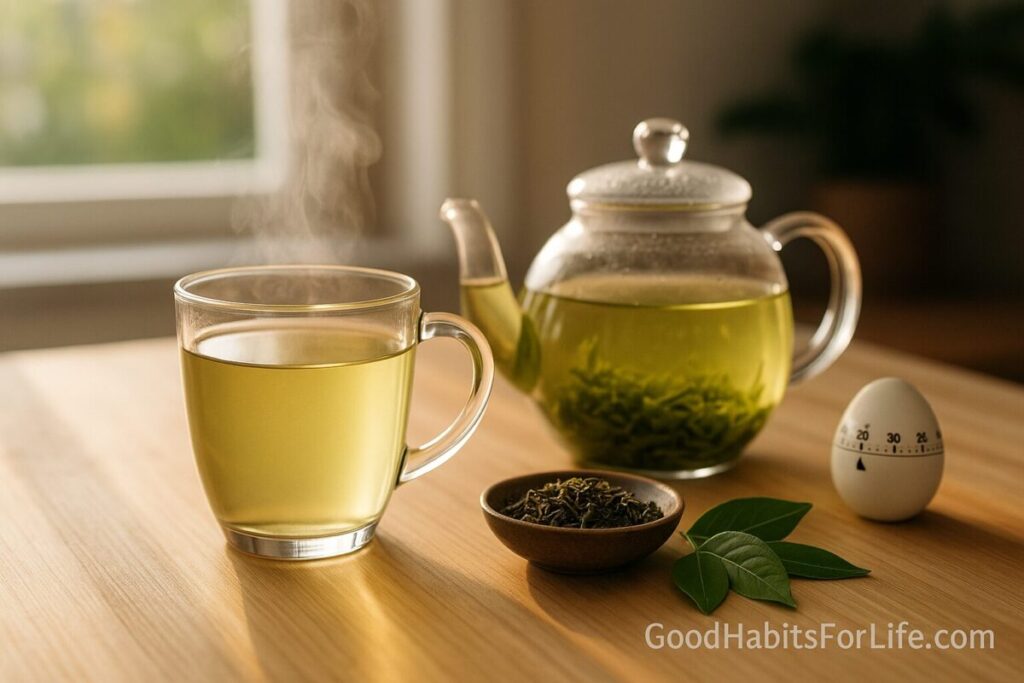
Green Tea Basics: Make a Daily Cup Youll Keep
Green Tea Basics: Make a Daily Cup You’ll Keep
Table of Contents
🧭 What Green Tea Is & Why It Helps
What it is. Green tea is made from Camellia sinensis leaves that are quickly heated (steamed or pan-fired) to prevent oxidation. That keeps the leaves “green,” preserving delicate catechins (notably EGCG) and L-theanine alongside modest caffeine.
Why people drink it.
-
Gentle alertness: Caffeine + L-theanine can promote calm focus compared with caffeine alone.
-
Cardiometabolic markers: Observational studies and trials suggest green tea intake is associated with modest improvements in cardiovascular risk markers when part of an overall healthy diet.
-
Hydration & ritual: It’s a low-calorie, warm beverage that fits well into mindful routines.
What it’s not. It’s not a magic weight-loss potion. Benefits are modest and work best as part of a healthy lifestyle (diet quality, sleep, movement, stress management).
Caffeine range (brewed): commonly ~20–45 mg per 240–250 ml cup, but it varies by leaf, amount, temp, and steep time. Decaf and shorter steeps reduce caffeine further.
✅ Quick Start: Your First Better-Tasting Cup
Equipment: kettle (temperature control if possible), mug, infuser or tea bag, timer.
Steps (2 minutes active):
-
Measure: 2–3 g loose-leaf green tea (about 1 heaped teaspoon) or 1 standard tea bag.
-
Heat: Bring fresh water to a boil, then let it sit 1–2 minutes to reach ~80 °C (175 °F).
-
Brew: Pour 250 ml (8 oz) over leaves. Steep 2 minutes for light, 3 minutes for fuller flavor.
-
Taste & tweak: Too bitter? Lower temp (75–80 °C) or shorten to 90–120 seconds. Too weak? Add 0.5–1 g leaves or steep 30–45 seconds longer.
-
Enjoy plain for catechin clarity; a slice of lemon is fine. Avoid milk if you want to maximize polyphenol bioavailability.
Flavor shortcuts:
-
Choose sencha (bright, grassy), longjing/dragon well (nutty), or gunpowder (bolder).
-
Store tea away from light, air, and moisture; use within a few months of opening.
🗺️ 7-Day “Make-It-Stick” Plan
Goal: One enjoyable, repeatable cup per day—no decision fatigue.
Anchor habit: Pair your tea with a daily event (e.g., after breakfast, post-lunch stretch, or during your evening reading).
Day-by-day:
-
Day 1 — Setup: Pick your tea, mug, and a time anchor. Put kettle + tea together on the counter.
-
Day 2 — Brew & Log: Make a 2-minute cup. Jot notes: taste, mood, time.
-
Day 3 — Adjust: Tune temp/steep to kill bitterness. Identify the cue (e.g., “after breakfast, I boil water”).
-
Day 4 — Automate: Pre-fill kettle with fresh water; place leaves in infuser before your anchor event.
-
Day 5 — Mindful Minute: While steeping, breathe slowly for 6–8 breaths. This pairs tea with calm.
-
Day 6 — Environment: Keep tea visible where the habit starts (cue design).
-
Day 7 — Celebrate & Lock-in: Review what worked. Batch-prep tea sachets for the week.
Checkpoints: If you miss a day, brew at the next anchor (don’t skip two). Keep the ritual short and pleasant.
🧪 Techniques & Frameworks (Flavor, Focus, and Habit Loops)
Brewing Variables You Can Control
-
Leaf amount: 2–3 g per 250 ml. More leaves = fuller body; start at 2.5 g.
-
Water temp: 75–85 °C (167–185 °F). Higher temps extract faster but risk bitterness.
-
Time: 90–180 seconds; adjust in 15–30 second steps.
-
Rinse (optional): For some rolled teas (e.g., gunpowder), a quick 5–10 second warm rinse can smooth flavor.
-
Second infusions: Many greens handle a second infusion; add ~15–30 seconds.
The Habit Loop Framework (Cue → Routine → Reward)
-
Cue: After breakfast, place kettle on.
-
Routine: Brew for 2–3 minutes.
-
Reward: Pair with a favorite 3-minute read or song.
Repeat daily until your brain binds the cue to the reward.
For Focus & Calm: The Caffeine + L-Theanine Pair
-
Many people find green tea’s alertness gentler than coffee. If you’re caffeine-sensitive, try:
-
Shorter steeps (90–120 seconds)
-
Lower-caffeine greens (bancha, kukicha)
-
Decaf green tea in the afternoon/evening
-
Storage & Water
-
Store in opaque, airtight tins, away from heat and humidity.
-
Use fresh water: Re-boiled stale water can flatten taste; filtered water helps if tap flavor is off.
👥 Variations by Audience
Students: Brew during your pre-study routine. Use 1 cup for a 30–45-minute focus sprint. Keep caffeine modest after 16:00 to protect sleep.
Professionals: Swap mid-morning coffee for green tea to reduce jitters; pair with a 3-minute “micro-walk” while the kettle heats.
Parents & Busy Caregivers: Pre-portion tea into 7 small envelopes on Sunday. A simple electric kettle with auto-off is your friend.
Seniors: Choose slightly cooler water and shorter steeps for smoother flavor; check meds for interactions (especially anticoagulants) and discuss with your clinician.
Teens: One gentle cup earlier in the day only. Prioritize sleep; avoid caffeine after mid-afternoon.
⚠️ Mistakes & Myths to Avoid
-
Myth: “Green tea melts fat.” Evidence doesn’t support dramatic weight loss from tea alone. It’s a helpful ritual, not a miracle.
-
Over-steeping = bitterness. If it tastes harsh, reduce temperature and time before adding sweeteners.
-
Confusing brewed tea with supplements. High-dose green tea extracts (especially on an empty stomach) have been linked to rare liver issues; brewed tea is much lower in catechins per serving.
-
Ignoring caffeine totals. Keep overall caffeine under ~400 mg/day (adults), and under ~200 mg/day during pregnancy unless your clinician advises otherwise.
-
Adding lots of sugar/syrups. That cancels many benefits. Keep it plain or lightly flavored with lemon/herbs.
-
Storing tea in clear jars near the stove. Light and heat degrade flavor and catechins.
💬 Real-Life Examples & Scripts
Anchor + Script (Morning):
“After I rinse my breakfast bowl, I will boil water, steep 2.5 g of sencha for 2 minutes, and read one page of my book.”
Office Reset (Mid-Morning):
“When the calendar chime rings at 11:00, I will stand, fill the kettle, and practice 60 seconds of box breathing while the tea steeps.”
Evening Wind-Down (Low-Caf/Decaf):
“After I put my phone to charge, I will make a decaf green tea, write 3 gratitude lines, and dim the lights.”
If-Then Plan (Relapse-proofing):
“If I miss my morning cup, then I’ll brew during lunch—no guilt, just the next cup.”
🔧 Tools, Apps & Resources
-
Electric kettle with temp control: Quick, consistent results; set to ~80 °C.
-
Loose-leaf infuser or reusable basket: More control and less waste than single-use bags.
-
Small scale (0.1 g resolution): Optional, but removes guesswork.
-
Habit apps: Streaks, Habitify, or a paper habit tracker—tick your daily cup and attach a tiny reward (e.g., sticker, emoji, or 2 minutes of your favorite song).
-
Tea journal: Note tea type, temp, time, and taste. Simple notes help you dial in and enjoy the ritual.
Pros & cons of formats
-
Loose-leaf: Best flavor control; slightly more cleanup.
-
Pyramid bags: Convenient with decent quality; check for plastic-free materials.
-
Ready-to-drink bottles: Handy but watch added sugar and flavorings.
📌 Key Takeaways
-
Use 2–3 g tea in 250 ml water at ~80 °C for 2–3 minutes.
-
Anchor your cup to a daily cue to make the habit automatic.
-
Keep caffeine totals in check; choose decaf or shorter steeps if sensitive.
-
Brewed green tea ≠ high-dose extracts; supplement safety rules are different.
-
Focus on consistency and enjoyment, not perfection—small, daily cups add up.
❓ FAQs
1) How much green tea should I drink per day?
1–3 cups/day is common for many adults. Prioritize how you feel, your sleep quality, and total daily caffeine.
2) What’s the best time to drink it?
Morning or early afternoon. Avoid late-day caffeine if it harms your sleep. Evening decaf is fine.
3) Does adding lemon help?
Yes—citrus may enhance catechin stability and tastes great. Avoid lots of sugar.
4) Can I add milk?
You can, but dairy may bind some polyphenols. If you’re drinking it for catechins, try it plain or with lemon.
5) I’m sensitive to caffeine—now what?
Use cooler water, shorter steeps, low-caffeine greens (bancha/kukicha), or decaf options.
6) Are tea bags safe?
Look for high-quality paper or plastic-free mesh. Pyramid bags often contain better-grade leaf; check brand materials.
7) Is matcha the same as green tea?
Matcha is a powdered, shade-grown green tea you drink suspended in water, often with more caffeine/catechins per serving than typical steeped tea. Start with ½ teaspoon.
8) Does green tea help with weight loss?
It’s not a standalone solution. At best, expect small effects when combined with diet quality, protein, fiber, steps, and sleep.
9) Can I drink green tea while pregnant?
Discuss with your clinician. Many guidelines suggest keeping total caffeine <200 mg/day during pregnancy.
10) Can green tea interact with medications?
Possibly—particularly with certain anticoagulants or stimulant meds. If you take prescription drugs, check with your healthcare professional.
📚 References
-
National Center for Complementary and Integrative Health (NCCIH). Green Tea (Herbs at a Glance). https://www.nccih.nih.gov/health/green-tea
-
Harvard T.H. Chan School of Public Health — The Nutrition Source. Tea. https://www.hsph.harvard.edu/nutritionsource/food-features/tea/
-
European Food Safety Authority (EFSA). Scientific opinion on the safety of green tea catechins. EFSA Journal 2018;16(4):5239. https://www.efsa.europa.eu/en/efsajournal/pub/5239
-
U.S. FDA/USDA FoodData Central. Tea, green, brewed — nutrients and caffeine (representative entries). https://fdc.nal.usda.gov/
-
Mayo Clinic. Caffeine content for coffee, tea and more. https://www.mayoclinic.org/healthy-lifestyle/nutrition-and-healthy-eating/in-depth/caffeine/art-20049372
-
American College of Obstetricians and Gynecologists (ACOG). Moderate Caffeine Consumption During Pregnancy. https://www.acog.org/clinical/clinical-guidance/committee-opinion/articles/2020/10/moderate-caffeine-consumption-during-pregnancy
-
World Cancer Research Fund/American Institute for Cancer Research. Tea, coffee and cancer risk — evidence summary. https://www.wcrf.org/diet-activity-and-cancer/risk-factors/tea-coffee/
-
Cochrane. Green tea for weight loss in adults. https://www.cochranelibrary.com/cdsr/doi/10.1002/14651858.CD006608.pub3/full
Disclaimer: This article is for general information only and is not a substitute for personalized medical advice.