
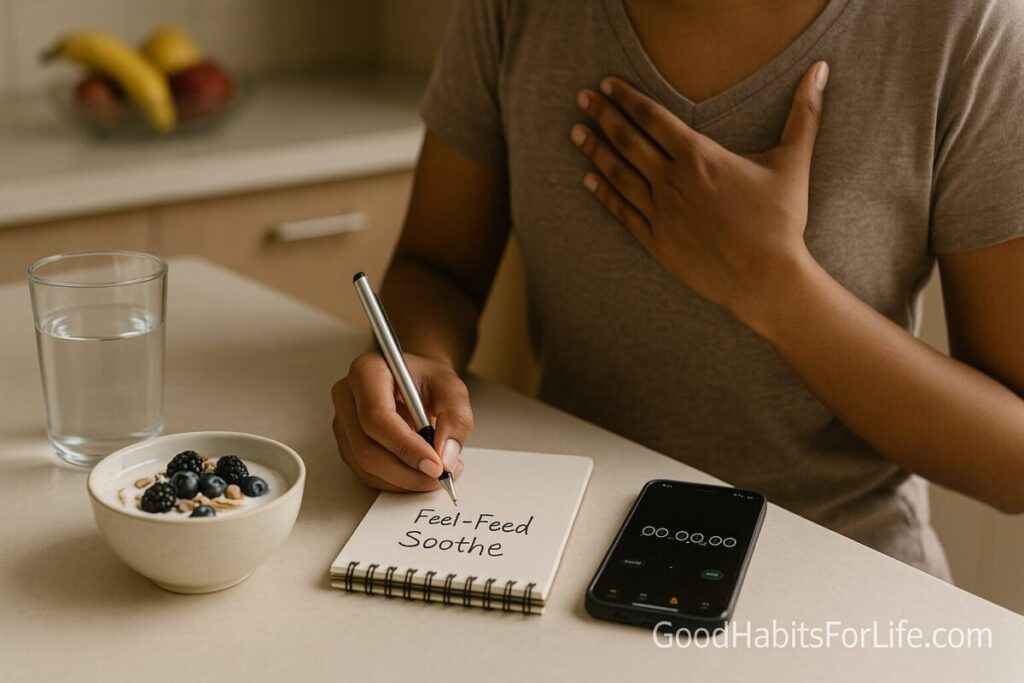
Emotional Eating Toolkit: Feel, Feed, or Soothe?: Protein-Forward Plan (2025)
Emotional Eating Toolkit (2025): Protein-Forward Plan
Table of Contents
🧭 What Emotional Eating Is (and Isn’t)
Emotional eating is eating in response to feelings (stress, boredom, sadness, reward) rather than physical hunger. It often targets highly palatable, sugary/fatty foods that briefly soothe the nervous system—then leave guilt or discomfort. Harvard Health
Researchers describe emotional eating as (over)eating in response to negative emotions; it can raise energy intake and, in some people, bleed into binge-type patterns. It’s debated conceptually, but the pattern is real and common. PMC
This toolkit’s core idea: before eating, pause and decide whether you need to Feel, Feed, or Soothe:
-
Feel: Name the emotion (“I feel overwhelmed/angry/lonely”) and let it move through with a quick practice.
-
Feed: If it’s physical hunger, eat a protein-forward mini-meal.
-
Soothe: If it’s an urge, use a craving tool (e.g., urge surfing) instead of food. Harvard Health
✅ Quick Start: 60-Second “Feel, Feed, or Soothe?”
Step 0: Breathe in for 4, out for 6 (three cycles).
Step 1 (Check-in): Use HALT—am I Hungry, Angry, Lonely, or Tired? HALT is a simple, evidence-informed self-care cue used in relapse-prevention. NCBI
Step 2 (Hunger test): Rate on a Hunger-Fullness Scale (0–10). Aim to eat at 3 (pleasant hunger) and stop at 6 (comfortably full). Queensland Health
Decision:
-
Feed if 3–4 hunger and food sounds broadly appealing (not just one specific comfort food).
-
Soothe if it’s an urge, stress spike, or very specific craving without hunger.
-
Feel if a clear emotion is driving the urge.
Fast actions (pick one):
-
Feel: Name → validate → 90-sec body scan → one sentence journaling.
-
Feed: Protein-forward mini-meal (e.g., 200 g Greek yogurt + berries; or 2 eggs + 1 slice whole-grain toast).
-
Soothe: 3-minute urge surfing; set a 10-minute timer before any food decision. PubMed
🧠 Why Protein-Forward Helps
Protein influences appetite signals: it can raise satiety hormones (GLP-1, CCK, PYY) and may lower ghrelin (a hunger signal), which together increase fullness and reduce appetite. PMC
A meta-analysis shows acute protein intake suppresses appetite and reduces ghrelin; long-term weight outcomes vary by study design. PubMed
Practical takeaways
-
Include 25–35 g protein at meals and 10–20 g at snacks to stabilize appetite.
-
Distribute protein evenly across the day for steadier energy.
-
The general RDA for adults is 0.8 g/kg/day (baseline minimum, not an optimal target for all). Adjust for needs and medical conditions. PMC
Why this matters for emotional eating: steadier satiety reduces the background “drive” to snack, so emotions aren’t layering onto an already hungry brain. Stress also nudges us toward comfort foods; stabilizing meals lowers the chance of spirals. Harvard Health
🛠️ 7-Day Starter Plan (Protein-Forward)
Targets (guidelines, not rules):
-
Meals: 25–35 g protein + veg + smart carbs + healthy fats.
-
Snacks: 10–20 g protein when truly hungry.
-
Before eating: 60-sec Feel-Feed-Soothe triage.
-
Hunger scale: start at 3, stop at 6. Queensland Health
Day 1–2: Foundation
-
Breakfast: 200 g Greek yogurt + 30 g mixed nuts + fruit (~30 g protein).
-
Lunch: Lentil-quinoa bowl + veggies + olive oil (~25–30 g).
-
Dinner: Beans & paneer/tofu stir-fry with brown rice (~30–35 g).
-
Snack options: Cottage cheese (200 g), edamame (1 cup), boiled eggs (2).
-
Practice: 3 Feel-Feed-Soothe reps; one urge surfing (3 min). PubMed
Day 3–4: Timing & Triggers
-
Move protein earlier in the day (≥30 g breakfast).
-
Add pre-planned “comfort-swap” (protein mug omelet, protein smoothie).
-
Practice: HALT checks at 11:00 and 16:00; hunger rating before each eating episode. NCBIQueensland Health
Day 5–7: Skills Stacking
-
Pre-meal mindful bite routine (3 breaths, notice aroma, first bite slowly).
-
“Delay 10”: set a 10-min timer when a non-hungry urge appears; surf it. PubMed
-
Create two scripts (see below).
-
End of Day 7: note your best go-to protein breakfasts/snacks and one emotional pattern you handled well.
📚 Techniques & Frameworks
1) Hunger-Fullness Scale (3→6 rule)
A simple clinical tool: eat at gentle hunger (≈3), stop at comfortable fullness (≈6). Print or save a small scale to keep on hand. Queensland Health
2) Urge Surfing (3 minutes)
Notice the craving as a “wave”: breathe, track where it sits in the body, ride the rise-peak-fall without acting. Works across urges—including food. PubMed
3) HALT Check
Hungry, Angry, Lonely, Tired. Meeting these needs early prevents “emotional hunger” from masquerading as physical hunger. NCBI
4) Mindful Eating Mini-Practice (5 steps)
Breathe → Observe emotion → Rate hunger → Take 2 mindful bites → Decide. Mindfulness-based programs show promise for reducing emotional eating and improving eating behaviors. NCCIHPMC
5) Protein-Forward Plate
Fill half the plate with vegetables, one quarter protein (≈25–35 g), one quarter smart carbs; add a thumb of healthy fat. Mechanistic and clinical data support protein’s satiety effect. PMCPubMed
👥 Audience Variations
-
Students: Budget protein (eggs, chickpeas, tofu, peanut butter); pre-portion trail mix + roasted chana; keep shelf-stable tuna or soy chunks.
-
Professionals: Desk drawer kit (roasted soy/peanuts, jerky, protein packets); calendar nudges for HALT checks at peak stress.
-
Parents: Family-style protein (dal + paneer, bean tacos, chicken/soy kebabs); model the 3→6 hunger rule at the table. Queensland Health
-
Seniors: Spread protein evenly across meals; pair softer proteins (yogurt, dal, tofu, tender fish) with easy veg; consult clinician if kidney disease or appetite issues. PMC
-
Teens: Link protein to energy and sport; teach urge surfing as a focus reset before study snacking. PubMed
⚠️ Mistakes & Myths to Avoid
-
Myth: “If I crave it, my body needs it.” Emotions and stress bias us toward ultra-palatable foods; they’re not nutrient beacons. Harvard Health
-
Mistake: Skipping meals then blaming “no willpower” at night—often it’s biology + emotions.
-
Myth: “High protein is unsafe for everyone.” RDA is 0.8 g/kg/day (baseline minimum); individual needs vary—check with your clinician, especially with kidney disease. PMC
-
Mistake: Using food as the only stress tool; build a stress-relief menu (walk, call a friend, breathing sets, music, shower).
💬 Real-Life Examples & Scripts
Script: Office stress, 4 pm
“Pause. HALT check: maybe ‘T’ (tired). Hunger 2/10 → not real hunger. I’ll surf the urge for 3 minutes, then have tea. If still hungry at 3/10, I’ll eat yogurt + nuts.”
Script: Late-night craving
“This is an urge, not an emergency. Start 10-minute timer, breathe 4-6. If still hungry at 3+, I’ll eat a boiled egg + fruit and stop at 6/10.”
Script: Family celebration
“I’ll eat a protein-forward dinner first. Dessert after a 10-minute check-in; one mindful portion if still at hunger 3+.”
🔧 Tools & Resources
-
Timers & breathing apps: built-in phone timer, Insight Timer, Headspace (for quick mindfulness).
-
Food planning: any notes app; weekly protein list (5 breakfasts, 5 snacks).
-
Visuals: print a small hunger scale card; post your 3 favorite protein breakfasts on the fridge. Queensland Health
🧾 Key Takeaways
-
Emotional eating eases feelings briefly but doesn’t solve them—use the Feel, Feed, or Soothe triage. Harvard Health
-
Protein-forward meals support satiety via appetite hormones; pair with mindful skills. PMCPubMed
-
Use HALT and the 3→6 hunger rule to avoid autopilot eating. NCBIQueensland Health
-
Practice urge surfing to let cravings pass without eating. PubMed
-
Iterate with the 7-day plan; seek support if eating or emotions feel out of control.
❓ FAQs
1) Is emotional eating always bad?
No—using food for comfort occasionally is normal. The toolkit is for when it becomes your main coping method or causes distress. Harvard Health
2) How much protein per meal is “protein-forward”?
A practical range is 25–35 g per main meal, 10–20 g for snacks; adjust to your needs and medical advice. PubMed
3) I’m vegetarian—can I still do this?
Yes. Use dairy/soy (yogurt, paneer/tofu, soy chunks), legumes, eggs (if ovo-), and mixed pulses/grains.
4) Won’t more protein hurt my kidneys?
People with kidney disease need clinical guidance. For healthy adults, the RDA is 0.8 g/kg/day; optimal amounts vary—speak with a clinician for personalized advice. PMC
5) Does mindfulness really help emotional eating?
Mindfulness-based programs show benefits for eating behaviors, including emotional eating, in several trials and reviews. NCCIHPMC
6) What if I overeat anyway?
Normalize it; log the trigger; run the triage next time; prioritize sleep and a protein-rich breakfast tomorrow.
7) How do I know if it’s true hunger?
Use the 3→6 hunger rule and ask: “Would I eat a simple protein snack right now?” If not, it’s likely an urge. Queensland Health
8) Can stress alone push overeating?
Chronic stress drives comfort-food seeking via hormones and reward pathways; pairing stress tools with stable meals helps. Harvard Health
📚 References
-
Harvard Health Publishing — Why stress causes people to overeat. Harvard Health
-
Harvard Health Publishing — Struggling with emotional eating? Harvard Health
-
Moon J, Koh G-Y. Clinical Evidence and Mechanisms of High-Protein Diet in Appetite Control and Weight Reduction. (Review). PMC
-
Kohanmoo A, et al. Effect of short- and long-term protein consumption on appetite, ghrelin, CCK, GLP-1. (Meta-analysis). PubMed
-
Queensland Health — Hunger Level Scale (3→6 guidance). Queensland Health
-
NCBI Bookshelf — HALT (Hungry, Angry, Lonely, Tired) overview. NCBI
-
Bowen S, Marlatt GA. Brief mindfulness instruction (“urge surfing”) and smoking urges. PubMed
-
NCCIH — 8 Things to Know About Meditation & Mindfulness (weight/eating behaviors). NCCIH
-
Morillo-Sarto H, et al. Mindful eating program reduces emotional eating (cluster RCT). PMC
-
O’Reilly GA, et al. Mindfulness-based interventions for obesity-related eating behaviors (review). PMC
-
NASEM/NCBI — RDA for protein ≈ 0.8 g/kg/day (baseline minimum). PMC
Disclaimer
This article is for general education on nutrition and emotional well-being; it’s not medical or mental-health advice. If you struggle with binge eating, depression, or an eating disorder, please seek qualified care.