
DiabetesFriendly Plates: Build with Confidence: Protein-Forward Plan (2025)
Diabetes-Friendly Plates: Protein-Forward Plan (2025)
Table of Contents
🧭 What & Why
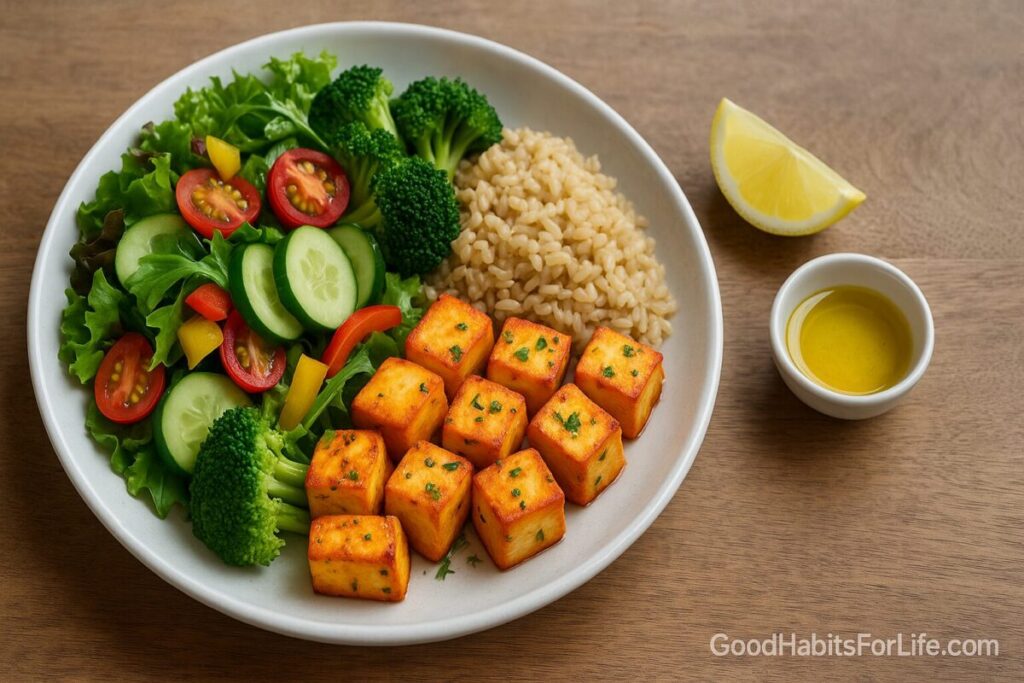
A diabetes-friendly plate is a fast, visual way to build balanced meals that support steadier blood glucose: half your plate non-starchy vegetables, one-quarter lean protein, and one-quarter higher-fiber, lower-GI carbohydrates—plus a small serving of healthy fats.
Going protein-forward simply means you anchor each meal around adequate protein. For many adults, that’s approximately 25–35 g protein at main meals (and 10–15 g at snacks), spread across the day. Protein helps you feel full, slows gastric emptying, and, when paired with fiber, can blunt sharp blood-glucose rises after eating. It also supports muscle maintenance—important for insulin sensitivity and healthy aging.
Use this as a practical template. Your personal carbohydrate and energy needs vary—medications, activity, weight goals, and glucose targets matter. Work with your clinician or dietitian to individualize.
✅ Quick Start: Your Protein-Forward Plate Today
-
Fill ½ plate with non-starchy vegetables.
Examples: spinach, cucumber, tomato, bell pepper, cabbage, okra, green beans, cauliflower, broccoli, mushrooms, lettuce. (~2 cups raw or ~1 cup cooked) -
Add ¼ plate lean protein (~90–120 g cooked / 3–4 oz).
Options: eggs, fish, skinless chicken, lean meats, paneer, tofu/tempeh, soy chunks, Greek yogurt/curd, dal + soy for complete proteins. -
Complete with ¼ plate smart carbs (~½ cup cooked).
Choose: brown/red/black rice, quinoa, millets (ragi/bajra/jowar), whole-wheat roti/chapati, oats, beans/legumes, sweet potato. Aim for fiber-rich, minimally processed choices. -
Add healthy fat (thumb-size or 1–2 tsp).
Olive/mustard/groundnut oil, ghee in small amounts, avocado, nuts/seeds (almonds, walnuts, peanuts, chia, flax). -
Flavor smart.
Herbs, spices, lemon, vinegar, yogurt-based dressings. Keep sauces/sugary condiments modest. -
Post-meal move.
10–15-minute easy walk after meals supports post-prandial glucose.
🛠️ Portion Guide & Plate Builder
Rule of thumb portions (per person):
-
Protein (25–35 g):
-
Chicken/fish: ~90–120 g cooked (3–4 oz) ≈ 25–30 g protein
-
Paneer: ~100 g ≈ ~18–22 g protein (choose low-fat if needed)
-
Tofu/tempeh: ~120–150 g ≈ 20–30 g protein
-
Eggs: 2 large ≈ 12–14 g protein (pair with Greek yogurt/curd or paneer to reach target)
-
Greek yogurt/curd: ~200 g (¾–1 cup) ≈ 15–20 g protein
-
-
Smart carbs (~15–45 g net carbs, individualized):
-
Cooked grains (brown rice, quinoa, millets): ~½ cup
-
Whole-wheat roti/chapati: 1 small (≈ 30–40 g)
-
Beans/legumes: ~½ cup cooked
-
Sweet potato: ~½ medium (100–120 g)
-
-
Veg: 2 cups raw leafy or 1 cup cooked non-starchy veg.
-
Fat: 1–2 tsp oil or 1 Tbsp nuts/seeds.
The Plate Builder (P + F + F + C):
-
Protein anchor (25–35 g)
-
Fiber (veg + whole-grain/legume)
-
Fat (small, for flavor & satiety)
-
Carbs (portion-controlled, higher fiber/lower GI)
Sample plates
-
Indian veg lunch: 100 g paneer tikka + 1 small whole-wheat roti + ½ cup chana (or ½ cup millet khichdi) + kachumber salad + 1 tsp olive oil/lemon.
-
Non-veg dinner: 120 g grilled fish + ½ cup quinoa + roasted cauliflower/broccoli + 1 tsp mustard oil drizzle.
-
Breakfast options:
-
Veg omelet (2 eggs) + 200 g Greek yogurt/curd + sautéed spinach + 1 small chapati.
-
Tofu bhurji (150 g) + ½ cup oats-upma + tomatoes & cucumbers.
-
🧠 Techniques & Frameworks That Help
-
Protein pre-load: Eat a few bites of protein and veg before carbs. Many people see steadier glucose with this sequence.
-
Low-GI/GL swaps: Choose intact grains, millets, beans, and fruit with skin; keep portions steady.
-
Vinegar or lemon with meals: Adds acidity and flavor; may reduce meal glycemic response for some people.
-
Meal timing: Space carbs across the day; avoid very large single-meal carb loads.
-
After-meal movement: 10–15 minutes of light walking can meaningfully help post-meal glucose.
-
Hydration: Aim for water/unsweetened beverages; limit sugary drinks and fruit juices.
-
Protein distribution: Spread protein across breakfast/lunch/dinner rather than loading at one meal.
-
Plan once, eat many: Batch-cook proteins (grill chicken, roast tofu), chop veg, and portion grains/beans for grab-and-go assembly.
🗓️ 7-Day Starter Plan
Goal: Build confidence with one protein-forward plate at each main meal.
Day 1 – Set up & shop
-
List 3 proteins, 3 carbs, 6 veg you like.
-
Buy: eggs, paneer/tofu/chicken; brown rice/millets/whole-wheat atta; legumes; lots of veg; olive/mustard oil; yogurt/curd; nuts/seeds; lemons.
Day 2 – Breakfast protein
-
Make protein-forward breakfast (e.g., tofu bhurji + oats-upma). Add fruit after the main plate if desired.
Day 3 – Lunch plate method
-
½ plate salad + ¼ plate protein (paneer/chicken) + ¼ plate millet or roti.
Day 4 – Batch prep
-
Cook 3–4 portions of protein (grilled fish/chicken, roasted tofu) and 3 cups cooked grains/legumes. Store in the fridge.
Day 5 – Snack smart
-
Keep 2 “P+F+F” snacks ready:
-
Greek yogurt + flax/chia;
-
Roasted chana + peanuts;
-
Cheese + cucumber sticks.
-
Day 6 – Restaurant rehearsal
-
Practice ordering a plate-method meal (see scripts below).
Day 7 – Review & adjust
-
Notice energy, satiety, and glucose patterns (if you monitor). Adjust protein/carbs/fats and portions with your clinician’s guidance.
👥 Audience Variations
Students:
-
Budget protein: eggs, tofu, roasted chana, peanuts, milk/curd.
-
Dorm staples: oats, whole-wheat wraps, canned beans, frozen veg.
-
Quick plates: egg wrap + salad; tofu stir-fry + microwaveable brown rice.
Parents/families:
-
Make the plate method the default platter at home; add fruit/yogurt for kids’ needs.
-
Keep bowls of chopped veg; batch cook beans and grains.
Busy professionals:
-
Build lunch boxes: 120 g grilled protein + ½ cup cooked grain/legume + bulky salad + 1 Tbsp seeds.
-
Restaurant heuristic: “Half veg, quarter protein, quarter carb.”
Seniors:
-
Prioritize protein at breakfast for muscle & balance; choose softer options (curd, paneer, fish, dals).
-
Watch total energy if appetite is low; flavor with herbs/spices to stimulate eating.
Vegetarians/Vegans:
-
Combine legumes + soy/wheat proteins to reach 25–35 g/meal.
-
Examples: chana + tofu; rajma + seitan; dal + soy chunks; paneer/tofu tikka bowls.
⚠️ Mistakes & Myths to Avoid
-
Myth: “Carbs are banned.”
Reality: Portion and type matter. Whole grains/legumes and fruit can fit—personalize the amount. -
Mistake: Skipping protein at breakfast.
Fix: Target 25–35 g to curb mid-morning cravings. -
Myth: “Only keto works.”
Reality: Many patterns (Mediterranean, vegetarian, low-GI, traditional Indian with millets/legumes) can work when portions are right. -
Mistake: Drinking calories.
Fix: Choose water, unsweetened tea/coffee; limit juices and sugary beverages. -
Myth: “Fruit is off-limits.”
Reality: Whole fruit in sensible portions is usually fine; pair with protein/fiber.
🗣️ Real-Life Examples & Scripts
At a North Indian restaurant
-
“Please bring tandoori chicken (or paneer tikka), mixed salad, and one small roti. I’ll skip rice today.”
At a South Indian spot
-
“Masala dosa with extra sambar and a side salad; I’ll share the dosa and focus on sambar + veg.”
At a buffet
-
“First plate: veg + protein. Second plate (if still hungry): small portion of carbs or fruit.”
At home
-
“Let’s fill half the thali with veg, a quarter with protein, and a quarter with roti/rice.”
🧰 Tools, Apps & Resources
-
Meal logging: MyFitnessPal, Cronometer, Carb Manager, HealthifyMe (for Indian foods).
-
Glycemic Index look-ups: University of Sydney GI database.
-
Kitchen helpers: food scale (optional), measuring cups, airtight containers, sheet pans for batch-roasting.
-
Monitoring: Glucose meter or CGM if prescribed—interpret with your healthcare team.
✅ Key Takeaways
-
Anchor each meal with 25–35 g protein, ½ plate non-starchy veg, and portion-controlled smart carbs.
-
Plan once, batch-cook proteins and grains, and keep “P+F+F” snacks handy.
-
Choose lower-GI, higher-fiber carbs most of the time; walk after meals.
-
Personalize targets with your clinician—your meds, activity, and goals matter.
❓ FAQs
1) How many carbs per meal is right for me?
It varies. Many adults start around 30–45 g per meal and adjust based on glucose, activity, and goals with a dietitian/clinician.
2) Can vegetarians/vegans do a protein-forward plate?
Yes—use tofu/tempeh, soy chunks, paneer (veg), seitan (if tolerated), and legumes. Combine sources to reach 25–35 g protein.
3) Are millets better than rice?
Millets are generally higher in fiber and can have a lower glycemic impact, but portion still matters. Choose what you enjoy and can sustain.
4) What about fruit and dairy?
Whole fruit and unsweetened dairy/curd can fit. Pair fruit with protein/fiber and watch portions.
5) Should I avoid fat?
No—use small amounts of olive/mustard/groundnut oil, nuts, seeds, or ghee for flavor and satiety while keeping overall calories in check.
6) Do I need supplements like protein powder?
Whole foods can cover most needs. Protein powder is optional for convenience—choose low-sugar options if used.
7) Will walking after meals really help?
Many people see improvements in post-meal glucose with 10–15 minutes of light walking—easy, low-risk movement.
8) Is keto better for diabetes?
Some do well on very-low-carb, but it’s not required. Balanced, protein-forward plates with smart carbs are effective and sustainable for many.
9) How do I handle festivals or social meals?
Lead with veg + protein, take smaller portions of sweets/starches, and add a post-meal walk. Enjoy mindfully—then return to your routine.
10) How do I know if my plate is working?
Track energy, hunger, and glucose (if monitoring). Review trends with your healthcare team and adjust protein, carbs, and portions.
📚 References
Disclaimer: This article is for general education and is not a substitute for personalized medical or nutrition advice; always consult your healthcare professional for individualized guidance.