
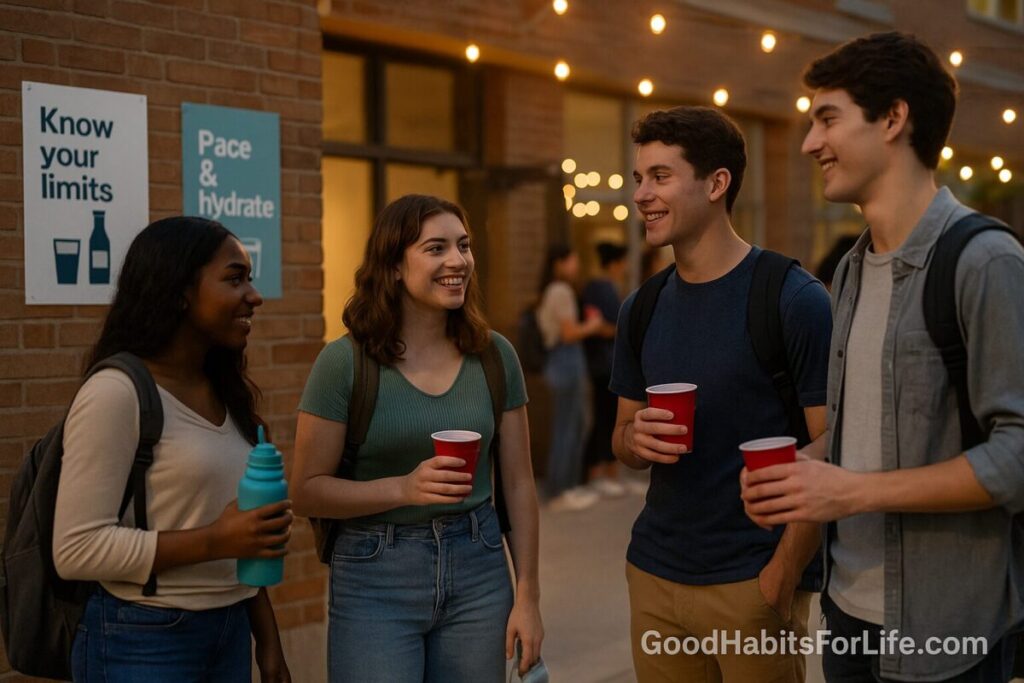
College Freshers: Orientation to Safer Choices
College Drinking Safety Tips: Orientation for Freshers
Table of Contents
🧭 What & Why: Safer Drinking for College Freshers
What it is: Practical, evidence-aligned steps that reduce harm from alcohol—whether you drink rarely, socially, or not at all. “Safer choices” include choosing not to drink, setting limits, pacing, buddy systems, and intervening early when someone needs help.
Why it matters:
-
The start of college brings new freedom, peer pressure, and misinformation. Alcohol-related harms—injury, violence, academic issues, and unsafe sex—spike at the beginning of term. Research shows that protective behavioral strategies (e.g., setting limits, spacing drinks) lower the odds of heavy drinking and its consequences.
-
Understanding standard drinks helps you keep track. In many countries a “standard drink” is 10–14 g of pure alcohol. Practical rule of thumb:
-
~330 ml beer at 5% ABV ≈ 1 US standard drink (12 oz)
-
~150 ml wine at 12% ABV ≈ 1 US standard drink (5 oz)
-
~45 ml spirits at 40% ABV ≈ 1 US standard drink (1.5 oz)
Check your country’s definition and labels.
-
Bottom line: Freshers who plan ahead, pace, and watch out for each other reduce risks without sacrificing the social fun of campus life.
✅ Quick Start: Do-This-Tonight Checklist
-
Decide your limit before you go. Example: “Max 2 drinks tonight.”
-
Eat and hydrate first. A full meal + 500 ml water.
-
Use the 1-for-1 rule. After each alcoholic drink, have water or a soft drink.
-
Measure, don’t guess. Avoid “top-ups” and shared bottles; ask for single measures.
-
Skip the high-risk stuff. Shots, funnels, “power hours,” and energy-drink mixers.
-
Buddy up + plan your ride. Arrive and leave with the same friend; book transport early.
-
Trust your gut. If a situation feels off, leave together.
-
Know red-flag symptoms. Confusion, repeated vomiting, slow/irregular breathing, seizures, or not waking—call emergency services immediately (e.g., 112/911/999).
🛠️ Techniques & Frameworks That Work
1) The P.A.C.E. Method
-
Plan your limit and transport.
-
Alternate drinks with water.
-
Count standard drinks (not rounds).
-
Eat before and during.
2) “Set-Point” Commitments
Pick one number you won’t cross (e.g., 0, 1, 2, or 3 drinks). Tell a friend; set a reminder.
3) The 45-Minute Rule
Space alcoholic drinks at least 45–60 minutes apart. If you want something in between, make it non-alcoholic.
4) Standard Drink Literacy
Learn common measures on your campus (pints, doubles, shots). Convert them to standard drinks so tracking stays honest.
5) Protective Behavioral Strategies (PBS)
-
Choose drinks ≤5% ABV beer or spritzers; avoid doubles.
-
Put your own cap on your bottle; keep your drink with you.
-
Pre-decide a refusal script (see below).
-
Plan a curfew or cut-off time (e.g., “stop alcohol by 22:30”).
6) Bystander Intervention: A.C.T.
-
Assess safety (stay with the person, bring others).
-
Call for help (resident advisor, security, or emergency services).
-
Take action you can do safely (give water if conscious, place in recovery position, don’t give more alcohol/coffee).
7) Medication & Health Check
Some antibiotics, antidepressants, and pain meds interact with alcohol. If you’re on medication or have a health condition, skip alcohol and confirm with a clinician or pharmacist.
🗓️ 30-60-90 Day Safer-Choices Plan
Goal: Build automatic habits around low-risk decisions.
Days 1–30 (Setup & Awareness)
-
Set a default choice: 0–2 drinks, or no alcohol at regular socials.
-
Learn your campus rules, amnesty policies, and emergency numbers.
-
Practice two refusal lines until they feel natural.
-
Log your first four nights out in a notes app: number of drinks, time, food, sleep, mood next day.
Days 31–60 (Consistency & Social Norms)
-
Host or suggest at least two alcohol-light events (board games, sport, coffee walk, mocktail night).
-
Use the 1-for-1 rule every time you drink.
-
Add a check-in buddy: swap “home safe” texts after nights out.
-
Identify and avoid one personal trigger (e.g., last-minute rounds, certain drinking games).
Days 61–90 (Mastery & Leadership)
-
Teach your group the P.A.C.E. Method.
-
Nominate a designated non-drinker for each society night out.
-
Share a ride-home plan in your group chat before events.
-
Review your log; set a semester policy (e.g., “max 1 drink on weeknights”).
👥 Audience Variations
Students (Freshers): Keep your drink with you, accept only sealed cans/bottles in crowded spaces, and agree a “leave code word” with your buddy.
Parents/Caregivers: Before move-in, discuss campus alcohol policies, local emergency number, and consent. Emphasize unconditional support if your student needs help—no judgment.
Resident Advisors / Society Leads: Display emergency steps in common areas; provide water/food at events; use wristbands or stamps for drink counts; schedule alcohol-free socials every month.
⚠️ Mistakes & Myths to Avoid
-
“Coffee sobers you up.” It doesn’t; it masks sedation. Only time lowers blood alcohol.
-
“Beer is safer than spirits.” It depends on volume and ABV. A pint of strong beer can equal multiple standards.
-
“I’m fine if I can walk.” Coordination can look OK while judgment is impaired—plan before you drink.
-
“Vomiting helps; then I’m good.” Repeated vomiting is a poisoning red flag. Seek help.
-
“Mixing alcohol with energy drinks keeps me alert.” It increases risk by masking intoxication—avoid.
-
“Everyone drinks heavily at uni.” Most students drink moderately or not at all.
💬 Real-Life Scripts (Copy-Paste)
Refusing a drink:
-
“I’m good—sticking to water tonight.”
-
“I set a two-drink limit; I’m done.”
-
“I’m on meds—no alcohol for me.”
Avoiding rounds:
-
“I’ll sit out the round; I’m pacing.”
-
“I’m alternating with soft drinks—grab me a soda?”
Leaving safely:
-
“We’re heading out—text us when you’re home.”
-
“This doesn’t feel right; let’s bounce and get food.”
Helping a friend:
-
“I’m worried about you—let’s get some fresh air and water.”
-
“You’re not OK; I’m calling for help now.”
🧰 Tools, Apps & Resources
-
Drink-tracking apps/BAC estimators: Quick awareness of intake and time to sober (estimates only; never use to decide on driving).
-
University pages: Policies, amnesty rules, and support services (health center, counseling).
-
Taxi/ride-share apps & campus shuttles: Book early; share your trip.
-
Water & food plan: Carry a refillable bottle; budget for snacks.
-
Mocktail kits: Make alcohol-free nights a norm—sodas with citrus, bitters-free spritzers, or zero-alcohol beers.
Pros & cons (rapid):
-
Apps → +awareness / −can feel inaccurate; treat as rough.
-
Zero-alcohol options → +inclusion / −some contain trace alcohol; check labels.
-
Campus shuttles → +cheap / −limited hours.
📌 Key Takeaways
-
You never have to drink; if you choose to, plan, pace, and protect.
-
Learn standard drink sizes and avoid top-ups and shots.
-
Buddy systems, food, and water reduce risk immediately.
-
Watch for poisoning signs and get help early—better safe than sorry.
-
Build culture: normalize refusal, alcohol-free socials, and ride-home plans.
❓FAQs
1) What is a standard drink?
Depending on the country, 10–14 g pure alcohol. Roughly: 330 ml beer (5%), 150 ml wine (12%), or 45 ml spirits (40%).
2) What’s “binge drinking”?
Often defined as a pattern leading to high blood alcohol concentration in a short time—commonly ≥4 drinks (women) or ≥5 (men) in ~2 hours. Definitions vary by country.
3) Is it safer to mix alcohol with energy drinks to stay alert?
No. Caffeine can mask intoxication and increase risky behavior. Avoid the combination.
4) How do I help a very drunk friend?
Stay with them, keep them upright or in the recovery position, give small sips of water if conscious, don’t give more alcohol/caffeine, and call emergency services if they’re hard to wake, breathing slowly/irregularly, or vomiting repeatedly.
5) Can I drink while on medication?
Ask a clinician or pharmacist first; many meds interact with alcohol. When unsure, don’t drink.
6) Are “beer before liquor” rules true?
Myths. Total alcohol and pace matter most.
7) What about weightlifting next morning?
Alcohol impairs recovery and sleep; keep sessions light or skip.
8) I’m under the legal drinking age—what are my options?
Choose alcohol-free events and drinks. Know campus rules and local laws; when in doubt, avoid alcohol.
9) What’s a safer “max” per night?
There’s no safe level for everyone. Lower is safer; many students set 0–2 drinks with 45–60 minutes between.
10) How do I track drinks at a crowded party?
Use cans/bottles you open yourself, avoid top-ups, and tally in your notes app.
📚 References
-
World Health Organization (WHO). Alcohol: key facts and health effects. https://www.who.int
-
National Institute on Alcohol Abuse and Alcoholism (NIAAA). College Drinking—Changing the Culture; What Is a Standard Drink? https://www.collegedrinkingprevention.gov and https://www.niaaa.nih.gov
-
U.S. Centers for Disease Control and Prevention (CDC). Alcohol and Public Health; Binge Drinking. https://www.cdc.gov/alcohol
-
NHS (UK). Alcohol advice; Alcohol units. https://www.nhs.uk/live-well/alcohol-advice/
-
Australian Government, Department of Health. Standard Drinks Guide. https://www.health.gov.au
-
American College Health Association (ACHA). Harm Reduction & College Health resources. https://www.acha.org
-
SAMHSA. Substance Use—Risk and Protective Factors; Helpline. https://www.samhsa.gov
Disclaimer: This guide is educational and not a substitute for professional medical advice; if you have health concerns or take medication, consult a qualified clinician.