
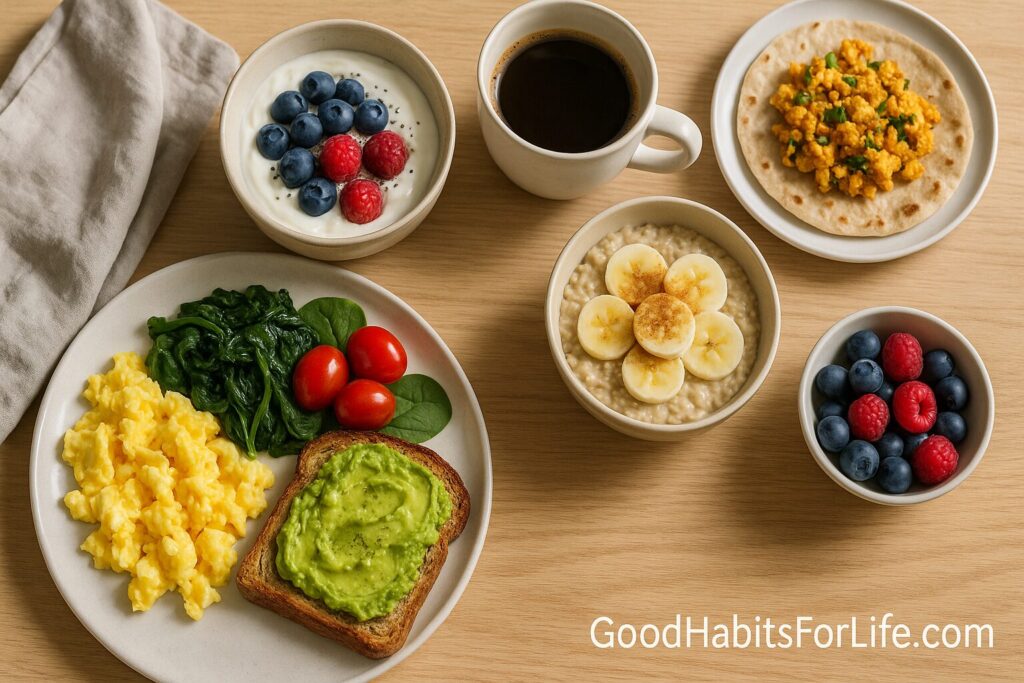
Breakfast Builder 2025: Protein + Produce + Fun
Breakfast Builder 2025: Protein + Produce + Fun
Table of Contents
🧭 What Is the Breakfast Builder?
The Breakfast Builder is a fast, repeatable template for making a balanced morning meal without overthinking. Each plate combines:
-
Protein (20–30 g): eggs, Greek yogurt, tofu, cottage cheese, lean meats, legumes, protein-fortified dairy/plant milks.
-
Produce (1–2 cups / 80–160 g): fruit and/or vegetables for fiber, micronutrients, and volume.
-
Smart carbs (½–1 cup cooked / 30–60 g): oats, whole-grain toast, chapati/roti, quinoa, sweet potato; or healthy fats like nuts/seeds/avocado as needed.
-
Fun add-ons: herbs/spices, salsa, cinnamon, dark chocolate shavings, peanut butter—small upgrades that boost flavor and adherence.
Think of it as LEGO® for breakfast: snap together a protein, a produce, and one extra for taste or texture. This structure gives you variety with zero decision fatigue.
✅ Benefits: Why Build Breakfast This Way
-
Satiety & appetite control: 20–30 g of protein in the morning supports fullness hormones and may reduce later snacking.
-
Steady energy & focus: Pairing protein with fiber-rich produce and whole grains moderates blood sugar spikes for sustained morning energy.
-
Weight management & body composition: Adequate daily protein (≈0.8–1.2 g/kg for most healthy adults) helps maintain lean mass, especially during weight loss or aging.
-
Heart & metabolic health: Whole grains, fruit/veg, and nuts/seeds are linked with better lipid profiles and lower chronic disease risk.
-
Habit strength: Clear rules + tasty defaults = higher consistency. The Builder turns “what do I eat?” into a 60-second decision.
Evidence snapshot: Major guidelines emphasize balanced meals with whole grains, fruit/veg, and appropriate protein; higher-protein breakfasts are associated with improved satiety and better diet quality (see References).
🛠️ Quick Start: Build One in 3 Steps
Step 1 — Pick your protein (target 20–30 g):
-
3 eggs (≈18–21 g) + 30 g cheese (7 g)
-
200 g Greek yogurt (≈20 g)
-
250 g cottage cheese/paneer (≈24–28 g)
-
200 ml high-protein milk/soy milk (≈12–15 g) + 1 scoop whey/plant protein (≈20–25 g)
-
150 g tofu/tempeh scramble (≈15–20 g)
Step 2 — Add produce (1–2 cups):
Berries, banana, orange, apple; spinach, tomato, mushrooms, peppers; leftover roasted veg; salsa.
Step 3 — Choose one “fun” add-on:
Whole-grain toast/oats/roti; nuts or seeds; avocado; olive-oil drizzle; dark chocolate (a few shavings); spices (cinnamon/cardamom/chaat masala).
Sample Combos (copy-paste to your notes)
-
Egg + Veg Wrap: 2 eggs + 2 whites, peppers/onions, roti/whole-grain wrap, salsa.
-
Berry Yogurt Bowl: 200 g Greek yogurt, 1 cup berries, 1 tbsp nuts/seeds, cinnamon.
-
Tofu Masala Scramble: Tofu, spinach, tomato, turmeric, toast.
-
Overnight Oats Pro: Oats + high-protein milk, chia, banana, peanut butter.
Quick Builder Table (approx. protein)
| Protein Base | Portion | Protein (g) |
|---|---|---|
| Eggs | 3 large | 18–21 |
| Greek yogurt | 200 g | ~20 |
| Cottage cheese/paneer | 250 g | 24–28 |
| Tofu/tempeh | 150–200 g | 15–20 |
| Whey/plant protein | 1 scoop | 20–25 |
| High-protein dairy/soy milk | 250 ml | 12–15 |
Tip: If your base gives <20 g, add a booster (extra egg, scoop of protein, or nuts/seeds).
📅 7-Day Breakfast Builder Plan
Goal: 7 effortless, repeatable mornings. Prep on Sunday: boil eggs, roast a tray of veg, wash berries/greens, mix overnight oats, and portion nuts/seeds.
Mon – Greek Yogurt Parfait
200 g Greek yogurt + berries + 1 tbsp walnuts + cinnamon.
Tue – Veg Omelet + Toast
3 eggs with spinach/mushrooms/tomato + 1 slice whole-grain toast.
Wed – Overnight Oats Pro
60 g oats + 250 ml high-protein milk + chia + banana; add ½ scoop protein if needed.
Thu – Tofu Masala Scramble Wrap
Tofu + peppers/onions + spices in roti/whole-grain wrap + salsa.
Fri – Cottage Cheese Bowl
250 g cottage cheese + pineapple or mango + pumpkin seeds.
Sat – Protein Smoothie
High-protein milk + scoop whey/plant protein + spinach + frozen berries + peanut butter.
Sun – Eggs & Sweet Potato Hash
2 eggs + roasted sweet potato + peppers + avocado spoon.
Checkpoints:
-
Week 1: Hit protein target on ≥5 days.
-
Week 2: Add veg/fruit to all 7 days.
-
Week 3: Reduce added sugar to ≤2 tsp/day across breakfast.
-
Week 4: Lock your top 3 favorites and put them on autopilot.
🧠 Techniques & Frameworks
The 20–30 g Rule
Most adults feel fuller when breakfast reaches 20–30 g protein. It’s a practical floor; athletes may go higher. Distribute protein across meals for better synthesis.
Plate & Pairing Method
-
½ plate produce, ¼ protein, ¼ whole grains/starchy veg; add 1 thumb healthy fats.
-
Pair fiber + protein for staying power (e.g., oats + yogurt; eggs + veg + toast).
80/20 Flavor Strategy
Make 80% nutrient-dense, 20% fun so the habit sticks (e.g., drizzle of honey, a few chocolate shavings, or a buttery toast).
Batch-Once, Eat-Thrice
Boil 6–8 eggs, roast 1 kg mixed vegetables, cook 2–3 servings oats/quinoa. Assemble different combos in minutes.
Score Your Breakfast (out of 10)
-
Protein 0–4 (20–30 g = 4)
-
Produce 0–3 (2 cups = 3)
-
Whole-grain/fat quality 0–2
-
Added sugar 0–1 (≤8 g = 1)
Aim for 7+/10 most mornings.
👥 Audience Variations
Students & Teens: Smoothies, overnight oats, egg muffins; keep grab-and-go. Add a second fruit for activity days.
Busy Professionals: Wraps, parfaits, and pre-portioned nuts; keep a desk “breakfast drawer” (oats, seeds, shelf-stable milk).
Parents: Build a family tray (scrambled eggs + roasted veg + toast soldiers). Let kids choose a fruit topping to increase buy-in.
Seniors: Prioritize soft-texture proteins (yogurt, cottage cheese, tofu), and fluids. Add extra calcium and vitamin D foods.
Vegetarian/Vegan: Soy milk, tofu/tempeh, pulses pancakes (chilla), plant protein; mix grains + legumes for complete amino acids.
⚠️ Mistakes & Myths to Avoid
-
Myth: “Carbs at breakfast are bad.”
Reality: Whole grains and fruit add fiber and steady energy—pair with protein. -
Mistake: Skipping produce. Add at least 1 cup—fresh, frozen, or leftover veg.
-
Mistake: Sugary cereals/yogurts. Check labels; choose ≥10 g protein and ≥3 g fiber per serving, ≤8–10 g added sugar.
-
Myth: “More protein is always better.”
Reality: Quality and distribution matter more than mega-doses. -
Mistake: Boring repetition. Keep a 3-to-5 meal rotation to prevent burnout.
💬 Real-Life Examples & Scripts
Microwave Mug Omelet (2 mins):
Beat 2 eggs + splash milk + chopped spinach + salt/pepper in a mug. Microwave 60–90 sec, stir halfway. Serve with toast and tomato slices.
Overnight Oats Text to Self:
“Tonight: 60 g oats + 250 ml soy milk + 1 tbsp chia + banana. Bowl ready by 7 AM.”
Five 60-Second Plates:
-
Greek yogurt + berries + granola sprinkle
-
Paneer cubes + tomato/cucumber + roti
-
Peanut butter toast + apple + glass of milk
-
Tofu scramble + salsa + leftover roasted veg
-
Cottage cheese + pineapple + chia seeds
🧩 Tools, Apps & Resources
-
Kitchen gear: blender, non-stick pan, microwave rice cooker, lunch boxes, ice-cube tray (for frozen pesto/spinach), digital scale (optional).
-
Apps:
-
Cronometer / MyFitnessPal: quick protein & fiber checks; Pros: nutrient detail; Cons: logging fatigue.
-
Paprika / AnyList: recipe & grocery management; Pros: organize & share lists; Cons: setup time.
-
Timer/Shortcuts: schedule an evening prep reminder.
-
-
Pantry Staples: eggs, Greek yogurt, high-protein milk, oats, whole-grain bread/roti, tofu, frozen berries, bananas, tomatoes, spinach, nuts/seeds, cinnamon, salsa.
📌 Key Takeaways
-
Hit 20–30 g protein + 1–2 cups produce every morning.
-
Use a 3-step builder to remove decision fatigue.
-
Prep once; rotate 3–5 favorites.
-
Track consistency (days per week) over calories.
-
Keep it delicious—habits follow taste.
❓ FAQs
1) Is it okay to drink breakfast (smoothies)?
Yes—blend protein (milk/protein powder/yogurt), fruit/veg, and optional oats/nuts. Chew something (like toast or an apple) if liquids leave you hungrier.
2) How much protein do I really need at breakfast?
Most adults do well with 20–30 g. Total daily needs vary (~0.8–1.2 g/kg for many healthy adults; more for athletes—talk to a professional).
3) Can I eat traditional foods (paratha, idli, dosa)?
Absolutely. Add protein: yogurt, paneer, eggs, dal, or soy milk; plus fruit/veg.
4) I’m short on time—what’s the 60-second option?
Greek yogurt + fruit + nuts; or protein milk + banana + peanut butter toast.
5) What about intermittent fasting?
If your first meal is at noon, the Builder still applies—hit protein + produce in meal one.
6) How do I keep costs down?
Buy seasonal fruit/veg, frozen berries/veg, bulk oats/eggs, and store-brand Greek yogurt.
7) Is cereal bad?
No—choose ≥10 g protein, ≥3 g fiber, and ≤8–10 g added sugar per serving; add milk and fruit.
8) Can kids use this?
Yes—adapt textures/portions. Offer fruit/veg choices to build autonomy.
📚 References
-
Harvard T.H. Chan School of Public Health — Healthy Eating Plate and protein guidance: https://www.hsph.harvard.edu/nutritionsource/
-
Dietary Guidelines for Americans 2020–2025 (USDA/HHS): https://www.dietaryguidelines.gov/
-
NHS — Eight tips for healthy eating & breakfast advice: https://www.nhs.uk/live-well/eat-well/
-
American Heart Association — whole grains, fiber, and heart health: https://www.heart.org/
-
Academy of Nutrition and Dietetics — protein distribution & meal planning: https://www.eatright.org/
-
WHO — healthy diet factsheet: https://www.who.int/news-room/fact-sheets/detail/healthy-diet
-
International Society of Sports Nutrition — protein position stand (meal distribution): https://jissn.biomedcentral.com/
Disclaimer: This article offers general nutrition information and is not a substitute for personalized medical or dietary advice.