
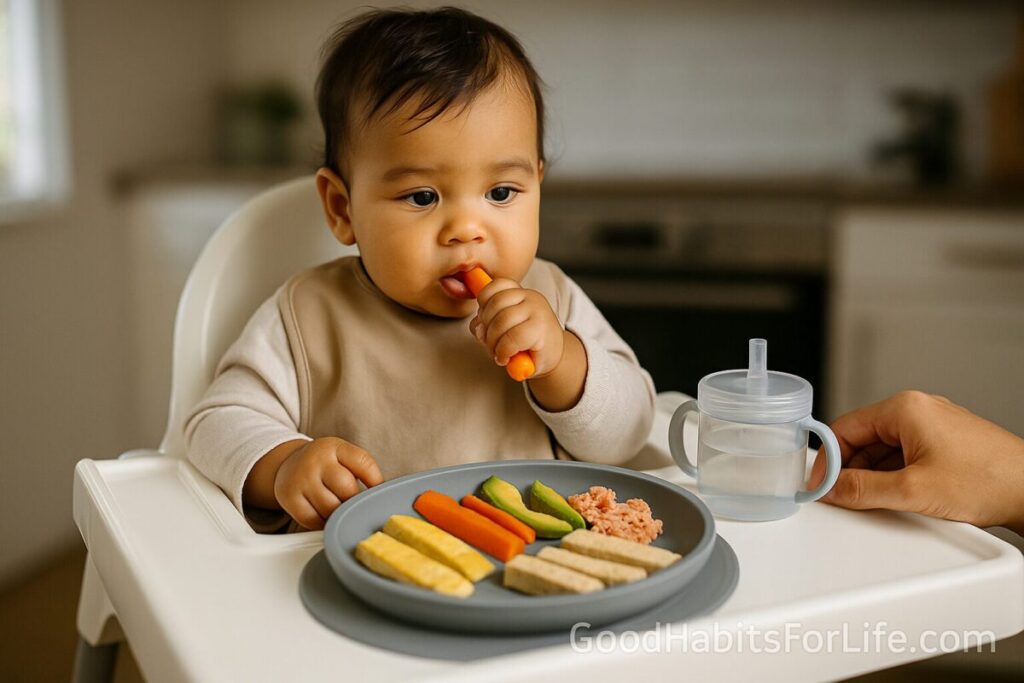
BabyLed Weaning Basics: Shapes, Safety, Sanity: Protein-Forward Plan (2025)
Baby-Led Weaning: Shapes, Safety & Protein Basics (2025)
Table of Contents
🧭 What Baby-Led Weaning Is—and Why It Works
Baby-led weaning (BLW) lets babies self-feed safe, developmentally appropriate pieces from the family table instead of relying only on spoon-fed purées. It’s simply responsive complementary feeding—letting babies lead pace and quantity while adults decide what, when and where. Benefits include motor skill practice, exposure to diverse flavors and textures, and early self-regulation of appetite. Global guidance aligns on introducing complementary foods around 6 months while continuing breastmilk/formula. CDCWorld Health Organization
Why protein-forward? From ~6 months, breastfed infants especially need foods rich in iron and zinc. Prioritizing meats, eggs, legumes, tofu and iron-fortified cereal supports growth, development and energy. MyPlateIris
✅ Is My Baby Ready? Safety & Choking Basics
Your baby is likely ready to start solids when they can:
-
Sit with minimal support and maintain good head/neck control
-
Show interest in food; open mouth and lean in
-
Bring objects to mouth and manage food without tongue-thrust reflex returning
These readiness signs typically appear around 6 months (not before 4 months). CDC
Choking prevention essentials
-
Sit baby upright at ~90° in a high chair; avoid reclined seats and car seats for meals.
-
Offer squish-soft foods (you can smush between fingers).
-
Avoid round, hard, coin-shaped, or sticky foods (e.g., whole grapes, raw carrot coins, hot-dog rounds, chunks/spoonfuls of nut butter, tough meat, popcorn). Modify shapes (see “Shapes & Textures”). CDCHealthyChildren.org
-
Honey is off-limits before 12 months (infant botulism risk). CDC
-
Know infant first aid. (Consider a certified course.) Red Cross
Is BLW safe? RCT and observational data suggest BLW does not increase choking when caregivers receive safety guidance and avoid high-risk foods. PubMed
🛠️ Quick Start: Your First Week Set-Up
-
Seat & space: Stable high chair, feet supported, tray at mid-torso, good lighting.
-
Timing: Offer 1–2 meals/day after a milk feed when baby is alert (not ravenous or overtired).
-
Texture: Start with very soft foods you can mash easily; move toward tender shreddable foods.
-
Allergens: Introduce early and often, one at a time in small amounts (e.g., thinned peanut, well-cooked egg). Keep in rotation if tolerated. NIAID
-
Liquids: Offer sips of water from an open or free-flow straw cup with meals starting around 6 months; keep breastmilk/formula as primary drink until 12 months. nhs.uk
-
Pace: Let baby lead. Expect mess and gagging (a protective reflex) as skills develop.
🍳 Protein-Forward 7-Day Starter Menu (BLW + mixed textures)
Offer milk first, then food. Include an iron/zinc source at each meal. Adjust sizes as per “Shapes & Textures.”
Day 1
-
Breakfast: Iron-fortified oat cereal mixed with breastmilk/formula; steamed pear sticks
-
Lunch: Tender shredded chicken thigh; avocado wedges with lemon
-
Dinner: Steamed carrot sticks; plain whole-milk yogurt (unsweetened)
Day 2
-
Breakfast: Scrambled egg well-cooked, soft curds; kiwi spears
-
Lunch: Red lentil patties (soft); cucumber spear (peeled, de-seeded)
-
Dinner: Flaked salmon (boneless); mashed sweet potato
Day 3
-
Breakfast: Peanut butter thinned with yogurt and spread thinly on toast fingers; ripe banana
-
Lunch: Silken tofu rectangles dusted with ground sesame; soft cooked zucchini batons
-
Dinner: Minced beef and carrot ragu on soft polenta (cut into soft strips)
Day 4
-
Breakfast: Iron-fortified multigrain cereal + mashed berries (watch seeds)
-
Lunch: Turkey meatballs (very tender, no added salt), halved cherry tomatoes peeled & crushed
-
Dinner: Chickpea hummus thinned with water/oil on soft pita fingers; roasted pumpkin sticks
Day 5
-
Breakfast: Omelet strips with spinach (finely chopped); mango cheeks
-
Lunch: Slow-cooked lamb strips; steamed broccoli florets
-
Dinner: Cottage cheese; soft pear pancakes (no added sugar)
Day 6
-
Breakfast: Yogurt + ground walnut/almond (if tolerated) stirred in; soft peach slices
-
Lunch: Black bean mash on toast fingers; roasted bell pepper strips (skin removed)
-
Dinner: White fish (cod) flakes; mashed peas
Day 7
-
Breakfast: Iron-fortified cereal + tahini swirl; strawberries quartered/mashed
-
Lunch: Soft cheese (pasteurized) on polenta fingers; steamed green beans (halved lengthwise)
-
Dinner: Lentil dahl; rice molded into soft logs
Why this works: It repeatedly features iron- and zinc-rich foods (meats, legumes, tofu, fortified cereal) while cycling in allergens (peanut/tree nuts, egg, fish, dairy) in safe forms. MyPlateIrisNIAID
🧠 Shapes & Textures by Stage (with prep examples)
General rule: Start with hand-grippable sticks ~5–6 cm long and 1–2 cm thick (≈2–2.5 in by ½–¾ in). As the pincer grasp develops (8–10 months), move toward pea-sized soft pieces.
High-risk shapes to avoid or modify
-
Rounds/coins: grape rounds, hot-dog coins, raw carrot coins → halve then quarter lengthwise; cook until soft.
-
Sticky globs: thick spoonfuls of nut/seed butter, marshmallows → thin and spread lightly or mix into yogurt.
-
Hard chunks: raw apple/carrot, tough meat → steam/slow-cook or grate/shred.
-
Whole nuts & popcorn: avoid for under-5s; use ground/chopped or smooth butters in thin spreads. CDCnhs.uk
Examples (6–8 months)
-
Avocado wedges; steamed carrot/broccoli; slow-cooked beef strips; omelet strips; thinned peanut on toast fingers.
Examples (9–12 months) -
Pea-sized soft chicken, shredded beef, flaked fish; banana coins mashed slightly; quartered grapes lengthwise; cooked apple pieces. HealthyChildren.org
🧰 Techniques & Frameworks that Make BLW Easier
-
Responsive feeding: You choose what/when/where; baby decides whether/how much. Watch hunger/fullness cues; encourage but don’t force. UNICEFWorld Health Organization
-
Meal rhythm: Offer complementary foods 2–3× daily at 6–8 months and increase over time, with small nutritious snacks after 12 months as desired. World Health Organization
-
Cup practice: Offer sips of water in an open or free-flow cup with meals from ~6 months. Avoid “no-spill” valves that promote sucking over sipping. nhs.uk
-
Salt & sugar: Skip added salt/sugar; keep foods simple and whole. espghan.org
👪 Variations (Vegetarian, Allergy-Risk, Preterm, Cultural)
-
Vegetarian/vegan families: Emphasize beans, lentils, tofu, nut/seed butters (thinned), dairy/soy yogurt, eggs (if not vegan), and iron-fortified cereals. Pair with vitamin-C-rich produce to enhance iron absorption. Consult a clinician/dietitian for fully vegan infants. espghan.org
-
Allergy-risk infants (e.g., severe eczema/egg allergy): Discuss peanut introduction timing with your pediatrician; many will advise testing and/or supervised first exposures. NIAID
-
Preterm/medically complex: Timing and textures may differ; follow your clinician’s individualized plan.
-
Cultural foods: Many traditional dishes adapt beautifully—think soft idli, dal, khichdi, congee, polenta, hummus—just keep textures soft and sodium low. espghan.org
⚠️ Mistakes & Myths to Avoid
-
“BLW means no spoons ever.” False. Mixed approaches are fine—self-feeding of pre-loaded spoons and soft finger foods supports skills and safety.
-
“Choking and gagging are the same.” Gagging is a normal protective reflex. Choking is silent and requires immediate first aid; learn the steps. Red Cross
-
“Honey is a natural sweetener so it’s safe.” Not for <12 months—botulism risk. CDC
-
“Milk in bottles is fine past one.” Transition away from bottles after 12 months; emphasize open/straw cups and water with meals. nhs.uk
🗣️ Real-Life Scripts & Examples
-
Caregiver hand-off: “We’re doing baby-led weaning. Please seat Maya upright, offer her soft strips of chicken and sweet potato, and watch for her to pick up and pace herself. No whole grapes, nuts, or chunks of peanut butter.” CDC
-
Restaurant order: “Can you bring plain steamed veggies cut into finger-size sticks and shredded chicken with no added salt?”
-
Peanut intro at home: “Today we’ll mix ½ tsp smooth peanut butter with yogurt until runny, offer a small amount, wait 10 minutes, then finish the portion if no reaction.” NIAID
-
Family table: “We’ll all eat the same dal and rice—baby gets the dal thicker and rice molded into soft logs.”
🧩 Tools, Apps & Resources
-
CDC Infant & Toddler Nutrition—choking hazards, what/when/how to serve foods. CDC+1
-
AAP HealthyChildren—practical safety lists and choking prevention. HealthyChildren.org
-
NIAID Peanut Guidelines (Parent Summary)—clear steps for peanut introduction. NIAID
-
NHS Start for Life—drinks/cups guidance and safe prep tips. nhs.uk+1
-
First-aid training—American Red Cross infant choking course. Red Cross
📌 Key Takeaways
-
Start complementary foods around 6 months and keep milk feeds central at first. CDC
-
Lead with iron- and zinc-rich options daily; think meats, eggs, beans, tofu, fortified cereal. MyPlate
-
Shape and texture are safety tools—long soft sticks > coins/rounds; thin sticky spreads; avoid whole nuts. CDC
-
Introduce allergens early in safe forms and keep them in the rotation. NIAID
-
Keep mealtimes responsive and pressure-free; progress textures as skills grow. UNICEF
❓ FAQs
1) Can I mix purées and BLW?
Yes. Offer pre-loaded spoons alongside soft finger foods. It’s still responsive feeding. UNICEF
2) How often should my 6- to 8-month-old eat?
Aim for 2–3 small meals/day, increasing frequency as baby grows; offer nutritious snacks after 12 months if desired. World Health Organization
3) What proteins are best for beginners?
Shredded dark-meat chicken, tender beef/lamb, flaky fish, soft omelet strips, tofu rectangles, well-cooked lentils/beans, iron-fortified cereal with vitamin-C-rich fruit. MyPlate
4) How do I serve peanut safely?
Mix smooth peanut butter with yogurt, breastmilk, or warm water to a runny consistency; offer a small amount first. Discuss timing with your pediatrician if baby has severe eczema or egg allergy. NIAID
5) Is water okay at 6 months?
Yes—sips with meals in an open or straw cup; continue milk as the main drink until 12 months. nhs.uk
6) What foods are top choking risks?
Whole grapes/berries, hot-dog coins, raw carrot/apple chunks, popcorn, chunks/spoonfuls of nut butter, whole nuts, tough meat, large cheese chunks/string cheese. Modify or avoid. CDCHealthyChildren.org
7) How do I cut grapes?
Cut lengthwise and then quarter; squish slightly for newer eaters. HealthyChildren.org
8) Why no honey under 12 months?
Risk of infant botulism from spores in honey; wait until after the first birthday. CDC
9) My baby gags a lot—should I stop?
Gagging is common as babies learn. Stay calm, keep textures soft, and avoid high-risk shapes. Learn infant choking first aid to feel prepared. Red Cross
10) We’re vegetarian—can BLW still be protein-forward?
Absolutely—focus on eggs, dairy/soy yogurt, tofu/tempeh, beans, lentils, nut/seed butters (thinned), and iron-fortified cereal with vitamin-C foods. Consider a dietitian for fully vegan planning. MyPlate
📚 References
-
World Health Organization. WHO Guideline for Complementary Feeding of Infants and Young Children 6–23 Months of Age (2023). https://www.who.int/publications/i/item/9789240081864
-
WHO. Complementary feeding (meal frequency). https://www.who.int/health-topics/complementary-feeding
-
Centers for Disease Control and Prevention. When, What, and How to Introduce Solid Foods. https://www.cdc.gov/infant-toddler-nutrition/foods-and-drinks/when-what-and-how-to-introduce-solid-foods.html
-
USDA MyPlate. Nutrition Information for Infants (iron & zinc). https://www.myplate.gov/life-stages/infants
-
American Academy of Pediatrics (HealthyChildren.org). Choking Prevention for Babies & Children. https://www.healthychildren.org/English/health-issues/injuries-emergencies/Pages/Choking-Prevention.aspx
-
CDC. Choking Hazards | Infant & Toddler Nutrition. https://www.cdc.gov/infant-toddler-nutrition/foods-and-drinks/choking-hazards.html
-
NIAID (NIH). Addendum Guidelines for the Prevention of Peanut Allergy – Parent Summary (2017). https://www.niaid.nih.gov/sites/default/files/peanut-allergy-prevention-guidelines-parent-summary.pdf
-
CDC. Foods and Drinks to Avoid or Limit (honey). https://www.cdc.gov/infant-toddler-nutrition/foods-and-drinks/foods-and-drinks-to-avoid-or-limit.html
-
NHS Start for Life. What to feed from around 6 months / Drinks & cups. https://www.nhs.uk/start-for-life/baby/weaning/what-to-feed-your-baby/from-around-6-months/
-
NHS. Preparing food safely for babies. https://www.nhs.uk/start-for-life/baby/weaning/safe-weaning/preparing-food-safely/
-
Fangupo LJ, et al. A Baby-Led Approach to Eating Solids and Risk of Choking. Pediatrics (2016). https://pubmed.ncbi.nlm.nih.gov/27647715/
-
WHO/UNICEF. Responsive Feeding resources. https://www.unicef.org.uk/babyfriendly/baby-friendly-resources/relationship-building-resources/responsive-feeding-infosheet/
Disclaimer: This article is general education, not medical advice. Always follow your pediatrician’s guidance for your child’s specific needs.