
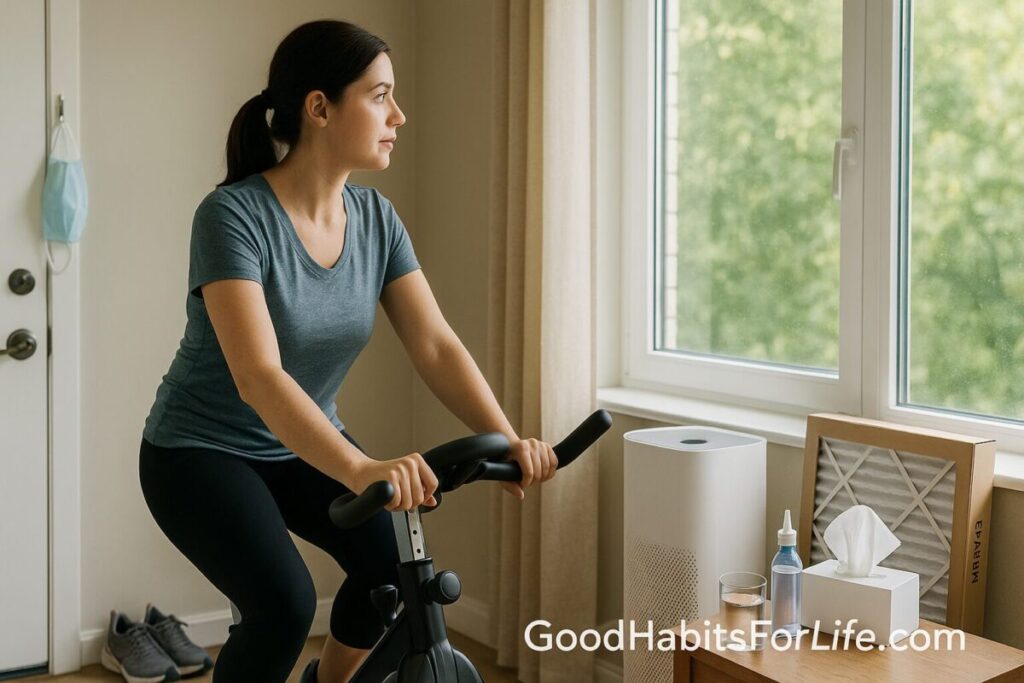
Allergy Season: Filters, Rinses, and Relief: Zone 2 + NEAT (2025)
Allergy Season: Filters, Rinses, and Relief: Zone 2 + NEAT
Table of Contents
🧭 What This Guide Covers & Why It Works
Goal: Cut exposure, clear pollen from airways, calm inflammation, and keep your life moving.
This playbook combines environmental control (HEPA/MERV-13, masks, cleaning), airway care (saline rinses), evidence-based medicines (intranasal steroids, antihistamines), and supportive habits (Zone 2 cardio + NEAT) to improve day-to-day symptoms in allergy season.
Core levers
-
Reduce exposure: Keep indoor air cleaner than outdoors; shut windows on high-pollen days; use HEPA air cleaners and, if your system allows, MERV-13 furnace/AC filters.
-
Flush allergens: Isotonic saline rinses sweep out pollen and reduce nasal swelling.
-
Treat inflammation: Intranasal corticosteroids are first-line for persistent allergic rhinitis; non-sedating antihistamines help sneezing/itching.
-
Support recovery: Moderate aerobic activity (Zone 2) and NEAT can aid sleep and general inflammation balance, while planning activity around pollen levels reduces flares.
✅ Quick Start: Today, Tomorrow, This Week
Today (20 minutes)
-
Check pollen level (local weather app/pollen tracker).
-
Shut windows; run AC on recirculate.
-
Place a portable HEPA unit in the bedroom; run on medium/high while you’re there.
-
Saline rinse this evening (use sterile or previously boiled/cooled water).
-
If symptoms are moderate/severe, start an intranasal steroid (once daily) and a non-drowsy antihistamine (per label or clinician advice).
-
Shower and change clothes after outdoor time; leave shoes by the door.
Tomorrow
-
Walk 25–35 minutes at a pace where you can talk in sentences (Zone 2). Prefer low-pollen times (after rain, late afternoon/evening).
-
Mask (well-fitting) and sunglasses for yard work or windy days.
-
Bedding: Put a weekly hot-wash reminder on pillowcases/sheets.
This Week
-
Vacuum 2–3× with a HEPA-sealed vacuum; damp dust high surfaces.
-
Audit HVAC: If compatible, upgrade to MERV-13; replace per manufacturer interval.
-
Size your HEPA: Aim for 4–5 air changes per hour (ACH) in the bedroom.
-
Set a rinse routine: 1–2×/day during peak days; taper when counts fall.
-
Track symptoms (0–10 scale) and triggers (windy yard work, morning runs, etc.).
🛠️ 30-60-90 Day Habit Plan
Days 1–30: Stabilize
-
Bedroom first: Run a correctly sized HEPA purifier nightly.
-
Med routine: Daily intranasal steroid (steady benefits after ~1–2 weeks). Add non-sedating antihistamine as needed.
-
Rinses: 1× daily on high-pollen days (AM or PM), 2× if very congested.
-
Zone 2: 3–4 sessions/week, 25–40 min each.
-
NEAT baseline: Add 2,000–3,000 steps/day (walk after meals, take calls standing).
-
Home tweaks: Doormats inside/outside; no line-drying laundry outdoors during peaks; pets brushed/wiped down.
Days 31–60: Optimize
-
Filter maintenance: Replace HEPA/HVAC filters on schedule; note dates.
-
Room 2: Add a HEPA to your main living area if you spend >3 hours/day there.
-
Pollen-smart schedule: Move runs/errands to low-count windows; indoor workouts when counts spike.
-
Micro-NEAT: 5-minute mini-walk per hour (timer).
-
Symptom review: If still struggling, discuss leukotriene antagonist, antihistamine eye drops, or allergy immunotherapy with a clinician.
Days 61–90: Personalize & Future-proof
-
Seasonal calendar: Save reminders for pre-season steps (start steroid spray 1–2 weeks before usual onset; stock filters/saline).
-
Yard strategy: Mow before flowering; delegate or mask up; rinse after.
-
Travel kit: Compact HEPA, saline pods, spray, antihistamine, spare masks, sunglasses.
-
Immunotherapy decision: If seasonal misery returns yearly, book an allergy consult.
🧠 Techniques & Frameworks
AIR Framework — Avoid • Irrigate • Reduce
-
Avoid: Check pollen forecasts; windows shut on peak days; recirculate car AC; mask/sunglasses outdoors.
-
Irrigate: Isotonic saline once/twice daily during spikes; always use sterile/boiled water; clean bottle/neti pot each use.
-
Reduce: HEPA/MERV-13, vacuum with sealed HEPA, hot-wash bedding weekly, shower post-outdoors.
CAMP Framework — Clean Air • Meds • Plan • Pace
-
Clean Air: Bedroom HEPA sized for 4–5 ACH; HVAC MERV-13 if system allows.
-
Meds: First-line intranasal corticosteroid; add non-drowsy antihistamine; consider antihistamine eye drops for itchy eyes.
-
Plan: Batch errands; mow/walk post-rain; masks on windy polleny days.
-
Pace: Keep workouts comfortable (Zone 2) during peaks; move indoors if needed.
🏃 Zone 2 + NEAT: How Movement Helps
-
Zone 2 (easy conversational cardio, ~60–70% max heart rate): supports aerobic capacity, sleep quality, and general inflammation balance. Many people find a light session temporarily opens the nose and improves energy.
-
NEAT (Non-Exercise Activity Thermogenesis): small all-day movements (standing, steps, light chores) keep blood flow up, help glucose regulation, and support weight maintenance—useful because weight and poor sleep can worsen nasal obstruction.
How to implement during allergy season -
Prefer indoor cardio when pollen is high (treadmill, indoor cycling, rowing).
-
If outdoors, go after rain or later in the day, wear sunglasses/mask, and rinse/shower afterward.
-
Aim for 150–300 minutes/week of moderate activity plus more daily steps, broken into 10–15-minute bouts if energy is low.
👨👩👧 Audience Variations
Parents & Kids
-
Make rinses a “2-minute bathroom routine” with a sticker chart.
-
Use child-appropriate sprays/doses and check age limits.
-
Keep a car kit (tissues, saline spray, spare masks).
-
Wash soft toys weekly in hot water or rotate a few favorites.
Students
-
Dorm room HEPA; keep windows closed during peak hours.
-
Schedule runs after rain; keep spare rinse bottle in the shower caddy.
-
Ask for classroom seating away from open windows/fans that blow pollen.
Professionals
-
Desk-side mini HEPA if the office has open windows or heavy foot traffic.
-
Block late-afternoon Zone 2 walk on calendar; take calls while walking.
-
Keep antihistamine eye drops in the bag; rinse post-commute if biking.
Seniors
-
Review meds with a clinician (decongestant cautions, interactions).
-
Choose low-fall-risk movement (indoor track, recumbent bike).
-
Use humidifier only if the air is very dry; clean it strictly to avoid mold.
⚠️ Mistakes & Myths to Avoid
-
Using tap water for neti/rinses. Always use sterile, distilled, or boiled-then-cooled water.
-
Overusing nasal decongestant sprays (>3 days) → rebound congestion.
-
Buying an undersized HEPA. Size for 4–5 ACH in the actual room you occupy most (usually the bedroom).
-
Outdoor workouts at dawn on high-pollen days (often peak counts).
-
Assuming supplements “cure” allergies. Evidence for most is limited; stick to proven basics.
-
Letting pets sleep on the bed during peak season (pollen catches on fur).
💬 Real-Life Examples & Scripts
Rinse Routine (script to self/child)
“We rinse after brushing at night. Fill to the line with boiled-cooled water, add the salt packet, lean over the sink, mouth open, and gently pour. Switch sides. Pat dry.”
Work Email (desk purifier request)
“Hi Facilities—pollen levels are high this month and my doctor recommends reducing indoor allergens. Would it be possible to place a small HEPA unit near my workstation for the next 6 weeks?”
Yard Day Plan
-
Mask + sunglasses → mow → bag clothes → quick shower → saline rinse → living-room HEPA on high for 1 hour.
Sizer note for HEPA
-
Room: 12 m² × 2.5 m height = 30 m³. For 5 ACH, target 150 m³/h CADR (or higher).
🧰 Tools, Apps & Resources
-
Pollen & Weather: Local weather app with pollen feed; national meteorological service; community air-quality apps.
-
HEPA Purifiers: Look for published CADR and sealed HEPA H13/H14 filters; avoid ionizers/ozone producers.
-
Rinse Kits: Squeeze bottle or neti pot; pre-measured salt/bicarbonate packets; distilled water or kettle + timer to cool.
-
Masks & Eyewear: Comfortable, well-fitting masks; wraparound sunglasses on windy days.
-
Habit Trackers: Any steps app; calendar reminders for filter changes and pre-season prep.
📌 Key Takeaways
-
Keep indoor air clean (HEPA + MERV-13) and rinse regularly with sterile water.
-
Use intranasal steroids consistently; add non-drowsy antihistamines as needed.
-
Plan pollen-smart movement with Zone 2 + NEAT to stay active without flares.
-
Mask, shower, change after outdoor exposure.
-
Track symptoms and adjust; consider immunotherapy if yearly symptoms stay severe.
❓ FAQs
1) Are HEPA purifiers really worth it for pollen?
Yes. Certified HEPA captures very small particles, including many pollen fragments that stay airborne indoors. Size the unit for your room (4–5 ACH).
2) MERV-13 vs HEPA—what’s the difference?
MERV-13 is an HVAC filter rating; if your system supports it, it reduces fine particles through the whole home when the fan runs. HEPA is a standalone filter standard for room purifiers. Many homes benefit from both.
3) How often should I rinse my nose?
During peak pollen: 1–2×/day. Use isotonic saline, sterile/boiled-cooled water, and clean devices thoroughly.
4) Which allergy medicine should I start with?
For persistent symptoms, intranasal corticosteroids are typically first-line; add a non-drowsy antihistamine for itching/sneezing. Ask a clinician about the best combo for you.
5) Are steroid nasal sprays safe long-term?
When used as directed, intranasal steroids are generally safe with minimal systemic absorption. Use the lowest dose that controls symptoms and review if you need long-term use.
6) Do masks actually help with hay fever?
Yes—well-fitting masks reduce inhaled pollen and can lessen symptoms outdoors, especially on windy days or during yard work.
7) Can exercise make allergies worse?
Hard outdoor workouts during high pollen can flare symptoms. Moderate Zone 2 activity, especially indoors on high-pollen days, is usually well tolerated and supports sleep and overall wellbeing.
8) When should I see an allergist?
If symptoms persist despite consistent meds/environmental control, if you have asthma symptoms, frequent sinus infections, or you’re considering allergy immunotherapy.
9) Are steam inhalations recommended?
Not for allergies; they don’t remove pollen and can cause burns. Saline rinses are safer and more effective.
10) What about eye symptoms?
Add lubricant drops and consider antihistamine/mast cell stabilizer eye drops. Wear wraparound sunglasses outside.
📚 References
-
U.S. EPA. Guide to Air Cleaners in the Home (HEPA, CADR, ozone cautions). https://www.epa.gov/indoor-air-quality-iaq/guide-air-cleaners-home
-
AAAAI. Allergic Rhinitis (Hay Fever) & Management. https://www.aaaai.org/tools-for-the-public/conditions-library/allergies/allergic-rhinitis
-
Cochrane Library. Nasal saline irrigation for allergic rhinitis—evidence summary. https://www.cochranelibrary.com/
-
MedlinePlus (NIH). Allergic Rhinitis Overview. https://medlineplus.gov/allergicrhinitis.html
-
NICE (UK). Allergic Rhinitis: Management recommendations. https://www.nice.org.uk/
-
WHO. Physical activity guidelines for adults and older adults. https://www.who.int/news-room/fact-sheets/detail/physical-activity
-
Cleveland Clinic. Rhinitis Medicamentosa (rebound congestion). https://my.clevelandclinic.org/health/diseases/23393-rhinitis-medicamentosa
-
AAAAI. Nasal Irrigation Safety (distilled/boiled water guidance). https://www.aaaai.org/tools-for-the-public/conditions-library/allergies/nasal-rinse
-
CDC. Allergies—Pollen & seasonal tips. https://www.cdc.gov/asthma/air_pollution/pollen.html
-
Mayo Clinic. Allergy medications: Types and tips. https://www.mayoclinic.org/diseases-conditions/hay-fever/in-depth/hay-fever-medications/art-20047403
⚖️ Disclaimer
This guide is educational and not a substitute for personalized medical advice. Consult a qualified clinician for diagnosis and treatment decisions, especially if you have asthma or other chronic conditions.