
AF Communities & Clubs (2025): Find Your People
Alcohol-Free Communities & Clubs (2025): Find Your People
Table of Contents
🧭 What Are Alcohol-Free Communities & Why They Work
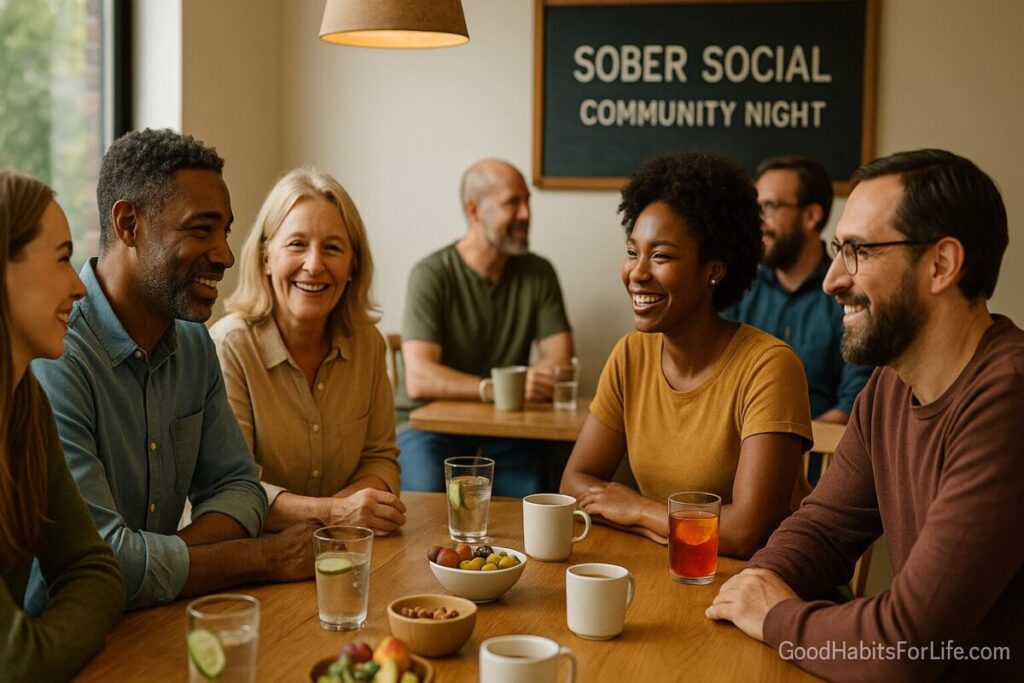
Alcohol-free communities are groups—local or online—where people come together to reduce or quit drinking, learn skills, and socialize without alcohol. They range from structured mutual-help programs (e.g., AA, SMART Recovery) to sober social clubs, online forums, and app-based check-ins.
Why they work
-
Belonging & identity. Being around people with the same goal strengthens a “sober-supportive” identity and norms. Social support consistently predicts better outcomes in behavior change.
-
Practical skills. Many communities teach cognitive, mindfulness, or 12-step coping tools for cravings, triggers, and high-risk situations.
-
Access & continuity. Meetings run daily across time zones—so help is available when motivation dips.
-
Evidence. Research shows mutual-help participation can improve abstinence rates and reduce healthcare costs versus some standalone clinical approaches. Pairing community with clinical care (if needed) is often most effective.
Bottom line: information helps; ongoing connection keeps you going.
✅ Quick Start: Find Your People Today
-
Set your goal. Absent, sober-curious, or moderation? Write it in one sentence.
-
Pick 2–3 styles to sample this week (e.g., AA + SMART + a sober social club).
-
Search & shortlist. Use the resource index below; add meeting times you can actually attend.
-
Attend 3–6 meetings before judging any approach. Different groups feel different.
-
Introduce yourself simply (script below). Stay camera-off or use a display name if online.
-
Follow the energy. Notice where you feel safe, seen, and motivated.
-
Add one person. Exchange numbers with someone you respect; ask to be “accountability buddies.”
-
Stack a daily micro-habit. 2-minute craving log, 10-minute walk, or “urge surfing” exercise.
-
Review weekly. What helped? What will you try next week?
🧠 The 2025 Landscape: Types of Communities & Clubs
Below are common options with typical vibes—sample before you settle.
| Program / Club | Core Approach | Best For | Typical Format | Notes |
|---|---|---|---|---|
| Alcoholics Anonymous (AA) | 12-step, peer-led, abstinence | Those seeking a spiritual/12-step path | In-person/online meetings, sponsor system | Ubiquitous schedule; group culture varies by meeting. |
| SMART Recovery | Cognitive & motivational tools; secular | People wanting CBT-style skills | Facilitated meetings + worksheets | Strong focus on thinking patterns & cravings. |
| LifeRing Secular Recovery | Secular, empowerment-based | Secular community with peer leadership | “How was your week?” circles | Emphasis on personal strengths. |
| Women for Sobriety (WFS) | Women-only, positive self-talk | Women seeking gender-specific space | Meetings + affirmations | Smaller groups; strong community feel. |
| Refuge Recovery | Buddhist-inspired mindfulness & ethics | Mindfulness practitioners | Meditation + readings | Secular Buddhist framing; meditation skills. |
| Moderation Management (MM) | Moderation skills & tracking | Sober-curious or goal to cut down | Online forums + meetings | Clear rules & self-monitoring tools. |
| Sober social clubs (e.g., Club Soda; local “sober-curious” meetups) | Alcohol-free events, fitness, cafes | People wanting friends & fun sans alcohol | Walks, workshops, mocktail nights | Great for lifestyle & identity building. |
| Peer apps & forums (I Am Sober, Sober Grid, r/stopdrinking) | Daily check-ins, streaks, peer posts | 24/7 connection & tracking | App feeds, milestones | Use thoughtfully; curate your feed. |
| Family & allies (Al-Anon/Alateen) | Support for loved ones | Partners, parents, teens | Peer-led groups | Not for your own use reduction—supports families. |
Tip: Two-track support is powerful—one skills group + one social club.
🧩 How to Choose the Right Group (Fit Checklist)
Use this quick FIT test after a meeting:
-
F—Feel: Did you feel safe, respected, not judged?
-
I—Ideas: Did you hear tools you can use this week?
-
T—Time: Are there 2–3 convenient meetings you could realistically attend?
Also consider:
-
Goal match: Abstinence vs. moderation.
-
Beliefs: Secular vs. spiritual language.
-
Access: Location, wheelchair access, women-only/LGBTQIA+ affirming, low-sensory options, childcare.
-
Privacy: Camera-off allowed? First-names only?
-
Cost: Most are free/donation-based; some clubs charge event fees.
If you’re in medical risk (e.g., withdrawal history, seizures, heavy daily use), seek medical advice before stopping abruptly and combine community with clinical care.
🚀 30-60-90 Day Support Plan
Day 0–7 (Stability)
-
Attend 3 different meetings; choose one “home group.”
-
Add one buddy; exchange check-in times.
-
Daily micro-habit: 2-minute urge log (trigger → feeling → action taken).
-
Replace one alcohol-linked time block with a new routine (walk, tea, phone call).
Day 8–30 (Skills)
-
Attend 2–3 meetings/week (mix of styles).
-
Learn 3 coping tools: urge surfing, “play the tape forward,” and ABC (Activating event–Belief–Consequence).
-
Decline scripts ready (see below).
-
Join one sober social event.
Day 31–60 (Identity)
-
Start helping (share wins, welcome newcomers).
-
Plan alcohol-free rewards (cinema, gear, class).
-
Build a relapse plan (people to call, steps to take).
-
Celebrate a 30-day milestone with your group.
Day 61–90 (Momentum)
-
Commit to one leadership micro-role (timekeeper, greeter).
-
Add fitness or mindfulness habit 3×/week.
-
Host a mocktail evening or sober brunch with your club.
-
Book a 90-day reflection with your buddy; update goals.
📚 Techniques & Frameworks (Practical)
-
Urge Surfing (mindfulness): Notice the craving as a wave; breathe 10 slow cycles; watch it peak and pass (usually <30 minutes).
-
If–Then Plans: “If it’s 6–8 pm (craving window), then I go for a 15-minute walk and text my buddy.”
-
Trigger Map: People, places, times; plan a swap (different route, alt drink, new routine).
-
Cognitive Reframe: Replace “I can’t drink” with “I choose what helps my future self.”
-
HALT Check: Hungry, Angry, Lonely, Tired—address the “real” need first.
-
SUDS Scale (0–10): Rate urge; act when ≥4 (tools above), re-rate after 10 minutes.
👥 Audience Variations
-
Students/Teens: Look for campus recovery/sober-curious societies; prioritize late-afternoon meetings; add sport or gaming nights.
-
Parents/Caregivers: Seek daytime or childcare-friendly meetings; agree on household boundaries and scripts with partners.
-
Professionals: Early morning or lunchtime meetings; practice decline scripts for client dinners; add travel routines.
-
Seniors: Choose accessible venues; pair meetings with gentle activity (walk, tai chi); consider tele-meetings for mobility.
-
LGBTQIA+: Many groups offer explicitly inclusive meetings—sample those to maximize psychological safety.
⚠️ Mistakes & Myths to Avoid
-
Myth: “If one meeting felt off, the whole approach is wrong.” → Try different groups; culture varies widely.
-
Myth: “I must pick one path forever.” → Mix and match; your needs evolve.
-
Mistake: Going it alone. → Add at least one human touchpoint per day.
-
Mistake: All-or-nothing thinking after a slip. → Treat it as data; reconnect the same day.
-
Myth: “Sober fun is boring.” → Social clubs prove the opposite—schedule fun early.
💬 Real-Life Scripts (Copy & Paste)
-
First meeting intro: “Hi, I’m ___; I’m exploring alcohol-free living and here to learn what works for you.”
-
Ask for a buddy: “I value accountability—would you be open to quick check-ins this week?”
-
Declining a drink (work): “I’m off alcohol for a while—sparkling water for me. What do you recommend?”
-
Party exit line: “Early start tomorrow—I’m heading out. Great to see you.”
-
After a slip: “I had a drink yesterday. I’m back today and would love your tips for evenings 6–8 pm.”
📲 Tools, Apps & Resources
-
NIAAA Alcohol Treatment Navigator: Evidence-based help to find treatment and mutual-help options (US). Pro: science-based; Con: US-centric.
-
SAMHSA FindTreatment & Helpline (US): 24/7 confidential support; includes withdrawal/medical info.
-
Meetup / Eventbrite: Search “sober,” “alcohol-free,” “mocktail,” “club soda,” “recovery.”
-
I Am Sober / Sober Grid / Loosid / Reframe: Daily counters, community, and CBT-style exercises. Pro: constant support; Con: notifications can be overwhelming.
-
r/stopdrinking (Reddit): Huge global forum; strong daily check-in threads. Con: internet noise—curate carefully.
-
Club Soda (UK/global) & local sober clubs: Courses, socials, festivals; growing international chapters.
-
Moderation Management, SMART, LifeRing, Refuge, WFS, AA: Official sites list meetings by location & time.
📌 Key Takeaways
-
Community multiplies willpower; connection beats white-knuckling.
-
Try several formats; choose the one that fits your goals and values.
-
Make a 90-day plan with meetings + buddy + daily micro-habit.
-
Protect privacy and safety; you decide what to share and when.
-
Keep it fun—sober socials cement a sustainable identity.
❓ FAQs
1) What if I’m not ready to quit, just curious?
Try sober-curious socials or Moderation Management and track alcohol-free days. Sampling doesn’t lock you in.
2) How many meetings should I attend?
Early on, aim for 2–3 per week for momentum. After 60–90 days, you’ll know whether to maintain, increase, or taper.
3) Is online as good as in-person?
Both help. In-person aids bonding; online wins on access and frequency. Many people combine them.
4) What if I don’t like 12-step language?
Try secular options like SMART, LifeRing, or Refuge Recovery (mindfulness-based). Fit matters more than labels.
5) How do I handle friends who pressure me to drink?
Use brief, confident scripts, change the venue, arrive/leave on your schedule, and line up an after-event debrief with a buddy.
6) Can I do this without therapy?
Many do, but if you have heavy use, withdrawal risks, co-occurring anxiety/depression, or repeated slips, add professional care alongside community.
7) What if I slip?
Treat it like a data point: identify triggers, call your buddy, attend the next meeting, and update your plan for the next high-risk window.
8) Are there alcohol-free clubs just for fun?
Yes—look for sober-curious meetups, running clubs, climbing/board-game nights, mocktail workshops, and alcohol-free bars.
📚 References
-
World Health Organization. Global alcohol action plan 2022–2030. https://www.who.int
-
Centers for Disease Control and Prevention. Alcohol and Your Health. https://www.cdc.gov/alcohol
-
Kelly JF, Humphreys K, Ferri M. Alcoholics Anonymous and other 12-step programs for alcohol use disorder. Cochrane Database Syst Rev. 2020. https://doi.org/10.1002/14651858.CD012880.pub2
-
National Institute on Alcohol Abuse and Alcoholism (NIAAA). Treatment for Alcohol Problems: Finding and Getting Help. https://www.niaaa.nih.gov
-
National Institute for Health and Care Excellence (NICE). Alcohol-use disorders: diagnosis, assessment and management. https://www.nice.org.uk
-
Tracy K, Wallace SP. Benefits of peer support groups in the treatment of addiction. Subst Abuse Rehabil. 2016. https://www.ncbi.nlm.nih.gov/pmc/articles/PMC5047716
-
SAMHSA. FindTreatment.gov & National Helpline. https://www.samhsa.gov
-
Witkiewitz K, Marlatt GA. Relapse prevention for alcohol and drug problems: that was Zen, this is Tao. Am Psychol. 2004.
-
Moos RH. Active ingredients of substance use-focused self-help groups. Addiction. 2008.
-
Public Health England (now OHID). Alcohol: applying All Our Health. https://www.gov.uk
Disclaimer: This article is for general education; if you have heavy use, medical conditions, or withdrawal risk, seek professional medical advice before changing drinking patterns.