
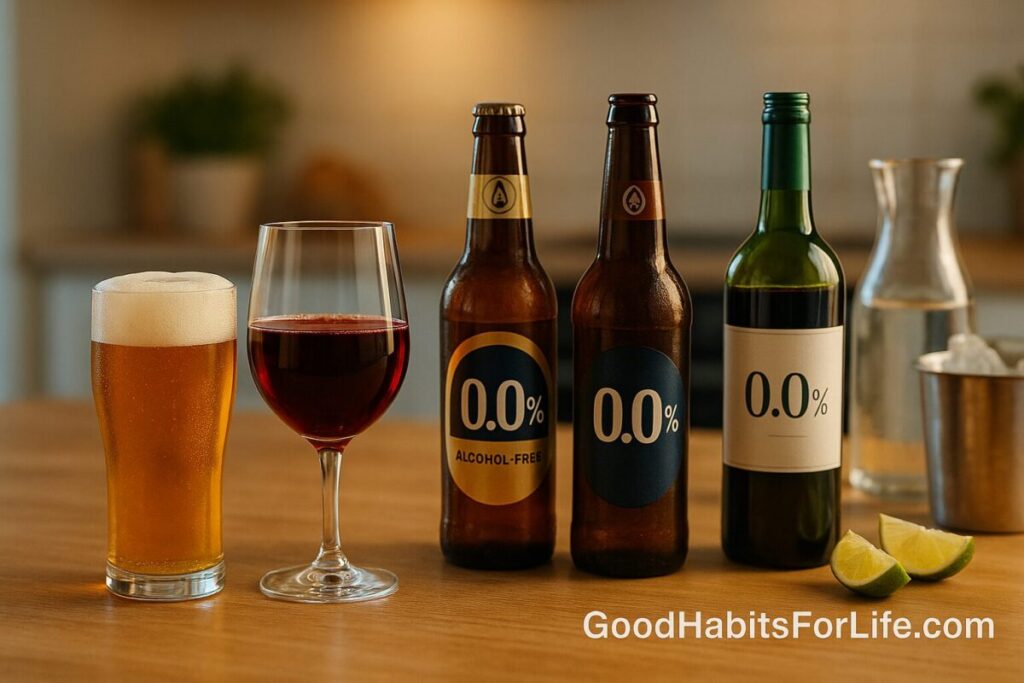
NA Beer & Wine 2025: What Actually Tastes Good
NA Beer & Wine (2025): What Actually Tastes Good
Table of Contents
🧭 What “Non-Alcoholic” Means in 2025
Getting labels right helps you pick confidently and serve safely.
-
United States (beer/malt beverages). “Non-alcoholic” can appear only if the label also states “contains less than 0.5% alcohol by volume.” “Alcohol-free” is allowed only if the beverage contains no alcohol. TTB
-
England/UK (all categories). “Alcohol-free” = ≤0.05% ABV; “de-alcoholised” = ≤0.5% ABV; “low alcohol” = ≤1.2% ABV. GOV.UKUK Government Publishing
Health note. Major public-health bodies emphasize that no level of alcohol is safe for health. NA choices help reduce exposure; still, read nutrition panels for sugar and calories. World Health Organization+1
Standard drinks refresher (for context). A US standard drink = 14 g (0.6 fl oz) pure alcohol; NA options sit far below this. Rethinking DrinkingNIAAA
🧠 Why Taste Is Better Now
Today’s NA beer and wine are not the “near beer” of old. Two big shifts:
-
Smarter production methods.
-
Beer: Arrested fermentation, special yeast, vacuum evaporation, and membrane separation are used strategically so aroma compounds and hop oils stay intact. Wiley Online LibraryMDPI
-
Wine: Reverse osmosis and vacuum distillation/spinning cones remove ethanol at low temperatures to preserve varietal character (think Sauvignon Blanc’s citrus or Cab’s cassis). Wiley Online LibraryPMC
-
-
Flavor balancing.
Removing ethanol can thin body and amplify acidity/bitterness. Many NA wines restore balance with a touch of sweetness; studies show ~40 g/L sugar can make fully dealcoholised Chardonnay more acceptable to tasters. (Translation: not “dessert sweet,” just enough for mouthfeel.) oeno-one.eu+1
Reality check on sugar & calories. Some NA beers/wines add carbs to rebuild body; check the label and compare brands. A small 2022 trial found metabolic differences after daily alcohol-free beers versus water—so moderation still matters. PMC
✅ Quick-Start: Your First Great Six-Pack & Mixed Case
Want instant wins? Use this buy list by style (availability varies):
Beer (mix-six):
-
Crisp lager/pils: German-style 0.0–0.5% options tend to be clean, bready, and refreshing.
-
Hazy/juicy IPA: Modern NA hazies pack expressive hops (citrus/tropical) with convincing mouthfeel.
-
Dark/malty: NA stouts/porters often taste fuller because roasted malts carry flavor without relying on alcohol.
Wine (4 bottles):
-
Sparkling (Brut/Extra Brut): Carbonation = texture + aroma lift; top NA bubblies feel closest to “the real thing.”
-
Aromatic white (Sauvignon Blanc/Riesling): Naturally high aromatics shine post-dealcoholization.
-
Rosé: Good summer all-rounder; look for dry styles.
-
Red (Cab/Merlot/PN): Choose producers that blend in polyphenol-rich components or oak tea to rebuild structure (common in 2025 releases).
Serving tips (taste boost):
-
Beer: 4–7 °C (39–45 °F) for lagers; 7–10 °C (45–50 °F) for ales.
-
Wine: Sparkling 6–8 °C, aromatic whites 7–10 °C, reds 12–15 °C; use proper glassware to focus aroma.
🛠️ 30-60-90 Habit Plan (Social & Home)
Days 1–30 (Foundations):
-
Week 1: Replace weeknight pours with NA lagers/sparkling; log preferences.
-
Week 2: Try two styles you don’t usually buy (e.g., hazy IPA + SAUV BLANC).
-
Week 3: Host a mini tasting: 3 beers + 2 wines; rate 1–5 on aroma, body, finish.
-
Week 4: Lock a go-to: 1 house lager, 1 aromatic white, 1 bubbly.
Days 31–60 (Social mastery):
-
Bring your own favorite to gatherings; pre-chill and pour confidently.
-
Restaurants: ask, “What 0.0% sparkling or de-alcoholised whites do you have by the glass?”
Days 61–90 (Lifestyle):
-
Pairings:
-
Lager + Indian chaat or pizza
-
Hazy IPA + burgers or smoky paneer
-
Aromatic white + Thai/Chinese
-
Sparkling + anything salty/spicy
-
-
Set a Dry Week each month; schedule delivery of your top three NA picks.
🏅 What Actually Tastes Good (By Style)
🍺 Beer: Styles that over-deliver
-
German-style lager/pils (0.0–0.5%). Clean malt, gentle noble hops. Look for “isotonic” or “Alkoholfrei” on EU imports; these often ace refreshment.
-
Hazy/NEIPA. High hop aroma (citra/mosaic) + soft water profile mimic “real” IPA body without ethanol’s weight.
-
Wheat/hefe-style. Isoamyl acetate (banana) and clove show up even after dealcoholization—great with brunch.
-
Stout/porter. Roast barley and oats provide weight; expect coffee/cocoa notes at modest bitterness.
Why these work: Beer flavor is hop oils + yeast by-products + malt. Modern NA processes keep these volatile aroma compounds intact. Wiley Online Library
🍷 Wine: Styles that shine
-
Sparkling (Brut/Extra Brut). Bubbles lift aroma and mimic mouthfeel. Dry styles avoid cloying sweetness.
-
Aromatic whites (Sauvignon Blanc, Riesling, Gewürztraminer). Strong varietal terpenes survive low-temp ethanol removal. Wiley Online Library
-
Rosé (dry). Crisp fruit + chilled service = crowd-pleaser.
-
Structured reds. Best when producers rebuild mid-palate (tannin/acid balance) after dealcoholization; emerging 2025 techniques focus on phenolic management. PMC
Sugar reality in NA wine: Small additions can improve body and acceptance; research finds acceptability sharply improves around ~40 g/L for fully dealcoholised Chardonnay—so “dry” on the label may still taste off-dry. Check grams per 100 mL. oeno-one.eu+1
👥 Audience Variations
-
Students/Young professionals: Budget? Start with supermarket NA lagers and NA sparkling tea + bubbly. Use campus events as low-pressure tastings.
-
Parents: Keep 0.0% options for pregnancy/feeding windows; store separately from alcoholic bottles.
-
Professionals/Entertainers: Bring branded glassware and NA sparkling to client dinners; it reads festive and inclusive.
-
Seniors: Pair NA drinks with hydration and meds review; choose 0.0% if medications interact with alcohol.
-
People in recovery: Many prefer 0.0% or avoiding beer-like cues altogether. Consider alternatives (sparkling waters, adult sodas). When in doubt, skip it.
⚠️ Mistakes & Myths to Avoid
-
Myth: “Non-alcoholic” = zero alcohol everywhere. Not true; definitions differ. Check the ABV and descriptor. TTBGOV.UK
-
Mistake: Serving too warm. Chilled service transforms NA taste and mouthfeel.
-
Myth: NA beer will get you drunk. In small studies, even 1.5 L in an hour didn’t measurably impair healthy adults; intoxication from 0.5% ABV is practically difficult. Choose 0.0% if you need zero. dxjcdxuv6chk2.cloudfront.net
-
Mistake: Ignoring sugar. Some NA wines add sugar for balance; compare nutrition panels, especially for daily drinkers. oeno-one.eu
-
Myth: NA equals “health drink.” It’s a lower-risk choice than alcohol, but health impact still depends on overall diet, sugar, and quantity. World Health Organization
💬 Real-Life Scripts (Copy-Paste)
-
At a bar: “Do you have a 0.0% lager or hazy NA IPA? What’s your driest NA bubbly by the glass?”
-
At a party: “I’m doing a dry week—mind if I stock the ice bucket with some 0.0% bottles?”
-
At dinner: “Could we start with an alcohol-free sparkling and a de-alcoholised Sauvignon Blanc for mains?”
-
With friends: “I’m tasting my way through NA styles—want to split a mixed six?”
📚 Tools, Apps & Resources
-
Rethinking Drinking (NIAAA) — track habits and plan cutbacks. Rethinking Drinking
-
Try Dry (Alcohol Change UK) — challenge-style tracking and badges (UK).
-
Label literacy: Look for ABV, grams sugar/100 mL, calories/100 mL.
-
Glassware & temp: Use proper flutes/tulips for bubbles; nonic/pint for lagers; Teku for hop-forward ales.
🔑 Key Takeaways
-
Label terms vary: US “non-alcoholic” (<0.5%); UK “alcohol-free” (≤0.05%). Know your market. TTBGOV.UK
-
Taste has improved due to modern membrane and vacuum tech that preserve aroma. Wiley Online Library
-
Sparkling and aromatic whites excel in NA wine; lagers, hazies, and dark ales shine in NA beer.
-
Sugar can be higher in some NA wines to rebuild body—compare labels. oeno-one.eu
-
Health: less alcohol is better; NA helps—but nutrition still counts. World Health Organization
❓ FAQs
1) Is “non-alcoholic” the same as “alcohol-free”?
No. In the US, “alcohol-free” is only for 0.0%; “non-alcoholic” can be up to 0.5% ABV. In England, “alcohol-free” is ≤0.05% ABV. Always check labels. TTBGOV.UK
2) Can I get drunk on NA beer?
For healthy adults, reaching impairment from 0.5% beers is very unlikely; a lab study found no measurable impairment after 1.5 L in an hour. If you need zero, choose 0.0%. dxjcdxuv6chk2.cloudfront.net
3) Which NA wine tastes most like “the real thing”?
Brut/Extra-Brut sparkling and aromatic whites (e.g., Sauvignon Blanc) usually deliver the most convincing flavor after dealcoholization. Wiley Online Library
4) Why do some NA wines taste sweet?
Removing alcohol thins body and highlights acidity; small sugar additions (e.g., ~40 g/L in research on fully dealcoholised Chardonnay) can restore balance. oeno-one.eu
5) Are NA drinks healthy?
They avoid alcohol’s risks (no safe level), but sugar and calories still matter. Think of NA beer/wine as lower-risk, not a health beverage. World Health Organization
6) What about pregnancy, recovery, or meds?
Choose 0.0% products and consult a clinician if in doubt. Many people in recovery prefer to avoid beer-like cues entirely.
7) Do NA beers hydrate?
Some are marketed “isotonic,” but for hydration, water still wins. Treat NA beer as a flavorful beverage, not a sports drink.
8) Any pairing rules for NA?
Match intensity: lagers with salty/fried foods; hazies with grilled and spicy; aromatic whites with aromatic cuisines; bubbles with snacks and celebrations.
References
-
US TTB — Malt Beverage Labeling: Alcohol Content (rules for “non-alcoholic” and “alcohol-free”). TTB
-
UK Gov — Labelling guidance for no/low-alcohol (definitions for alcohol-free, de-alcoholised, low alcohol). GOV.UK
-
WHO — No level of alcohol consumption is safe for our health; Alcohol Fact Sheet. World Health Organization+1
-
NIAAA — What’s a Standard Drink? (14 g ethanol; context for risk reduction). Rethinking DrinkingNIAAA
-
Piornos JA et al., 2023 — Alcohol-free and low-alcohol beers: Aroma chemistry & quality (Comprehensive Review). Wiley Online Library
-
Akhtar W et al., 2025 — Dealcoholized wine: techniques & sensory impacts (Review). Wiley Online Library
-
Sam FE et al., 2021 — Membrane vs thermal dealcoholization (impact on wine aroma). PMC
-
Podworny M et al., 2024 — Fully dealcoholised Chardonnay: sugar & acceptance (OENO One). oeno-one.eu+1
-
Lamiquiz-Moneo I et al., 2022 — Alcohol-free beers with modified carbohydrate composition: metabolic effects. PMC
-
University of Freiburg study (Erdinger summary) — No impairment after 1.5 L NA beer in 1 h (healthy adults). dxjcdxuv6chk2.cloudfront.net
Disclaimer: This guide is educational and not medical advice. If you’re pregnant, on medications, or in recovery, choose 0.0% options and consult a licensed clinician.