
Study Nutrition: Glycemic Steady for Focus
Study Nutrition: Keep Glycemic Steady for Focus
🧭 What & Why
Definition (plain-English): Glycemic steady means keeping your blood glucose within a gentle, stable range—no big spikes, no hard crashes—so your brain has a consistent fuel supply during study blocks. Foods that raise glucose slowly (low glycemic index or GI) and meals that keep the total glucose impact reasonable (low glycemic load or GL) help achieve this. The GI ranks carbohydrate foods 0–100 by how quickly they raise blood sugar; GL also accounts for portion size. Low-GI ≲55; high-GI ≳70. Harvard Health+1
Why it matters for focus: Rapid spikes can be followed by dips that correlate with fatigue, distractibility, and lower sustained attention. Reviews report that low-GI/low-GL breakfasts tend to support aspects of cognition 2–3 hours later (when many students feel a mid-morning slump). PMC+1
Hydration & the brain: Even mild dehydration can impair attention, working memory, and mood; rehydration improves reaction time and short-term memory. Don’t wait until you’re thirsty. PubMed+1
Added sugars: Minimizing “free sugars” (added sugars + syrups, and sugars in juices) helps avoid spikes and dental issues. The WHO recommends keeping free sugars <10% of energy (and ideally <5%). World Health Organization
✅ Quick Start (Do This Today)
-
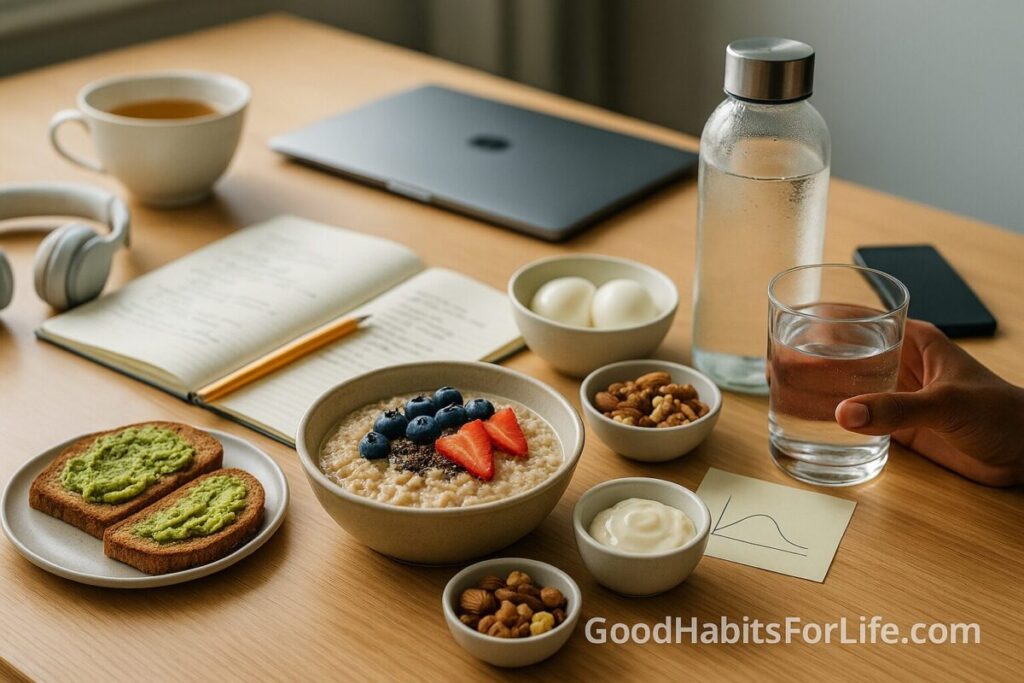
Build a “steady plate” for your next study session:
-
Carb (slow): oats, whole fruit, whole-grain roti, brown rice, millets.
-
Protein (15–25 g): Greek yogurt/curd, eggs, tofu/paneer, lentils/chana.
-
Fiber/healthy fat: nuts, seeds, veggies.
Pairing lowers overall glycemic impact and promotes satiety. Harvard Health
-
-
Schedule water, not willpower: 200–300 mL every 45–60 min through study blocks; aim to meet daily totals (~3.7 L men; ~2.7 L women) across foods and beverages. National Academies Press
-
Smart caffeine: If you use it, try 50–150 mg (≈½–1½ cups coffee) at the start of a block; avoid large boluses and sugary energy drinks. EFSA Journal
-
Snack templates (3-ingredient):
-
Yogurt + walnuts + berries
-
Apple + peanut butter + chia
-
Chana chaat (boiled chickpeas + cucumber + lemon)
-
Whole-grain toast + paneer/tofu + tomato
These combine low-GI carbs, protein, and fiber. Harvard Health
-
-
Breakfast timing: Eat within 1–2 h of waking before long study blocks; low-GI breakfasts show later-morning cognitive benefits vs. high-GI. PMC+1
🛠️ 7-Day Starter Plan (Steady-Glycemic Study Fuel)
Daily anchors: water on waking, low-GI breakfast, balanced snack before long sessions, early afternoon walk, caffeine cap by ~6 h before bedtime.
| Day | Breakfast (low-GI) | Study Snack (protein-fiber) | Hydration Cue |
|---|---|---|---|
| Mon | Oats + milk/curd + nuts + banana | Yogurt + almonds | 300 mL before each Pomodoro set |
| Tue | Besan chilla + veggie raita | Apple + peanut butter | 300 mL at top of each hour |
| Wed | Upma with peas + side eggs/tofu | Chana chaat | Glass before coffee |
| Thu | Dosa + sambar (extra dal) | Carrot sticks + hummus | Fill 1 L bottle twice |
| Fri | Poha + peanuts + lemon | Paneer/tofu cubes + grapes | 300 mL per 45–60 min |
| Sat | Overnight oats + seeds + berries | Trail mix (nuts+seeds) | Herbal tea between sessions |
| Sun | Vegetable omelet + whole-grain toast | Yogurt + flax + mango | 1 cup water with each meal |
Low-GI emphasis + protein/fiber helps stabilize glucose; hydration targets reflect NASEM adequate intakes across the day. Harvard Health+1
🧠 Techniques & Frameworks
1) The “P-F-C” Build (Protein-Fiber-Carb):
-
Start with protein (15–25 g), add fiber (≥6–10 g), fill with slow carbs (whole grains/fruit). This composition reduces post-meal glucose peaks vs. refined carbs alone. Harvard Health
2) Breakfast GI/GL Timing:
-
For 2–3-hour study windows, choose low-GI/low-GL breakfasts; RCTs and reviews report later-morning attention/memory benefits vs. high-GI. PubMed+2PMC+2
3) Hydration Ladder (simple triggers):
-
On waking, before caffeine, every hour, with each meal. Even mild dehydration impairs mood and attention; regular, small intakes help. PubMed
4) Caffeine guardrails:
-
Adults: single doses up to ~200 mg are generally considered of no safety concern; total daily ~400 mg for most adults. Space doses; avoid late-day use. EFSA Journal
-
Teens: keep to ≈3 mg/kg/day max; avoid energy drinks. European Food Safety Authority
5) Sugar Awareness (WHO):
-
Target <10% of energy from free sugars; <5% is even better. Scan labels for syrups and added sugars in cereals, drinks, sauces. World Health Organization
👥 Audience Variations
-
Students (school/college): Prioritize low-GI breakfasts on exam days; pack shelf-stable combos (roasted chana + nuts, whole-grain bars with ≥3 g fiber). PMC
-
Professionals: Front-load protein at breakfast and lunch to avoid mid-afternoon crashes; carry a 1 L bottle and set hourly reminders. National Academies Press
-
Seniors: Hydration is often under-reached; use flavored water/herbal tea and small, frequent servings; monitor medications that influence fluid balance. PubMed
-
Teens: Swap sugar drinks for milk, water, or diluted fruit; favor whole-grain wraps with eggs/paneer; be cautious with caffeine. European Food Safety Authority
-
Neurodiversity (ADHD/Autism): Preference-friendly textures (smooth yogurts, soft fruits), predictable snack kits, and pre-portioned nuts help reduce decision load and maintain steady intake.
⚠️ Mistakes & Myths to Avoid
-
Myth: “Sugar = instant brain power.” Quick sugar can transiently raise alertness but often rebounds into a focus dip; steadier carbs plus protein/fiber work better. Harvard Health
-
Skipping breakfast before long study blocks. Evidence shows breakfast consumption supports morning cognition vs. fasting. PMC
-
Counting only plain water. Total fluid includes water and beverages/foods; spread intake across the day. National Academies Press
-
Mega-caffeine + sugar. Large boluses (e.g., energy drinks) may produce jitters and a crash. Favor modest, timed doses without added sugar. EFSA Journal
🗣️ Real-Life Examples & Scripts
-
Café order (copy-paste): “One latte (no syrup) + a boiled egg/Greek yogurt cup.”
-
Hostel/office pantry: Keep a “steady box”: roasted chana, mixed nuts, high-fiber whole-grain crackers, shelf-stable milk, tea bags.
-
Exam-morning plate: Oats with curd/yogurt, seeds, berries/banana + 300 mL water; coffee/tea if you use it. PMC
-
Late-night study snack: Paneer/tofu wrap in whole-grain roti + cucumber; or yogurt + walnuts + raisins.
-
Hydration prompt: Set a 60-min timer named “Refill” and keep a marked bottle (0.5–1 L) on your desk; aim to empty/refill it 3–4× daily. National Academies Press
🧰 Tools, Apps & Resources (quick pros/cons)
-
Cronometer / MyFitnessPal: Track fiber, added sugar, and protein; beware of crowdsourced GI values (inconsistent).
-
Timer apps (Pomodoro): Pair hydration sips with breaks to maintain steady intake. PubMed
-
Label-scanner apps: Use to spot added sugars (syrup, maltose, dextrin). Align choices with WHO sugar limits. World Health Organization
-
Plain 1 L bottle: Low-tech, high-impact for pacing fluids to NASEM totals. National Academies Press
📚 Key Takeaways
-
Aim for low-GI/low-GL meals, protein (15–25 g) + fiber (≥6–10 g) at each study-supporting eating occasion. Harvard Health
-
Eat breakfast before long study blocks; low-GI options support later-morning attention and memory. PMC+1
-
Hydrate proactively; small, regular intakes add up to ~3.7 L (men) / ~2.7 L (women) daily from all sources. National Academies Press
-
Keep caffeine modest and separated from sugar. EFSA Journal
-
Reduce free sugars to stay steady and prevent crashes (<10% energy; aiming for <5%). World Health Organization
❓ FAQs
1) Do I need to calculate GI/GL for every meal?
No. Use patterns: whole grains/fruit + protein + fiber/healthy fat. This typically reduces glycemic impact without precise math. Harvard Health
2) Is breakfast really necessary?
Skipping can impair morning cognition for some; many studies show breakfast consumption (vs. fasting) benefits specific cognitive domains. Try low-GI options and track your own response. PMC
3) What are easy low-GI swaps?
Oats or millets for sugary cereals; whole fruit for juice; whole-grain roti for white bread; pulses (dal/chana) for part of your starch. Harvard Health
4) How much should I drink during a 2-hour study block?
Roughly 300–600 mL (sipped), adjusted for climate, activity, and individual needs—contribute toward daily totals. National Academies Press
5) Will coffee alone dehydrate me?
Coffee contributes to daily fluids; moderate caffeine can aid alertness. Avoid sugary add-ins and very large doses. EFSA Journal
6) Are low-GI diets only for diabetes?
No. While many data come from diabetes research, low-GI/GL patterns are broadly useful for steady energy and satiety. Harvard Health
7) Do I need supplements (e.g., MCTs) for focus?
There’s limited evidence they beat a balanced, low-GI meal with adequate protein and fiber. Start with food first. Harvard Health
8) What about teens and energy drinks?
Prefer food + water; if using caffeine, keep to ~3 mg/kg/day and avoid sugary, high-dose products. European Food Safety Authority
📚 References
-
Harvard T.H. Chan School of Public Health — The lowdown on glycemic index and glycemic load. https://www.health.harvard.edu/diseases-and-conditions/the-lowdown-on-glycemic-index-and-glycemic-load Harvard Health
-
Harvard T.H. Chan School of Public Health — Carbohydrates and Blood Sugar. https://nutritionsource.hsph.harvard.edu/carbohydrates/carbohydrates-and-blood-sugar/ The Nutrition Source
-
Adolphus K, et al. The Effects of Breakfast and Breakfast Composition on Cognition. Adv Nutr. 2016. https://pmc.ncbi.nlm.nih.gov/articles/PMC4863264/ PMC
-
Ingwersen J, et al. Low-GI breakfast cereal & children’s cognition. Physiol Behav. 2007. https://pubmed.ncbi.nlm.nih.gov/17224202/ PubMed
-
Gaylor CM, et al. Impact of Glycaemic Load on Cognitive Performance. Neurosci Biobehav Rev. 2022. https://www.sciencedirect.com/science/article/pii/S014976342200313X ScienceDirect
-
WHO — Guideline: Sugars intake for adults and children. 2015. https://www.who.int/publications/i/item/9789241549028 World Health Organization
-
National Academies (IOM/NASEM) — Dietary Reference Intakes for Water. https://nap.nationalacademies.org/read/10925/chapter/6 National Academies Press
-
Masento NA, et al. Effects of hydration status on cognitive performance and mood. Br J Nutr. 2014. https://pubmed.ncbi.nlm.nih.gov/24480458/ PubMed
-
EFSA — Scientific opinion on caffeine safety. EFSA Journal, 2015. https://efsa.onlinelibrary.wiley.com/doi/10.2903/j.efsa.2015.4102 EFSA Journal
-
Álvarez-Bueno C, et al. Low- vs high-GI breakfasts & cognition in youth (systematic review/meta-analysis). Nutrients. 2019. https://pubmed.ncbi.nlm.nih.gov/31344892/ PubMed
Disclaimer: This guide is educational and not a substitute for personalized medical or nutrition advice; consult a qualified professional if you have health conditions that affect diet, glucose regulation, or hydration.