
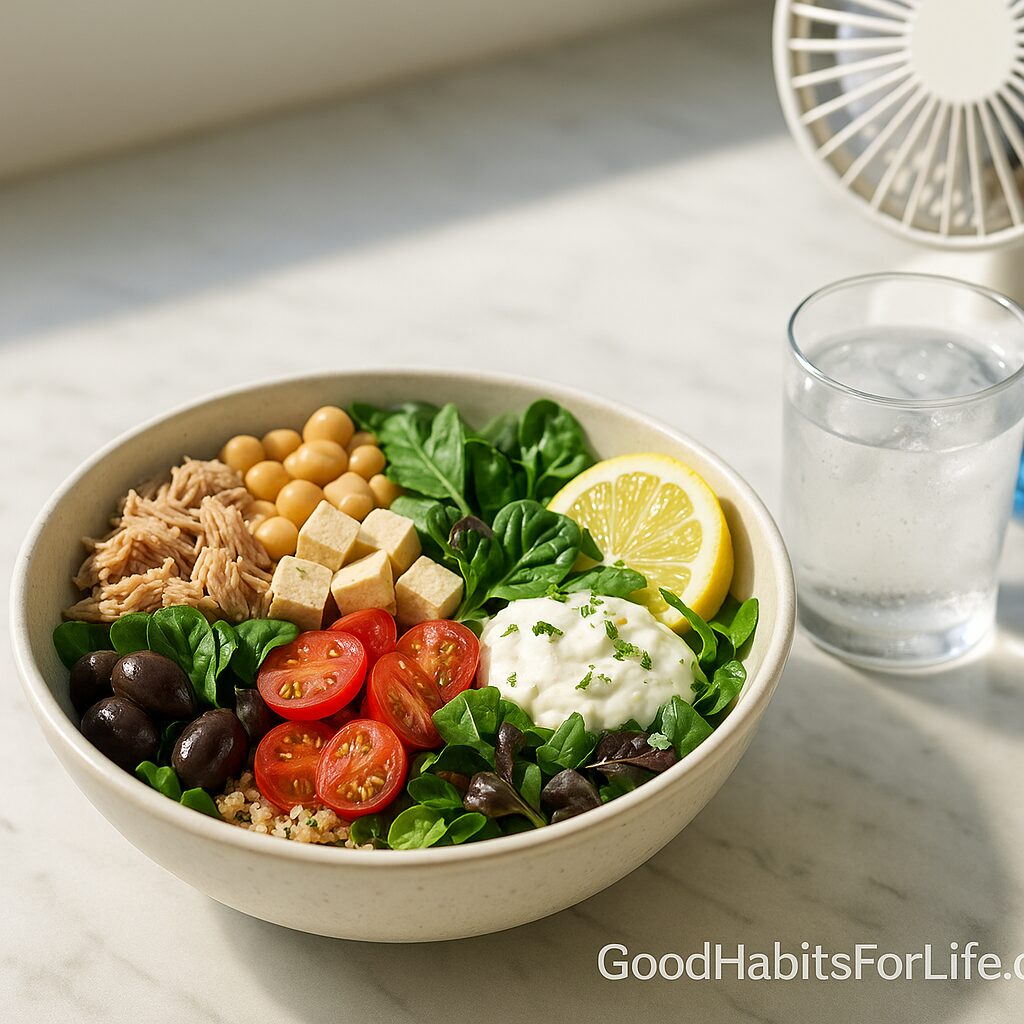
NoCook Meals for HeatWave Days: Protein-Forward Plan (2025)
No-Cook Meals for Heatwaves: Protein-Forward Plan (2025)
Table of Contents
🧭 What “No-Cook, Protein-Forward” Means & Why It Works
No-cook means you assemble meals without turning on a stove or oven—ideal when your kitchen already feels like a sauna. You’ll rely on cold, ready-to-eat ingredients (fresh, refrigerated, or shelf-stable) and light rinsing, chopping, mixing, and chilling.
Why go protein-forward during heatwaves?
-
Sustained energy & satiety: Protein helps you feel full and stable when appetite dips in the heat.
-
Muscle maintenance: Even when activity is low, keeping 25–35 g protein/meal supports lean mass.
-
Blood-sugar steadiness: Pairing protein with fiber-rich produce/legumes smooths post-meal glucose swings.
-
Convenience & safety: Many high-protein foods are safe and ready-to-eat from the pack (yogurt, canned fish/beans, tofu, tempeh, hummus, cheese).
Heat-aware food safety: In hot weather, limit perishable foods at room temperature to 1–2 hours (less if outdoors), refrigerate promptly at ≤4 °C (≤40 °F), and pack cold foods with ice or frozen gel packs.
✅ Quick Start: Today’s Heatwave Plate (5–10 minutes)
-
Pick 1–2 proteins (25–35 g total):
Greek yogurt/skyr, cottage cheese, soy yogurt, tofu/tempeh slices, canned tuna/salmon/mackerel, hummus + edamame, rotisserie chicken (pre-cooked, chilled), paneer, cheese + seeded crackers. -
Add produce (2 cups):
Hydrating veg/fruit—tomatoes, cucumbers, bell peppers, greens, citrus, melon, berries, mango. -
Add fiber & crunch:
Whole-grain pita/tortilla, high-fiber crackers, quick-soaked oats/muesli, canned beans (rinsed), chickpea or lentil salad, nuts/seeds. -
Sauce it smart:
Olive oil + lemon, tahini-yogurt, pesto, salsa, tzatziki, harissa-yogurt, peanut-lime. -
Hydrate:
Cold water + a pinch of salt and citrus; lightly sweetened iced tea; low-sugar oral rehydration solution if sweating heavily.
5-Minute Examples
-
Mediterranean Bowl: Cottage cheese (200 g) + cherry tomatoes, cucumbers, olives, chickpeas, olive oil-lemon, pita.
-
Tofu Crunch Wrap: Firm tofu slices + slaw mix, peanut-lime sauce in a whole-grain wrap, crushed peanuts.
-
Tuna-Bean Salad: Tuna + cannellini beans (rinsed), red onion, parsley, capers, lemon-olive oil, arugula.
🛠️ The Formula: Protein-Forward No-Cook Builder
Use this every meal (copy-paste to your notes):
Protein (25–35 g) + Produce (2 cups) + Fiber/Whole Grains + Crunch (nuts/seeds/pickles) + Bold Sauce + Cold Hydration
Flavor lanes (choose one):
-
Mediterranean: olive oil, lemon, herbs, feta/paneer, cucumbers, tomatoes, olives.
-
Pan-Asian: tofu/edamame, sesame, soy, chili crisp, cucumber, mango, herbs.
-
Tex-Mex: black beans, corn, salsa, avocado, lime, queso fresco/cottage cheese.
-
Indian-inspired: chilled paneer/tofu, cucumbers, tomatoes, onions, chaat masala, mint-yogurt.
-
Nordic: skyr, smoked/canned fish, dill, rye crispbread, pickled veg.
📊 Protein Cheat Sheet (typical per serving)
| Food | Serving | Protein |
|---|---|---|
| Greek yogurt / skyr | 200 g | 18–22 g |
| Soy yogurt | 200 g | 10–14 g |
| Cottage cheese | 200 g | 22–26 g |
| Paneer (fresh) | 100 g | 17–20 g |
| Firm tofu | 150 g | 16–18 g |
| Tempeh (ready-to-eat) | 100 g | 18–19 g |
| Canned tuna/salmon/mackerel (drained) | 100 g | 22–25 g |
| Rotisserie chicken (chilled, skinless) | 100 g | 26–28 g |
| Edamame (shelled, thawed) | 100 g | 11–12 g |
| Hummus | 100 g (~⅓ cup) | 7–8 g |
| Cooked lentils/chickpeas (canned, rinsed) | 150 g | 10–12 g |
| Eggs (pre-boiled, purchased) | 2 large | 12–13 g |
| Cheese (hard/semisoft) | 40 g | 9–11 g |
| High-protein crackers (per label) | 30 g | 5–8 g |
Tip: If your single item is <25 g protein, pair two (e.g., yogurt + nuts, tofu + edamame).
📅 7-Day Heatwave Menu (breakfast • lunch • dinner • snack)
Portions target ~25–35 g protein/meal; adjust for energy needs.
Day 1
-
B: Skyr bowl with berries, chia, pumpkin seeds, drizzle honey.
-
L: Tuna-bean arugula salad with lemon-olive oil + rye crisps.
-
D: Paneer-tomato-cucumber plate, mint-yogurt dip, pita.
-
S: Watermelon + feta cubes.
Day 2
-
B: Overnight oats (oats + soy milk) topped with soy yogurt, almonds.
-
L: Tofu crunch wrap with slaw, peanut-lime sauce.
-
D: Cottage-cheese “caprese” (tomato, basil, olive oil) + chickpeas.
-
S: Edamame with chili-lime salt.
Day 3
-
B: High-protein muesli with Greek yogurt, mango.
-
L: Salmon pouch + cucumber-dill salad + whole-grain crackers.
-
D: Hummus mezze (olives, pickles, peppers, carrots) + lentil salad.
-
S: Orange + handful of pistachios.
Day 4
-
B: Fruit-nut parfait (soy yogurt + granola + mixed fruit).
-
L: Chicken salad roll-ups (chilled rotisserie chicken + yogurt-mustard).
-
D: Tempeh strips with Asian slaw, sesame-ginger dressing.
-
S: Cottage cheese + pineapple.
Day 5
-
B: Chia-chia! (chia seeds soaked in milk/plant drink overnight) + berries + skyr.
-
L: Black bean-corn-avocado bowl, salsa, lime, coriander.
-
D: Smoked/canned mackerel plate, beetroot, dill, mustard yogurt, rye.
-
S: Grapes + cheddar cubes.
Day 6
-
B: Peanut-banana wrap with soy yogurt dip.
-
L: Greek salad with chickpeas + extra feta/paneer.
-
D: Tofu-edamame poke-style bowl with cucumbers, seaweed, sesame.
-
S: Cucumber sticks + tzatziki.
Day 7
-
B: Cottage-cheese toast (no-toast version: crispbread) with tomatoes, everything spice.
-
L: Lentil-tabbouleh (store-bought tabbouleh + canned lentils).
-
D: Tuna-white-bean-roasted pepper jar salad (from pantry) + greens.
-
S: Yogurt + trail mix.
🧠 Techniques & Frameworks that Make It Effortless
-
Cold-prep mise en place (10 minutes): Rinse a head of lettuce, slice cucumbers, halve cherry tomatoes, portion olives/pickles, decant beans into containers.
-
Two-protein rule: If any single serving <25 g, pair two proteins.
-
Sauce bank (3 jars): Tahini-yogurt, pesto, and chili-lime vinaigrette—cover all flavor lanes.
-
Hydration pairing: With each meal, add 500–750 ml cold fluid; when sweating, include a pinch of salt and citrus.
-
Ice-bath salad hack: If greens wilt in the heat, soak briefly in ice water, spin dry, refrigerate.
-
Plan B pantry: Keep 3–4 cans/pouches each of tuna/salmon/beans, shelf-stable tofu (silken), whole-grain crackers, long-life milk/soy drink, olives, roasted peppers, corn, pickled veg.
-
Fridge zones: Front = “eat first” bowls (pre-cut produce); Back = sealed proteins; Door = condiments (keep cold sensitive sauces inside shelves, not the door, when possible).
-
Food safety cadence: Assemble, eat within 1 hour, promptly re-chill leftovers; transport in an insulated bag with cold packs.
👥 Audience Variations
Students (hostels/dorms):
-
Stock microwavable rice/quinoa cups (optional), canned beans, pouches of fish, tofu, soy yogurt, crispbreads, nuts, fruit.
-
Use a mini-fridge + ice packs; prep bowls in lidded containers.
Busy professionals (office):
-
Keep “desk pantry”: tuna/salmon pouches, roasted chickpeas, nut butter, whole-grain crackers, dark chocolate.
-
Office fridge kit: yogurt cups, hummus singles, washed salad mixes.
Parents (kids & teens):
-
Build-your-own snack plates: cheese/paneer cubes, edamame, hummus, sliced veg, fruit; add a whole-grain carb.
-
Watch sodium; choose lower-salt canned beans/fish; cut grapes for young kids.
Seniors:
-
Softer textures (yogurt, cottage cheese, tofu, hummus), pre-cut produce, easy-open lids.
-
Emphasize hydration and adequate protein to support strength.
⚠️ Mistakes & Myths to Avoid
-
Myth: “No-cook means low protein.”
Reality: You can hit 25–35 g easily with yogurt/cottage cheese + beans/edamame or fish/tofu pairings. -
Mistake: Leaving salads/bowls out “for later.”
Fix: Chill within 1–2 hours; use ice packs for transport. -
Myth: “Canned fish/beans aren’t healthy.”
Reality: They’re nutrient-dense, affordable, and safe; choose options packed in water/olive oil and rinse beans. -
Mistake: Skipping carbs entirely.
Fix: Add fiber-rich grains or legumes for energy and hydration synergy. -
Mistake: Spicy sauces without fluids.
Fix: Pair heat with extra water and fruit/veg for hydration.
💬 Real-Life Scripts, Shopping List & Prep Rhythm
One-minute scripts (copy-paste to your notes):
-
“Too hot—need lunch in 7 minutes: grab cottage cheese + chickpeas + tomatoes + olive oil + pita. Water bottle to full.”
-
“No stove dinner: tofu slices + slaw + peanut-lime in wrap; freeze a bottle for tomorrow.”
-
“Pantry rescue: tuna pouch + white beans + roasted pepper from jar + lemon + parsley.”
Minimal Shopping List (1 week, 2 people)
-
Proteins: 4 yogurt/skyr tubs (500 g), 2 cottage cheese tubs, tofu (2 × 300 g), tempeh (2 × 200 g), paneer (400 g), tuna/salmon pouches (6), hummus (2 × 300 g), edamame (frozen, 1 kg), eggs (pre-boiled, 12) or buy ready-boiled packs.
-
Produce: lettuce/greens (2 big bags), cucumbers (6), tomatoes (1 kg), peppers (4), onions/herbs, lemons/limes, berries (1 kg), melon (1), avocado (3), carrots (1 kg).
-
Fiber/Grains: whole-grain pitas/wraps, rye/crispbread, oats/muesli, canned beans (6–8).
-
Sauces & Extras: olive oil, tahini, yogurt, pesto, salsa, pickles/olives, nuts/seeds, chili crisp or harissa.
Weekly rhythm (10–15 min on Day 1): Wash & portion veg, mix one lentil or bean salad, shake up two dressings, freeze two bottles of water for grab-and-go cold packs.
🧰 Tools, Apps & Resources
-
Insulated lunch bag + gel packs: keeps food <4 °C (<40 °F) longer.
-
Salad spinner + airtight containers: crisp veg, cut smell transfer.
-
Kitchen shears & good knife: faster than chopping boards alone.
-
Apps: grocery delivery, nutrition tracker (for protein checks), reminders to hydrate.
📌 Key Takeaways
-
Hit 25–35 g protein per meal with ready-to-eat items; pair two proteins as needed.
-
Use the Protein + Produce + Fiber + Crunch + Sauce + Hydration formula.
-
Follow cold-chain safety: keep foods cold, limit time out, and insulate for transport.
-
Keep a Plan B pantry and a tiny sauce bank for instant flavor.
-
Use the 7-day menu to glide through any heatwave without cooking.
❓ FAQs
1) Are canned fish safe to eat cold from the can or pouch?
Yes—commercially canned fish are fully cooked during processing; drain and serve. Choose lower-sodium options and check country advisories for mercury when relevant.
2) How can I reach 30 g protein without meat?
Combine tofu or tempeh with soy yogurt/edamame/beans; e.g., 150 g tofu (17 g) + 150 g edamame (17–18 g) ≈ 34–35 g.
3) Is paneer safe to eat chilled, without cooking?
Yes if it’s fresh, pasteurized, properly stored, and within date. Keep it cold and consume soon after opening.
4) What about deli meats in hot weather?
They’re perishable; keep cold and limit time out of refrigeration. If sodium is a concern, use fish, tofu, beans, eggs, or yogurt instead.
5) Can I rely on protein shakes during heatwaves?
They’re convenient—especially when appetite is low. Prioritize whole foods first; shakes can top up protein or serve as a quick breakfast.
6) What fruits/veg are most hydrating?
Cucumber, tomato, lettuce, melon, citrus, berries, and grapes have high water content and pair well with protein.
7) Do spicy foods worsen heat stress?
Spice can increase perceived heat; if you enjoy it, balance with fluids, fruits/veg, and cooling ingredients (yogurt, cucumber, mint).
8) Any vegan yogurt options with higher protein?
Choose soy-based yogurts (often 6–8 g/100 g) or added-protein varieties.
📚 References
-
World Health Organization. Heat and Health. https://www.who.int/health-topics/heat
-
Centers for Disease Control and Prevention. Extreme Heat – Heat Related Illness. https://www.cdc.gov/disasters/extremeheat/
-
U.S. Department of Agriculture & HHS. Dietary Guidelines for Americans, 2020–2025. https://www.dietaryguidelines.gov/
-
FoodSafety.gov. Refrigerator & Freezer Storage Chart. https://www.foodsafety.gov/food-safety-charts
-
USDA FSIS. Shelf-Stable Food Safety (Canned Foods). https://www.fsis.usda.gov/food-safety/safe-food-handling-and-preparation/food-safety-basics/shelf-stable-food-safety
-
FDA & EPA. Advice About Eating Fish. https://www.fda.gov/food/consumers/advice-about-eating-fish
-
Harvard T.H. Chan School of Public Health – The Nutrition Source. Protein. https://www.hsph.harvard.edu/nutritionsource/what-should-you-eat/protein/
-
NHS. Dehydration. https://www.nhs.uk/conditions/dehydration/
-
Academy of Nutrition and Dietetics. Keeping Food Safe During Summer. https://www.eatright.org/homefoodsafety/seasonal-food-safety/summer
-
EFSA. Food Safety Advice for Consumers (Chilling and Storage). https://www.efsa.europa.eu/en/consumers/food-safety-advice
Disclaimer: This guide is educational and not a substitute for personalized nutrition or medical advice; consult a qualified professional for individual needs.