
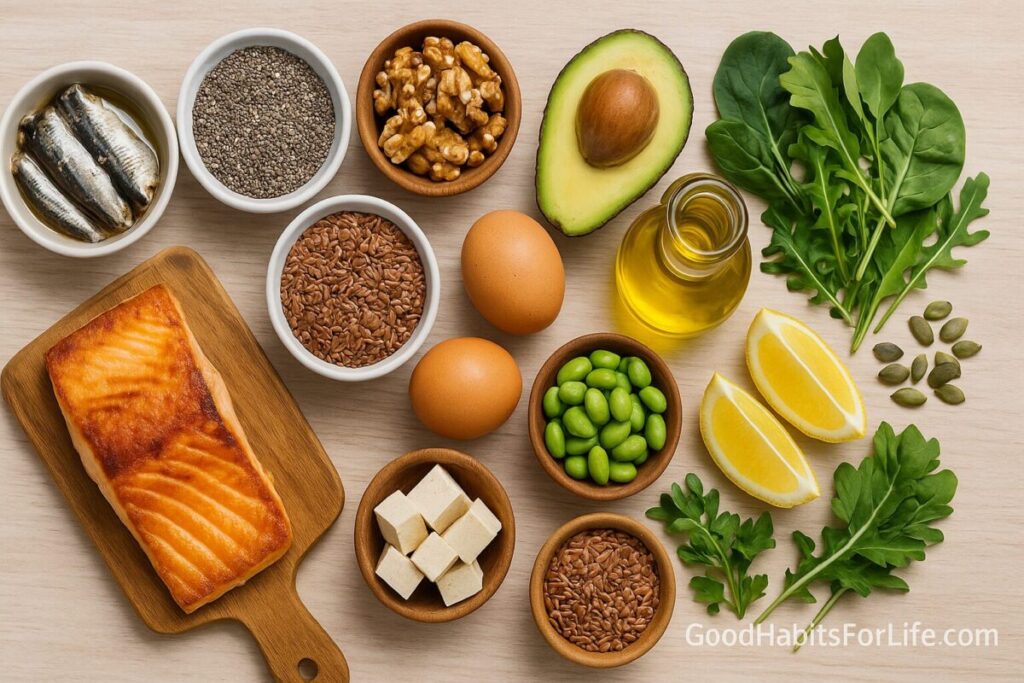
Fats Demystified: Omega3s, Omega6s & Balance: Protein-Forward Plan (2025)
Fats Demystified: Omega-3 & Omega-6 Balance, Protein-Forward
Table of Contents
🧭 What Are Fats & Why They Matter
Dietary fat = energy + structure + signaling. Fats help you absorb fat-soluble vitamins (A, D, E, K), build cell membranes, make hormones, and keep you full.
Types (think “quality first”):
-
Unsaturated fats
-
Monounsaturated (MUFA): olive oil, canola, avocado, almonds.
-
Polyunsaturated (PUFA): omega-3 (EPA/DHA from fish; ALA from plants) and omega-6 (linoleic acid from seeds/seed oils, nuts).
-
-
Saturated fats (SFA): butter, ghee, coconut oil, high-fat dairy, fatty meats. Limit.
-
Trans fats: industrial “partially hydrogenated oils.” Avoid entirely.
Big picture: Replacing saturated and trans fats with unsaturated fats helps heart health. No single “perfect omega-3:omega-6 ratio” is required; get enough omega-3s and keep overall fat quality high.
✅ Quick Start: Do This Today
-
Add omega-3 now:
-
Eat 1 tin (100–120 g) sardines/mackerel or 120–150 g salmon this week.
-
Plant boost: 1 tbsp ground flaxseed or chia daily.
-
-
Swap your cooking fat: Use extra-virgin olive oil for most dishes; canola/peanut for higher heat.
-
Go protein-forward: Target 1.2–1.6 g protein/kg body weight/day (e.g., 75–100 g for a 65 kg adult).
-
Nuts > snacks: 1 small handful (25–30 g) of almonds/walnuts instead of chips.
-
Read labels: Avoid “partially hydrogenated oil.”
-
Plan two fish meals into your calendar (e.g., Tue + Sat).
🧠 The Protein-Forward Plate (with Healthy Fats)
One plate template (per meal):
-
Protein (palm-size; 25–40 g): fish, eggs, Greek yogurt, tofu, legumes + protein.
-
Colourful produce (½ plate): fibre for fullness and nutrient density.
-
Smart fats (1–2 tbsp or a handful): olive oil, avocado, nuts/seeds, tahini.
-
Quality carbs (fist-size): whole grains or starchy veg to activity level.
Why protein-forward? Higher protein supports satiety, muscle maintenance, and steadier energy—then fats provide flavor, vitamins, hormone support, and extended fullness.
📚 Omega-3s & Omega-6s: How Much?
Acceptable ranges (adults):
-
Total fat: ~20–35% of calories (≈ 44–78 g/day on 2,000 kcal).
-
Saturated fat: keep low; general guidance <10% of calories (≤ 22 g on 2,000 kcal).
-
Trans fat: as close to 0 as possible.
Omega-3 (ALA, EPA, DHA)
-
ALA (plant omega-3): ~1.1 g/day (women), 1.6 g/day (men).
-
1 tbsp ground flax ≈ 1.6–2.4 g ALA; 1 tbsp chia ≈ 1.7–2.5 g.
-
-
EPA + DHA (marine omega-3s): many authorities advise ~250–500 mg/day, or 2 fish meals/week.
Omega-6 (linoleic acid)
-
Typical AIs: ~12 g/day (women), 17 g/day (men) from foods like sunflower, safflower, soybean oils, nuts, and seeds.
About the “ratio”: No official “best” omega-3:omega-6 ratio. Rather than chasing a number, ensure you hit omega-3 targets and keep overall fat quality high with varied unsaturated sources.
Plant-based? You can meet ALA easily and still reach EPA/DHA via algal oil (vegan) or fortified foods.
🛠️ Techniques & Frameworks
1) The 3-2-1 Fat Framework (per day)
-
3 servings of unsaturated fats (e.g., 1 tbsp olive oil, 25–30 g nuts, 2 tsp tahini).
-
2 omega-3 boosters (e.g., 1 tbsp ground flax + 1 fish meal or algal capsule).
-
1 saturated-fat conscious choice (e.g., choose olive oil over butter at dinner).
2) The Swap Matrix
| Instead of… | Choose… | Why |
|---|---|---|
| Butter for sautéing | Extra-virgin olive oil | MUFA/PUFA, polyphenols |
| Deep-fried snacks | Handful of nuts/seeds | Healthy fats + fibre + minerals |
| Processed meats | Fatty fish (salmon, sardines) | EPA/DHA for heart/brain |
| Creamy dressings | Olive oil + lemon/tahini | Better fat profile |
| Coconut oil daily | Olive/canola/peanut (context-based) | Lower SFA, more MUFA/PUFA |
3) Heat-Smart Cooking
-
Olive oil works for most everyday sautéing and roasting.
-
Canola/peanut oils suit higher-heat stir-fries.
-
Keep deep-frying rare; reheated oils generate unwanted compounds.
🗺️ Audience Variations
-
Students/Busy pros: batch-cook salmon bowls; trail mix (almonds-walnuts-raisins); canned fish + whole-grain wraps.
-
Parents: bake fish fingers with oat/almond crust; smoothie with yogurt + flax.
-
Seniors: softer textures (poached fish, mashed avocado), vitamin D with fatty fish; watch drug–nutrient interactions if on anticoagulants.
-
Vegetarian/Vegan: daily ALA (flax/chia/walnuts) + algal DHA/EPA supplement.
⚠️ Mistakes & Myths to Avoid
-
Myth: “Omega-6 is always inflammatory.”
Reality: Within healthy ranges and whole-food patterns, omega-6 can support heart health, especially when it replaces saturated fat. -
Myth: “There’s a single ideal ratio.”
Reality: No official ratio; prioritize adequate omega-3 and overall fat quality. -
Mistake: Using coconut oil as your main everyday oil.
Fix: Enjoy occasionally; default to olive/canola/peanut for better profiles. -
Mistake: Relying on supplements instead of food variety.
Fix: Use fish/algal oil to fill gaps, not to replace eating patterns. -
Mistake: Ignoring portion creep with “healthy” nuts.
Fix: Aim for 25–30 g (small handful).
💡 Real-Life Examples & Scripts
-
Grocery script: “Two fish options (fresh or canned), 1 L olive oil, 500 g Greek yogurt, 12 eggs, 200 g walnuts, 250 g mixed seeds, 1 jar tahini, leafy veg, whole grains.”
-
Restaurant script: “Could I swap fries for a side salad and add olive oil? I’ll take the grilled fish or bean-and-avocado bowl.”
-
Snack script: “Nuts + fruit or yogurt + flax instead of pastries.”
-
Label check: “No partially hydrogenated oil; lower saturated fat; short ingredient list.”
🗓️ 7-Day Starter Plan (Repeat Weekly)
Daily anchors:
-
Protein target: 1.2–1.6 g/kg/day.
-
Omega-3: 1 tbsp ground flax/chia daily + 2 fish meals/week (or algal oil).
-
Oil: olive for most cooking; canola/peanut for higher heat.
Mon: Greek yogurt parfait + flax; dal + veg; olive-oil sautéed veg + eggs.
Tue: Oats + chia; tuna-bean salad wrap; chicken-veg stir-fry (canola).
Wed: Smoothie (yogurt + berries + flax); hummus bowl; salmon, potatoes, greens.
Thu: Eggs + tomatoes; leftover salmon salad; tofu-peanut stir-fry.
Fri: Cottage cheese + fruit; sardine avocado toast; whole-grain pasta + olive-oil veg.
Sat: Nutty muesli; lentil-walnut salad; grilled mackerel, quinoa, broccoli.
Sun: Veg omelette; chickpea-tahini bowl; roast chicken, olive-oil veg, salad.
🧰 Tools, Apps & Resources
-
Diet tracking apps (Cronometer, MyFitnessPal): easy macro checks; cons: logging fatigue.
-
Seafood guides (local health/food authority): sustainability + mercury info.
-
Kitchen kit: quality non-stick pan, olive oil dispenser, sardine key opener, spice rack.
🔑 Key Takeaways
-
Fats are essential—quality and variety beat chasing a ratio.
-
Hit omega-3 targets (EPA/DHA + ALA) and keep saturated low.
-
Default to olive oil, add nuts/seeds, and eat fish twice weekly (or algal oil).
-
Go protein-forward for fullness and weight-management support.
-
Use the 7-Day Starter and the Swap Matrix to lock the habit.
❓ FAQs
1) What’s the best omega-3 source if I don’t eat fish?
Algal oil provides DHA/EPA directly; pair with ALA from flax/chia/walnuts.
2) Are seed oils “toxic”?
No. Within normal intakes, seed oils help meet PUFA needs—especially when they replace saturated fat. Focus on overall diet quality.
3) Butter or ghee—are they healthier than olive oil?
They’re mostly saturated fat. Olive oil (rich in MUFA/polyphenols) is a better default for heart health.
4) Can I get too much omega-3?
Very high supplemental doses can increase bleeding risk for some people; food-based intakes and standard supplements are typically safe for healthy adults. Check with your clinician if on anticoagulants.
5) What oil should I use for high-heat cooking?
Canola or peanut oil are practical; keep deep-frying rare and avoid reusing burnt oil.
6) Do I need fish oil if I already eat fish twice a week?
Probably not; supplements are to fill gaps. If you rarely eat fish, a daily algal/fish oil can help.
7) Is coconut oil good for weight loss?
No special fat burns fat. Calorie balance and food quality matter more; use coconut oil sparingly.
8) How much nuts is “one serving”?
About 25–30 g (a small handful) or ~14 almonds/7 walnuts halves.
9) Does cooking olive oil destroy its benefits?
Used within normal kitchen temps, it retains most benefits. Avoid smoking/burning.
10) What about mercury in fish?
Choose lower-mercury options (salmon, sardines, trout, mackerel). Limit large predatory fish.
📚 References
-
National Institutes of Health, Office of Dietary Supplements — Omega-3 Fatty Acids Fact Sheet (EPA/DHA/ALA): https://ods.od.nih.gov/factsheets/Omega3FattyAcids-Consumer/
-
National Institutes of Health, ODS — Alpha-Linolenic Acid (ALA) Fact Sheet: https://ods.od.nih.gov/factsheets/AlphaLinolenicAcid-Consumer/
-
National Academies (IOM) — Dietary Reference Intakes for Energy, Carbohydrate, Fiber, Fat, Fatty Acids, Cholesterol… (AMDRs, AIs): https://nap.nationalacademies.org/catalog/10490
-
Dietary Guidelines for Americans 2020–2025 — Dietary Fats Guidance: https://www.dietaryguidelines.gov
-
American Heart Association — Fish and Omega-3 Fatty Acids: https://www.heart.org/en/healthy-living/healthy-eating/eat-smart/fats/fish-and-omega-3-fatty-acids
-
World Health Organization — Saturated Fat and Trans-Fat Intake Guidance & REPLACE Trans Fat: https://www.who.int/news-room/fact-sheets/detail/healthy-diet and https://www.who.int/teams/nutrition-and-food-safety/policies/trans-fat
-
Harvard T.H. Chan School of Public Health — Fats and Cholesterol: https://www.hsph.harvard.edu/nutritionsource/what-should-you-eat/fats-and-cholesterol/
-
EFSA Panel on Dietetic Products, Nutrition and Allergies — Dietary Reference Values for fats, including PUFA: https://efsa.onlinelibrary.wiley.com/doi/10.2903/j.efsa.2010.1461
Disclaimer: This article is educational and not a substitute for personalized medical or nutrition advice; consult a qualified clinician for your specific needs.