
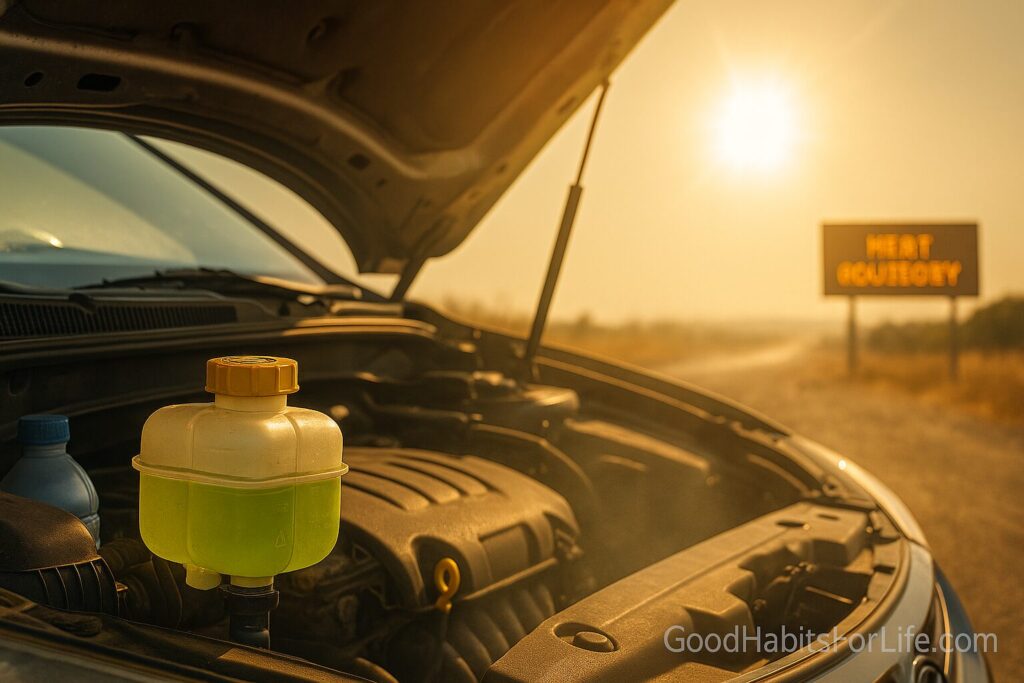
Heat Waves: Coolant, Cabin, and Driver Care
Heat Waves: Coolant, Cabin & Driver Care
Table of Contents
🧭 What Heat Does to Cars, Cabins, and Drivers
Heat waves increase risk across three fronts:
Engine & components
-
Higher ambient temps reduce the radiator’s ability to shed heat, making overheating more likely—especially with low coolant, weak fans, clogged fins, or failing belts.
-
AC load adds thermal stress and can mask rising engine temps if you’re not watching gauges.
Cabin
-
Parked vehicles can reach dangerous interior temperatures within minutes, even with windows cracked. This is life-threatening for children, older adults, and pets. CDC, NHTSA.
Driver
-
Heat increases fatigue, dehydration, slower reaction time, and risk of heat illness (cramps, exhaustion, heat stroke). Use the Heat Index to judge combined temperature + humidity risk. NWS, WHO.
✅ Quick-Start: Do This Today (10-Minute Checklist)
-
Coolant (engine cold): Reservoir on “MIN–MAX,” no oily film, no obvious leaks.
-
Radiator cap: Inspect for cracks/wear (replace if suspect). Only open cold.
-
Fans & belts: Start car; confirm cooling fan cycles with AC on; check belt condition/tension.
-
Grille & radiator fins: Clear leaves/plastic; gently rinse bugs/dust.
-
Tires: Check pressures in the morning (heat raises PSI while driving).
-
AC test: Full fan, outside air for 30–60 seconds to purge hot air, then recirculate.
-
Cabin kit: Water (2–3 L/person), electrolyte tabs, sunshade, hat, light towel.
-
Route & timing: Prefer morning/evening; note heat advisories.
-
Break plan: Every 90 minutes, park in shade, stretch, drink 250–500 ml water.
-
Emergency plan: Know your overheat protocol (see below) + roadside assistance number.
🛠️ Vehicle Cooling System: Coolant, Fans, and Overheat Protocol
What to check
-
Coolant type & mix: Most cars use 50/50 coolant (ethylene glycol) and distilled water; some require specific long-life formulas (e.g., HOAT, OAT). Follow your owner’s manual.
-
Reservoir level (cold): Between MIN–MAX. Low? Top with the correct premix and watch for a leak.
-
Hoses & clamps: Look for bulges, cracks, dried residue.
-
Radiator fins: Clean, not bent or clogged.
-
Thermostat & water pump: If the temp creeps often or cabin heat is weak in winter, have these inspected.
-
Cooling fans: With AC on, the condenser fan should run; many cars have variable-speed fans—listen/feel for operation.
-
Drive belts: Cracks, glazing, or fraying = replace.
Signs of overheating (while driving)
-
Temperature gauge climbing above normal; warning light; loss of power; heater blows cold; sweet smell (coolant); steam from hood.
Overheat protocol (memorize STOP)
-
S — Safely pull over. Hazard lights on.
-
T — Turn off AC; turn on cabin heat to draw heat from the engine (if airflow is adequate).
-
O — Open the hood (latch only; let it lift to vent—but stay clear of steam).
-
P — Phone help. If the gauge doesn’t drop after a short idle or you see leaks, shut off engine and call roadside assistance. Never open the radiator cap hot.
Tip: Carry a compatible premixed coolant (1–2 L) and a work glove. Only top off a cooled engine, and treat this as a temporary measure until a mechanic checks for leaks.
❄️ Cabin Comfort & AC Efficiency: Cool Faster, Spend Less
-
Purge first: Open doors or windows, blower high, fresh/outside air for 30–60 seconds to dump super-heated air; then windows up and recirculate.
-
Fan before max cold: High airflow helps condenser and evaporator; once airflow is moving, set to cold.
-
Shade strategy: Use reflective sunshades, park with windshield facing away from sun, crack rear windows slightly (weather permitting), and use window tints where legal.
-
Maintenance: Replace cabin air filter every 12–15 months (or per manual). A clogged filter cripples AC performance.
-
Smells or weak cooling? Could be low refrigerant or a blend door issue. See a certified technician; venting refrigerant is illegal in many countries (follow environmental regulations). EPA MVAC.
-
Seat comfort: Light-colored covers, breathable fabrics, and cooling towels reduce perceived heat.
🚰 Hydration & Driver Health: Recognize Heat Stress
-
Pre-hydrate: Drink 300–500 ml water 30 minutes before departure.
-
During drive: Sip 150–250 ml every 20–30 minutes; add electrolytes if sweating heavily.
-
Clothing: Lightweight, breathable, light-colored.
-
Breaks: Every 90 minutes (or sooner in extreme heat).
-
Know the signs:
-
Heat cramps: Muscle spasms; stop, cool down, hydrate with electrolytes.
-
Heat exhaustion: Heavy sweating, weakness, nausea, headache; move to shade/AC, loosen clothing, cool with damp cloths, sip fluids.
-
Heat stroke (emergency): Confusion, fainting, very high temp, no sweating—call emergency services and cool rapidly with available methods.
Sources: CDC, OSHA/NIOSH.
-
Never leave children or pets in a parked car—even for a moment. Interior temperatures rise rapidly and can be fatal. NHTSA.
🗺️ Trip Planning for Heat Waves
-
Check advisories: Review NWS/IMD (or your national weather service) for heat alerts and Heat Index.
-
Time of day: Drive early morning or late evening; avoid 11:00–16:00 when possible.
-
Terrain: Uphills + stop-and-go traffic spike coolant temps—allow extra distance and gentle throttle.
-
Fuel & fluids: Top off fuel (AC increases consumption) and windscreen washer fluid.
-
Load: Remove unnecessary cargo; weight increases heat load and braking distance.
-
Contingencies: Identify shaded rest stops every 60–90 minutes; store an insulated water container.
📅 30-60-90 Upgrade Plan for Hot-Weather Driving
30 days — Baseline reliability
-
Cooling system inspection (hoses, clamps, coolant, fans).
-
Replace cabin filter; clean condenser/radiator fins.
-
Stock kit: water (2–3 L per person), electrolytes, sunshades, cooling towels, hat, small first-aid kit, torch, OBD-II reader.
-
Create your STOP overheat card (wallet/glove box).
60 days — Efficiency & comfort
-
Window shade/tint (legal), seat covers, dash sunshade.
-
Add tire pressure gauge and check weekly (morning).
-
Practice AC purge → recirculate routine until automatic.
90 days — Pro level
-
Schedule coolant flush if due per the manual; replace suspect belts.
-
Heat-route planning template in your maps app (saved shaded rest stops).
-
Family drill: “park → purge → recirc; water first, seatbelts second.”
🧠 Techniques & Frameworks
HEAT (pre-drive)
-
H—Hydration bottle filled
-
E—Engine coolant on mark (cold)
-
A—AC purge → recirc tested
-
T—Tires checked (morning PSI)
STOP (overheat protocol)
-
Safely pull over → Turn off AC, heat on → Open hood latch → Phone help
AC-SMART (cooling quickly)
-
Sunshade on stop, Max fan fresh for 30–60 s, Air recirculate, Route away from congestion, Trim cabin clutter (breathability)
👥 Audience Variations
Parents & caregivers
-
Place necessities within reach: water sippers, wipes, cooling towel.
-
Lock-in rule: Car locked = do a rear-seat check (look-back habit). Use phone reminders. NHTSA.
Professionals & delivery drivers
-
Set 15-minute hydration reminders.
-
Rotate stops to include AC cool-down; log symptoms (headache, dizziness) and escalate early.
Seniors
-
Keep meds that increase heat sensitivity (diuretics, some antihypertensives) in mind; ask your clinician about driving in heat.
EV owners
-
Pre-condition cabin while plugged in; use eco/efficiency climate modes.
-
Expect range loss in extreme heat; plan chargers with shade/amenities.
-
Watch battery temp warnings and reduce DC fast-charging during peak heat if advised by the manufacturer.
⚠️ Mistakes & Myths to Avoid
-
Myth: “Windows cracked make it safe to leave kids/pets briefly.” → False. Deadly temps occur quickly.
-
Mistake: Opening a hot radiator cap. Wait until fully cool.
-
Mistake: Ignoring a faint sweet smell (possible coolant leak).
-
Myth: “AC on max always cools fastest.” → Purge hot air first, then recirculate.
-
Mistake: Running old coolant beyond service life. Inhibitors degrade and corrosion risk rises.
-
Mistake: Over-inflating tires “for heat.” Use manufacturer PSI (cold); recheck monthly.
💬 Real-Life Scripts & Templates
Calling roadside assistance (overheat):
“Hi, I’m on [road/marker]. My engine temperature warning came on; I’ve pulled over safely, turned off AC, and opened the hood latch to vent. There’s/ isn’t visible steam. I need a tow/inspection.”
Talking to passengers (heat plan):
“We’ll stop every 90 minutes to stretch and drink. If anyone feels dizzy or nauseous, tell me immediately—we’ll cool down and reassess.”
Service request message:
“Please inspect cooling system: coolant condition/level, pressure test for leaks, radiator/condenser cleanliness, fan operation, thermostat, water pump, and belts. Car driven in high heat.”
🧰 Tools, Apps & Resources
-
Weather & heat: National Weather Service (Heat Index, alerts), India Meteorological Department (IMD), local met office apps.
-
Vehicle: OBD-II reader (monitor temps, codes), quality coolant tester, tire pressure gauge, reflective sunshade, insulated water bottle, cooling towel.
-
Knowledge: Owner’s manual (coolant spec/intervals), EPA MVAC info (refrigerants), AAA/National motoring organization guides on summer car care.
Pros/cons: -
OBD-II: Insightful data; needs basic app know-how.
-
Sunshade: Immediate cabin benefits; adds setup step.
-
Electrolyte tabs: Easy; watch sugar/sodium if required medically.
📌 Key Takeaways
-
Heat challenges engine cooling, cabin comfort, and driver health.
-
Prevent issues with cold checks on coolant, fans, belts, and tires.
-
Purging hot air before recirculation cools cabins faster.
-
Hydration + breaks protect alertness and safety.
-
Learn STOP and HEAT; never open a hot cooling system or leave kids/pets in cars.
❓ FAQs
1) How often should I change coolant for hot climates?
Follow the owner’s manual interval (often 5 years/160,000 km for long-life coolants, shorter for conventional). Heat waves don’t change spec, but they reveal weak systems.
2) Is it safe to run cabin heat to cool an overheating engine?
Yes—briefly. Cabin heat can draw heat from coolant. Prioritize safety: pull over, monitor, and call assistance if temps don’t normalize.
3) Does AC use increase engine overheating risk?
AC adds load and raises under-hood temps. If the gauge climbs, turn AC off and follow STOP.
4) Should I use distilled water to top up?
If you must top a compatible premix, use the same premix. In emergencies, small amounts of distilled water can help reach a shop—but restore correct mix later.
5) Do EVs overheat?
EVs manage heat differently (battery/motor thermal systems), but can derate power or limit charging in extreme heat. Pre-condition while plugged in and heed warnings.
6) Why check tire pressure in the morning?
You need a cold reading. Heat and driving raise PSI temporarily and can mislead you.
7) How can I cool the car faster after parking in the sun?
Open doors/windows briefly, fan on fresh, then switch to recirculate and close windows. Use sunshades and shade parking to reduce initial cabin temps.
8) Is idling with AC better than driving?
Moving airflow helps both engine and AC efficiency. If safe, drive gently rather than long idles.
9) What temperature/humidity combination is most dangerous for drivers?
Use the Heat Index: high humidity reduces sweat evaporation, raising heat illness risk even at moderate temperatures. Check official advisories.
10) What if coolant looks rusty or oily?
Rusty/murky suggests corrosion or contamination; oily film could indicate a serious issue. Do not drive hard—book a professional inspection.
📚 References
-
Centers for Disease Control and Prevention — Extreme Heat
-
National Weather Service — Heat Index & Heat Safety
-
World Health Organization — Heatwaves and Health
-
OSHA/NIOSH — Heat Stress Guidance
-
U.S. EPA — Motor Vehicle Air Conditioning (MVAC)
-
AAA (American Automobile Association) — Summer Driving & Cooling System Tips
-
NoHeatStroke.org (Jan Null, SFSU) — Child Heatstroke in Vehicles
Disclaimer
This guide offers general information on vehicle care and heat-related health; it is not medical or mechanical advice. Consult a qualified clinician or certified technician for your specific situation.