
Reward Loops Without Drinks: New Cues & Treats
Reward Loops Without Drinks: New Cues & Treats
Table of Contents
🧭 What Are “Reward Loops Without Drinks”?
Definition. A habit loop has three parts: cue (trigger), routine (what you do), and reward (the feel-good outcome). When we drink, the reward can be relaxation, belonging, pleasure, or relief. Going alcohol-free doesn’t mean losing the reward—it means re-engineering the loop so the reward arrives without alcohol.
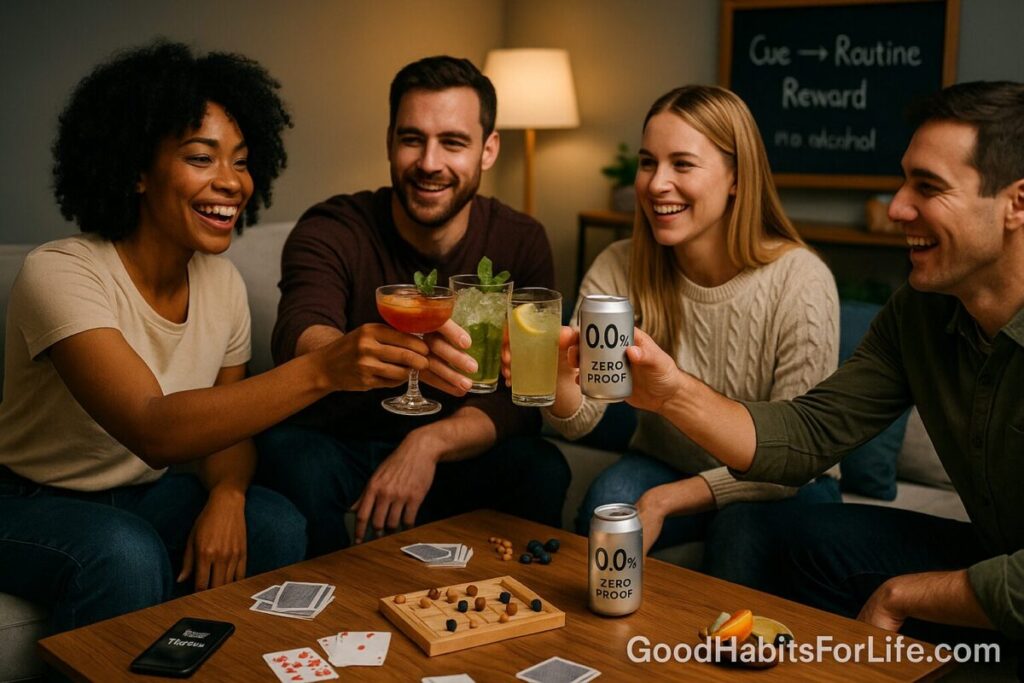
Why it works. Habits automate because the brain learns that a cue predicts a reward. If we keep the cue (e.g., Friday 7 pm, friends, music) but swap the routine (order a zero-proof drink, start a game, lead a toast) and preserve the reward (belonging, taste, unwind), the loop can stabilize around the new behavior. Evidence-based tools—like implementation intentions, temptation bundling, contingency rewards, and environment design—boost success.
Benefits.
-
Better sleep, mood, and energy the next morning.
-
Clearer skin and lower calorie load from sugary cocktails/beer.
-
Safer driving and fewer next-day regrets.
-
Money saved for higher-value treats.
-
Stronger confidence from keeping promises to yourself.
✅ Quick Start: Do This Today
-
Name 1–2 risky cues. Examples: post-work stress, first 10 minutes at a bar, awkward small talk.
-
Write an if-then plan. “If I walk into the venue, then I order a zero-proof drink and text the group pic.”
-
Pre-load a reward. Choose one of each:
-
Tasty: NA beer/wine, shrub, bitters-and-soda, ginger-lime fizz.
-
Feel: 4-7-8 breath, two-minute stretch, quick outside air.
-
Social: bring a game question card; volunteer to be DJ/ride lead.
-
-
Add friction to alcohol. Sit away from the bar, carry NA can, keep a tab closed.
-
Track one metric for seven days: “Evenings alcohol-free” or “Drinks avoided.” Reward streaks with small prizes.
🧪 7-Day Starter Plan
Goal: Keep your favorite rewards (fun, connection, “ahh”) while practicing alcohol-free routines.
-
Day 1 (Map Cues): List top 3 triggers and your usual drink decisions. Write matching if-then plans.
-
Day 2 (Stock Options): Buy 3 NA choices you actually like (try two brands/styles). Prep ice, citrus, glassware.
-
Day 3 (Body Reward): Choose a quick somatic reward for urges: box breathing, face splash, 10 squats, 5-minute walk.
-
Day 4 (Social Script): Draft one-liners: “I’m experimenting with no-alc—try this ginger fizz!”
-
Day 5 (Temptation Bundle): Pair your favorite show/podcast only with NA ritual or post-event tea.
-
Day 6 (Contingency Reward): Set a €5/₹200/$5 token per event you stay alcohol-free; tally for a Saturday treat.
-
Day 7 (Review & Upgrade): What cues were hardest? Replace or reshuffle environments. Celebrate streaks.
🧱 30-60-90 Roadmap
30 Days—Stability.
-
Standardize arrival routine: greet host → order NA → take a photo → share to your accountability buddy.
-
Practice urge surfing: high-crave moments pass in ~10–20 minutes; set a 10-minute timer before any alcohol decision.
-
Build a reward menu (taste, feel, social, progress). Rotate to avoid boredom.
60 Days—Expansion.
-
Add identity cues: “Designated driver,” “morning runner,” or “mocktail maker.”
-
Skill swap: offer to bartend NA drinks, host a board-game corner, or run a 15-minute dance set.
90 Days—Integration.
-
Plan high-risk events: weddings, airports, reunions. Pre-commit rides, seating, and drink tickets (NA first).
-
Introduce a bigger reward: weekend micro-trip, course, or gear using money saved.
🧠 Techniques & Frameworks That Work
-
Implementation Intentions (If-Then). “If [cue], then [alternative].” This automates choices under pressure.
-
Temptation Bundling. Pair something indulgent (favorite playlist/series) only with your NA routine or post-event wind-down.
-
Contingency Management. Small, immediate rewards for meeting targets (stickers, cash jar, points → treat).
-
Environment Design. Put NA options at eye level; pre-pour in great glassware; sit with AF friends; avoid first round at the bar.
-
Habit Stacking. Attach NA ritual to a stable anchor: “After I hang my keys, I open a cold NA.”
-
Friction & Fuel. Add friction to alcohol (no tab, sit far from bar); add fuel to NA (pre-chilled, lime wedges ready).
-
Urge Surfing & Breathing. Label the urge, ride the wave, exhale longer than you inhale; urges peak and fade.
-
Progress Tracking. Visible streaks increase motivation; reward every 3, 7, and 14 days.
👥 Audience Variations
-
Students/Teens (18+ where legal; no underage drinking): Pre-game with food and NA cans; group signal (“🍋” emoji = AF buddy). Free, accessible rewards: music queue control, photo challenges.
-
Professionals: Replace “debrief drink” with 10-minute walk-and-talk plus NA bottle at desk. Tie contingency rewards to career treats (course, book).
-
Parents/Caregivers: Build a post-bedtime decompression ritual: hot shower + mint tea + 15-minute show only if AF.
-
Seniors: Prioritize sleep and meds safety; choose low-sugar NA options; schedule morning walks as a next-day reward.
-
Social Hosts: Advertise two signature mocktails; pour NA first; create activity zones (cards, darts, dance) to reduce “standing and sipping.”
⚠️ Mistakes & Myths to Avoid
-
“I must avoid all triggers forever.” You can also reshape them—same cue, better routine.
-
“NA drinks are just soda.” Quality NA beer, wine, aperitifs, and bitters offer complex flavor and a ritual reward.
-
“I’ll rely on willpower.” Willpower is fickle; systems and pre-commitments are reliable.
-
“One plan fits every night.” Rotate rewards for novelty.
-
Skipping food and water. Hunger and dehydration amplify urges.
-
No exit plan. Decide your end-time or “Irish goodbye” in advance.
🎭 Real-Life Examples & Scripts
-
At the bar. “Hey! I’m the driver tonight—starting with a hop-forward NA. Want a taste?”
-
At dinner. “I’m trying a 30-day reset. Can we add a carafe of bitters-and-soda for the table?”
-
Office mixer. “I’m on early-morning gym duty—got this spicy ginger fizz instead.”
-
Airport. “Sparkling water with lime, and I’ll walk a lap before boarding.”
-
Home urge at 9 pm. “If I think ‘I deserve it,’ then I make mint tea, turn on my show, and transfer ₹200/$5 to my trip fund.”
Reward Menu (mix & match):
-
Taste: NA IPA, kombucha, bitter orange spritz, tea latte.
-
Feel: hot shower, foam roll, 5-minute stretch, breathwork.
-
Social: host a 10-minute game, photo scavenger hunt, song request rotation.
-
Progress: streak tracker, savings jar, step goal, bedtime consistency badge.
🛠️ Tools, Apps & Resources
-
Habit trackers (Streaks, Loop Habit, Productive): visual streaks; reminder nudges. Pro: simple; Con: novelty can fade—tie to rewards.
-
Savings apps (Qapital, custom bank rules): auto-move “drinks not bought” money to a fun goal. Pro: tangible; Con: requires setup.
-
AF communities (local meetups, online groups): accountability and ideas. Pro: social proof; Con: quality varies.
-
Breath timers (any timer app): support urge surfing. Pro: easy; Con: needs practice.
-
NA directories (bar menus, bottle shops): discover options before events. Pro: removes friction; Con: availability differs by city.
📌 Key Takeaways
-
Keep the cue, swap the routine, preserve the reward.
-
Plan if-then responses for your top two triggers.
-
Pre-stock NA options and body/social rewards you genuinely like.
-
Use small, immediate incentives for streaks.
-
Review and upgrade your loop every 7 days; rotate rewards to prevent boredom.
❓ FAQs
1) Will NA drinks trigger cravings?
They can for some people. If NA beer/wine increases urges, switch to bitters-soda, tea lattes, flavored water, or non-beverage rewards for a while.
2) What if my friends pressure me?
Pre-script a one-liner (“experimenting with AF this month”) and involve allies. Offer to drive or DJ to anchor your identity and role.
3) How long until the new habit feels natural?
Habit formation varies widely; simple actions can feel automatic within weeks, complex social routines take longer. Consistency + cues + rewards speed it up.
4) What if I slip?
Treat it as data. Revisit the cue that preceded the slip, strengthen your if-then, and add friction to alcohol at that specific point.
5) I don’t like sweet NA drinks.
Try dry options: hop seltzers, unsweetened kombucha, Italian-style bitter sodas, tonic with bitters and citrus.
6) Is replacing alcohol with sugar okay?
Prefer lower-sugar choices and mix non-food rewards (movement, connection, progress). If sugar becomes a new issue, rebalance the menu.
7) How do I handle weddings or open bars?
Decide your first NA order, your seat, your buddy, and your end-time before arriving. Keep a cash tip for bartenders who make great NA options.
8) Can I do this if others in my household drink?
Yes—create a dedicated AF shelf, keep cold cans ready, and set your own arrival routine. Ask for support around first rounds.
9) How do I measure success?
Track: nights AF, total drinks avoided, money saved, sleep quality, and morning energy. Reward milestones.
10) What if my goal is moderation, not zero?
The same loop skills help you cap drinks: start NA, alternate every drink, stop at a pre-set time, and reward meeting the plan.
📚 References
-
Wood, W., & Rünger, D. (2016). Psychology of Habit. Annual Review of Psychology, 67, 289–314. https://doi.org/10.1146/annurev-psych-122414-033417
-
Lally, P., et al. (2010). How are habits formed in the real world? European Journal of Social Psychology, 40(6), 998–1009. https://doi.org/10.1002/ejsp.674
-
Gollwitzer, P. M. (1999). Implementation intentions: Strong effects of simple plans. American Psychologist, 54(7), 493–503. https://doi.org/10.1037/0003-066X.54.7.493
-
Gollwitzer, P. M., & Sheeran, P. (2006). Implementation intentions and goal achievement: A meta-analysis. Advances in Experimental Social Psychology, 38, 69–119. https://doi.org/10.1016/S0065-2601(06)38002-1
-
Milkman, K. L., et al. (2014). Holding the Hunger Games Hostage at the Gym: An Evaluation of Temptation Bundling. Management Science, 60(2), 283–299. https://doi.org/10.1287/mnsc.2013.1784
-
National Institute on Drug Abuse (NIDA). Drugs, Brains, and Behavior: The Science of Addiction. (Reward, dopamine, and conditioning). https://nida.nih.gov/publications/drugs-brains-behavior-science-addiction
-
World Health Organization (WHO). Alcohol. Health impacts overview. https://www.who.int/health-topics/alcohol
-
Centers for Disease Control and Prevention (CDC). Alcohol and Public Health. https://www.cdc.gov/alcohol/index.htm
-
Higgins, S. T., et al. (2020). Contingency Management in the 21st Century: Recent Developments and Challenges. Preventive Medicine, 135, 106076. https://doi.org/10.1016/j.ypmed.2020.106076
-
Brewer, J. A., et al. (2013). Mindfulness training for smoking cessation: Results from a randomized controlled trial. Drug and Alcohol Dependence, 132(3), 31–38. (Urge surfing concept) https://doi.org/10.1016/j.drugalcdep.2013.01.024
Disclaimer: This article is educational and is not a substitute for personalized medical advice; speak with a healthcare professional about alcohol use and health.