
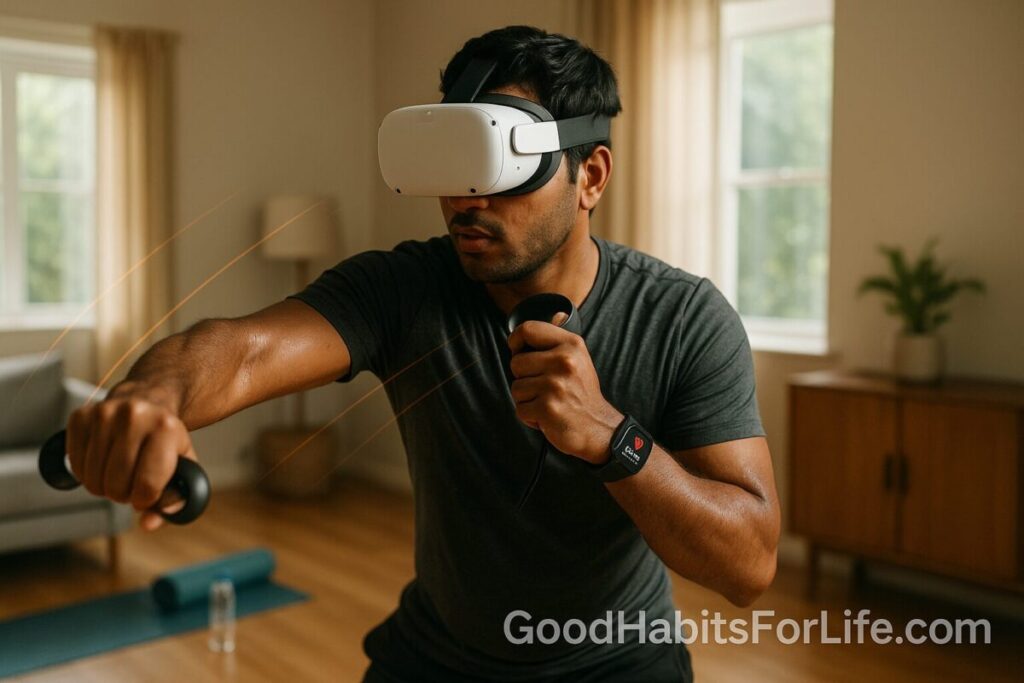
VR Fitness: Fun Cardio that Sticks: Dopamine Detox (2025)
VR Fitness: Fun Cardio that Sticks: Dopamine Detox (2025)
Table of Contents
🧭 What VR Fitness Is & Why It Works
VR fitness uses immersive headsets and motion-tracked controllers to turn movement into play (e.g., rhythm slashing, boxing, dance). When designed well, it elevates heart rate to moderate-to-vigorous intensity comparable to traditional cardio—while feeling easier and more engaging. Research shows actual exertion can exceed what people feel (lower RPE), a combo that supports adherence. PMC
Large health bodies still set the target: 150–300 minutes/week of moderate activity (or 75–150 minutes vigorous) plus 2+ days of muscle-strengthening. VR sessions can count toward these minutes if intensity is sufficient. PMCCDC
Emerging trials and reviews indicate VR exergames can raise heart rate, improve obesity-related outcomes, and increase enjoyment/satisfaction, though certainty varies by study. PMC+1Nature
“Dopamine Detox” — Reframed for Habits
A literal detox from dopamine isn’t a thing. The popular “dopamine fasting” idea is widely misunderstood. A better approach is reward redirection: replace compulsive, high-dopamine scrolling with healthy, rewarding activities like VR cardio. That aligns with how dopamine drives reinforcement and motivation. Harvard HealthAmerican Psychological Association
✅ Quick Start: Do-This-Today Setup
-
Pick one game mode you enjoy (e.g., rhythm flow or boxing). Enjoyment is your adherence engine. PMC
-
Set a realistic target: 3×/week, 15–20 min per session this week. Build gradually toward 150–300 min/week. PMC
-
Use the “talk test” & heart rate: You should speak in short sentences at moderate intensity; breathe too hard to talk at vigorous. (Maps to WHO/CDC intensity guidance.) PMC
-
Space & safety: Clear a 2×2 m area, secure straps, hydrate, and warm up 3–5 min.
-
Cybersickness control: Prefer high refresh rate, fixed horizon scenes, and start with short bouts + breaks (5-10 min on/2-3 min off). PMCMDPI
-
End with a 2–3 min cooldown + quick note in your tracker (see Tools).
🛠️ 30-60-90 Day Habit Plan
Goal: Hit guidelines and make VR cardio automatic.
Days 1–30 (Foundation)
-
Frequency: 3–4 sessions/week × 15–25 min.
-
Focus: Technique, comfort, sickness mitigation.
-
Progression: +5 min/session each week if you recover well.
-
Checkpoint: By Day 30, average ~90 min/week in VR cardio and add 1 day/week light strength (bands or bodyweight). PMC
Days 31–60 (Consistency)
-
Frequency: 4–5 sessions/week × 20–30 min.
-
Intensity mix: 3 moderate days + 1 interval day (e.g., 60 s hard / 60 s easy for 10 rounds).
-
Checkpoint: Cross 150–180 min/week; add 2 days/week strength.
Days 61–90 (Mastery)
-
Frequency: 5–6 sessions/week × 25–40 min.
-
Options: Add a boxing or HIIT-style playlist once/week (only if comfortable). PMC
-
Checkpoint: Maintain 180–220+ min/week; review variety to avoid plateaus.
🧠 Techniques & Frameworks that Boost Adherence
-
Temptation bundling: Pair VR workouts with a favorite playlist or post-workout treat (tea, podcast).
-
Implementation intentions: “At 7:00 pm on Mon/Wed/Fri, I will play Boxing Starter for 20 minutes.”
-
Instant feedback loops: Choose modes with clear scoring and streaks; enjoyment and meaning predict stickiness. PMC
-
RPE reality check: Because VR can feel easier than it is, cross-check with HR or talk test weekly. PMC
-
Gamified goals: Weekly boss fight (hard playlist), monthly badge for minutes met.
-
Cybersickness habituation: Gradually increase exposure over sessions; habituation training reduces symptoms in immersive VR. ScienceDirect
👥 Audience Variations
Students/Teens: Short, high-fun bursts between study blocks; prioritize rhythm games to lower stress and break up sitting. Track minutes toward 150+/week. PMC
Busy Professionals: 15-minute “desk-to-drenched” sessions at lunch; use interval modes for time-efficiency twice/week.
Parents: Family mode on weekends—switch players for 10-minute rounds. Keep straps on and space clear.
Seniors (or new exercisers): Start with 10–15 min low-intensity rhythm modes, larger text/UI, seated options if needed; enjoyment and satisfaction are key for adherence. Consult a clinician if you have chronic conditions. PMC
⚠️ Mistakes & Myths to Avoid
-
Myth: “Dopamine detox” removes dopamine. Fact: You can’t detox from a neurotransmitter; redirect reward to healthy behaviors instead. Harvard Health
-
Ignoring guidelines. Minutes still matter—VR has to meet intensity/time targets. PMC
-
Overdoing day 1. Start short to avoid cybersickness and soreness; build gradually. PMC
-
Cluttered play area/loose straps. Injury risk rises without basic setup.
-
Only cardio forever. Add 2+ strength days weekly for best health outcomes. PMC
🗣️ Real-Life Examples & Scripts
-
5-Minute Pre-Commit: “Alexa/Google, set a reminder: 7 pm VR Flow warm-up.”
-
Interval Script (20 min): 5-min warm-up → 8×(60 s hard / 60 s easy) → 3-min cooldown.
-
“Bored Day” Mini: “I’ll just play one song.” (Momentum beats motivation.)
-
Family Plan: “Two songs each, rotate, total 30 minutes.”
🧰 Tools, Apps & Resources (quick takes)
-
Games/Apps:
-
Supernatural (rhythm/boxing; guided coaching; subscription). Emerging data shows moderate intensity possible in specific modes. PMC
-
Beat Saber (rhythm slashing; huge song library; modifiable difficulty). Studies report moderate-to-vigorous intensity portions in sessions. SpringerLink
-
FitXR / LES MILLS BODYCOMBAT (boxing/dance/combat-aerobics classes; interval options).
-
Thrill of the Fight (boxing sim; intense—scale carefully).
-
-
Hardware tips: Prefer headsets with high refresh rate and good fit to reduce sickness; keep lenses clean; enable guardian/boundary. PMC
-
Trackers: Any HR strap or smartwatch + spreadsheet/app to total weekly minutes.
-
Stock images for posts: Pexels and Pixabay allow free use (check their licenses). PexelsPixabay
🧾 Key Takeaways
-
VR can transform cardio into something you look forward to, which is half the battle for long-term habits. PMC
-
Aim for 150–300 min/week and 2+ strength days; VR minutes count if intensity is right. PMC
-
Start small, prevent cybersickness, and progress steadily. PMC
-
Forget “detox”—channel dopamine toward healthy movement you’ll repeat. Harvard Health
❓ FAQs
1) Does VR cardio really “count” toward weekly exercise goals?
Yes—if your session reaches moderate/vigorous intensity and you accumulate enough minutes, it counts the same as other aerobic activity. PMC
2) How do I know my VR session is moderate intensity?
Use the talk test (short sentences only) or check heart rate zones; both map to guideline intensities. PMC
3) I get nauseous in VR. What should I change first?
Shorten bouts, increase refresh rate, use stable-camera experiences, expand play space, and build tolerance gradually. PMCMDPI
4) Is VR better than the gym?
It depends on you. Evidence suggests VR can increase enjoyment and be effective; consistency beats perfection. Mix with strength training for best results. PMC
5) Can seniors use VR safely?
Yes—with appropriate modes, supervision if needed, and gradual progression; research supports feasibility and acceptability in older adults. PMC
6) What about weight management?
VR exergaming shows promising effects on obesity-related outcomes when used regularly, alongside diet and strength training. Nature
7) Is “dopamine detox” necessary before VR fitness works?
No. There’s no detox from a neurotransmitter; instead, schedule rewarding, healthy behaviors like VR workouts. Harvard Health
8) Are interval sessions safe in VR?
For healthy users, brief HIIT-style VR playlists can be effective; scale up cautiously and stop if dizzy or unwell. PMC
📚 References
-
World Health Organization. 2020 Guidelines on Physical Activity and Sedentary Behaviour. PMCWHO Apps
-
Centers for Disease Control and Prevention. Adult Physical Activity Basics & What Counts. CDC+1
-
American Heart Association. Recommendations for Physical Activity in Adults. www.heart.org
-
Stewart TH, et al. Actual vs. perceived exertion during active VR gaming. Games Health J (2022). PMC
-
Craig TV, et al. Energy expenditure in Supernatural VR modes via indirect calorimetry. (2024). PMC
-
Rutkowski S, et al. Training using a commercial immersive VR app (Beat Saber). (2024). SpringerLink
-
Bravo-Aparicio J, et al. Active video games and enjoyment/satisfaction in older adults (systematic review & meta-analysis). (2025). PMC
-
Merola P, et al. VR HIIT exergaming—physiological responses. (2025). PMC
-
Oh H, et al. Cybersickness and its severity: review. (2022). PMC
-
Papaefthymiou S, et al. Mitigating cybersickness in VR (2024). MDPI
-
Harvard Health Publishing. Dopamine fasting: misunderstanding science. (2020). Harvard Health
-
American Psychological Association. Dopamine and desire. (Overview). American Psychological Association
Disclaimer: This article is for general information and is not a substitute for professional medical advice; consult your clinician before starting or changing an exercise program.