
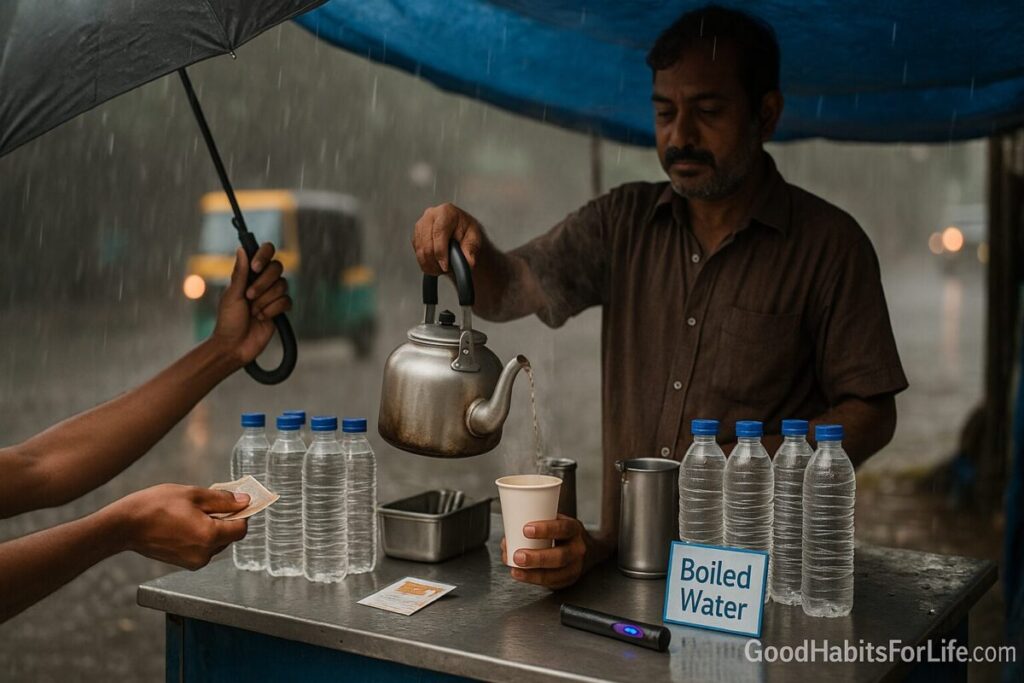
Travel in Monsoon: Safe Street Drinks & Clean Water: AI workflows (2025)
Monsoon Travel: Safe Street Drinks & Clean Water (2025)
Table of Contents
🧭 What this guide covers & why it matters
Monsoon season brings heavy rain, flooding, and intermittent contamination of water sources. Street drinks can be a delight—but poor water, ice, or handling turns a treat into a sick day. This guide shows you how to choose safer beverages, purify water quickly, and use AI to plan and check conditions in real time. It draws on global guidance for safe water and food handling, and adapts it for travel in rainy months. CDCWorld Health Organization
Benefits (evidence-aligned):
-
Lower risk of traveler’s diarrhea, typhoid, leptospirosis, and other water/food-borne infections through safer beverage choices and treatment. CDC+1World Health Organization
-
Faster, more reliable hydration using proven disinfection methods and ORS (oral rehydration solution). CDCWorld Health Organization
-
Practical, repeatable workflows that help you act quickly during boil-water advisories, outages, or floods. CDC
✅ Quick Start: Do this today
-
Pick safer beverages
-
Carry a 1-2-3 water plan
-
1: Filter (0.1–0.2 μm) to remove particulates/protozoa.
-
2: Disinfect (boil 1 min, or 3 min above 2,000 m/6,562 ft; or use chlorine/chlorine dioxide tablets with proper contact time). CDC
-
3: Store in clean, lidded bottles; avoid re-contamination. World Health Organization
-
-
During floods/heavy rain
-
Pack ORS & electrolytes
-
Use WHO/UNICEF-style ORS for dehydration; seek medical help if severe or if there’s blood in stool, high fever, or persistent vomiting. World Health Organization
-
🍹 Safe Street Drinks: What to pick, what to skip
Usually safer
-
Hot, steaming chai/coffee made from freshly boiled water.
-
Sealed bottled or canned drinks (prefer carbonated). Wipe lids. CDC
Higher risk
-
Iced drinks, fountain sodas, fresh juices diluted with tap water, or beverages prepared with unboiled water. Alcohol does not neutralize unsafe ice. CDC
In India: When buying “packaged drinking water,” look for the BIS Standard Mark and a valid license number (IS 14543:2024); for natural mineral water, see IS 13428:2024. BIS ServicesBIS
🛠️ Water You Can Trust: Fast purification methods
Use this table to pick the right method (often best to combine filter + disinfectant).
| Method | How to | What it inactivates well | Notes |
|---|---|---|---|
| Boiling | Bring to rolling boil 1 min; 3 min >2,000 m; let cool with lid on | Bacteria, viruses, protozoa | Most reliable and widely recommended; doesn’t remove chemicals. CDC+1 |
| Chlorine/chlorine dioxide tablets | Follow label; typical 30–60 min contact | Bacteria, viruses; chlorine dioxide better vs Giardia, limited vs Cryptosporidium | Works best in clear water; leaves residual to prevent re-contamination. CDCCDC Stacks |
| Iodine | Use only short-term; follow label | Bacteria, viruses (not Crypto) | Avoid in pregnancy, thyroid disease; taste/odor issues. CDC |
| Filters (portable 0.1–0.2 μm) | Squeeze/pump/gravity systems | Protozoa (Giardia/Crypto), many bacteria | Pair with chemical or UV to cover viruses; check pore size/specs. CDC |
| UV pens | Treat clear water per device instructions | Bacteria, viruses, protozoa | Doesn’t work well in turbid water; no residual. CDC |
| SODIS (solar disinfection) | Clear PET bottles, filled with low-turbidity water, in full sun ≥6 h (longer if cloudy) | Bacteria, viruses, some protozoa | Useful in austere settings; clarify turbid water first. CDC |
Emergency tip: If you can’t boil due to power cuts, use chlorine/chlorine dioxide correctly, or UV pens on filtered water; store safely. CDC
🧭 7-Day Monsoon Travel Habit Plan
T-7 to T-5 (Before departure)
-
Pack: filter + disinfectant tablets, UV pen (optional), ORS sachets, collapsible bottle with lid, wipes, and a small kettle/heating coil. CDC
-
Save local advisories/clinics; bookmark CDC Travelers’ Health and destination-specific notices. CDC Travelers’ Health+1
T-4 to T-2
-
Practice your 3-step water routine (filter → disinfect → store).
-
Build AI checklists (see workflows below).
T-1
-
Pre-download maps, offline translation, and your drink safety script in local language.
On trip (daily loop)
-
Choose sealed or steaming hot beverages; no ice unless verified safe. CDC
-
Boil hotel water for brushing teeth and baby formula where tap water may be unsafe. CDC
-
If diarrhea hits, start ORS; escalate care if severe (blood in stool, high fever, persistent vomiting). World Health Organization
Returning home (T+1)
-
If you had significant illness, seek clinical review and mention exposures (street drinks, untreated water). CDC
🤖 AI Workflows (2025): Smarter, faster safety checks
1) Local advisory snapshot
Prompt: “Summarize today’s boil-water advisories and flood alerts for [city], including official sources, and list safe water steps to follow. Use bullet points.” (Cross-check with official notices.) CDC
2) Street-stall risk scan (text + photo)
Prompt: “From this photo/description of a drink stall, list hygiene red flags (e.g., uncovered ice, dirty water jugs, lukewarm ‘hot’ drinks), and suggest safer alternatives nearby.” (Use as a checklist, not a lab test.)
3) Pack-list generator
Prompt: “Create a monsoon water safety kit under 1 kg: filter specs, chlorine dioxide tablet count for 7 days, collapsible bottle, ORS sachets, and a tiny kettle—include grams.”
4) Instant translation
Prompt: “Translate into [language]: ‘Is this water boiled?’ ‘Can you serve without ice?’ ‘Do you have sealed bottles?’ (polite tone).”
5) ORS plan
Prompt: “If I have mild diarrhea, remind me how to mix/store ORS safely and when to seek care. Keep it to 6 bullets.” (You still follow WHO/CDC guidance.) World Health Organization
🧠 Audience Variations
-
Students & backpackers: Favor filters + chlorine dioxide (lightweight); avoid refilling from dispensers with doubtful maintenance. CDC
-
Parents with infants: Use ready-to-feed formula or reconstitute with safe hot water (≥70 °C), and sterilize feeding items with safe water. CDC
-
Professionals on tight schedules: Keep sealed drinks in your bag; travel kettle + collapsible cup for hotel boiling routine. CDC
-
Seniors/health-compromised: Be extra strict—tap water aerosols and minimally treated drinks carry higher risk; consider only sealed/boiled options. CDC
⚠️ Mistakes & Myths to Avoid
-
Myth: “Alcohol kills germs in ice.” → False. Alcohol content in mixed drinks doesn’t disinfect contaminated ice. CDC
-
Mistake: Using UV on cloudy water → particles block light; filter first. CDC
-
Mistake: Rinsing cups/fruit with unsafe tap water → re-contamination. Use treated/boiled water. CDC
-
Myth: “Once bottled, always safe.” → Counterfeits exist; check seals, labels, and (in India) BIS Mark. BIS Services
-
Mistake: Ignoring floods → avoid wading; keep wounds covered; treat all water. CDC
💬 Real-Life Scripts (copy-paste)
-
“Could you please serve it without ice?”
-
“Is this water boiled or bottled and sealed?”
-
“Can I get hot tea/coffee, freshly made?”
-
“Do you have sealed soda or water?”
-
“Could you rinse this cup with boiled water?”
Use AI to translate these into local languages and save offline.
🧰 Tools, Apps & Resources (pros/cons)
-
Squeeze/gravity filter (0.1–0.2 μm) — Pro: fast for turbidity/protozoa; Con: pair with chemical/UV to cover viruses. CDC
-
Chlorine dioxide tablets — Pro: good bacteria/viruses/Giardia; Con: slower for Cryptosporidium; follow contact time. CDC
-
UV pen — Pro: rapid in clear water; Con: battery-dependent, no residual protection. CDC
-
Travel kettle/heating coil — Pro: reliable boiling in hotel rooms; Con: needs power. CDC
-
ORS sachets — Pro: proven dehydration treatment; Con: mix with safe water only. World Health Organization
-
Official guidance — CDC Yellow Book (food/water, disinfection), WHO “Five Keys to Safer Food,” UNICEF flood safety. CDC+1World Health OrganizationUNICEF
📚 Key Takeaways
-
Choose steaming-hot or sealed drinks; avoid ice unless you’re sure it’s safe. CDC
-
Use a filter → disinfect → store routine; at altitude, boil 3 minutes. CDC
-
In India, check for the BIS Standard Mark on packaged water. BIS Services
-
During floods, treat all water and avoid contact with floodwater; keep ORS handy. UNICEFCDC
-
Let AI speed up planning, translation, and daily checklists—then verify with official sources.
❓ FAQs
1) Are hot street drinks always safe?
Safer, yes—if made from water that just boiled and served steaming; still assess hygiene (clean utensils, covered containers). CDC
2) Is carbonated soda safer than still water?
When factory-sealed, carbonated drinks are generally safe; wipe the can/bottle before drinking. CDC
3) If I can’t boil, what’s next best?
Use a filter + chlorine/chlorine dioxide or a filter + UV on clear water. Follow contact times and device directions. CDC
4) How long do I boil at altitude?
Boil 1 min (sea level) or 3 min above 2,000 m/6,562 ft. CDC
5) Is SODIS (solar disinfection) legit for travelers?
Yes, for low-turbidity water in full sun (≥6 h). It’s useful in austere situations but slower; pre-filter if cloudy. CDC
6) Can alcohol make unsafe ice safe?
No. Alcohol concentration in typical drinks doesn’t disinfect contaminated ice. CDC
7) What’s the safest move for baby formula?
Use ready-to-feed; if using powder, mix with safe, hot water, and clean equipment with safe water. CDC
8) I’m in India—how do I vet bottled water quickly?
Look for the BIS Standard Mark and license number (IS 14543:2024 for packaged drinking water). BIS Services
9) When should I seek medical care?
High fever, blood in stool, persistent vomiting, severe dehydration, or symptoms >72 hours—start ORS and get care promptly. World Health Organization
10) What hygiene rules should vendors follow?
WHO’s Five Keys: keep clean; separate raw/cooked; cook thoroughly; keep food at safe temps; use safe water and raw materials. World Health Organization
References
-
CDC Yellow Book — Food and Water Precautions for Travelers (2026). CDC
-
CDC Yellow Book — Water Disinfection for Travelers (2026). CDC
-
CDC — About Water Treatment Options When Hiking, Camping, or Traveling (2025). CDC
-
WHO — Guidelines for Drinking-Water Quality (4th ed., addenda, 2022). Iris
-
WHO — Five Keys to Safer Food poster. World Health Organization
-
UNICEF — Flood safety information: keep food and water safe (Parenting). UNICEF
-
US EPA — Emergency Disinfection of Drinking Water (2025). US EPA
-
BIS — Guidelines for implementation of Revised IS 14543:2024 (Packaged Drinking Water). BIS Services
-
BIS — Product Manual for IS 14543 (July 2025). BIS
-
CDC — Leptospirosis prevention after floods (2025). CDC
-
WHO — Typhoid fact sheet (2023). World Health Organization
Disclaimer: This guide provides general health and safety information and is not a substitute for professional medical advice; seek care from a qualified clinician for diagnosis or treatment decisions.