
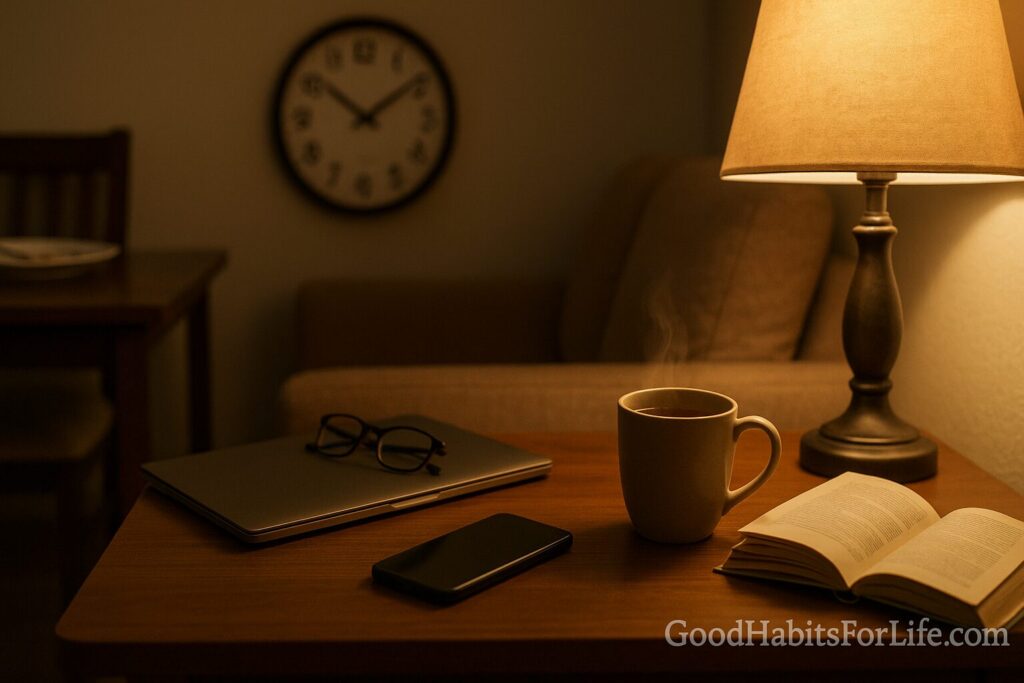
The 3-2-1 Rule for Healthier Evenings: AI workflows (2025)
The 3-2-1 Rule for Healthier Evenings: AI workflows (2025)
Table of Contents
🧭 What the 3-2-1 Rule Is & Why It Works
The 3-2-1 rule is a simple evening routine:
-
3 hours before bed: no heavy meals or alcohol. Heavy/spicy meals and alcohol close to bedtime can fragment sleep and cause awakenings; public-health guidance specifically recommends finishing these several hours before bed. CDC+1
-
2 hours before bed: stop work and demanding tasks. Shifting from cognitively arousing activity to a relaxing wind-down helps the nervous system downshift. NHS and sleep-health sources encourage winding down and avoiding stimulating tasks in the late evening. nhs.uksleepstation.org.uk
-
1 hour before bed: screens off. Evening blue-enriched light suppresses melatonin and shifts circadian timing; guidance often suggests 30–120 minutes of screen-free time before bed. Harvard HealthCDC Archive
Why it works (evidence snapshot):
-
Food & alcohol timing: Finishing meals and alcohol earlier reduces reflux and sleep disruption; CDC/NIOSH advise avoiding heavy meals and alcohol near bedtime. Alcohol may hasten sleep onset but disrupts REM and later-night continuity. CDC+1PMC
-
Cognitive arousal: A calm pre-sleep routine improves sleep onset; multiple health systems recommend structured wind-down time. nhs.uksleepstation.org.uk
-
Blue light: Blue light suppresses melatonin more than other wavelengths and can shift circadian phase, delaying sleepiness. Harvard Health
✅ Quick Start: Do This Tonight
-
Pick a target bedtime. Example: 22:30.
-
Count back your 3-2-1 checkpoints:
-
19:30 (-3h): Finish dinner; skip alcohol tonight.
-
20:30 (-2h): Close work apps; start a wind-down playlist.
-
21:30 (-1h): Enable phone’s Bedtime/Downtime; put devices away.
-
-
Create a 20-minute wind-down loop: light stretch, warm shower, journal, or paper book. nhs.uk
-
Bedroom basics: cool, dark, quiet; consistent wake time. CDC
-
If you’re not sleepy after 20–30 minutes: leave bed, read on paper under dim, warm light; try again when drowsy. nhs.uk
🛠️ 30-60-90 Day Habit Plan
Days 1–30 (Foundation):
-
Lock a fixed bedtime/wake time (±15 min).
-
Apply 3-2-1 checkpoints 5 nights/week.
-
AI workflow: Each evening at -2h, an assistant prompt generates a Tomorrow Top 3 list and a 3-line daily summary so you can close loops and stop working.
-
Track: bedtime, wake time, how many checkpoints hit (0–3), and next-day energy (1–5).
Days 31–60 (Optimization):
-
Extend to 6 nights/week.
-
Add “friction reducers”: charger in living room, paper book on nightstand, herbal tea ritual.
-
AI workflow: At -1h, auto-start a Focus/Wind Down mode across devices and cue a 10-minute breathing script.
-
Track: screen-free minutes before bed; late-meal/alcohol exceptions.
Days 61–90 (Personalization):
-
Keep the rule but customize: e.g., 3-1-1 (lighter dinner, no alcohol 3h; stop work 1h; screens 1h) if your job requires late hours.
-
AI workflow: Weekly review compiles sleep trends, exceptions, and suggestions (earlier dinner on meeting nights, move workouts earlier).
-
Track: subjective sleep quality & morning mood; adjust checkpoints.
🧠 Techniques & Frameworks (with AI workflows)
1) Wind-Down Protocol (WDP-20):
-
5 min tidy / 5 min hygiene / 5 min stretch / 5 min journal.
-
AI assist: a routine triggers a step-by-step checklist on your watch/phone at -2h.
2) Stimulus Control Lite:
-
Bed = sleep & intimacy only; read elsewhere if awake >20–30 min. nhs.uk
-
AI assist: if motion sensor or keyboard activity continues past -1h, send a gentle “lights down” nudge.
3) Light Management:
-
After sunset: dim, warm light; mornings: bright light for 10–20 minutes. Evening blue light delays melatonin; morning light advances clocks. Harvard HealthAASM
-
AI assist: smart bulbs shift to warm at -1.5h; blinds open at wake time.
4) Nutrition & Alcohol Timing:
-
Target last large meal by -3h; if hungry later, choose a small, balanced snack; avoid alcohol near bedtime. CDC+1
-
AI assist: meal-planning bot schedules earlier dinner on late-meeting days; “Are you sure?” prompt if ordering late.
5) Caffeine Cutoff:
-
Many people need an 8-hour buffer before bed; caffeine half-life varies (≈1.5–9.5h). Sleep FoundationPMC
-
AI assist: if caffeine logged after cutoff, your assistant suggests decaf/herbal alternatives and auto-moves tomorrow’s first coffee earlier.
👥 Variations by Audience
-
Students: Use campus library hours as the “stop-work” cue; swap scrolling for a 10-minute paper flashcard review.
-
Professionals: End-of-day Tomorrow Top 3 and inbox-to-zero sprint at -2h; set laptop to auto-sleep at -1h.
-
Parents: Batch prep (lunches, clothes) at -2h; screens off household-wide at -1h; story time counts as wind-down.
-
Seniors: Emphasize morning light and gentle mobility; smaller, earlier dinners to reduce nighttime reflux. CDC
-
Teens: Family charging station outside bedrooms; bedtime mode + app limits; coach why (melatonin/blue light). Harvard Health
⚠️ Mistakes & Myths to Avoid
-
“Alcohol helps me sleep.” It may speed sleep onset but disrupts REM and continuity later—net negative. PMCWiley Online Library
-
“A snack ruins sleep.” Late heavy meals are the issue; a light snack is fine if hungry. CDC Archive
-
“Screens are harmless with Night Shift.” Warmer tint helps a bit, but content and brightness still stimulate; aim for full screen-free time. Harvard Health
-
“Caffeine after dinner doesn’t affect me.” Individual sensitivity varies, but studies show measurable sleep loss even 6 hours pre-bed. PMC
💬 Real-Life Examples & Scripts
-
Decline late invites: “I’m sticking to an early dinner—can we do lunch tomorrow?”
-
Sign-off at work: “Logging off by 8:30 so I’m fresh tomorrow. Anything urgent? Otherwise I’ll pick it up at 9 a.m.”
-
Household cue: “Phones to the charging basket at 9:30—book club in the living room.”
📚 Tools, Apps & Resources (quick pros/cons)
-
iOS Screen Time / Focus / Wind Down: native, automatic; limited cross-platform.
-
Android Digital Wellbeing / Bedtime mode: greyscale + DND; some OEMs vary.
-
Apple Shortcuts / Android Routines: chain 3-2-1 cues across devices; initial setup time.
-
Freedom / Opal / Focus To-Do: blocks distracting sites; subscription.
-
Smart lights (Hue, Nanoleaf): evening warm dims; higher cost.
-
White-noise apps: mask noise; avoid overreliance.
-
Paper journal / habit tracker: zero blue light; manual logging.
🧾 Key Takeaways
-
The 3-2-1 rule structures your evening into digest, downshift, and darken.
-
Evidence supports earlier meals/alcohol, calm wind-down, and screen-free time before bed. CDCnhs.ukHarvard Health
-
Layer AI workflows to make good choices the default.
-
Personalize after 30–60 days; keep the spirit even if the numbers flex.
-
Protect mornings (light, movement, consistent wake) to reinforce nights. CDC
❓ FAQs
1) Is the 3-2-1 rule the same as the 10-3-2-1-0 rule?
They’re related. The longer rule adds a 10-hour caffeine cutoff and “0 snooze.” Many people find 3-2-1 easier to start; you can add the caffeine step once evenings feel solid. Livingetc
2) What if I have to eat late?
Keep it lighter and leave time to digest; if hungry near bed, a small snack is acceptable. CDC Archive
3) Do blue-light glasses fix the problem?
They may help, but screen-free time and lower brightness still win. Prioritize reducing exposure in the last hour. Harvard Health
4) How strict must the “2 hours no work” be?
Aim to remove stimulating tasks and swap to a relaxing wind-down. Even 60–90 minutes helps; be consistent. nhs.uk
5) Is caffeine really a problem if I sleep fine?
Caffeine’s half-life varies widely; even 6 hours before bed can reduce sleep for some. Test an 8-hour buffer for two weeks and compare. PMC+1
6) Do I need special bulbs?
Not required, but warmer/dimmer light in the evening supports melatonin; smart bulbs simply automate it. Harvard Health
7) Can AI really help here?
Yes—automation reduces decisions: auto-blocking apps, auto-summarizing your day at -2h, and triggering Wind Down across devices make the routine effortless.
📚 References
-
Centers for Disease Control and Prevention (CDC). About Sleep (sleep hygiene tips). CDC
-
CDC/NIOSH. Prepare for Sleep / Tips to Improve Your Sleep (meal/alcohol timing; device curfew). CDCCDC Archive
-
NHS. Fall asleep faster and sleep better (wind-down advice). nhs.uk
-
Harvard Health. Blue light has a dark side (melatonin suppression and circadian shift). Harvard Health
-
Sleep Foundation. Blue Light and Sleep; How Long Does Caffeine Take to Wear Off? (consumer summaries; 8-hour guideline). Sleep Foundation+1
-
Drake C. et al. Caffeine effects 0, 3, 6 hours before bedtime (J Clin Sleep Med). PMC
-
Roehrs T. & Roth T. Sleep, Sleepiness, and Alcohol Use (review on REM disruption). PMC
-
AASM resources/reviews on circadian light timing (morning light advances). AASM
-
Sleepstation (UK). Wind-down routine guidance (practical evening steps). sleepstation.org.uk
Disclaimer: This article is for general education and is not a substitute for personalized medical advice; consult your clinician if sleep problems persist.