
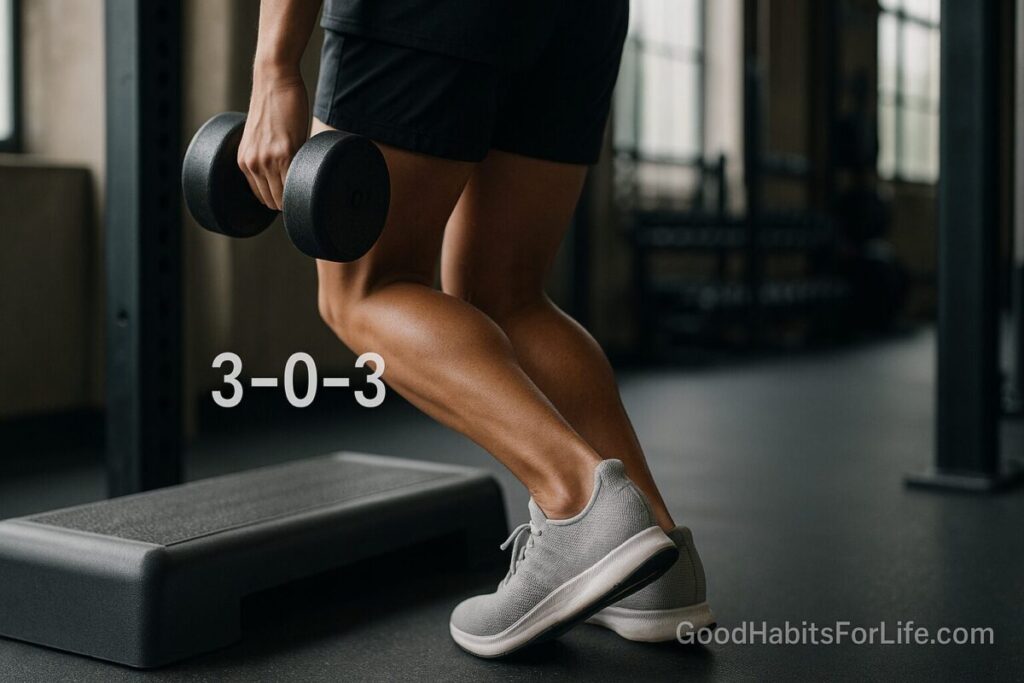
Tendons Love Tempo: Eccentric Protocols
Tendons Love Tempo: Eccentric Protocols
Table of Contents
🧭 What & Why: the tendon case for slow, heavy, controlled reps
Tempo = how long each phase of a rep takes (e.g., 3-0-3 = 3 s down, 0 s pause, 3 s up). Eccentric = the lowering phase where the muscle lengthens under load.
Tendons adapt to mechanical strain—especially when loading is slow and heavy. Heavy-slow loading raises time-under-tension (TUT) and controls the rate of force development, two levers that drive collagen remodeling. PMC
On the rehab side, classic eccentric-only (Alfredson) and HSR show comparable pain and function improvements; HSR often yields equal outcomes with higher satisfaction and better compliance. TRIPP
Mechanistically, loading increases collagen synthesis and matrix turnover—key to healthier, stronger tendons over time. PubMed+1
Finally, tendinopathy isn’t simply “inflammation”; it’s better understood as a continuum of changes in tendon structure and pain sensitivity—so load needs staging and progression. British Journal of Sports Medicine+1
✅ Quick Start: do this today (10–15 minutes)
-
Pick the right exercise for the irritated tendon (e.g., heel-drop for Achilles; decline squat for patellar; wrist extensor lowering for lateral elbow).
-
Choose a tempo: 3-0-3 for HSR (6 s total per rep) or 3-0-6 if you want extra eccentric time. TRIPP
-
Dose by pain-monitoring: it’s acceptable to feel up to ~5/10 during/after, but discomfort should settle by next morning. If not, reduce load or volume. PubMedPMC
-
Perform 3 sets today at a load you could lift ~15 times (15RM), 8–12 reps per set, slow tempo, 2–3 min rests. Physiopedia
-
Log it (load, reps, pain now/next morning). Small increases each week.
🗓️ 30-60-90 Day Habit Plan (eccentric + HSR)
Frequency: 3×/week (alternate days) for HSR; eccentric-only can be daily in early phases if tolerated. TRIPP
Weeks 1–4 (Days 1–30) — Foundation
-
Load: ~15RM → 12RM, tempo 3-0-3.
-
Sets × reps: 3×15 (wk 1) → 3×12 (wk 2–3).
-
Pain rule: keep ≤5/10; must settle by morning. PubMed
-
Add isometric holds (5×45-60 s) on high-pain days for analgesia. PubMed
Weeks 5–8 (Days 31–60) — Capacity
-
Load: ~10RM → 8RM, tempo 3-0-3.
-
Sets × reps: 4×10 (wk 4–5) → 4×8 (wk 6–8).
-
Gradual return to running/jumping/sport if symptoms stable. TRIPP
Weeks 9–12 (Days 61–90) — Strength & Specificity
-
Load: ~6RM, tempo 3-0-3 (option: 3-0-6 focus eccentric).
-
Sets × reps: 4×6.
-
Introduce faster reps/plyometrics if your sport needs them, but keep 1–2 slow-heavy days to maintain tendon strain stimulus. PMC
Why this works: This mirrors the HSR template validated in Achilles and patellar tendinopathy trials (progressing 15RM → 6RM across 12 weeks with ~3 s down/3 s up). TRIPPPubMed
🛠️ Techniques & Frameworks (with exact tempos)
1) Alfredson Eccentric Heel-Drop (Achilles)
-
Protocol: 3×15 straight-knee + 3×15 bent-knee, twice daily, 12 weeks; eccentric-only (use the other leg to lift). Each rep ~3 s. Train into tolerable pain. TRIPPPubMedPMC
-
Good for: mid-portion Achilles tendinopathy; high daily volume responders.
2) HSR (Heavy-Slow Resistance)
-
Exercises: seated calf raise, leg-press calf raise, standing calf raise (Achilles) / squat-pattern or decline squat (patellar).
-
Tempo: 3 s eccentric + 3 s concentric (3-0-3), full ROM. TRIPP
-
Progression: week-blocks of 15RM → 12RM → 10RM → 8RM → 6RM with 2–3 min rests, 3×/week. TRIPP
-
Outcomes: Similar pain/function gains to eccentric-only; often higher satisfaction and better adherence. TRIPP
3) Isometrics (Analgesia tool)
-
Use for pain relief: 5×45–60 s heavy holds, 2–3 min rest; helpful before sport or loading. Evidence supports short-term analgesia, though findings are mixed—use pragmatically. PubMedAalborg Universitets forskningsportal
4) Pain-Monitoring Model (how to dose)
-
OK for pain to reach ~5/10 during/after; it should settle by next morning. If morning pain/stiffness spikes, reduce load/volume/speed. PubMedPMC
⚙️ Quick comparison
| Approach | Frequency | Tempo | Volume | Notes |
|---|---|---|---|---|
| Alfredson (ecc-only) | Daily (2×/day) | ~3 s ↓ | 180 reps/day | Simple; high volume; proven for Achilles. PubMed |
| HSR (ecc+conc) | 3×/wk | 3-0-3 | 3–4×6–15 | Equally effective; better satisfaction/compliance. TRIPP |
| Isometrics | PRN | 30–60 s holds | 5 reps | Short-term pain relief; bridge to loading. PubMed |
🧩 Audience Variations
-
Runners (Achilles): Prioritize HSR calf raises + Alfredson if you like daily structure; reintroduce running via every-other-day easy runs; avoid back-to-back speed/long days in early rehab. TRIPP
-
Jumpers/field sports (Patellar): Decline squats (eccentric/HSR) with slow tempo; add hip/knee extensors strength; later add controlled plyos. PubMed
-
Lifters (Elbow/Shoulder): Use slow-tempo wrist extensors or cable external rotation eccentrics; maintain global training by swapping aggravators (e.g., neutral-grip pulls).
-
Desk athletes: Micro-loads (3×/day 60–90 s isometric + evening HSR).
-
Seniors: Same principles; start lighter, longer tempo (3-0-6); emphasize balance and calf strength for gait.
⚠️ Mistakes & Myths to Avoid
-
Myth: “Only eccentrics fix tendons.” → Truth: Loading is the driver; eccentric-only and HSR both work. TRIPP
-
Mistake: Rushing to fast, springy reps. Slow tempos first to build strain tolerance; speed later for sport. PMC
-
Mistake: Chasing zero pain. Mild pain is acceptable if it normalizes by morning. PubMed
-
Myth: “Inflammation pills will cure it.” Tendinopathy is a load-adaptation issue; NSAIDs don’t rebuild tendon. PubMed
💬 Real-Life Examples & Scripts
-
Coach/physio update script: “I’m running HSR 3×/week at 3-0-3 tempo (currently 4×8 @ 8RM). Pain peaks ~4/10, gone by morning. Next week plan 4×6.”
-
Training log template: Date | Exercise | Load | Sets×Reps | Tempo | Pain During/Next AM | Notes.
-
Return-to-run rule: Add ~10% weekly run time if morning pain/stiffness remains baseline and hops are pain ≤3/10.
🧰 Tools & Resources
-
Metronome app (pace 3-0-3 cleanly).
-
Lifting log (Strong/Hevy/Sheets).
-
Timer (2–3 min rests).
-
Slant board/step, seated calf machine, leg press (where available).
🔑 Key Takeaways
-
Slower tempo = more tendon strain exposure; pair with progressive load (15RM → 6RM). PMC
-
Eccentric-only and HSR both work; HSR is efficient and adherable. TRIPP
-
Use isometrics for pain relief; then build with slow, heavy training. PubMed
-
Let pain guide—but not scare—your loading. PubMed
❓ FAQs
1) What tempo is “best” for tendons?
For HSR, 3 s down + 3 s up works well; you can bias eccentric time (e.g., 3-0-6) for extra strain. TRIPP
2) How long until I feel better?
Meaningful change usually appears by 6–12 weeks with steady loading (HSR/Alfredson). TRIPPPubMed
3) Can I keep running/playing?
Often yes—with pain-monitoring and smart progressions. Keep pain ≤~5/10 and normal by morning; reduce load if it lingers. PubMedPMC
4) Is eccentric-only superior to HSR?
Not consistently; trials show similar outcomes, with HSR often preferred. TRIPP
5) Do isometrics replace heavy loading?
No. They can reduce pain short-term, but you still need slow, heavy loading for long-term change. PubMedjournals.humankinetics.com
6) How heavy is “heavy”?
Work in repetition maximum zones: start around 15RM and progress toward 6RM over 12 weeks. TRIPP
7) What if mornings get stiffer?
You over-cooked it. Cut a set, lower load, or slow progression; reassess after 48 hours. PubMed
8) Do tendons need days off?
Yes—alternate days allow collagen turnover and adaptation. Most HSR protocols use 3 sessions/week. TRIPP
📚 References
-
Alfredson H. Heavy-load eccentric calf muscle training for chronic Achilles tendinosis. Am J Sports Med. 1998. PubMed
-
Beyer R, et al. Heavy Slow Resistance vs Eccentric Training for Achilles Tendinopathy (12-week RCT). Am J Sports Med. 2015. Includes 3-0-3 tempo & RM progression. TRIPP
-
Kongsgaard M, et al. Corticosteroid vs Eccentric vs HSR in Patellar Tendinopathy (RCT). Scand J Med Sci Sports. 2009. PubMed
-
Morrison S, et al. Putting “Heavy” into Heavy Slow Resistance—why slow tempo (TUT) and rate of loading matter. 2022. PMC
-
Cook JL, Purdam CR. Tendon Pathology Continuum Model. Br J Sports Med. 2009; and Revisiting the continuum model. 2016. British Journal of Sports Medicine+1
-
Kjaer M. From mechanical loading to collagen synthesis: tendon adaptation. 2009; ECM adaptation of tendon & muscle. 2006. PubMedWiley Online Library
-
Silbernagel KG, et al. Pain-monitoring model & continued activity during Achilles rehab. Am J Sports Med. 2007; plus contemporary guidance. PubMedPMC
-
Rio E, et al. Isometric exercise induces analgesia in patellar tendinopathy (clinical trials). 2015–2017; evidence summary 2020. PubMed+1journals.humankinetics.com
-
Radovanović G, et al. Evidence-Based High-Loading Tendon Exercise (review of HSR effects on ECM). 2022. PMC
Disclaimer: This guide is educational and not a substitute for personal medical advice; consult a qualified clinician if your pain persists or worsens.