
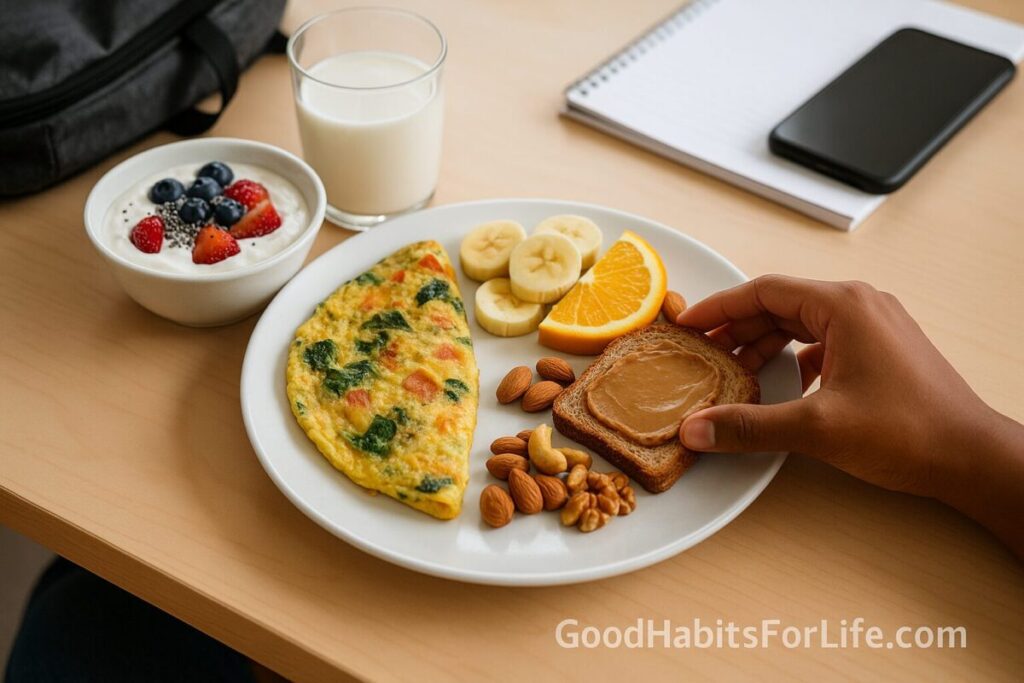
Teen Breakfast Wins: Quick, Tasty, ProteinForward: Protein-Forward Plan (2025)
Teen Breakfast Wins: Quick, Tasty, Protein-Forward (2025)
Table of Contents
🧭 What & Why: The Protein-Forward Teen Breakfast
Definition. Protein-forward = building breakfast around 20–30 g protein plus fiber-rich carbs and color (fruit/veg). Think eggs, dairy/curd, tofu/paneer, beans, nut/seed butters, lean meats, or fortified soy; add whole grains (oats, whole-wheat roti, multigrain bread), fruit/veg, and healthy fats.
Why it matters for teens
-
Growth & repair. Ages 14–18 typically need ~46 g/day (girls) and 52 g/day (boys) of protein; spreading intake over meals (including breakfast) improves muscle and satiety.
-
Focus & mood. Eating breakfast is associated with better attention, memory, and school performance vs. skipping; balanced macronutrients slow glucose swings for steadier energy.
-
Sports & activity. Post-overnight fast, a protein-carb breakfast supports training, recovery, and bone health in active teens.
Target a PFC plate at breakfast: Protein (20–30 g) + Fiber/Whole-grain (≥5 g) + Color (1–2 servings fruit/veg).
✅ Quick Start: 5-Minute Builds & Swaps
Builds (choose 1 from each column)
| Protein (20–30 g) | Fiber/Whole-grain | Color (fruit/veg) | Add-ons |
|---|---|---|---|
| 200 g Greek yogurt (or hung curd) | 60 g oats or 2 slices multigrain bread | 1 banana or 150 g berries | 1 tbsp peanut/almond butter |
| 120 g paneer/tofu bhurji | 1 whole-wheat roti or 1 small multigrain wrap | sliced tomato/spinach | chutney or salsa |
| 2 eggs + 2 egg whites | 1 slice whole-grain toast or 1 small potato (boiled) | capsicum/onion in omelet | 1 tsp olive oil/ghee |
| 250 ml soy milk (fortified) + 30 g whey/soy powder | 40 g muesli | 1 apple | 1 tbsp chia/flax |
| 150 g chana (chickpea) chaat with dahi | 1 small jowar/bajra bhakri | cucumber/carrots | lemon + chaat masala |
Fast swaps
-
Sugary cereal → high-fiber cereal (≥5 g fiber/serving) + milk/yogurt + nuts.
-
Jam toast → peanut/almond butter + sliced banana.
-
Plain idli → add sambar (lentil protein) + egg on the side.
-
Masala maggi → quick egg-veggie maggi (use half packet masala, add peas/corn, 2 eggs).
Make-ahead 5-packs (Sunday batch)
-
Egg or tofu muffin cups (12-cup tray; 2 per serving).
-
Overnight oats (5 jars; add powder milk or protein powder).
-
Freezer burritos/wraps (paneer/tofu + beans + salsa).
-
Protein pancake mix (oats + milk powder + eggs; cook fresh).
🗓️ 7-Day Starter Menu (mix & match)
Goal: 20–30 g protein + fiber + color each day. Portions are typical; adjust for hunger/activity.
-
Mon: Greek yogurt (200 g) + oats (40 g) + berries + 1 tbsp nuts/seeds.
-
Tue: Paneer bhurji (120 g) in whole-wheat wrap + cucumber sticks.
-
Wed: Veg omelet (2 eggs + 2 whites) + whole-grain toast + orange.
-
Thu: Chana chaat (150 g) with dahi + small bhakri + carrots.
-
Fri: Peanut-banana toast (2 tbsp PB) + milk (250 ml).
-
Sat: Protein oats (oats 60 g + milk + 20–25 g protein powder) + apple.
-
Sun: Idli + sambar + egg on side or tofu scramble + fruit.
Beverage add-ons (optional): milk/fortified soy (250 ml), lassi/chaas (200 ml), or fruit-veg smoothie (limit added sugars).
🛠️ 30-60-90 Day Roadmap
Days 1–30 (Start)
-
Pick two breakfast templates and repeat.
-
Sunday 45-minute batch: prep 2 proteins (e.g., paneer bhurji + chickpeas), 1 grain (oats), 2 cut fruits.
-
Put a visible checklist on the fridge: Protein / Fiber / Color.
-
Win condition: 4/5 school mornings = protein-forward.
Days 31–60 (Level-up)
-
Add third template (e.g., freezer wrap).
-
Track protein grams at breakfast 3 days/week.
-
Athletes: align protein (~0.3–0.4 g/kg) within 1–2 h of training.
Days 61–90 (Lock-in)
-
Introduce teen-choice day each week for autonomy.
-
Rotate global flavors (Mexican wrap, Indian bhurji, Mediterranean bowl).
-
Habit proofing: keep a “rainy-day shelf” (UHT milk/soy, muesli, nut butter, tinned beans).
🧠 Techniques & Frameworks that Work
-
PFC Plate: Always assemble Protein + Fiber + Color.
-
Two-by-Two Rule: Stock 2 quick proteins (yogurt, eggs/tofu) and 2 whole-grains (oats, rotis).
-
Habit stacking: Breakfast prep right after brushing.
-
Friction lessening: Pre-cut fruit; keep wraps/rotis in front of fridge; pan on stove at night.
-
Autonomy support: Teens pick from a laminated menu; parents provide ingredients and time.
-
Batch + Freeze: Cook once, freeze in single portions; reheat 60–90 s in microwave.
-
Sugar smart: Check labels—aim for breakfast foods with <10 g added sugar per serving.
👥 Variations: Athletes, Vegetarian/Vegan, Weight Management, Busy Parents
Teen athletes
-
Target: ~0.3–0.4 g/kg protein at breakfast on training days (e.g., 60 kg teen → 18–24 g).
-
Add extra carbs (oats/banana/bread) pre-practice; include dairy/fortified soy for calcium.
-
Example: Egg-veggie wrap + yogurt + fruit.
Vegetarian/Vegan
-
Protein pairs: tofu + soy milk; beans + dairy/soy; peanut butter + yogurt/soy yogurt.
-
Fortified soy milk provides complete protein + calcium + vitamin D.
Weight management
-
Keep protein ≥25 g and fiber ≥8 g; limit liquid calories.
-
Use berries/whole fruit over juices; choose plain, not flavored, yogurt.
Busy parents & commuters
-
2-minute builds: drinkable yogurt + banana + handful of nuts; or protein milk + muesli cup.
-
Grab-and-go box: wrap + fruit + small nut packet.
⚠️ Mistakes & Myths to Avoid
-
Myth: “Teens don’t need breakfast.”
Reality: Breakfast is linked to better cognition and mood; a balanced first meal supports attention at school. -
Mistake: All-carb or high-sugar starts (pastries/sugary cereals alone).
-
Mistake: Huge weekend breakfasts, skipped weekdays—consistency beats feast-fast cycles.
-
Myth: “Protein powders are always unsafe.”
Reality: Food-first is best. Reputable whey/soy powders can be used to top up when food access/time is limited; check for third-party tested products and avoid stimulant blends. -
Mistake: Skipping calcium-rich foods (dairy/fortified alternatives) during peak bone growth years.
💬 Real-Life Examples & Scripts
Morning script (parent → teen, 15 seconds)
“Pick A or B: paneer wrap or yogurt-oats bowl. Fruit’s cut. We leave in 10.”
Teen DIY script (on school nights)
“I’ll set out oats, a container of yogurt, banana, and a spoon on the counter so I can assemble in 60 seconds.”
Canteen/cafeteria choices
-
Egg roll + fruit + water.
-
Dosa + sambar + curd.
-
Veg sandwich (extra paneer/tofu) + buttermilk.
Shopping list (1 week)
-
Proteins: eggs (12), paneer/tofu (500 g), Greek yogurt/curd (1–1.5 kg), chickpeas (2 tins or 500 g dry), milk/fortified soy (2 L), nut/seed butter.
-
Grains: oats (1 pack), whole-wheat bread/wraps, rotis/bhakri.
-
Color: berries/bananas/apples, cucumber/tomatoes/spinach, frozen peas/corn.
-
Extras: olive oil/ghee, salsa/chutney, nuts/seeds, spices.
📚 Tools, Apps & Resources
-
MyPlate (USDA)—teen-friendly meal patterns; visual plate method. Pros: simple visuals. Cons: US-centric.
-
NHS Food Scanner (UK)—scan labels, spot added sugars. Pros: actionable. Cons: UK database.
-
Cronometer / MyFitnessPal—track protein and fiber. Pros: macro awareness. Cons: logging fatigue; set to teen-appropriate goals.
-
Food safety & allergy checkers—teach label reading; keep EpiPen/MD plan if needed.
🧾 Key Takeaways
-
Plan the protein first (20–30 g), add fiber and color.
-
Repeat templates so breakfast happens even on chaotic mornings.
-
Batch once per week; keep a rainy-day shelf for no-cook options.
-
Adjust for athletes or vegetarian/vegan needs without losing the PFC balance.
-
Measure success by consistency (4/5 school mornings) rather than perfection.
❓ FAQs
1) How much protein should a teen get at breakfast?
Aim 20–30 g as part of the daily total (≈46 g girls, 52 g boys ages 14–18). Active teens may benefit from the higher end.
2) Is cereal ok?
Yes—choose high-fiber (≥5 g), lower-sugar options; add milk/yogurt + nuts for protein and fat.
3) Are smoothies good?
They can be—use milk/soy + yogurt + fruit + oats/chia. Limit added sugars; chewing solid food can increase fullness.
4) What if my teen isn’t hungry early?
Try half-breakfast at home (yogurt/nuts) and half later (wrap/fruit at first break). Hydration can help appetite.
5) Can we use plant proteins only?
Yes—tofu/tempeh/soy milk/beans/peanut butter work well. Aim for fortified soy for complete protein and calcium.
6) What about protein powders?
Food first, but whey/soy powders are acceptable top-ups from reputable, third-party-tested brands. Avoid stimulants or “fat burners.”
7) How do we hit more fiber?
Add oats, whole-grain breads/rotis, fruit skins, beans, chia/flax. Target ≥25–30 g/day total fiber.
8) My teen does early practice—what’s best?
60–90 min pre-practice: toast + peanut butter + banana + milk/soy.
Post-practice: yogurt + muesli or egg wrap.
9) Any budget tips?
Use eggs, curd, chana, peanut butter, seasonal fruit, and buy oats and beans in bulk.
10) How do we avoid morning chaos?
Stage the station nightly: set out bowls/spoons, pre-cut fruit, thaw a wrap, and put the pan on the stove.
📚 References
-
U.S. Department of Agriculture & HHS. Dietary Guidelines for Americans, 2020–2025. https://www.dietaryguidelines.gov
-
Institute of Medicine (National Academies). Dietary Reference Intakes for Protein. (Adolescent RDAs: girls 46 g/day; boys 52 g/day). https://nap.nationalacademies.org
-
Harvard T.H. Chan School of Public Health—The Nutrition Source: Protein. https://www.hsph.harvard.edu/nutritionsource/what-should-you-eat/protein/
-
American Academy of Pediatrics (HealthyChildren.org). Protein and Your Child. https://www.healthychildren.org
-
Adolphus K, et al. “The effects of breakfast on behavior and academic performance in children and adolescents.” Frontiers in Human Neuroscience (2013/2016 updates). https://www.frontiersin.org
-
CDC—Added Sugars guidance for youth dietary patterns. https://www.cdc.gov/nutrition
-
International Society of Sports Nutrition. Position Stand: Protein and Exercise. https://jissn.biomedcentral.com
-
NHS—Protein & teen healthy eating guidance. https://www.nhs.uk/live-well/eat-well/
-
Academy of Nutrition and Dietetics—Fueling Teen Athletes. https://www.eatright.org
-
WHO—Adolescent nutrition. https://www.who.int/health-topics/adolescent-health#tab=tab_2
⚖️ Disclaimer
This article is educational and not a substitute for personalized medical or nutrition advice; consult a qualified professional for individual needs, allergies, or health conditions.