
Study Snacks for Focus: Protein + Fiber First: AI workflows (2025)
Study Snacks for Focus: Protein + Fiber First (2025)
Table of Contents
🧭 What & Why: The “Protein + Fiber First” Study Snack Framework
Definition: A simple rule for study fuel—build each snack around protein (15–25 g) and fiber (6–10 g), then add slow-burn carbs and healthy fats.
Why it works (evidence-aligned):
-
Protein boosts satiety and helps maintain stable blood glucose when paired with carbs, supporting sustained attention.
-
Fiber slows digestion and lowers glycemic impact, smoothing energy instead of spiking it.
-
Low-GI carbs (oats, legumes, fruit, whole grains) produce steadier energy than refined options.
-
Hydration + smart caffeine can sharpen alertness without the crash when dosed and timed well.
Target macros per snack (guide, not dogma):
-
Protein: 15–25 g
-
Fiber: 6–10 g
-
Carbs: 15–35 g (prefer low-GI)
-
Healthy fats: 5–15 g
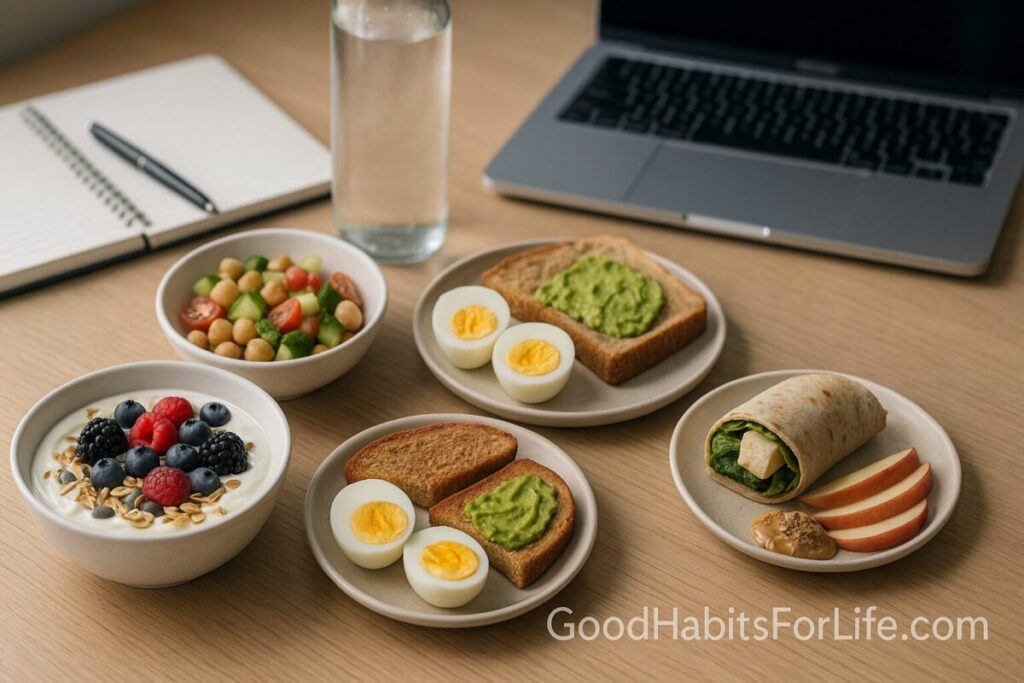
Examples that hit the targets:
-
Greek yogurt (200 g) + ¼ cup oats + ½ cup berries + 1 Tbsp seeds
-
Chana (chickpea) bowl (¾ cup cooked) + cucumber + tomatoes + lemon + chaat masala
-
Boiled eggs (2) + whole-grain toast (1) + avocado slice
-
Paneer (75–100 g) + whole-wheat roti + greens (wrap)
-
Apple + 2 Tbsp peanut butter + 1 Tbsp flaxseed
Result: Fewer “post-snack crashes,” more stable focus over 2–3 hours.
✅ Quick Start: Today’s 15-Minute Setup
-
Pick your snack base (protein): Greek yogurt, skyr, paneer/cottage cheese, eggs, tofu/tempeh, roasted chana, hummus, milk powder whey blend, tuna, edamame.
-
Add fiber: Fruit (berries, apple, pear), veg sticks, oats, chia/flax, whole-grain crackers, legumes.
-
Pre-portion x6 containers for the next 3 study days (2 snacks/day).
-
Water plan: Keep a 750 ml bottle at your desk; finish 1 bottle per study block.
-
Caffeine: If you use it, dose 100–200 mg pre-study; stop by mid-afternoon.
-
AI assist (1 minute prompt): “Generate 12 protein+fiber study snacks I can prep in 10 minutes, sorted by no-cook / microwave / batch-cook. Output ingredients + macros + storage notes.”
🛠️ 7-Day Starter Plan (with study slots)
Structure: 2–3 hr study blocks, snack between or mid-block if longer.
| Day | Snack A (15–25 g protein; 6–10 g fiber) | Snack B (optional) |
|---|---|---|
| Mon | Skyr/Greek yogurt (200 g) + oats (¼ cup) + berries | Roasted chana (½ cup) + orange |
| Tue | Paneer wrap (100 g paneer, whole-wheat roti, lettuce) | Apple + peanut butter (2 Tbsp) + flaxseed (1 Tbsp) |
| Wed | Eggs (2) + whole-grain toast + tomato | Hummus (¼ cup) + carrots + whole-grain crackers |
| Thu | Chia pudding (3 Tbsp chia in milk) + banana slices + nuts | Edamame (¾ cup) + sea salt + lemon |
| Fri | Tuna (75–100 g) + whole-grain crackers + cucumber | Yogurt + high-fiber cereal (30 g) + kiwi |
| Sat | Moong salad (¾ cup cooked) + veggies + lime | Cottage cheese (150 g) + pineapple + sunflower seeds |
| Sun | Overnight oats (½ cup) + milk + whey (½ scoop) + berries | Trail mix (nuts + roasted seeds) + pear |
Checkpoints:
-
Day 3: Are snacks keeping you full ~3 hours? Increase protein by 5 g if hungry early.
-
Day 7: List your top 4 snacks → set them as your default rotation next week.
🧠 Techniques & Frameworks
Glycemic Impact (GI/GL) in plain English
-
Aim: Favor low-GI carbs (oats, legumes, most fruits, dairy) to avoid attention-sapping peaks and dips.
-
Pairing rule: Always combine carbs + protein/fat. Example: fruit + nuts/yogurt.
Satiety levers you control
-
Protein priority: 0.3–0.4 g/kg per snack is a useful range for many (e.g., 60 kg person → ~18–24 g).
-
Viscous fiber: Oats, barley, legumes, chia, flax—great for fullness.
-
Volume foods: Add water-rich produce (cucumber, tomatoes, oranges) to boost fullness for few calories.
Caffeine timing (if you use it)
-
Dose: Up to 400 mg/day for most healthy adults (≈ 2–4 cups brewed coffee), lower for teens.
-
Timing: Pre-study or early block; avoid late afternoon/evening to protect sleep, which underpins memory consolidation.
-
Stack smart: Pair caffeine with water + protein to blunt jitters.
Hydration & electrolytes
-
Mild dehydration can feel like “brain fog.” Sip ~250–300 ml every 30–45 minutes of study.
-
Hot climates/sweaty commutes? Add a pinch of salt + citrus to water or use a light electrolyte.
👥 Audience Variations
Students (campus/hostel):
-
No-cook staples: greek yogurt cups, roasted chana, milk powder protein + oats shakers, bananas, apples, whole-grain crackers.
-
Micro-fridge? Pre-portion 3-ingredient cups: yogurt + cereal + fruit.
Professionals (office):
-
Desk drawer kit: nuts/seeds (pre-portioned), whole-grain crackers, shelf-stable tuna, peanut butter, protein bars with ≥15 g protein & ≥5 g fiber.
-
Meeting buffer: snack 30–45 min pre-meeting to avoid pastry traps.
Parents (home):
-
Batch on Sunday: boil a dozen eggs; roast 3 cups chickpeas; chop veg sticks; freeze paneer wraps.
-
Kid-friendly swaps: mini yogurt parfaits; moong chaat in small cups.
Teens:
-
Emphasize sleep + hydration. Caffeine: avoid or keep very low; use fruit + yogurt + nuts instead.
⚠️ Mistakes & Myths to Avoid
-
“Fruit alone is a perfect study snack.” Better: fruit + protein/fat to steady energy.
-
“Energy drinks are focus superpowers.” They often hide high sugar + high caffeine → crash + poor sleep.
-
“Low-fat automatically means healthy.” Can be high-sugar; check fiber and protein.
-
Skipping snacks → binge later and foggy focus mid-block.
-
Mega-caffeine late day → worse sleep → worse memory/attention tomorrow.
📚 Real-Life Examples & Scripts
Copy-paste grocery mini-list (1 week, 2 snacks/day):
-
Dairy/alt: 1.4 kg Greek yogurt or skyr; 400 g paneer; 12 eggs.
-
Staples: Oats, whole-grain crackers, chia, flax, nuts, seeds.
-
Protein shelf-stable: roasted chana, tuna pouches, peanut butter.
-
Produce: 1 kg fruit (berries, apples, oranges), salad veg.
-
Extras: Hummus, edamame (frozen), high-fiber cereal.
Study block routine (script):
-
Fill 750 ml bottle. 2) Brew/prepare light caffeine (optional). 3) Eat protein+fiber snack 10–20 min pre-block. 4) Set 50/10 focus timer. 5) Mid-break → water + stretch.
Dorm microwave set (3-items):
-
Microwave oats + milk + whey + banana.
-
Edamame steam-bag + soy sauce + sesame seeds.
-
Eggs in mug (scramble) + whole-grain toast.
🧰 Tools, Apps & Resources (incl. AI workflows)
Nutrition tracking (optional):
-
Cronometer, MyFitnessPal — accurate databases; verify entries.
Planning & lists:
-
Google Keep/Notion/Todoist for snack rotations, checklists, and batch-prep boards.
AI workflows (plug-and-play prompts):
-
Snack generator:
“You are a sports dietitian. Generate 30 protein (15–25 g) + fiber (6–10 g) study snacks. Group by no-cook, microwave, batch-prep. Add ingredients, approximate macros, and storage.” -
Batch-prep schedule:
“Create a 60-minute Sunday batch plan to prep 12 study snacks (Mon–Thu). Include oven/microwave parallel steps, container labels, and fridge/freezer notes.” -
Smart swap assistant:
“I’m out of [ingredient]. Suggest 3 swaps that keep protein+fiber targets, with grams and updated macros.” -
Grocery optimizer (budget):
“Build a weekly list for 14 protein+fiber snacks under ₹1,200 / $15, prioritizing eggs, yogurt, legumes, and seasonal fruit.”
Pros/Cons:
-
Pros: Speed, variety, less decision fatigue.
-
Cons: Databases can be inconsistent → spot-check macros; AI outputs need your allergy and preference filters.
🔑 Key Takeaways
-
Anchor snacks to protein + fiber to stabilize energy and attention.
-
Pre-portion + rotate 4–6 favorites to remove friction.
-
Hydration and sensible caffeine timing amplify focus; sleep wins tomorrow’s study.
-
Use AI workflows to automate ideas, shopping, and prep—then iterate based on what keeps you full and focused.
❓ FAQs
1) What’s the simplest protein+fiber snack with no kitchen?
Greek yogurt cup + high-fiber cereal + apple. Or roasted chana + orange.
2) How often should I snack while studying?
Every 3–4 hours or when you notice early focus fade. Pair carbs with protein/fat.
3) Are protein bars good for focus?
Choose bars with ≥15 g protein, ≥5 g fiber, ≤8–10 g added sugar. Use as a backup, not your only option.
4) I’m vegetarian—how do I hit protein?
Dairy (yogurt, paneer), eggs, lentils/beans, soy (tofu/tempeh), milk powder/whey blends, nuts/seeds.
5) Is fruit juice a good study drink?
Small portions only and ideally with food; whole fruit is better for fiber and satiety.
6) How much caffeine is okay?
Up to 400 mg/day for most healthy adults. Teens should minimize/avoid; stop by mid-afternoon.
7) Do I need to track macros?
Not required. Use the protein (15–25 g) + fiber (6–10 g) target as an easy rule of thumb.
8) What if I get sleepy after snacks?
Reduce refined sugars, switch to low-GI carbs, and add 2–5 g extra fiber or 5 g extra protein.
9) Can I study fasted?
Some can, but many experience dips in sustained attention. Test carefully; keep a protein+fiber option on standby.
10) Best budget choices?
Eggs, yogurt, lentils/beans, seasonal fruit, oats, roasted peanuts/chana.
References
-
Harvard T.H. Chan School of Public Health — Protein overview and health effects. https://www.hsph.harvard.edu/nutritionsource/what-should-you-eat/protein/
-
Harvard T.H. Chan School of Public Health — Dietary Fiber and health. https://www.hsph.harvard.edu/nutritionsource/carbohydrates/fiber/
-
Harvard T.H. Chan School of Public Health — Glycemic Index & Load. https://www.hsph.harvard.edu/nutritionsource/carbohydrates/glycemic-index-glycemic-load/
-
NIH Office of Dietary Supplements — Caffeine Fact Sheet. https://ods.od.nih.gov/factsheets/Caffeine-Consumer/
-
World Health Organization — Healthy diet fact sheet (added sugars, fats, salt). https://www.who.int/news-room/fact-sheets/detail/healthy-diet
-
Academy of Nutrition and Dietetics — Smart Snacking guidance (satiety, balance). https://www.eatright.org/food/nutrition/healthy-eating/
-
Centers for Disease Control and Prevention — Water & Healthier Drinks. https://www.cdc.gov/healthyweight/healthy_eating/water-and-healthier-drinks.html
-
Position Stand: Nutrition and Athletic Performance — ACSM/AND/DC (overview of fueling for performance). https://www.ncbi.nlm.nih.gov/pmc/articles/PMC6019534/
Disclaimer: This article is educational and not a substitute for personalized medical or nutrition advice; consult your clinician or a registered dietitian for individual guidance.