
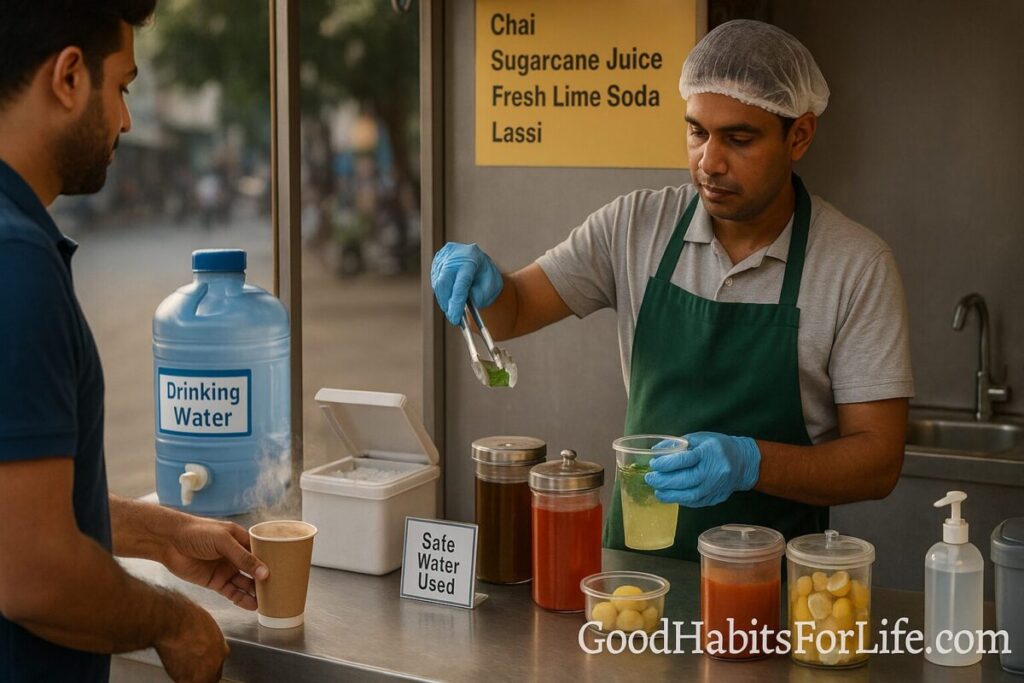
Street Beverages: Enjoy with Hygiene in Mind: AI workflows (2025)
Street Beverages Hygiene: Enjoy Safely (2025 Guide)
Table of Contents
🧭 What Counts as “Street Beverages” & Why Hygiene Matters
Street beverages include chai/coffee, sugarcane juice, fresh lime soda, tender coconut water, lassi, flavored milk, sharbat, kulukki, cane/fruit crushes, fresh juices, and chilled cart drinks (with or without ice). Great taste and value—but variable hygiene.
Why it matters. Street-vended drinks can be contaminated by unsafe water, poor hand hygiene, dirty ice, and unclean utensils. Studies show microbial risks increase with reused bottles, uncovered containers, and inadequate temperature control. Evidence-based frameworks like the WHO Five Keys to Safer Food and Codex/FAO guidance outline practical controls for handlers and consumers. PMCWorld Health OrganizationFAOHome+1
Big wins for safety (for drinkers):
-
Prefer sealed or piping-hot drinks.
-
If ice is used, ensure it’s made from safe water and handled hygienically—or skip it.
-
Choose stalls that look organized: covered ingredients, tongs, clean hands/surfaces, and safe water. CDC travel guidance emphasizes these choices. CDC Travel HealthCDC
✅ Quick Start: 60-Second Safety Check at Any Stall
Use this micro-checklist before you buy:
-
Water source — Ask: “Is this made with filtered/RO or boiled water?” Look for sealed water containers; avoid exposed buckets. (WHO/CDC: “use safe water.”) World Health OrganizationCDC
-
Ice — Accept only if made from safe water and stored covered with a dedicated scoop. Otherwise, no ice. (CDC explicitly warns on ice.) CDC Travel Health
-
Heat — Favor boiling-hot chai/coffee served fresh. Heat reduces risk. (WHO Key: cook thoroughly/keep at safe temperatures.) World Health Organization
-
Utensils & surfaces — Look for tongs, gloves, covered jugs, clean counters, and no raw foods nearby (separation = safer). World Health Organization
-
Vendor habits — Handwashing station? Apron/hairnet? No touching money and cups with the same hand? (WHO/FSSAI promote these norms.) World Health OrganizationEat Right India
-
Certification/Hub — Prefer hygiene-rated outlets or Clean Street Food Hubs where available. Hygiene RatingEat Right India
If two or more signals look off, choose a sealed drink or move on.
🤖 AI Workflows: Fast Hygiene “Signal” Checks on the Go
Leverage your phone + AI to make smarter choices quickly.
1) Photo Hygiene Scan (30–60 s)
-
Snap a wide photo of the stall (no faces needed).
-
Prompt: “Analyze this stall photo for hygiene signals: covered ingredients, glove/tong use, separate cash hand, clean surfaces, labeled water source, protected ice, handwashing setup, temperature control. Give a 0–5 safety score and 3 improvement tips.”
-
Use it to compare stalls in a market and choose the best option.
2) Review-Summarizer for Red Flags
-
Open maps/reviews; copy a handful of most recent comments.
-
Prompt: “Summarize these reviews focusing on cleanliness, water/ice mentions, glass/cup hygiene, illness reports, and consistency. Output pros/cons and a risk verdict (Low/Medium/High).”
3) Ingredient & Process Checklist Generator
-
Prompt: “Create a checklist for safe preparation of [sugarcane juice/fresh lime soda/lassi] at a street stall using WHO Five Keys and HACCP principles. Include water source, wash/peel, equipment sanitation, temperature, and serving steps.”
4) “Ask-the-Vendor” Script Builder
-
Prompt: “Write a polite, local-language script to ask the vendor about water source, ice origin, and cup hygiene, keeping it friendly and brief.”
These workflows don’t replace judgment; they speed it up using structured, evidence-aligned checks. (Underlying principles from WHO/FAO/CDC.) World Health OrganizationCDCFAOHome
🧠 Techniques & Frameworks: Proven Food-Safety Principles
WHO “Five Keys” (consumer version)
-
Keep clean (hands, surfaces, utensils).
-
Separate raw and ready-to-eat items.
-
Cook/heat thoroughly (favor boiling-hot chai/coffee).
-
Keep at safe temperatures (serve hot; keep cold items truly cold).
-
Use safe water & ingredients (including ice). World Health Organization
FAO/Codex perspective for street vending
-
Structured preparation zones, protected storage, and HACCP-style controls even in small operations. As a buyer, look for these signals: covered containers, labeled water, separate money/serving hands, and cleaning routines. FAOHome+1
“SAFE-ICE” mnemonic (for iced drinks)
-
Sealed water source
-
Away from raw foods
-
Freshly broken—not pre-melted
-
Equipment: scoop/tongs only
-
Ice covered in a clean bin
-
Clear, not cloudy/dirty
-
Explain origin if unsure; otherwise skip (CDC supports avoiding uncertain ice). CDC Travel Health
What science says about risk
Meta-analyses and field studies link contamination to improper handling, reused bottles, and poor environmental control—all visible cues you can assess quickly. PMC+1
🧭 Audience Variations
Students & commuters: Favor hot chai/coffee, sealed tetra-pak milk, or canned soda between classes or rides. Keep a collapsible cup and sanitizer. Harvard travel guidance notes sealed/carbonated beverages are usually safest. globalsupport.harvard.edu
Professionals on work trips: In unfamiliar cities, shortlist hygiene-rated hubs or stalls with strong cleanliness reviews; schedule a daily tea stop at the most consistent one. Hygiene RatingEat Right India
Parents with kids: Choose fresh-cut whole fruit juice only when you’ve watched the wash/peel, or opt for sealed juices/milk. Avoid ice unless verified safe. (CDC guidance.) CDC Travel Health
Seniors or those with sensitive stomachs: Prefer sealed or hot beverages; carry ORS for quick rehydration if needed; avoid high-risk raw milk drinks unless pasteurized. (Harvard travel tips.) globalsupport.harvard.edu
Teens: Make it a game—use the photo hygiene scan workflow and “SAFE-ICE” test before ordering.
⚠️ Mistakes & Myths to Avoid
-
“Cold = safe.” Temperature alone doesn’t make drinks safe; ice can be the risk. CDC Travel Health
-
“Clear water means clean.” Visual clarity ≠ microbiological safety. Prefer sealed, boiled, or verified filtered sources. CDC
-
“One vendor sickened me; all street drinks are bad.” Quality varies widely—choose certified hubs or top-reviewed, visibly hygienic stalls. Eat Right India
-
“Reused bottles are eco-friendly, so fine.” Reuse without proper sanitation raises contamination risk. PMC
🗣️ Real-Life Examples & Scripts (Copy-Paste)
Ask about water (friendly):
“Hi! Your juice looks great. Is it made with RO/boiled water? And the ice—is it from the same filtered water?”
Request no ice:
“Could I have it without ice, please? I prefer it room-temperature.”
Hot-drink safety:
“Could you please pour mine fresh while it’s boiling-hot?”
Cup hygiene:
“Do you have paper cups or a freshly washed glass? I can pay a bit extra.”
If something looks off:
“Thanks! I’ll come back later.” (Move on—no need to explain.)
🗓️ 30-60-90 Habit Plan: Become a Smart, Safe Street-Drink Regular
Days 1–30 (Starter):
-
Choose one trusted stall that passes the 60-second check.
-
Default to hot or sealed drinks; no ice unless verified.
-
Build your Go-Kit: 750 ml bottle, paper cups, tissues, sanitizer, ORS sachets.
-
Practice the photo hygiene scan & review summarizer prompts.
Days 31–60 (Build):
-
Expand to 3 vendors across your usual routes; keep notes: water source, utensils, consistency.
-
Try fresh juices only when you’ve watched washing/peeling and covered storage.
-
Share your AI-generated checklist with friends/family; crowd-verify stalls.
Days 61–90 (Optimize):
-
Prefer hygiene-rated hubs when exploring new places.
-
Add a weekly review: which stalls stayed consistent? Any red flags?
-
Create a personal map of safe spots in each neighborhood you frequent.
🧰 Tools, Apps & Resources
-
WHO Five Keys to Safer Food—simple, universal hygiene rules. World Health Organization+1
-
CDC Yellow Book (Food & Water Precautions)—evidence-based traveler guidance. CDC
-
CDC Food & Drink Safety page—practical tips (incl. ice). CDC Travel Health
-
FAO Street Foods & Codex—policy perspective and codes for street vending. FAOHome+1
-
FSSAI Hygiene Rating & Clean Street Food Hub (India)—find/recognize safer clusters. Hygiene RatingEat Right India
📌 Key Takeaways
-
Favor sealed or fresh-hot beverages; treat ice as a potential risk unless confirmed safe. CDC Travel Health
-
A 60-second visual check (water, ice, covers, utensils, hand hygiene) dramatically reduces risk. World Health Organization
-
AI workflows help you rate stalls fast and consistently.
-
Seek hygiene-rated hubs and repeat the best vendors for consistency. Hygiene RatingEat Right India
❓ FAQs
1) Are carbonated beverages safer than still?
Often, yes—sealed and carbonated drinks are generally lower risk because proper sealing is evident from the fizz. Choose factory-sealed cans/bottles. globalsupport.harvard.edu
2) Is fresh sugarcane juice safe?
It can be—if the cane is washed, the press is cleaned between batches, water/ice are safe, and the glass/cup is clean. If unsure, skip ice or choose hot/sealed alternatives. Evidence links poor equipment hygiene to contamination. PMC
3) What about lassi or milk-based drinks?
Prefer pasteurized milk products from sealed packaging or reputable stalls with strong hygiene practices; avoid unpasteurized dairy. globalsupport.harvard.edu
4) Is coconut water from a street cart safe?
Often lower risk when the shell is opened in front of you and the mouth of the coconut is cleaned before inserting a fresh straw. Avoid pre-filled bottles with unknown water/ice.
5) What’s the safest choice in a hurry?
A fresh-hot chai/coffee served boiling or a factory-sealed beverage. World Health Organizationglobalsupport.harvard.edu
6) If I do get an upset stomach, what should I do?
Hydrate with safe fluids; consider ORS; seek medical care if symptoms are severe, prolonged, or include fever/blood. (General travel-health guidance aligns with CDC principles.) CDC
7) Are “Clean Street Food Hubs” really different?
They’re designed to raise minimum hygiene standards via vendor training, licensing, and monitoring—use them when available. Eat Right India
8) Does clear ice mean safe ice?
No. Clarity doesn’t guarantee safety; source and handling matter more. When in doubt, skip ice. CDC Travel Health
📚 References
-
World Health Organization. Five Keys to Safer Food (Poster & Manual). World Health Organization+1
-
Centers for Disease Control and Prevention. Food & Water Precautions for Travelers (Yellow Book 2026). CDC
-
CDC Travelers’ Health. Food & Drink Safety (incl. guidance on ice). CDC Travel Health
-
FAO. Food Safety & Quality: Street foods (Codex context). FAOHome
-
Codex Alimentarius/FAO-WHO. Regional Guidelines for Street-Vended Foods (CXG 22R-1997). FAOHome
-
Nawawee NSM, et al. Microbiological Safety of Street-Vended Beverages (review). PMC
-
Rane S. Street-Vended Food in the Developing World: Hazard Analyses. PMC
-
FSSAI. Hygiene Rating Scheme – Guidance Document. Hygiene Rating
-
Eat Right India (FSSAI). Clean Street Food Hub – Guidance Document. Eat Right India
-
Harvard Global Support Services. Food & Drink Safety While Abroad (sealed/carbonated drinks). globalsupport.harvard.edu
-
WHO/FAO. Food safety is everyone’s business in street food vending (leaflet). World Health Organization
⚖️ Disclaimer
This guide offers general, educational information about food and beverage hygiene; it is not medical advice—please consult a qualified professional for personal health concerns.