
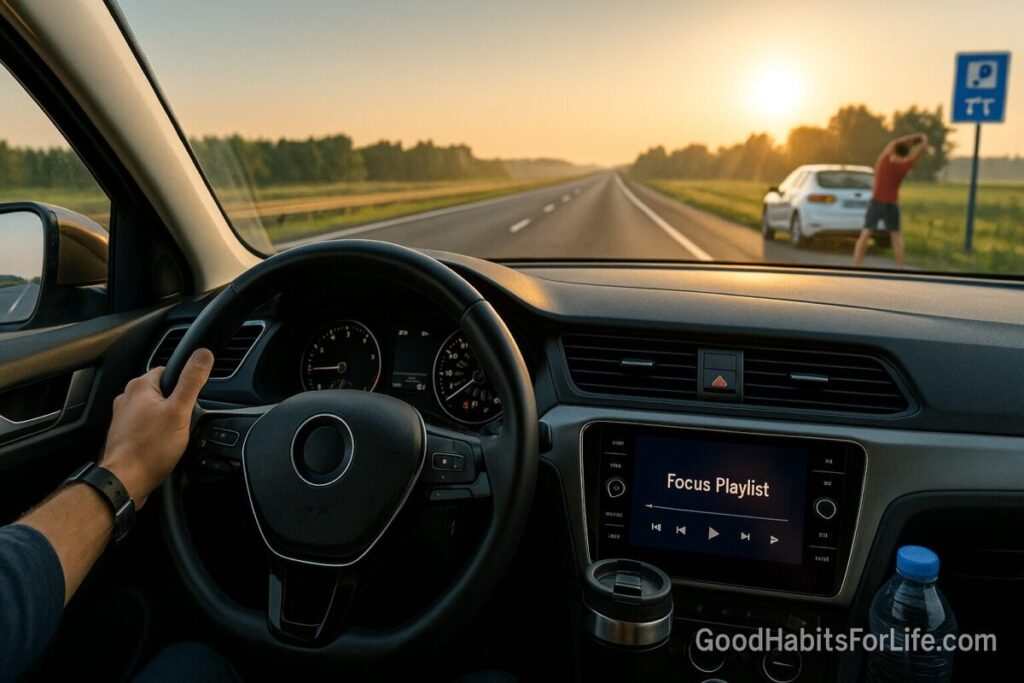
Staying Alert: Audio, Air, and Activity
Stay Alert on Long Drives: Audio, Air & Activity
Table of Contents
🧭 What & Why
Long, monotonic highway stretches can lull even experienced drivers into “micro-sleep” moments. In 2021, drowsy drivers were involved in 684 U.S. traffic deaths (≈1.6% of all fatalities), and experts agree fatigue is under-reported. NHTSA
Crash risk climbs quickly when sleep drops: missing just 1–2 hours raises crash risk, and <5 hours multiplies risk fourfold or more. AAA Foundation for Traffic SafetyAAA Newsroom
Most adults need at least 7 hours’ sleep nightly—showing up rested is the single biggest safety move you can make. CDC
Fatigue also spikes at predictable times (≈00:00–06:00 and mid-afternoon). If your itinerary crosses these windows, build in extra breaks or an overnight stop. CDC
✅ Quick Start: Do This Today
-
Sleep 7–9 hours the night before. If you’re short on sleep, delay departure. CDC
-
Plan breaks every ~2 hours (≥15 min). Put them in your map as waypoints. GOV.UK
-
Pack alertness aids: water, two coffees (or tea), healthy snacks, sunglasses, and a small pillow/eye mask for a power nap.
-
Set your audio plan: calm/steady-tempo playlist or talk radio/podcasts at moderate volume. Avoid very fast, loud tracks. PMC
-
Ventilation routine: start with outside air; if you use recirculation for comfort or pollution, toggle it off every 10–20 minutes to bring in fresh air. PubMedUniversity of California
-
Caffeine-nap if sleepy: pull over somewhere safe, drink ~150–200 mg caffeine (coffee/tea), nap 15–20 min, then continue. PubMedCDC
-
Move at stops: walk briskly, stretch calves/hips/neck for 3–5 minutes.
-
Share driving when you can. If alone and you feel heavy-eyed: stop—windows and music are not cures. NHTSA
🛠️ 30-60-90 Habit Plan for Safer Long Trips
Goal: Make alertness a repeatable routine covering audio, air, and activity.
Days 1–30 (Baseline)
-
Pre-trip checklist template: sleep 7+ hrs, route with 2-hour stops, audio playlist queued, ventilation routine noted. CDCGOV.UK
-
Practice caffeine-nap on a weekend errand so it’s familiar before a real road trip. PubMed
-
Audio audit: build two playlists—“steady/neutral tempo” and “talk content.” PMC
-
Stretch pack: add a resistance band to the glovebox for stop-time mobility.
Days 31–60 (Integration)
-
CO₂ awareness habit: during any drive >30–45 min, toggle recirculation off for a few minutes each quarter hour; crack a window briefly if conditions allow. PubMedPMC
-
Refine stop cadence: aim for 10–20 min breaks every ~2 hrs; test snacks/hydration that keep you steady (nuts, fruit, water).
Days 61–90 (Optimization)
-
Personal alertness log: note when you get drowsy (clock time, meal timing, audio, cabin air). Avoid those patterns on future trips.
-
Team driving playbook: if traveling with another adult, rotate every 2 hours; build shared signals to call a stop.
🧠 Techniques & Frameworks
🎧 Audio Strategy: “CALM”
-
Consider speech content (podcasts/talk radio) or steady-tempo music for long, steady roads.
-
Avoid very loud or fast music; meta-analyses link higher volume/tempo with faster speeds and risk. PMC
-
Limit live conversations/phone calls—dual-tasking can slow reactions, especially in complex traffic. PMC
-
Modulate volume with road demand: turn audio down/off in cities, work zones, and bad weather.
Evidence is mixed overall—music can lift mood, but driver-preferred or high-arousal music has been shown to impair control in some settings. Keep it moderate and context-aware. PubMed
🌬️ Air Strategy: “FRESH”
-
Fresh air first; use outside-air intake rather than permanent recirculation on long drives. PubMed
-
Recirc sparingly for heat/smog; toggle off every 10–20 minutes to purge cabin CO₂. PMCUniversity of California
-
Evaluate crew count: more passengers = faster CO₂ rise; ventilate more often. PubMed
-
Signs to refresh: yawning, heavy eyes, “stale” air feel—pull in outside air or crack a window.
-
Health note: studies link high in-vehicle CO₂ with increased drowsiness; active ventilation reduces buildup. PubMedScienceDirect
🚶 Activity Strategy: “MOVE”
-
Micro-moves while seated (when safe, straight road): posture reset, shoulder rolls, calf pumps at lights.
-
At stops (3–5 min): brisk walk, leg swings, hip flexor stretch, 10 bodyweight squats—enough to raise circulation and alertness.
-
The proven boost: if sleepiness hits, don’t rely on movement alone—caffeine-nap outperforms a simple break. PubMed
⏱️ Two-Hour Rule + Caffeine-Nap Flow
-
Drive ~2 hours → stop 15–20 min. GOV.UK
-
If sleepy: drink ~150–200 mg caffeine (coffee/strong tea), nap 15–20 min, then resume. Benefits are temporary—plan lodging if fatigue returns. CDC
👥 Audience Variations
-
Students/Teens: prioritize sleep; late-night departures + sleep debt are high risk. Set a hard cut-off for leaving after 22:00. CDC
-
Parents with kids: more people = faster CO₂ rise in recirc—purge air more often and align breaks with kids’ energy cycles. PubMed
-
Shift-working professionals: circadian dips (00:00–06:00; mid-afternoon) amplify risk—schedule shared driving or split the trip. CDC
-
Seniors: review medicines with a clinician; some cause drowsiness. (General health advice; see disclaimer.)
-
Solo drivers: pre-download speech content, set “break alarms” in maps, and commit to the caffeine-nap when signs appear. CDC
⚠️ Mistakes & Myths to Avoid
-
“Loud music keeps me awake.” It can feel stimulating but often increases speed and workload; not a substitute for sleep. PMC
-
“Windows down = fixed.” Fresh air helps CO₂, but won’t reverse sleep debt. If you’re sleepy, stop and sleep. NHTSA
-
“Recirculation all day.” Comfortable, yes—but sustained recirc can raise cabin CO₂ and drowsiness risk. PubMed+1
-
“Breaks only when tired.” Performance declines after about 2 hours of continuous driving—schedule breaks proactively. GOV.UK
-
“Energy drinks are enough.” Caffeine is only a temporary aid; the only real cure for fatigue is sleep. CDC
🧾 Real-Life Scripts & Examples
8-Hour Trip Example (Solo)
-
Night before: 7–9 h sleep; pack snacks, water; cue “steady” playlist + 2 podcasts. CDC
-
08:00–10:00: Drive with outside-air intake; toggle recirc briefly in heavy traffic only. University of California
-
10:00 (Break 1): Restroom + 5-min walk + light snack.
-
12:00 (Break 2): Feeling dip? Coffee + 15–20 min power nap. PubMed
-
14:30 (Break 3): Short walk + water; switch to podcast to maintain engagement at moderate volume. PMC
“Pull-Over” Script (to yourself or passengers)
“I’m getting drowsy—eyes feel heavy. We’re stopping now for a coffee and a 20-minute nap. It’s the safest choice.” CDC
Buddy System (Two Drivers)
-
Rotate every ~2 hours; the off-driver manages ventilation and navigation, then naps during their off segment when safe/appropriate. GOV.UK
🧰 Tools & Resources
-
Maps with planned stops: Add POIs every ~160–200 km (100–125 mi) to force breaks. GOV.UK
-
Noise-isolating, not noise-cancelling earbuds: Do not wear headphones that block traffic sounds while driving; use the car audio system. (General safety guidance.)
-
Vehicle settings: Learn where the recirculation toggle is; practice switching between outside air and recirc. PubMed
📌 Key Takeaways
-
Sleep first. No hack replaces 7+ hours of rest. CDC
-
Breaks every ~2 hours are non-negotiable on long drives. GOV.UK
-
Caffeine-nap beats a quick walk when you’re sleepy. PubMed
-
Keep audio moderate and context-aware; avoid very loud/fast music. PMC
-
Manage cabin air—limit long-term recirculation and bring in fresh air routinely. PubMed
❓ FAQs
1) What’s the single best thing to stay alert?
Adequate sleep—7+ hours before departure—plus scheduled breaks. Caffeine helps temporarily; sleep is the cure. CDC+1
2) Does blasting AC or rolling down the window fix drowsiness?
Cool air and airflow can refresh you briefly, but if you’re sleepy you need a stop, and ideally a caffeine-nap. NHTSAPubMed
3) How often should I stop on a long drive?
At least 15 minutes every ~2 hours; more often at night or when driving solo. GOV.UK
4) Is the “caffeine-nap” real? How do I do it?
Yes. Drink ~150–200 mg caffeine, nap 15–20 minutes, then continue. It outperforms a break alone in studies. PubMed
5) Which music is safest?
Research is mixed, but loud/high-tempo music tends to increase speed. Choose speech or steady-tempo music at moderate volume. PMC
6) Is using the recirculation button bad?
It’s useful for heat or pollution, but leaving it on continuously can raise cabin CO₂ and contribute to drowsiness. Toggle it off regularly to bring in fresh air. PubMed+1
7) Are hands-free calls okay?
Conversations add cognitive load and can slow reactions, especially in complex traffic. Keep calls short or save them for stops. PMC
8) What times of day are riskiest for fatigue?
Midnight–6 a.m. and mid-afternoon; plan extra caution or avoidance then. CDC
📚 References
-
National Highway Traffic Safety Administration. Drowsy Driving: Avoid Falling Asleep Behind the Wheel. NHTSA
-
NHTSA. Countermeasures That Work – Drowsy Driving (2023). NHTSA
-
AAA Foundation for Traffic Safety. Acute Sleep Deprivation and Risk of Motor Vehicle Crash Involvement (2016). AAA Foundation for Traffic Safety
-
AAA Foundation / AAA Newsroom summary. Missing 1–2 Hours of Sleep Doubles Crash Risk (2016). AAA Newsroom
-
CDC/NIOSH. Motor Vehicle Safety at Work – Driver Fatigue. CDC
-
CDC. FastStats: Sleep in Adults (2024). CDC
-
UK Highway Code. Rules 89–102: Fitness to Drive—Breaks every 2 hours. GOV.UK
-
Horne JA, Reyner LA. Counteracting Driver Sleepiness: Caffeine and Nap (1996). PubMedWiley Online Library
-
Hudda N, et al. Carbon dioxide accumulation inside vehicles: recirculation mode effects (2018). PubMed
-
University of California. Driving exposes you to more air pollutants; recirculation reduces particles but raises CO₂ (2020). University of California
-
Chen R-Y, et al. In-vehicle CO₂ and adverse effects (drowsiness) (2020). PubMed
-
Ghojazadeh M, et al. Effect of music on driving performance—meta-analysis (2023). PMC
-
Brodsky W., Slor Z. Background music as a risk factor for distraction among young-novice drivers (2013). PubMed
⚖️ Disclaimer
This article provides general information on road-safety habits and alertness and is not a substitute for professional medical advice; seek guidance for any health, sleep, or medication concerns before driving.