
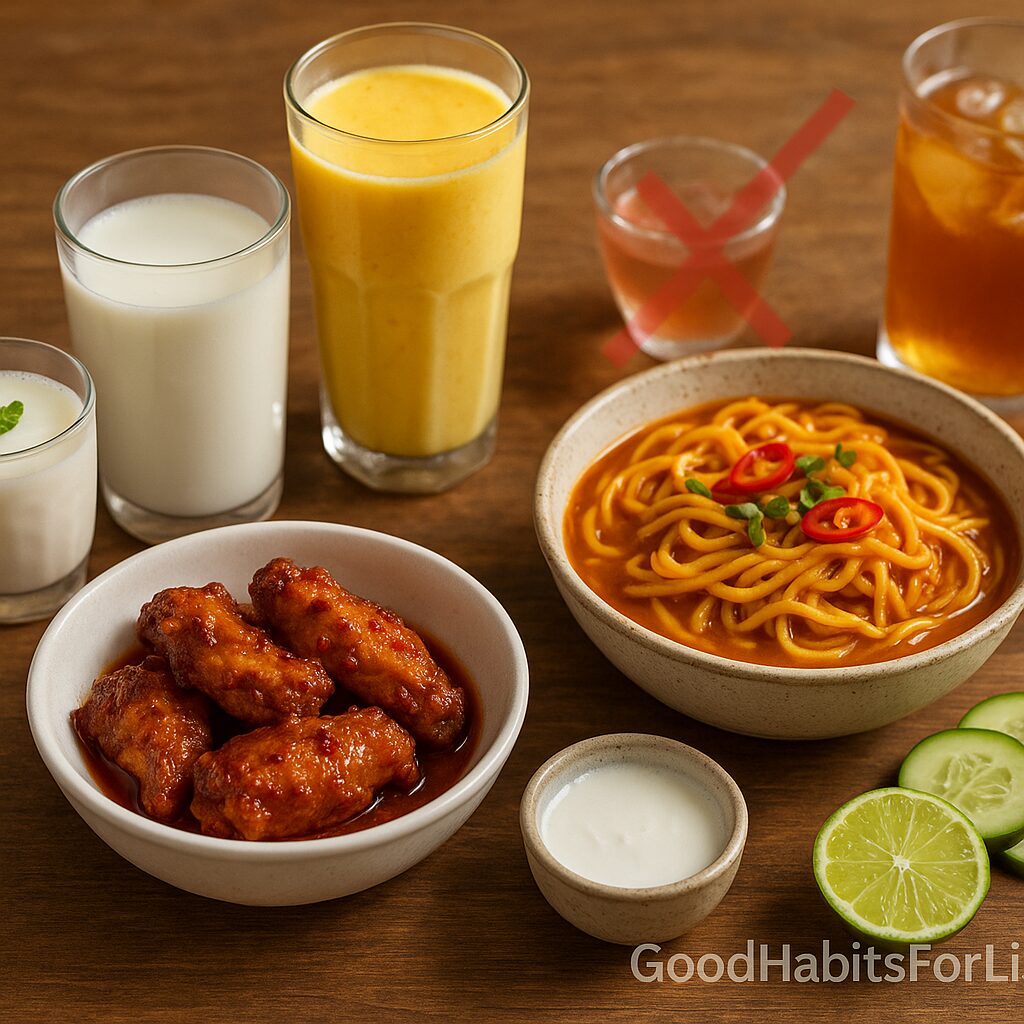
Spicy Food Pairings: Drinks That Keep the Heat Happy
Spicy Food Pairings: Drinks That Keep the Heat Happy
Table of Contents
🧠 What Makes Spice Burn (and How Drinks Help)
Spicy chiles feel “hot” because capsaicin binds to TRPV1 receptors—the same nerve channels that respond to noxious heat and acidity. That’s why chilies can feel like fire even when food is cold. Research also shows carbonation (CO₂) can excite pain-sensing pathways, and ethanol (alcohol) can stimulate or sensitize TRPV1—so highly fizzy or high-ABV drinks may make things feel spicier rather than calmer. Dairy proteins (casein), fat, and sweetness, on the other hand, reduce perceived burn in human studies.
Why this matters for pairing:
-
Dairy & fat can “pull” lipophilic capsaicin away from receptors.
-
Sweetness (e.g., from fruit or a touch of sugar) dampens burn perception.
-
High carbonation & bitterness can intensify tingle; higher alcohol can feel hotter.
(See: NCBI/Bookshelf & StatPearls on TRPV1; beverage efficacy and mechanisms studies in References.)
✅ Quick Start Pairings (Do This Today)
If you’re serving…
-
Indian, Thai, Sichuan (medium–hot): Mango lassi or salted yogurt lassi; pineapple-mint cooler; wheat beer (hefeweizen); off-dry Riesling (10–12% ABV).
-
Mexican/Tex-Mex (jalapeño–habanero): Horchata, agua fresca (watermelon, pineapple), hibiscus iced tea with a little sugar; Vienna lager or Mexican amber lager.
-
Korean gochujang BBQ: Iced barley tea + splash of apple juice; kölsch or helles; off-dry Chenin Blanc.
-
Fiery vindaloo/ghost pepper anything: Skip wine and bitter IPAs. Go lassi, coconut-milk smoothie, or non-alcoholic options with sweet-tart balance.
-
Wasabi/mustard/ginger heat (sushi/ramen): These trigger a different receptor (TRPA1), felt more in the nose. Pair with low-alcohol, lightly sweet drinks: yuzu lemonade, nigori sake spritz (low fizz), off-dry Gewürztraminer.
Fast rules: colder, creamier, sweeter, and lower-alcohol = calmer heat.
🛠️ 7-Day “Heat-Happy” Tasting Plan (Short, Practical)
Goal: Lock in instincts for pairing without memorizing a wine atlas.
-
Day 1 – Baseline: Eat medium-spicy chips with water, seltzer, cola, whole milk. Notice: milk wins, seltzer can sting.
-
Day 2 – Sweetness Check: Try a 15–20% sugar mocktail rinse (e.g., pineapple juice + water). Heat drops quickly.
-
Day 3 – Dairy Variations: Compare lassi vs. plain yogurt drink vs. coconut milk.
-
Day 4 – Beer Spectrum: Taste hefeweizen → kölsch → Vienna lager → IPA with spicy wings. Watch how bitterness & fizz change the burn.
-
Day 5 – Wine Spectrum: Off-dry Riesling/Chenin (10–11.5% ABV) vs dry Sauvignon (12.5–13%) vs tannic red. The first usually soothes; tannin + heat often clash.
-
Day 6 – Wasabi Night: Sushi with low-ABV, gently sweet drinks; avoid aggressive bubbles.
-
Day 7 – Build Your Menu: Pick your household’s winners and record go-to pairings for each cuisine.
🧭 Techniques & Frameworks (The Science-Backed Rules)
1) The TRPV1 Rule (Chile heat):
-
Capsaicin activates TRPV1; dairy proteins (casein) and fat reduce burn; sweetness reduces perceived intensity; high ABV and strong carbonation can heighten sting.
-
Use: Lassi, milk, yogurt, coconut-milk smoothies; lightly sweet mocktails; low-ABV beers and wines.
2) The TRPA1 Rule (Wasabi/mustard/ginger):
-
Allyl isothiocyanate (mustard/wasabi) triggers TRPA1 (“wasabi receptor”), felt as a sinus-clearing zing.
-
Use: Low-alcohol, gently sweet, low-fizz drinks; avoid sharp tannins or harsh spirits.
3) The Bitterness/Carbonation Caution:
-
High bitterness and prickly fizz can compound the burn. If serving beer, choose low-IBU, soft-carbonation styles.
4) The Alcohol Ceiling:
-
Keep wine around 10–12% ABV; cocktails at low-proof (or 0-proof) with sweet-tart balance.
5) The Temperature Trick:
-
Cold drinks reduce burn more than room-temp—but ice-cold, intensely carbonated seltzer can tingle.
📚 Pairing Matrix by Cuisine & Heat Level
| Cuisine/Heat | Best Non-Alcoholic | Better Beer Picks | Wine/Other |
|---|---|---|---|
| Indian (medium–hot) | Mango/salted lassi; sweet-tart lime soda (not too fizzy) | Hefeweizen, wheat beer, kölsch | Off-dry Riesling or Chenin (10–11.5%); sparkling demi-sec with gentle bubbles |
| Thai (chile + citrus) | Pineapple-mint cooler; coconut water + splash of OJ | Rice lager; helles | Off-dry Gewürztraminer; Kabinett Riesling |
| Sichuan (numbing + chile) | Pear-ginger iced tea (light sweet) | Vienna/Amber lager; low-IBU pale ale | Off-dry Riesling; pet-nat with modest fizz |
| Mexican/Tex-Mex | Horchata; hibiscus tea with sugar | Mexican lager; Vienna lager | Off-dry Rosé; Moscato d’Asti (low alcohol) |
| Korean BBQ (gochujang) | Barley tea + apple juice | Kölsch; dunkel lager | Off-dry Chenin; Lambrusco semisecco (soft fizz) |
| Wasabi-heavy sushi | Yuzu lemonade; mild ginger-honey cooler | Light rice lager (soft carb) | Off-dry Gewürztraminer; low-ABV nigori |
🧪 Audience Variations
-
Kids/Teens (no alcohol): Mango lassi, banana-yogurt shake, pineapple-mint lemonade, horchata, sweet iced tea. Keep carbonation gentle.
-
Seniors: Favor low-fizz drinks and moderate sweetness; dairy or non-dairy yogurts for soothing texture.
-
Professionals hosting clients: Offer a no-alcohol track (lassi/mocktails) beside a low-ABV track (hefeweizen, off-dry whites).
-
Beer-lovers: Steer toward wheat, kölsch, helles, Vienna; save double-IPAs for non-spicy courses.
-
No-dairy guests: Coconut-milk smoothies, oat-yogurt drinks, or fruit coolers with a bit of sugar; sweetness still helps even without casein.
⚠️ Mistakes & Myths to Avoid
-
“Water fixes spice.” It usually spreads capsaicin; plain water rinses help less than dairy or sweetness.
-
“Whole milk beats skim by a mile.” In rinses, both reduce burn; protein may be key.
-
“IPAs are perfect with curry.” High bitterness and fizz often amplify burn; try wheat or Vienna lager instead.
-
“Any sparkling wine works.” Brut bubbles can sharpen perception. If bubbly, pick demi-sec and serve quite cold.
-
“Hot food needs strong red wine.” Tannin + high alcohol + spice can feel astringent and hot.
💬 Real-Life Scripts (Hosting Lines & Menus)
At the table:
-
“Tonight’s curry is medium-hot. I’ve poured mango lassi and a light wheat beer—both soften the heat. If you’d like wine, this off-dry Riesling is chilled at 8–10°C.”
-
“This Sichuan dish has numbing peppercorn + chile. We’re pairing a lightly sweet pear-ginger iced tea and a Vienna lager—less bitter, less sting.”
-
“The sushi has fresh wasabi. Try this yuzu lemonade or a low-ABV nigori—gentle sweetness, low fizz.”
Two ready menus:
-
Spice-Comfort Menu: Paneer tikka + salted lassi; fish tacos + hibiscus iced tea; mapo tofu + off-dry Riesling.
-
Beer-Forward Menu: Thai basil chicken + hefeweizen; Korean bulgogi + kölsch; salsa roja & chips + Vienna lager.
🧰 Tools, Apps & Resources
-
Drink calculators to track ABV and IBU when you plan beer selections.
-
Wine-style filters (off-dry, aromatic whites) in wine apps help narrow to 10–12% ABV bottles.
-
Blender + yogurt or coconut milk = instant house lassi or tropical cooler; add a little sugar for soothing power.
✅ Key Takeaways
-
Dairy, sweetness, and fat reliably calm chile heat; carbonation, high bitterness, and high alcohol can intensify it.
-
For wine, go off-dry, aromatic, low-ABV. For beer, go low-IBU, low-fizz.
-
For wasabi/mustard heat, use low-alcohol, gently sweet, low-fizz options.
-
Build menus by heat level: the hotter the dish, the sweeter/creamier and lower-alcohol the drink.
❓ FAQs
1) Does sparkling water help with spice?
It cools temperature-wise but the carbonation can sting, so it often feels sharper than still water.
2) Is coconut milk as good as dairy?
It lacks casein, but fat + mild sweetness still help. Many people find coconut-milk smoothies soothing.
3) What’s the single safest wine with spicy food?
An off-dry Riesling or Chenin Blanc at 10–11.5% ABV—aromatic, a touch of sweetness, and refreshing acidity.
4) Which beers should I buy for a spicy-food party?
Hefeweizen, kölsch, helles, Vienna/amber lager, or a low-IBU pale ale. Avoid ultra-bitter or very strong beers.
5) Why does milk work better than water?
Casein proteins and fat can bind/solubilize capsaicin, reducing receptor activation; human studies show milk outperforms water.
6) Do sugar and juice really help?
Yes—sweetness reduces perceived burn; even a short rinse with a 20% sucrose solution lowered burning in a study.
7) Are tannic reds always bad with spice?
Not always, but tannin + high alcohol can emphasize burn. If pouring red, choose juicy, low-tannin, low-ABV styles slightly chilled.
8) What about wasabi heat vs chile heat?
Wasabi/mustard mainly hit TRPA1 (nasal zing), not just TRPV1. Pair with low-alcohol, gently sweet, low-fizz drinks.
📚 References
-
TRPV1 overview. NCBI Bookshelf: TRPV1 Receptors and Signal Transduction. https://www.ncbi.nlm.nih.gov/books/NBK5260/
-
Capsaicin & TRPV1 mechanism. StatPearls: Capsaicin. https://www.ncbi.nlm.nih.gov/books/NBK459168/
-
Beverage efficacy vs. capsaicin. Nolden AA et al. Putting out the fire—efficacy of common beverages in reducing oral burn from capsaicin. (PMC). https://pmc.ncbi.nlm.nih.gov/articles/PMC6620146/
-
Sweetness reduces burn. Puengsurin D et al. Sucrose alleviates capsaicin-induced tongue burning. (PMC). https://pmc.ncbi.nlm.nih.gov/articles/PMC9328490/
-
Dairy proteins & burn. Gøkhan MA et al. Role of dairy proteins in the reduction of capsaicin-induced oral burning pain. Physiol Behav. 2023. https://pubmed.ncbi.nlm.nih.gov/36403780/
-
Carbonation & nociception. Wang YY et al. TRPA1 is a component of the nociceptive response to CO₂. (PMC). https://pmc.ncbi.nlm.nih.gov/articles/PMC2993877/
-
Ethanol & TRPV1. Nicoletti P et al. Ethanol causes neurogenic vasodilation by TRPV1 stimulation. J Pharmacol Exp Ther. 2008. https://pubmed.ncbi.nlm.nih.gov/17888011/
-
TRPA1 (“wasabi receptor”). Paulsen CE et al. Structure of the TRPA1 ion channel… (PMC). https://pmc.ncbi.nlm.nih.gov/articles/PMC4409540/