
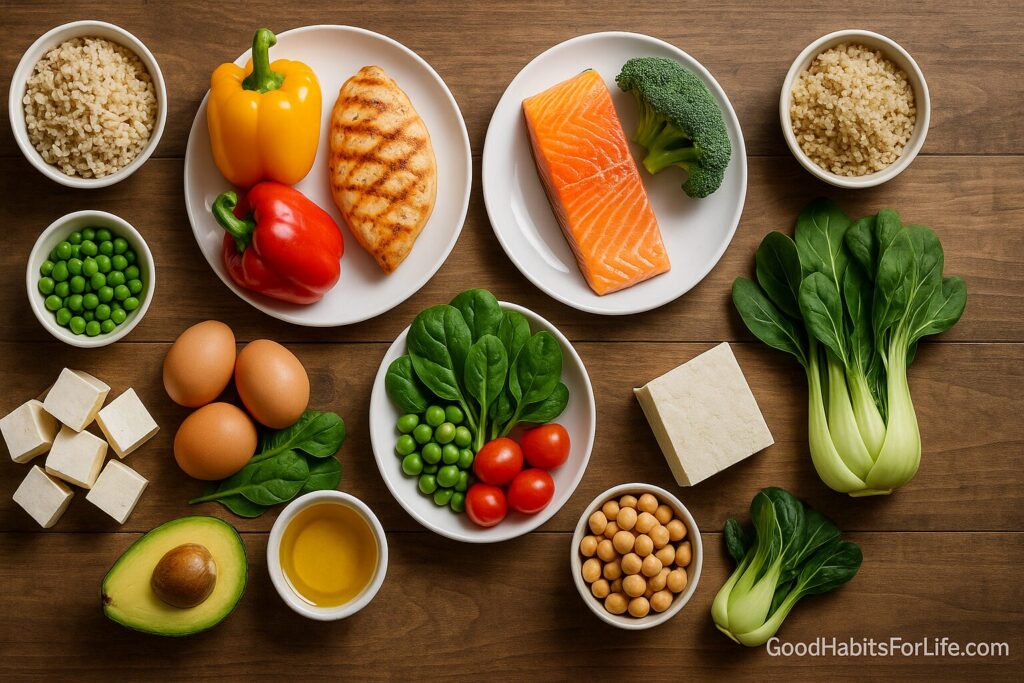
Smart Grocery List: Protein+Produce Pairing
Smart Grocery List: Pair Protein + Produce
Table of Contents
🧭 What This “Protein + Produce” List Is—and Why It Works
Definition. A smart grocery list is a reusable, modular list that centers every meal on one protein + one produce item. You then add smart carbs (whole grains, beans, starchy veg) and healthy fats as needed.
Why it works (evidence-aligned):
-
Satiety & muscle health: Protein at each meal (≈20–30 g) supports muscle protein synthesis and helps you feel full.
-
Micronutrients & fiber: Fruits and vegetables provide vitamins, minerals, and fiber; most adults fall short of fiber targets (≈25–38 g/day).
-
Balanced plate: A simple ½ plate produce, ¼ protein, ¼ grains visual keeps portions in check without counting.
-
Decision-light: A stable set of favorite pairs reduces planning time and food waste.
✅ Quick Start: Build Your List in 10 Minutes
Step 1 — Pick 6 proteins (mix animal & plant).
Eggs, Greek yogurt, paneer/tofu, chickpeas/lentils, chicken breast, fish (e.g., salmon), cottage cheese, tempeh, prawns.
Step 2 — Pick 8 produce staples.
Spinach, tomatoes, cucumbers, carrots, bell peppers, broccoli/cauliflower, berries, bananas/apples, onions, leafy greens.
Step 3 — Add 4 smart carbs + 3 fats.
Brown rice, whole-wheat roti/pita, oats, quinoa; olive oil, nuts/seeds, avocado/peanut butter.
Step 4 — Form meal pairs.
-
Eggs + spinach → omelet wrap
-
Chickpeas + tomatoes → chana salad bowl
-
Chicken + peppers → sheet-pan fajita bowl
-
Tofu + broccoli → stir-fry with quinoa
-
Yogurt + berries → parfait with oats
Step 5 — Make a reusable list.
Create a master list in your notes/app with checkboxes. Keep quantities like “Greek yogurt—6 cups” or “spinach—2 large bunches.”
🛠️ 7-Day Starter Habit Plan (with Shopping List)
Goal: 2–3 balanced meals/day built from protein + produce pairs.
Shopping List (core for 7 days; adjust for household size)
-
Proteins: 18 eggs; 1.2 kg chicken breast; 700 g extra-firm tofu or paneer; 2 cans chickpeas; 1 tub Greek yogurt (1 kg).
-
Produce: 2 bags spinach (~400 g each); 6 tomatoes; 3 cucumbers; 2 broccoli heads; 3 bell peppers; 1 cauliflower; 500 g berries; 6 bananas; 1 red onion, 1 garlic bulb; lemons.
-
Smart carbs & fats: 1 kg brown rice; 10 whole-wheat rotis/pitas or 8 tortillas; 500 g oats; 500 g quinoa; olive oil; mixed nuts/seeds.
-
Flavor kit: Low-sodium soy sauce, cumin, turmeric, chili, Italian herbs, salsa, tahini/peanut butter.
7-Day Menu Template (swap freely)
| Day | Breakfast | Lunch | Dinner |
|---|---|---|---|
| Mon | Greek yogurt + berries + oats | Chickpea–tomato–cucumber bowl | Chicken + peppers + brown rice |
| Tue | Spinach–mushroom omelet | Tofu–broccoli stir-fry + quinoa | Paneer tikka + cauliflower |
| Wed | Overnight oats + banana | Chicken salad wrap + veggies | Lentil soup + side salad |
| Thu | Yogurt parfait + seeds | Chana masala + salad | Fish or tofu + roasted veg |
| Fri | Egg wrap + spinach | Leftover stir-fry bowl | Chicken fajita bowl |
| Sat | Veg omelet + toast | Greek salad + chickpeas | Paneer–pepper skewers + quinoa |
| Sun | Oats + fruit + nuts | Buddha bowl (tofu + veg) | Sheet-pan chicken + broccoli |
Weekly batch-prep (90 minutes):
-
Cook 600 g chicken breast (sheet pan).
-
Cook a pot of chickpeas or open 2 cans (rinse).
-
Roast a tray of broccoli/cauliflower + peppers.
-
Wash and chop salad veg; store in clear containers.
-
Cook 4 cups cooked brown rice + 4 cups cooked quinoa.
-
Make 3 sauces: yogurt-herb, tahini-lemon, salsa-based.
🧠 Techniques & Frameworks (Portions, Pairings, and Prep)
1) The ½–¼–¼ Plate Method (visual control)
-
½ plate: vegetables/fruit (at least 2 colours).
-
¼ plate: protein (≈20–30 g per meal; see cheat sheet below).
-
¼ plate: whole grains/beans/starchy veg.
Add 1–2 tsp oil or a thumb-sized fat for flavor.
2) Protein cheat sheet (to ~20–30 g):
-
3 eggs (≈18–21 g) + a dollop of Greek yogurt or cottage cheese.
-
200 g Greek yogurt (≈20 g).
-
120–150 g cooked chicken/fish/tofu/paneer (≈22–30 g).
-
1 cup cooked lentils/chickpeas (≈15–18 g) + seeds/nuts for boost.
3) Produce spectrum:
Aim for 5+ servings/day (≈2½ cups cooked veg + 2 fruits). Mix leafy greens, crucifers (broccoli/cauli), coloured veg (carrots/peppers), and berries/citrus.
4) Fast pairings table
| Protein | Produce | Quick Meal Idea |
|---|---|---|
| Eggs | Spinach + tomato | 5-minute skillet omelet wrap |
| Greek yogurt | Berries | Parfait with oats & seeds |
| Chicken | Bell peppers + onions | Sheet-pan fajita bowl |
| Tofu/Paneer | Broccoli | Stir-fry with soy-ginger |
| Chickpeas | Cucumber + tomato | Mediterranean bowl with herbs |
| Fish | Green beans + lemon | Pan-sear, steam beans, lemon drizzle |
5) Meal-prep containers
Use 1–2 compartment containers: one for protein + grain, one for veg to keep texture fresh.
6) Flavor rules
-
Mediterranean: olive oil + lemon + oregano.
-
Indian-inspired: cumin + turmeric + chili + yogurt.
-
Asian-inspired: soy sauce + garlic + ginger + sesame.
🧩 Audience Variations
Students: Buy eggs, yogurt, canned beans, frozen veg, whole-wheat wraps. Microwave + skillet make 10-minute meals.
Parents: Double-batch sheet-pans; let kids pick the produce for a build-your-own bowl night.
Professionals: Prep 2 proteins + 4 veg on Sunday; keep nuts, fruit, and yogurt at work.
Seniors: Prioritize softer proteins (fish, yogurt, lentils) and pre-cut veg; aim for 25–30 g protein at main meals to support muscle.
Teens/Active: Add extra grain portions or milk to meet higher energy needs.
⚠️ Mistakes & Myths to Avoid
-
Myth: “Low-carb is mandatory.” Fact: Whole grains/beans support fiber and steady energy; portion and quality matter.
-
Mistake: Buying produce without a plan. Always pair each veg/fruit with a protein and a meal idea.
-
Mistake: Under-protein at breakfast. Front-load 20–30 g to curb mid-morning grazing.
-
Myth: “Frozen veg is inferior.” Frozen can be as nutritious and reduces waste.
-
Mistake: Sauces with hidden sugar/salt. Use herbs, citrus, yogurt, tahini, spices.
🗣️ Real-Life Examples & Scripts
10-minute breakfasts
-
Greek yogurt + berries + oats: Bowl yogurt, add 1 cup berries, ¼ cup oats, 1 tbsp seeds.
-
Egg wrap: 2 eggs scrambled + spinach + salsa in a whole-wheat wrap.
Packable lunches
-
Chickpea salad box: 1 cup chickpeas, cucumber, tomato, onion, lemon, herbs + olive oil.
-
Tofu grain bowl: 150 g tofu, 1 cup broccoli, ¾ cup quinoa, soy-ginger.
Family dinners
-
Sheet-pan chicken & peppers: 600 g chicken strips + peppers/onions, olive oil + spices; roast 20–25 min at 220 °C (430 °F).
-
Paneer & cauliflower: Paneer cubes + cauliflower florets; turmeric, chili, cumin; roast or pan-sear; serve with roti and raita.
Shopping script (copy-paste):
“6 proteins (eggs, yogurt, chicken, tofu, paneer, chickpeas), 8 produce (spinach, tomatoes, cucumbers, peppers, broccoli, cauliflower, berries, bananas), grains (rice, oats, quinoa, whole-wheat wraps), fats (olive oil, nuts), flavor kit (garlic, onion, lemon, herbs).”
📚 Tools, Apps & Resources
-
AnyList / Google Keep / Apple Reminders: Shared lists with checkboxes. Pros: simple, sharable. Con: minimal nutrition data.
-
Paprika / Notion recipe vault: Save recipes and auto-scale ingredients. Pros: meal-plan + grocery combine. Con: setup time.
-
Cronometer / MyFitnessPal: Track protein/fiber; scan barcodes. Pros: micronutrient detail (Cronometer). Con: can be fiddly.
-
Yuka / Food Switch (availability varies): Simple nutrition-score scanners. Pros: quick label check. Con: scoring isn’t perfect.
-
Local grocer apps: Build carts from your master pair list; watch unit prices.
🧷 Key Takeaways
-
Make protein + produce your default pairing for every meal.
-
Target 20–30 g protein/meal and 5+ produce servings/day.
-
Run a weekly prep: 2 proteins, 4 veg, 2 grains, 3 sauces.
-
Shop from a reusable checklist built around your favorite pairs.
-
Keep it visual with the ½–¼–¼ plate to control portions without counting.
❓ FAQs
1) How much protein do I actually need daily?
Most adults do well with 0.8 g/kg/day minimum; many benefit from spreading 20–30 g per meal. Older, active, or strength-training adults may aim higher—talk to a clinician if unsure.
2) Can I hit goals with plant-based proteins?
Yes. Mix legumes (lentils, chickpeas), soy foods (tofu, tempeh), grains, nuts/seeds to cover amino acids and reach 20–30 g per meal.
3) Is fruit “too sugary”?
Whole fruit comes with fiber, water, and micronutrients. For most people, 2 servings/day fits a balanced plan.
4) What about budget?
Use eggs, canned beans, frozen veg, in-season produce, and bulk grains. Plan 2–3 repeating meals each week to reduce waste.
5) Do I need supplements?
Food first. Consider vitamin D, B12 (if vegan), or doctor-directed supplements based on labs and local sunlight/diet.
6) How do I speed up weeknights?
Keep a sheet-pan + stir-fry rotation, pre-chop veg, and store cooked grains. Pair with your ready proteins.
7) I’m trying to lose weight—do I need to count calories?
Not necessarily. Start with the plate method, consistent protein, and more non-starchy veg. If progress stalls, consider gentle tracking or portion tweaks.
8) What are fast snacks that follow “protein + produce”?
Apple + peanut butter; yogurt + berries; carrots + hummus; cheese + grapes; edamame + mandarin.
9) Is frozen or canned produce OK?
Absolutely. Choose no-salt-added/no-sugar-added options; drain and rinse canned beans/veg.
10) How do I handle dining out?
Scan the menu for a clear protein (fish/chicken/beans) and produce (salad/veg sides). Swap fries for veg or split starches.
📚 References
-
U.S. Department of Agriculture. MyPlate: Balanced plate guidance. https://www.myplate.gov
-
Harvard T.H. Chan School of Public Health. Healthy Eating Plate. https://www.hsph.harvard.edu/nutritionsource/healthy-eating-plate/
-
World Health Organization. Healthy diet factsheet. https://www.who.int/news-room/fact-sheets/detail/healthy-diet
-
National Academies (IOM). Dietary Reference Intakes for Macronutrients (fiber & protein). https://nap.nationalacademies.org
-
Phillips SM & Van Loon LJC. Dietary protein for athletes & active individuals. Appl Physiol Nutr Metab. 2011. https://pubmed.ncbi.nlm.nih.gov/22150425/
-
Morton RW et al. Protein needs and muscle (ISSN Position Stand). J Int Soc Sports Nutr. 2018/2022 updates. https://jissn.biomedcentral.com/
-
Aune D et al. Fruit/veg intake and health outcomes. Int J Epidemiol. 2017. https://pubmed.ncbi.nlm.nih.gov/28338764/
-
U.S. FDA. Frozen vs fresh produce nutrition. https://www.fda.gov/food
Disclaimer
This article provides general nutrition information and is not a substitute for personalized medical advice; consult your clinician or dietitian for individual guidance.