
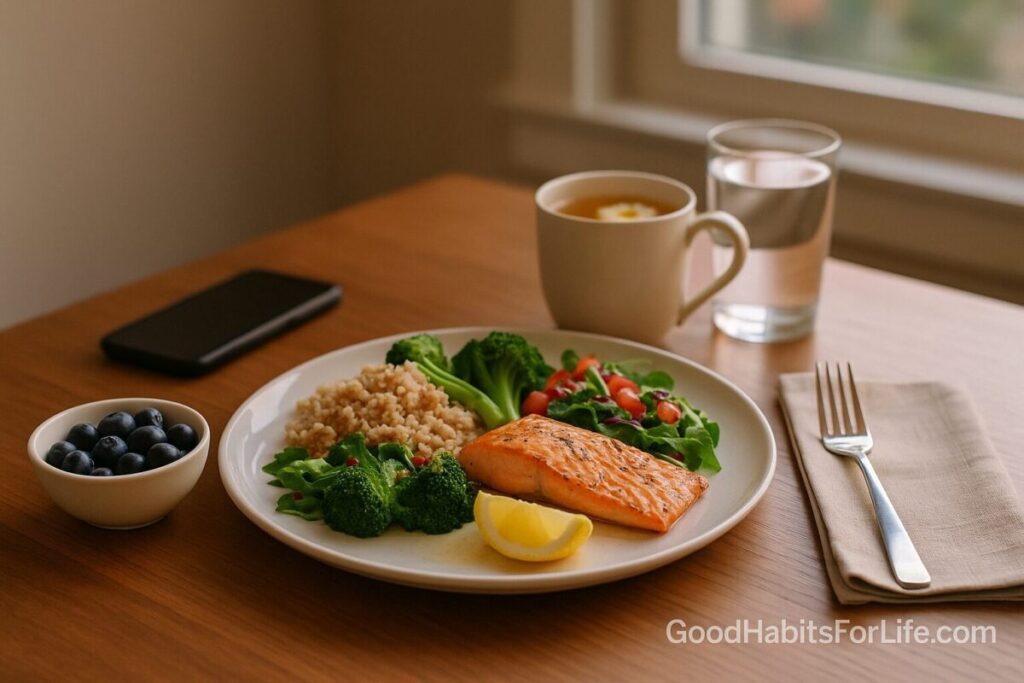
SleepFriendly Dinners: Earlier, Lighter, Lovely: AI workflows (2025)
Sleep-Friendly Dinners: Earlier, Lighter, Lovely — AI Workflows (2025)
Table of Contents
🧭 What & Why
Definition. Sleep-friendly dinners are evening meals timed 3–4 hours before bedtime, designed to be lighter, lower in saturated fat and spice, and built around lean protein, complex carbohydrates, and high-fiber plants.
Why it works (evidence-aligned).
-
Large, late meals can worsen reflux and discomfort that fragment sleep.
-
Caffeine late in the day reduces total sleep time and delays circadian timing.
-
Alcohol near bedtime may hasten sleep onset but disrupts the second half of the night.
-
Stable evening glucose (from fiber-rich carbs and protein) helps avoid nocturnal awakenings.
-
Eating aligned with your circadian rhythm (earlier vs. late-night) supports metabolic health and next-day alertness.
✅ Quick Start (Do This Today)
-
Set your “lights-out” time. Subtract 3–4 hours → that’s your dinner window.
-
Use the 1-2-½ Plate:
-
½ plate non-starchy veg (greens, crucifers, peppers).
-
¼ plate lean protein (fish, eggs, tofu, chicken, lentils).
-
¼ plate high-fiber carbs (quinoa, brown rice, whole-grain roti, beans, sweet potato).
-
-
Cap fat & spice at night. Choose olive oil over deep-fried; go mild on chilies, tomato, citrus if reflux-prone.
-
Stop caffeine after lunch. Switch to water or herbal teas (e.g., chamomile).
-
Go easy on alcohol. If used, finish ≥3 hours before bed and keep to modest amounts.
-
Prep tomorrow’s dinner now. Batch-cook grains/beans; marinate protein; wash/chop veg.
-
Track sleep & energy. Note bedtime, wake time, and how dinner felt (fullness, reflux, cravings).
🛠️ 7-Day Starter Plan (times assume 23:00 bedtime → dine by ~19:00–20:00)
Target macro: ~25–35 g protein + fiber-rich carbs + lots of veg; gentle seasoning.
-
Mon (19:00): Grilled salmon (120–150 g), lemon-herb quinoa (¾ cup cooked), steamed broccoli & carrots.
-
Tue (19:30): Chana-palak (chickpeas + spinach), brown basmati rice (¾ cup), cucumber-mint raita (yogurt).
-
Wed (19:00): Tofu & veggie stir-fry (lite soy, ginger), soba noodles (¾ cup), toasted sesame.
-
Thu (19:30): Chicken breast kebabs (yogurt marinade), whole-wheat pita, tabbouleh salad.
-
Fri (19:00): Lentil tomato-basil soup, side salad, whole-grain toast; berries for dessert.
-
Sat (19:30): Baked white fish, sweet potato wedges (air-fried), green beans almonds.
-
Sun (19:00): Paneer-veg tikka (moderate fat), mixed-veg millet pulao, kefir/yogurt.
Portion guide: stop at ~7/10 fullness; keep dessert small (fruit, yogurt, or dark chocolate 10–15 g).
Hydration: finish large fluids ≥1 hour before bed to reduce awakenings.
🧠 Techniques & Frameworks
Chrononutrition Basics
-
When you eat influences how your body handles food. Earlier dinners improve comfort and align better with circadian metabolism.
-
Anchor breakfast/lunch as your larger meals; make dinner lighter.
The Sleep-Friendly Plate (Evening)
-
Protein (25–35 g): fish, tofu/tempeh, eggs, lentils, Greek yogurt.
-
Carbs (30–50 g, fiber-rich): quinoa, brown rice, whole grains, legumes, sweet potato.
-
Veg (2+ cups): leafy greens, crucifers, colorful veg → fiber + magnesium.
-
Fats (1–2 tbsp): olive oil, nuts, seeds; keep heavy sauces minimal.
Timing & Triggers
-
Finish dinner 3–4 h before bed.
-
Reflux-prone? Avoid late-night tomato/citrus/chili, chocolate, peppermint; keep portions modest.
-
Caffeine cut-off: generally ~8–10 h before bedtime (varies by sensitivity).
-
Alcohol: earlier and less is better for sleep architecture.
Add-Ons That Help
-
Magnesium-rich foods (spinach, beans, pumpkin seeds).
-
Tryptophan sources (yogurt, milk, turkey, tofu), paired with carbs to aid brain uptake.
-
Evening routine: dim lights after dinner; short walk (10–20 min) aids digestion.
👥 Audience Variations
Students: batch-cook grains/beans on weekends; schedule campus dinners before library sessions; swap energy drinks for water + fruit.
Professionals: block a calendar “dinner stop” 3–4 h before bed; keep a default 3-meal rotation to reduce decision fatigue.
Parents: serve a family-style base (grain + veg + protein) with simple kid tweaks (milder spices, finger-friendly veg).
Seniors: smaller, more frequent daytime meals; soft, high-protein options (eggs, yogurt, dal); watch reflux triggers and late liquids.
Shift Workers: align “main meal” after your longest sleep of the cycle; keep the “pre-bed meal” small (yogurt + fruit, dal soup); minimize caffeine in the final 6–8 h of your shift.
⚠️ Mistakes & Myths to Avoid
-
Myth: “A nightcap helps me sleep well.” It fragments sleep later.
-
Mistake: Eating a heavy, spicy, or fried dinner close to bedtime → reflux and restless sleep.
-
Mistake: Skipping dinner then bingeing late. Plan a small, steady evening meal.
-
Myth: “Carbs at night are always bad.” Fiber-rich carbs in moderate portions can stabilize sleep.
-
Mistake: Chugging water right before bed—front-load fluids earlier.
💬 Real-Life Examples & Scripts
Restaurant script (early dinner):
“We’re keeping it light tonight—could we have grilled fish/chicken with extra vegetables and dressing on the side? Also, not too spicy.”
Family text:
“Team: dinner at 19:15. Stir-fry + brown rice. Gentle spice. Screens off by 21:30.”
Office plan:
-
Add a 19:30 hard stop event.
-
Keep emergency dinners: pre-washed salad + canned beans + olive oil/lemon; eggs + whole-grain toast + veg.
📚 Tools, Apps & AI Workflows
Meal builders & tracking
-
Cronometer/MyFitnessPal: check protein/fiber targets; duplicate meals for fast logging.
-
Paprika/Notion recipe DB: organize favorites; tag sleep-friendly.
Automation & reminders
-
Calendar rule: If bedtime is 23:00, auto-block 19:00–20:00 as Dinner daily.
-
Shortcuts/IFTTT/Zapier:
-
Trigger a “Start dinner” phone reminder 4 h before bedtime.
-
When you add a recipe to Notion → generate a shopping list in Google Tasks.
-
After marking Dinner done → dim smart lights, queue wind-down playlist.
-
AI menu generator (prompt)
“Plan 7 sleep-friendly dinners for a 23:00 bedtime: finish eating by 19:30, 25–35 g protein/meal, high-fiber carbs, low spice/fat, include Indian + Mediterranean options, produce a shopping list grouped by aisle, and a 2-hour weekend batch-prep schedule.”
AI grocery optimizer
“Using this meal plan, return a costed list for a family of 3 for one week, quantities in metric, flag pantry staples, and propose swaps if any item is unavailable.”
🧾 Key Takeaways
-
Time your dinner 3–4 hours before bed.
-
Keep it lighter: lean protein + fiber-rich carbs + lots of veg + modest healthy fats.
-
Trim triggers (excess spice/fat, caffeine, alcohol) and finish liquids early.
-
Use AI + automation to plan, prep, shop, and remind you reliably.
-
Iterate with a simple log of sleep quality and next-day energy.
❓ FAQs
1) What’s the best dinner time if I sleep at 23:00?
Aim to finish by 19:00–20:00 (3–4 h buffer).
2) Can I eat dessert?
Yes—keep it light (fruit, yogurt, or small dark chocolate) and finish within your dinner window.
3) Are carbs at dinner OK?
Yes—choose high-fiber options (quinoa, brown rice, legumes) and moderate portions.
4) What if I train in the evening?
Have a balanced post-workout meal still within the 3–4 h window; add protein (25–35 g) and a modest carb serving.
5) Do herbal teas help?
Caffeine-free teas (e.g., chamomile) can be a soothing ritual. Avoid large volumes close to bedtime.
6) Is intermittent fasting required?
No. The key is earlier, lighter dinners and consistent timing.
7) I get reflux at night—what should I change first?
Eat earlier, reduce portion size and spice/acid, avoid lying down ≤3 h after eating, and consider a short after-dinner walk.
8) How fast will I notice benefits?
Many people feel calmer and sleep better within 1–2 weeks of consistent timing and lighter meals.
📖 References
-
Centers for Disease Control and Prevention. Sleep Hygiene Tips. https://www.cdc.gov/sleep/about_sleep/sleep_hygiene.html
-
American Academy of Sleep Medicine. Healthy Sleep Habits. https://sleepeducation.org/healthy-sleep/healthy-sleep-habits/
-
National Institute of Diabetes and Digestive and Kidney Diseases (NIH). Symptoms & Causes of GERD. https://www.niddk.nih.gov/health-information/digestive-diseases/acid-reflux-ger-gerd-adults/symptoms-causes
-
American College of Gastroenterology. GERD: Diet & Lifestyle Modifications. https://gi.org/topics/gerd-diet-and-lifestyle-modifications/
-
U.S. Department of Agriculture. Dietary Guidelines for Americans 2020–2025. https://www.dietaryguidelines.gov/
-
National Center for Complementary and Integrative Health (NIH). Caffeine and Your Health. https://www.nccih.nih.gov/health/caffeine-and-your-health
-
Sleep Foundation. Alcohol and Sleep. https://www.sleepfoundation.org/nutrition/alcohol-and-sleep
-
Harvard T.H. Chan School of Public Health. Healthy Eating Plate & Plate Method. https://www.hsph.harvard.edu/nutritionsource/healthy-eating-plate/
Disclaimer
This content is for general education and is not a substitute for personalized medical advice; consult your healthcare professional for guidance specific to you.