
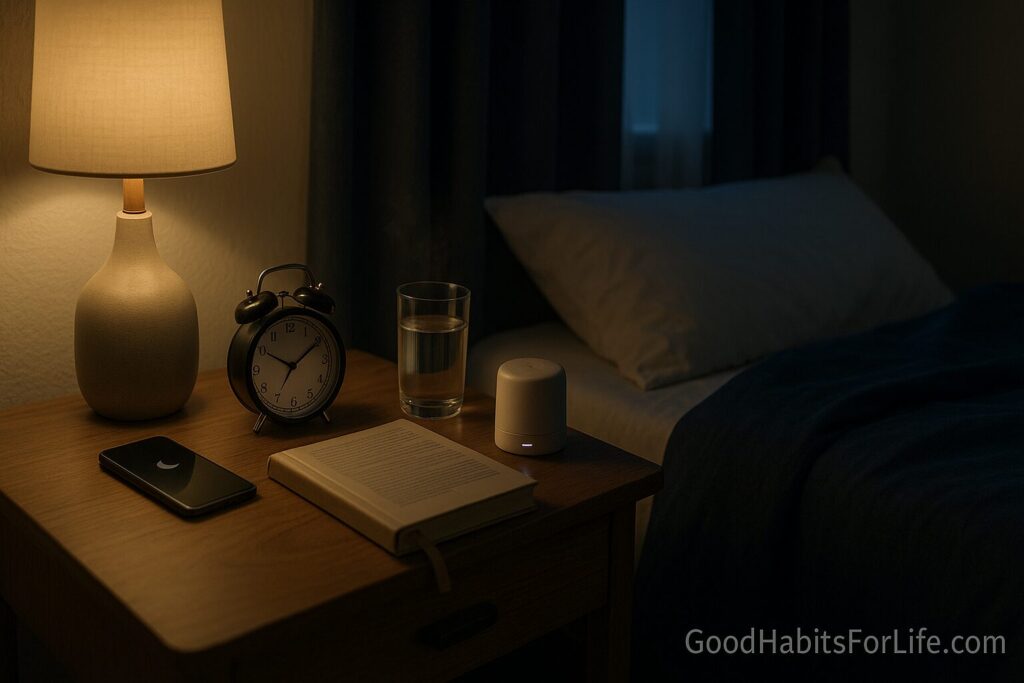
Sleep Hygiene 2025: The 4-Lever Routine
Sleep Hygiene 2025: The 4-Lever Routine
Table of Contents
🧭 What Is Sleep Hygiene & Why It Matters
Sleep hygiene means the daily habits and environmental factors that help your brain fall asleep faster, stay asleep longer, and wake restored. It’s the low-friction foundation for healthy sleep across ages. Good sleep hygiene improves attention, memory, mood, and metabolic and cardiovascular health, while poor sleep raises accident risk and chronic disease risk. It’s not a cure for medical sleep disorders (like insomnia, sleep apnea, restless legs), but it supports any plan you follow and often fixes mild problems by itself.
In 2025, the core science still centers on homeostatic sleep pressure (tiredness building with time awake) and circadian rhythm (your 24-hour body clock set mostly by light). The routine below aligns both with simple, repeatable steps.
✅ The 4-Lever Routine (Overview)
Think of sleep as a system with four big dials. Nudge each dial a little and they multiply:
-
Rhythm (Regularity & Anchors)
-
One consistent wake time (±30 min, even weekends).
-
Pair it with morning outdoor light within 30–60 minutes of waking.
-
Light (Timing & Intensity)
-
A.M.: Bright light (ideally outdoors) for 10–30 minutes.
-
P.M.: Dim the house 2 hours pre-bed; reduce screen time 60–90 minutes before sleep.
-
Stimulants & Fuel (Caffeine, Alcohol, Nicotine, Meals)
-
Caffeine cutoff: ~8 hours pre-bed (earlier if sensitive).
-
Alcohol: Keep to small/early or skip; it fragments sleep.
-
Nicotine: Avoid near bedtime; it’s stimulating.
-
Meals: Light snack is fine; avoid heavy, spicy, or very late dinners.
-
Wind-Down & Environment (Calm & Cues)
-
20–30 minute routine you repeat in the same order nightly (cues teach your brain).
-
Bedroom: Cool (≈18–20 °C / 65–68 °F), dark, quiet, comfortable bedding.
🛠️ Quick Start: Do-This-Today Checklist
Morning (0–60 min after wake):
-
Open curtains/go outside for 10–15 min light.
-
Hydrate; move your body 5–10 min (walk, mobility).
-
Set tomorrow’s wake time alarm (your anchor).
Afternoon:
-
Keep caffeine before ~8 hours to bedtime.
-
Brief walk in daylight if you hit a slump.
Evening (2 h pre-bed):
-
Dim lights; switch to warm bulbs or lamps.
-
Park “to-do worries” with a 2-minute brain dump on paper.
Pre-bed (30 min):
-
Run your wind-down loop: hygiene → stretch/relax → quiet reading or audio → bed.
-
Bedroom: cool, blackout (or eye mask), quiet (or white noise).
If you wake at night:
-
Don’t clock-watch. After ~20 minutes awake, get up and do a calm, dim-light activity until sleepy again.
🗓️ 7-Day Starter Plan
Goal: Build momentum and test your optimal times.
-
Day 1–2 (Anchor & Light):
-
Choose a wake time you can keep all week.
-
Get morning light daily.
-
Log bedtime/wake time in notes.
-
-
Day 3 (Evening Dimmer):
-
Start 2-hour light dimming.
-
Add a screen taper: no scrolling the last 60 min.
-
-
Day 4 (Caffeine Audit):
-
Move last caffeine dose to 8+ hours pre-bed.
-
Swap late drinks for herbal tea or water.
-
-
Day 5 (Wind-Down Script):
-
Write a 3–4 step routine and follow it.
-
Example: Brush → 5 min stretch → 10 min paper book → audio nature sounds.
-
-
Day 6 (Bedroom Pass):
-
Set room to 18–20 °C (65–68 °F).
-
Block light leaks; test earplugs or white-noise app.
-
-
Day 7 (Review & Adjust):
-
Rate sleep quality (1–5) and sleep consistency % (days you hit your wake target).
-
Keep what helped; tweak one lever next week.
-
🧠 Techniques & Frameworks That Work
R.I.S.E. framework (2025 edition)
-
R — Regularity: One wake time, seven days a week.
-
I — Illumination: Bright A.M., dim P.M.
-
S — Stimulants & substances: Time caffeine; limit alcohol/nicotine near bed.
-
E — Environment & exhale: Bedroom cues + relaxation.
Wind-down menu (pick 1–2):
-
Box breathing 4-4-4-4 or 4-7-8 breathing
-
Gentle stretches, progressive muscle relaxation (head-to-toe 5–7 minutes)
-
Paper journaling: 3 lines—wins, worries (then “park” them), plan for tomorrow
-
Paper book (avoid thrillers), low-volume nature sounds or audiobooks
Cognitive wind-down for busy minds:
-
“Constructive worry” sheet (2 columns: concern → next action tomorrow).
-
If rumination persists, practice CBT-I strategies: stimulus control (bed = sleep only), sleep restriction (temporarily align time in bed with actual sleep to rebuild efficiency). If insomnia lasts >3 months, speak with a clinician; CBT-I is first-line therapy.
Naps:
-
Keep 10–20 min, before 15:00, and not if they worsen nighttime sleep.
👥 Audience Variations
Students
-
Morning light before class; maintain one wake time even after late study nights.
-
Keep naps ≤20 min; batch caffeine before early afternoon.
-
Use campus libraries for evening study (brighter but still plan a screen taper).
Parents of young kids
-
You may not control night wakings; protect wake time and get A.M. light anyway.
-
Trade on-call shifts with a partner; aim for sleep opportunities across the week.
-
If you snore loudly or are very sleepy driving, assess for sleep apnea.
Professionals/Shift workers
-
Lock one anchor (either wake time or first light exposure) on most days.
-
For night shifts: bright light at work; dark, cool bedroom after; blackout curtains; sunglasses on commute; consistent schedule across consecutive nights if possible.
Seniors
-
Earlier circadian phase is common; move light exposure earlier and reduce late naps.
-
Review meds with your clinician; some affect sleep.
-
Add daytime movement and brief strength work to deepen sleep.
Teens
-
Biological clocks run later; negotiate school-compatible anchors and a realistic bedtime.
-
Protect screen taper (use parental controls or app timers if helpful).
-
Keep energy drinks rare; caffeine cutoff extra early.
⚠️ Mistakes & Myths to Avoid
-
Weekend “catch-up” fixes everything → It helps a little but disrupts circadian timing for Monday.
-
Alcohol helps sleep → It can knock you out but reduces REM and fragments sleep later.
-
Blue-light filters alone are enough → Helpful, but overall brightness and timing matter more.
-
More tracking = better sleep → Over-focus can worsen anxiety; track just one metric at a time.
-
Melatonin is a universal fix → It’s a clock-shifter, not a sedative; timing and dose matter, and it’s not for everyone—ask a clinician if you use it regularly.
💬 Real-Life Examples & Scripts
Bedtime wind-down (20–25 min):
-
Bathroom routine → 2) 5 min stretch → 3) 10–15 min paper book → 4) Lights out.
Script to self: “Now I do my four steps. If I’m not sleepy after ~20 minutes in bed, I’ll get up, read in dim light, and try again.”
Declining late invites (text):
“Thanks! I’m on an early wake streak—rain check for a weekend brunch?”
Worry reset at 02:00 (index card):
-
Concern → “Presentation slides”
-
Next action → “Rehearse 10:00–10:20 tomorrow”
-
Close card, breathe 4–7–8, dim reading until sleepy.
Travel jet-lag (eastbound):
-
Shift bedtime/wake by 30–60 min earlier for 2–3 days pre-trip.
-
Get AM light at destination; avoid heavy late meals; short nap day 1 (<20 min).
🔧 Tools, Apps & Resources
(Use them to support habits, not replace them.)
-
CBT-i Coach (iOS/Android) — Free program from VA/DoD; teaches stimulus control, sleep restriction. Pros: evidence-aligned; Cons: requires consistency.
-
Apple Sleep / Android Bedtime — Simple alarms, sleep focus. Pros: low friction; Cons: basic analytics.
-
White-noise apps or machines — Mask intermittent noise. Pros: cheap, immediate; Cons: may bother partners.
-
f.lux / Night Shift / Dark Mode — Warmer evening displays. Pros: easy; Cons: not a substitute for dimming overall light.
-
Blackout curtains, eye mask, earplugs — Environmental game-changers. Pros: one-time costs; Cons: adjust to comfort.
-
Wearables — Helpful for trends; don’t chase nightly scores. Pros: awareness; Cons: accuracy varies; can fuel “orthosomnia.”
📚 Key Takeaways
-
Anchor wake time and pair with morning light.
-
Diminish evening brightness and screen time before bed.
-
Time caffeine wisely; minimize alcohol/nicotine near bedtime.
-
Repeat a 20–30 min wind-down and keep the bedroom cool, dark, quiet.
-
Track consistency, not perfection; escalate to CBT-I or a clinician for persistent insomnia or heavy snoring.
❓ FAQs
1) How many hours should adults sleep?
Most healthy adults need 7–9 hours per night. Individual needs vary; consistent daytime alertness is a good signal.
2) What’s the best bedroom temperature?
Many sleepers do best around 18–20 °C (65–68 °F) with breathable bedding.
3) Do blue-light blocking glasses work?
They can help some people at night, but reducing overall light and tapering screens is more impactful. Morning daylight exposure is equally important.
4) When should I stop caffeine?
A good rule is ~8 hours before bedtime (earlier if sensitive). Test moving it back in 30–60 min steps.
5) Is alcohol a good nightcap?
No. Alcohol may help you fall asleep but fragments sleep and reduces REM in the second half of the night.
6) Are naps okay?
Yes—keep them 10–20 minutes, early afternoon, and skip if they impair nighttime sleep.
7) I wake at 2–3 a.m. and can’t return to sleep—what now?
Avoid clock-watching. If not sleepy after ~20 minutes, get up and do a calm activity in dim light until drowsy, then return to bed.
8) When do I need professional help?
If insomnia lasts >3 months, if you snore loudly, gasp at night, or feel very sleepy driving, talk to a clinician. CBT-I is first-line for chronic insomnia; screening for sleep apnea may be needed.
9) Should I take melatonin?
Small, well-timed doses can shift body clock timing (e.g., jet-lag), but it’s not a general sleep pill. Discuss with your clinician, especially if you take other meds.
10) Are sleep trackers accurate?
They’re useful for trends, not precise staging. Use them to support habits, not to chase nightly scores.
References
-
Centers for Disease Control and Prevention (CDC). How Much Sleep Do I Need? https://www.cdc.gov/sleep/about_sleep/how_much_sleep.html
-
National Heart, Lung, and Blood Institute (NHLBI). Sleep Deprivation and Deficiency. https://www.nhlbi.nih.gov/health-topics/sleep-deprivation
-
SleepEducation.org (American Academy of Sleep Medicine). Healthy Sleep Habits. https://sleepeducation.org/healthy-sleep/healthy-sleep-habits/
-
American College of Physicians. ACP Recommends Cognitive Behavioral Therapy for Chronic Insomnia as Initial Treatment. Ann Intern Med. 2016. https://www.acpjournals.org/doi/10.7326/M15-2175
-
U.S. Food & Drug Administration (FDA). Spilling the Beans: How Much Caffeine is Too Much? https://www.fda.gov/consumers/consumer-updates/spilling-beans-how-much-caffeine-too-much
-
NHS (UK). How to get to sleep. https://www.nhs.uk/every-mind-matters/mental-health-issues/sleep/
-
National Institute of Neurological Disorders and Stroke (NINDS). Brain Basics: Understanding Sleep. https://www.ninds.nih.gov/health-information/public-education/brain-basics/brain-need-sleep
-
World Health Organization (WHO Europe). Environmental Noise Guidelines for the European Region. 2018. https://www.who.int/europe/publications/i/item/9789289053563
-
U.S. Department of Veterans Affairs & Department of Defense. CBT-i Coach App. https://mobile.va.gov/app/cbt-i-coach
-
Harvard Health Publishing. Blue light has a dark side. https://www.health.harvard.edu/staying-healthy/blue-light-has-a-dark-side
Disclaimer: This article is for general education only and is not a substitute for personalized medical advice; please consult a qualified clinician for diagnosis or treatment.