
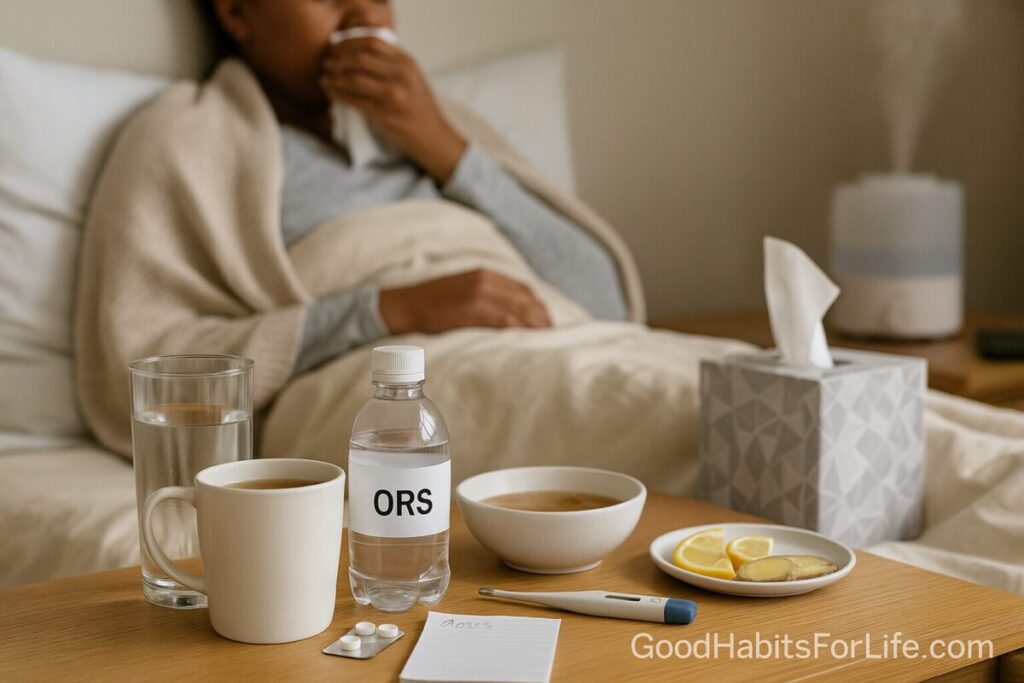
SickDay Sips: What to Drink When Youre Under the Weather: Zone 2 + NEAT (2025)
Sick-Day Sips: What to Drink When You’re Sick (2025)
Table of Contents
🧭 What & Why Hydration Matters
When you’re ill, fever and fast breathing increase fluid loss, and vomiting/diarrhea can drain electrolytes. Hydration keeps blood volume stable, supports temperature control, helps thin mucus, and prevents complications like dizziness and kidney strain. ORS (oral rehydration solution) replaces both water and key salts (sodium, potassium) in the right ratios, which is why it’s first-line for fluid loss from gastro symptoms.
Signals you’re on track: pale-straw urine, steady urination, moist mouth, less dizziness, less headache.
Signals you need more: darker urine, dry mouth, fatigue, rapid heartbeat, confusion—seek care if severe or persistent.
✅ Quick-Start: Exactly What to Sip Today
-
Set a baseline target: most adults do well with ~2–3 L/day (8–12 cups), more if you have fever or are losing fluids. Sip steadily rather than chugging.
-
Make it easy: keep a 500–750 mL bottle at arm’s reach; refill 4–6×.
-
Rotate these “Sick-Day Five”:
-
Water (room-temp or warm)
-
ORS (ready-made or WHO recipe) if vomiting/diarrhea or dizziness
-
Warm broths (veg/chicken)—gentle sodium
-
Herbal teas (ginger, chamomile, peppermint)
-
Diluted juice (1:1 water:juice) for a little carbohydrate
-
-
Soothing cups (as needed): honey-lemon in warm water for cough/sore throat (not for kids <1 year).
-
Hold these for now: alcohol; very sugary drinks; energy drinks; heavily caffeinated sips if they worsen palpitations or sleep.
🛠️ 7-Day Sick-Day Sips Plan
Daily anchor: Aim for pale-straw urine; use small, frequent sips (100–150 mL every 15–20 min while awake).
Day 1–2 (Acute phase)
-
Goal: gentle, frequent fluids; replace losses.
-
Menu: 1 L water + 1–2 L mix of ORS, broth, herbal tea.
-
If GI symptoms: prioritize ORS (up to 1–2 packets/day or WHO recipe), tiny sips with pauses.
Day 3–4 (Turning the corner)
-
Goal: maintain hydration, reintroduce calories.
-
Menu: 1–1.5 L water + 1 L broth/tea + diluted juice as appetite returns.
-
Add-ons: yogurt or salty crackers if tolerated.
Day 5–7 (Recovery)
-
Goal: routine fluids; normal eating; gentle activity.
-
Menu: 1.5–2 L water + teas/broths to taste.
-
Movement: see Zone 2 & NEAT below if fever-free and energy is back.
Checkpoints
-
Stop & call for help if: you can’t keep fluids down >6 hours; minimal urination; signs of dehydration/confusion; chest tightness/shortness of breath; persistent high fever.
🧠 Drinks: Best, Good, Caution, Avoid
Best (use freely)
-
Water (still or warm).
-
ORS (WHO formula or commercial): right glucose-sodium balance to absorb fluid efficiently.
-
Broths: sodium helps fluid retention; warm temperature soothes throat.
-
Herbal teas: ginger (nausea), chamomile (relaxation), peppermint (comfort).
Good (use strategically)
-
Diluted fruit juice (1:1 with water): adds carbs for energy; avoid if diarrhea worsens.
-
Coconut water: some potassium; lower sodium than ORS—pair with salty foods.
Caution
-
Caffeine (coffee/strong tea): modest amounts can be fine; too much may worsen jitters, sleep, or GI upset.
-
Undiluted sugary drinks: can draw water into the gut and aggravate diarrhea.
Avoid
-
Alcohol: dehydrates and can interact with medicines.
DIY WHO-style ORS (1 L): Mix ½ level tsp salt + 6 level tsp sugar in 1,000 mL clean water. Taste should be “not saltier than tears.” Use level measures only.
🧭 Zone 2 & NEAT While You’re Under the Weather
Zone 2 ≈ easy-to-moderate effort where you can hold a full conversation (roughly 60–70% of max heart rate). NEAT = non-exercise movement (standing, strolling, gentle household puttering).
Golden rules
-
Fever, chest symptoms, shortness of breath, or body-wide aches? Rest. Hydration first.
-
Mild “above-the-neck” symptoms only (stuffy nose/sore throat) and no fever? Short, easy movement can help mood and sleep.
What to do (when appropriate)
-
10–20 min Zone-2 walk indoors or outside; stop if symptoms worsen.
-
NEAT micro-bursts every hour: 2–3 min of easy stretching, light tidying, or balcony stroll.
-
Breathing & mobility: diaphragmatic breathing 5×/day; gentle neck/shoulder rolls.
What to skip
-
High-intensity intervals, long runs, heavy lifting, hot environments. Return to normal training only after you’re fever-free, hydrated, and energy is truly back.
📚 Variations: Kids, Teens, Adults, Seniors, Pregnancy
Kids (over 1 year)
-
Offer small, frequent sips; use ORS after each loose stool/vomit as directed on packet.
-
Honey for cough only if ≥1 year. Seek care sooner for low urine output or lethargy.
Teens & Adults
-
Use the Sick-Day Five rotation. Caffeine modest; avoid alcohol. Watch urine color.
Seniors
-
Thirst cues may be blunted—schedule sips, keep drinks visible, consider broths for sodium. Monitor medications that affect fluids.
Pregnancy
-
Ginger tea or lozenges may help nausea; keep hydration steady. If vomiting is persistent or severe, seek care to avoid dehydration.
⚠️ Mistakes & Myths to Avoid
-
Waiting for thirst—it lags behind need when you’re ill.
-
Chugging large volumes—can trigger nausea; sip steadily.
-
Using sports drinks as ORS—they’re usually lower in sodium and higher in sugar; not ideal for rehydration from GI losses.
-
“Milk always increases mucus.” Evidence doesn’t consistently show this; choose based on comfort.
-
Exercising with fever—raises risk; rest and fluids instead.
🗣️ Real-Life Scripts & Mini-Menus
If nothing stays down:
“I’m taking 3 tiny sips (about 100 mL) every 15 min. If I vomit, I’ll pause 10 min, then restart with ORS.”
If you must step out:
“I’m recovering and focusing on fluids—let’s reschedule. I’ll check back in two days.”
Two easy mini-menus
-
Comfort warmers: 250 mL ginger tea → 250 mL broth → 250 mL water → repeat.
-
ORS ladder (GI upset): 150 mL ORS × 4 (1 hr) → 150 mL water × 2 → reassess.
🛠️ Tools & Resources
-
1-L bottle with measurement marks to mix DIY ORS accurately.
-
ORS packets (WHO-formula) in the medicine cabinet.
-
Hydration app or phone reminders every 30–60 minutes while awake.
-
Thermometer and urine-color chart (pale straw goal) posted in the bathroom.
-
NHS/CDC online symptom checkers for escalation guidance.
✅ Key Takeaways
-
Keep fluids flowing all day; use ORS if you have GI losses or feel light-headed.
-
Warm drinks soothe; diluted juice adds gentle calories.
-
Avoid alcohol and keep caffeine modest.
-
Light Zone 2/NEAT only with mild, fever-free symptoms; otherwise, rest.
-
Escalate care promptly for dehydration red flags.
❓ FAQs
1) Is coffee OK when I’m sick?
Small amounts are fine for many people, but skip if it worsens jitteriness, palpitations, or sleep. Hydrate with water/tea around it.
2) What’s the difference between sports drinks and ORS?
Sports drinks suit sweating; ORS is formulated for absorption during illness—higher sodium and correct glucose-sodium balance.
3) Does milk increase mucus?
Research hasn’t shown a consistent mucus-increasing effect. If milk feels uncomfortable, skip; otherwise it’s personal preference.
4) How do I know I’m hydrated enough?
Aim for pale-straw urine, regular urination, and less dizziness or headache.
5) Can I add salt to water instead of ORS?
Plain salty water won’t have the right glucose-sodium balance for optimal absorption. Use proper ORS (packet or WHO recipe).
6) When can I resume hard workouts?
After you’re fever-free, symptoms are improving, hydration and appetite are normal, and easy activity feels comfortable.
7) Are herbal teas safe with medicines?
Most are mild, but if you’re on anticoagulants, cardiac meds, or are pregnant, check interactions (e.g., high-dose ginger).
8) How much should kids drink?
Offer frequent small sips; use ORS after each episode of vomiting/diarrhea as per packet weight/age guidance. Seek care for low urine output or lethargy.
9) Is coconut water a good replacement for ORS?
It has potassium but less sodium than ORS; okay as part of the rotation, but not a 1:1 substitute during GI losses.
10) Do fizzy sodas help nausea?
They can be too sugary or gassy; if you try them, dilute and take tiny sips. Ginger tea or ORS is usually better.
📚 References
-
World Health Organization. Oral Rehydration Salts (ORS): composition and use. https://www.who.int/
-
Centers for Disease Control and Prevention. Rehydration during illness & treating diarrhea (travel/illness guidance). https://www.cdc.gov/
-
NHS. Common cold: self-care (fluids, rest, warm drinks). https://www.nhs.uk/
-
MedlinePlus (NIH). Dehydration & Fever—self care and warning signs. https://medlineplus.gov/
-
National Academies of Sciences, Engineering, and Medicine. Dietary Reference Intakes for Water, Potassium, Sodium, Chloride, and Sulfate. https://nap.nationalacademies.org/
-
CDC. Physical Activity Basics—intensity (talk test). https://www.cdc.gov/
-
Levine JA. Non-exercise activity thermogenesis (NEAT). Proc Nutr Soc. 2002;61(4):679-691.
-
NHS. Cough self-care (honey & lemon, >1 year). https://www.nhs.uk/
-
Cochrane/peer-reviewed summaries on ginger for nausea and honey for cough (evidence overviews). https://www.cochranelibrary.com/
-
American College of Sports Medicine. Exercise intensity & the talk test. https://www.acsm.org/
Disclaimer
This article is educational and not a substitute for medical advice—seek personal care if you have concerning or persistent symptoms.