
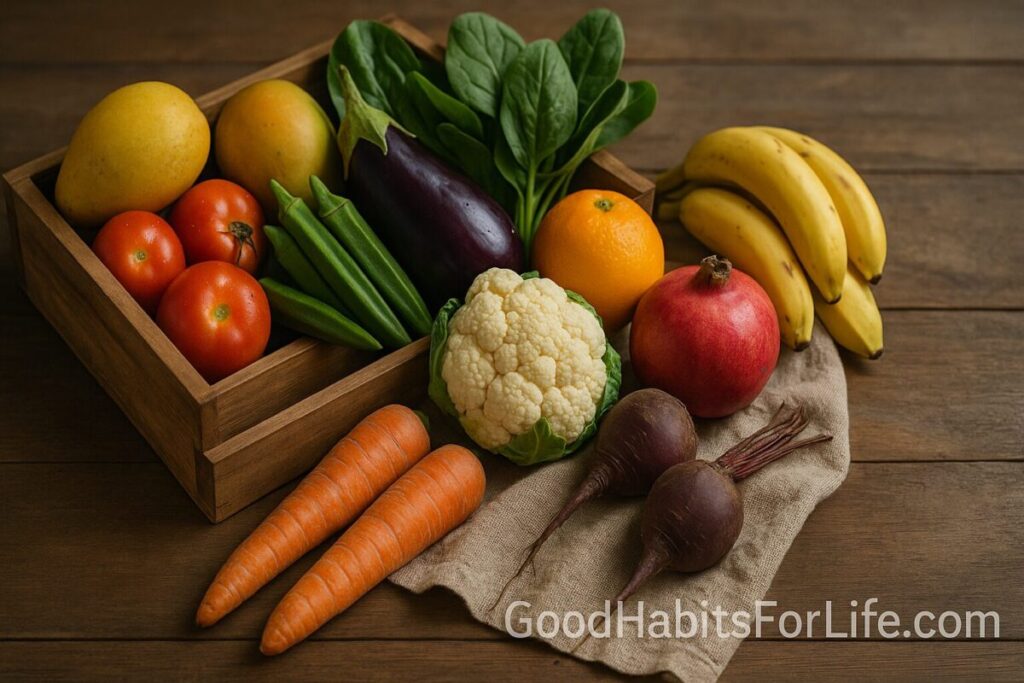
Seasonal Produce Guide 2025: Fresh, Fair, Flavorful
Seasonal Produce Guide 2025: Fresh, Fair, Flavorful
Table of Contents
🧭 What “seasonal” means & why it matters
Definition. Seasonal produce is fruit and veg harvested at (or close to) their natural peak where you live (or in your trading region). Because it’s picked ripe and spends less time in storage, it’s often fresher, more flavorful, and better value at the checkout.
Benefits (evidence-aligned).
-
Health: A varied intake of fruits and vegetables supports heart, gut, and metabolic health; major authorities recommend several servings daily. Seasonal eating naturally rotates choices across the year, raising variety and micronutrient coverage.
-
Budget: Peak-season abundance lowers price per kilo; imperfect produce (cosmetically off but tasty) is also more available.
-
Sustainability (with nuance): Shorter storage and fewer heated-greenhouse days can shrink footprints; transport (“food miles”) is only one piece of emissions, but out-of-season hothouse produce can be energy-intensive. Choosing in-season regional options is a practical rule of thumb.
-
Less waste: When you know how to store what’s in season, you keep it fresher longer and waste less.
✅ Quick start (today)
-
Pick one season where you live (e.g., “late summer”).
-
Choose 3 heroes (e.g., tomatoes, cucumbers, peaches).
-
Plan 4 uses per hero this week (salad, skillet, soup, snack).
-
Buy once, prep once: wash, chop, and box into airtight containers.
-
Store smart: cool/dry for roots, fridge-crisper for leaves, countertop for climacteric fruits (ripen first, then refrigerate).
-
Freeze the extra: sliced stone fruit, corn kernels, herb cubes in oil/water.
-
Swap in-season for out-of-season in your usual recipes.
🗺️ Seasonal cheat sheets (2025)
Seasons vary by country, altitude, and climate. Use these as North-Hemisphere guides (US/Europe/North India etc.). For Southern Hemisphere (AU/NZ/SA), flip the seasons; for tropics/monsoon regions, see the monsoon notes.
Northern Hemisphere — what’s great now
Spring (Mar–May)
-
Vegetables: asparagus, artichoke, peas, broad beans, baby potatoes, spring onions, spinach, radish, lettuce, rocket (arugula).
-
Fruits: strawberries (late), rhubarb, loquat (regional), citrus tail-end.
-
Quick uses: 5-minute pea–mint sauté; asparagus + eggs; radish butter toast.
Summer (Jun–Aug)
-
Vegetables: tomatoes, cucumbers, courgette (zucchini), aubergine (eggplant), sweetcorn, peppers, okra, green beans.
-
Fruits: berries, cherries, peaches/nectarines, apricots, melons, plums, mango (regional).
-
Quick uses: chopped “salad-shop” bowls; chilled tomato soup; grilled veg platters; fruit yogurt pots.
Autumn (Sep–Nov)
-
Vegetables: pumpkin/winter squash, sweet potato, beetroot, carrot, celeriac, brassicas (broccoli, cauliflower, cabbage), mushrooms.
-
Fruits: apples, pears, late grapes, persimmon, pomegranate.
-
Quick uses: sheet-pan roots; cauliflower steaks; apple–cabbage slaw.
Winter (Dec–Feb)
-
Vegetables: hardy greens (kale, chard), leeks, onions, stored potatoes, turnips, parsnips.
-
Fruits: citrus (oranges, mandarins, grapefruit), kiwi, stored apples/pears, dates.
-
Quick uses: lemon-garlic greens; leek–potato soup; roasted citrus over yogurt.
Monsoon/Tropics note (e.g., much of India, SE Asia)
-
Pre-monsoon (hot): mangoes, cucumbers, gourds, okra; hydrate with cucumber–mint raita and spiced fruit.
-
Monsoon: leafy greens thrive (spinach, amaranth), gourds (bottle, ridge), corn; prioritize hygiene and proper drying/storage.
-
Post-monsoon/winter: carrots, peas, cauliflowers, citrus; best time for hearty sabzis and koshimbirs.
Southern Hemisphere (flip the seasons)
-
Spring ≈ Sep–Nov; Summer ≈ Dec–Feb; Autumn ≈ Mar–May; Winter ≈ Jun–Aug (choose from the lists above accordingly).
🛒 Smart shopping & storage
How to pick & keep it (mini-guide)
| Produce | Pick like this | Store like this | Typical life* |
|---|---|---|---|
| Tomatoes | Fragrant, heavy, slight give (never mealy) | Room temp; refrigerate only when fully ripe | 3–5 days counter; +2–3 days fridge |
| Leafy greens | Crisp, no yellowing | Wash/spin dry; pack with paper towel in box | 3–5 days fridge |
| Berries | Dry, no juice stains; avoid crushed | Don’t wash till eating; keep vented | 2–3 days fridge; freeze extra |
| Cucumbers | Firm, glossy, no soft spots | Crisper drawer, bagged | 5–7 days |
| Stone fruit | Slight give, aromatic | Ripen on counter; then refrigerate | 2–3 days ripe in fridge |
| Herbs (soft) | Bright, unwilted | In jar with water, bag over top (fridge) | 5–7 days |
| Root veg | Firm, no sprouts | Cool, dark, ventilated; greens removed | 2–8 weeks (varies) |
*Guidance varies by variety and storage conditions.
Ethylene tip: Keep ethylene-producers (bananas, apples, tomatoes) away from ethylene-sensitive greens to prevent premature wilting.
Budget plays
-
Buy whole heads (cabbage/cauli) not pre-cut.
-
Choose large bags of in-season staples (carrots, onions) for soups and roasts.
-
Grab “seconds”/imperfects for sauces and jams.
-
Freeze half your berries/stone fruit the day you buy.
🗓️ 30–60–90 day habit plan
Days 1–30 (Starter)
-
Make 1 seasonal swap per meal (e.g., lettuce → rocket in spring; fries → roasted squash in autumn).
-
Sunday 30-minute ritual: check your local season chart, pick 3 heroes, batch-prep.
-
Track servings: aim for ≥400 g/day fruit + veg (about 5 servings).
Days 31–60 (Build)
-
Add a freezer buffer: 6 bags of prepped veg/fruit.
-
Start one preserving skill: quick pickles, simple jam, or herb cubes.
-
Cost check: compare your weekly produce spend vs. baseline month.
Days 61–90 (Master)
-
Create a “season wheel” for your region (printable/fridge).
-
Host a seasonal potluck (summer salads, winter soups).
-
Commit to one farmers’ market or farm-box per month (where available).
🛠️ Techniques & frameworks
1) The 3–2–1 Week
-
3 mains featuring the week’s veg (e.g., sheet-pan root veg; tomato-bean skillet; stir-fried greens).
-
2 grab-and-go sides (slaw; cucumber-yogurt).
-
1 preserve (pickled onions; frozen peach slices).
2) “Bowl Builder” formula
Grain (1 cup cooked) + Protein (100–150 g) + 2 seasonal veg + Sauce + Crunch (seeds/nuts).
3) Batch once, eat thrice
Roast 2 kg mixed veg → eat hot (night 1), blend into soup (night 3), fold into wraps (lunches).
4) Preserve the peak
-
Freeze: berries, mango, corn, blanched greens.
-
Pickle: onions, cucumbers, beets (vinegar-based, quick).
-
Dry: herbs, chilies.
Follow safe recipes from trusted sources.
👥 Variations: tailor to your life
-
Students: Buy shared crates of seasonal staples; focus on 20-minute skillet meals and freezer packs.
-
Parents: Build a “fruit tray habit” after school; roast double trays for mix-and-match family bowls.
-
Professionals: Schedule a Thursday “veg prep hour”; keep desk snacks (carrot sticks, citrus).
-
Seniors: Prioritize softer textures (stews, compotes) and high-water fruits; store in smaller boxes to reduce waste.
⚠️ Mistakes & myths to avoid
-
Myth: “Local always beats everything.” Reality: Production method usually outweighs transport; choose in-season field-grown where possible.
-
Mistake: Fridging tomatoes or unripe stone fruit too early (kills flavor).
-
Mistake: Washing berries before storage (invites mold).
-
Myth: Frozen produce is inferior. Reality: Often frozen at peak and can be equally or more nutritious.
💬 Real-life examples & scripts
At the market
-
“Which tomatoes are best for sauce this week?”
-
“Do you have ‘seconds’ for jam?”
-
“What just came in from the field today?”
Seasonal swaps
-
Out-of-season asparagus → green beans or broccoli.
-
Imported berries → citrus in winter, apples/pears for baking.
-
Lettuce shortage → cabbage/rocket slaws.
5-minute sides (copy-paste)
-
Cucumber–Yogurt: 2 cups chopped cucumbers + 200 g yogurt + salt, pepper, mint.
-
Pan-charred Corn: Kernels + pan + 5 minutes + lime + chili + pinch salt.
-
Quick Greens: Olive oil + garlic + 300 g leafy greens; wilt 2–3 min; lemon.
🧰 Tools, apps & resources (pros/cons)
-
Seasonal Food Guide (US/Canada) — searchable by state/month; great planning; regional focus.
-
Eat Seasonably (UK/Europe) — visual calendar; quick glance; not recipe-heavy.
-
USDA FoodKeeper App — storage times & methods; science-based; some US-specific items.
-
Local agriculture/extension sites — region-accurate calendars and safe-preserving guides; quality varies.
-
Farm-box/CSA — variety + value; needs flexibility in cooking.
📌 Key takeaways
-
Buy what’s abundant now; it’s cheaper and tastier.
-
Plan weekly around 2–3 seasonal heroes.
-
Store smart to keep freshness and avoid waste.
-
Build a freezer/pantry buffer to ride price swings.
-
Make seasonal eating a habit with the 30–60–90 roadmap.
❓ FAQs
1) What if my supermarket doesn’t label origins or seasons?
Ask staff what’s just arrived or check your region’s monthly chart; choose produce that’s abundant and well-priced.
2) Is frozen or canned okay for seasonal eating?
Yes. Frozen is often packed at peak; canned tomatoes/beans are affordable and nutritious—watch sodium and added sugars.
3) How do I hit 5 servings (≈400 g) daily?
Add 1 piece of fruit at breakfast, a big salad or veg bowl at lunch, two veg sides at dinner, and a fruit/veg snack.
4) How can I keep herbs from wilting?
Trim stems, place in a jar with a little water, cover loosely with a bag, refrigerate. Change water every 2–3 days.
5) Are farmers’ markets always cheaper?
Not always. Compare per-kilo prices; markets excel for peak-season buys and bulk “seconds.”
6) Is organic necessary for seasonal eating?
Seasonality and proper washing matter more for flavor and budget; organic is a separate choice based on preference and availability.
7) I live in the tropics—what’s my “winter”?
Use pre-monsoon / monsoon / post-monsoon as your seasons; align choices to those cycles (see notes above).
8) Best way to reduce waste from greens?
Wash/spin dry, store with paper towel in airtight boxes, and add a mid-week “greens check” to your routine.
📚 References
-
World Health Organization (WHO). Healthy diet — fruit & vegetable guidance. https://www.who.int/news-room/fact-sheets/detail/healthy-diet
-
Harvard T.H. Chan School of Public Health. Vegetables and Fruits — The Nutrition Source. https://www.hsph.harvard.edu/nutritionsource/vegetables-and-fruits/
-
Our World in Data. Food miles and the climate; Food choice vs. eating local. https://ourworldindata.org/food-miles , https://ourworldindata.org/food-choice-vs-eating-local
-
USDA. SNAP-Ed Seasonal Produce Guide. https://snaped.fns.usda.gov/seasonal-produce-guide
-
USDA & FDA. FoodKeeper App — Storage Guidance. https://www.foodsafety.gov/foodkeeper-app
-
UC Davis Postharvest Technology Center. Commodity Storage Recommendations. https://postharvest.ucdavis.edu/commodity_storage_recommendations
-
FAO. Food loss and waste reduction resources. https://www.fao.org/food-loss-and-food-waste
Disclaimer: This guide is for general nutrition and shopping information and is not a substitute for personalized medical or dietary advice.