
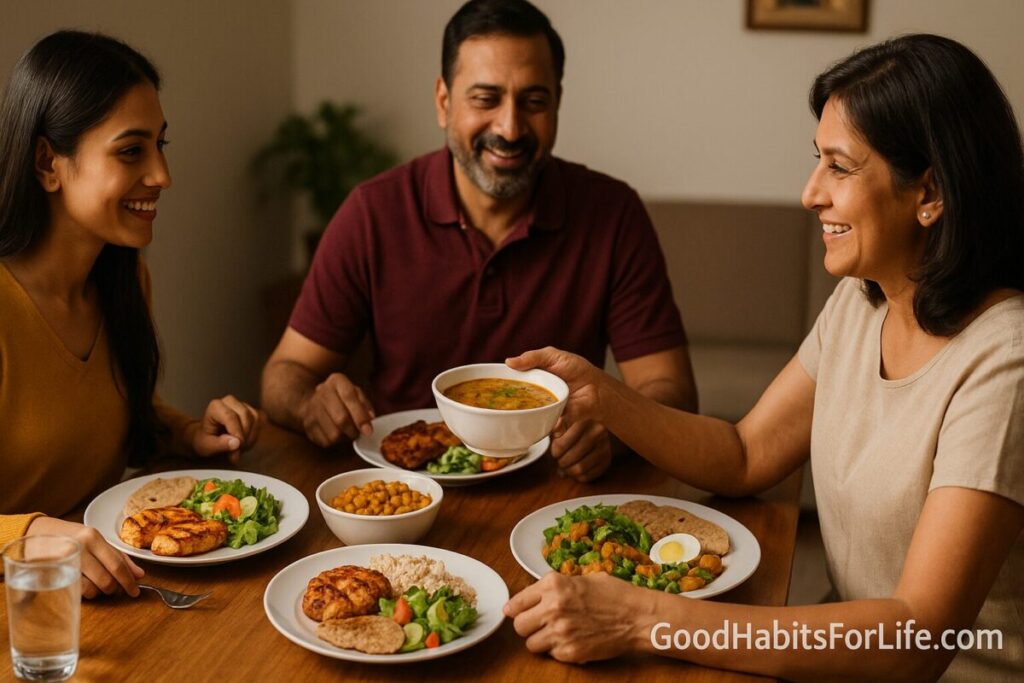
ScreenFree Meals: Simple Rituals that Stick: Protein-Forward Plan (2025)
Screen-Free Meals: Protein-Forward Rituals (2025)
Table of Contents
🧭 What & Why
Screen-free meals are mealtimes without phones, TV, tablets, or laptops—just people, food, and attention. Why it matters:
-
Distraction drives overeating. Meta-analysis shows that eating while distracted increases immediate intake and especially later snacking; paying attention to meals helps regulate appetite. American Journal of Clinical Nutrition
-
Family connection improves. Pediatric guidance encourages screen-free zones (like the dinner table) to strengthen face-to-face bonding and healthier patterns. HealthyChildren.org
-
Mindful eating improves satisfaction. Evidence links mindful eating with better psychological wellbeing and more enjoyable, balanced food choices. The Nutrition Source
-
Protein helps meals “hold you.” Evenly distributing protein across meals (rather than loading only at dinner) increases 24-hour muscle protein synthesis. PMC
-
Clear, simple targets work. The Plate Method (½ veg, ¼ protein, ¼ carbs) makes balanced, protein-forward meals easier—no counting. CDC
In short: combine attention (screen-free, mindful) with composition (protein-forward, balanced plate) to get meals that satisfy and stick.
✅ Quick Start (Do This Today)
-
Declare the table screen-free. Put phones in a shared “charging basket” before sitting down. Turn on Focus/Do Not Disturb. (5 seconds) HealthyChildren.org
-
Plate it simply. Use a 22–23 cm (≈9-inch) plate: ½ colorful veg, ¼ protein (≈25–35 g), ¼ smart carbs. (2 minutes) CDC
-
Protein-forward options (mix & match):
-
Animal: eggs, fish, chicken, yogurt, paneer, cottage cheese.
-
Plant: tofu/tempeh, lentils, chickpeas, beans, edamame, soy milk, nuts/seeds. MyPlate
-
-
Mindful first bite. Pause, breathe, notice aroma/texture; chew fully. Aim for a 20-minute meal. (No scrolling!) Harvard Health
-
Finish with a 30-second check-in. “How full am I (1–10)? What tasted best? What tweak next time?”
🛠️ 30-60-90 Habit Roadmap
Days 1–30: Rules → Routine
-
Anchor rule: “Screens off when food is on the table.” Put a card on the table as a prompt. HealthyChildren.org
-
Protein target per meal: 25–35 g (≈ palm-sized animal protein or 1–1½ cups legumes/tofu). Distribute across meals. PMC
-
Meal templates (rotate):
-
Bowl: quinoa or millets + grilled tofu/chicken + mixed veg + yogurt sauce.
-
Skillet: egg/veg scramble + whole-grain toast + fruit.
-
Dal-Rice-Veg: lentil dal + brown rice + big veg side + raita.
-
-
Mindful cues: timer to 20 minutes; fork-down between bites; sip water.
Days 31–60: Routine → Ritual
-
Upgrade the plate: add a second veg or fermented side (e.g., salad + sautéed greens).
-
Add a connection ritual: rose-bud-thorn (one good, one challenge, one hope).
-
Batch prep proteins twice a week: roast chicken or tofu; cook beans/lentils; boil eggs; portion Greek yogurt.
Days 61–90: Ritual → Autopilot
-
Default menu: 7 dinner “standbys” everyone can cook.
-
Protein distribution audit: aim for protein at breakfast and lunch, not just dinner. PMC
-
Resilience plan: if schedules get chaotic, switch to “assemble-only” meals (pre-washed salad + smoked fish or tofu + whole-grain bread).
🧠 Techniques & Frameworks
1) The 20-Minute Meal
Why: slowing down improves interoceptive awareness and fullness cues. Set a 20-minute timer; notice 3 flavors, 3 textures, 3 aromas during the meal. Harvard Health
2) The Plate Method (visual balance)
Half non-starchy veg; quarter lean protein; quarter quality carbs (whole grains, starchy veg, or fruit). No weighing or tracking. CDC
3) Protein-Forward Distribution
Target ~25–35 g protein at each main meal. Even distribution across the day supports muscle maintenance and satiety more than a big single protein load at dinner. PMC
4) PAUSE Method (for screen urges at table)
Place phone in another room → Activate Focus → Use a table prompt (“Talk > Tech”) → Sip & slow the first 5 bites → Exhale, then eat.
5) Attentive Eating
Reduce external distraction; attend to the food itself. Evidence shows mindful/attentive eating reduces subsequent snacking. American Journal of Clinical Nutrition
👥 Audience Variations
-
Families with kids: Decide together on screen-free dinners and rotate “table jobs” (water, salad, clearing). Pediatric guidance explicitly recommends screen-free zones like the dinner table. HealthyChildren.org
-
Students & busy professionals: Pre-portion protein (boiled eggs, roasted chickpeas, tofu cubes) for quick bowls; eat at a table, not a laptop, even if solo.
-
Older adults (65+): Discuss protein needs with your clinician; expert groups often suggest 1.0–1.2 g/kg/day along with resistance exercise to protect muscle. Distribute protein across meals (e.g., yogurt + nuts at breakfast, lentil soup at lunch). PubMed
-
Vegetarian/vegan: Combine legumes, soy, and grains across the day; consider calcium-set tofu/tempeh and fortified soy milk for quality protein. MyPlate
⚠️ Mistakes & Myths to Avoid
-
“I’ll just eat less at dinner to compensate for snacking while streaming.” Distracted intake raises later intake, not just at that meal. Eliminate the distraction instead. American Journal of Clinical Nutrition
-
“Protein only matters for athletes.” Adequate, evenly spread protein supports satiety and muscle health for everyone, especially aging adults. PMCPubMed
-
“Screens help kids eat more.” It may “work,” but it blunts self-regulation and connection; prefer small portions, repeated exposure, and table games. HealthyChildren.org
-
Over-engineering meals. Use the Plate Method, not perfectionism; keep prep ≤20 minutes on weeknights. CDC
🗣️ Real-Life Examples & Scripts
-
Family rule script: “When food is on the table, phones go on charge. We’ll check them after dishes.”
-
Roommate script: “Let’s eat at the table—10 minutes, no screens, then we can finish the episode.”
-
Restaurant script: “Can we put our phones in the middle and leave them until the bill?”
-
Self-talk at lunch: “Fork down. Breath in. What flavors do I notice right now?”
🧰 Tools, Apps & Resources
-
Phone Focus/Do Not Disturb (built-in): schedule to auto-activate at meal times; add VIP exceptions for caregiving.
-
App blockers (e.g., Opal, Freedom, Forest): temporarily block social apps during meals; gamify staying off-screen.
-
Kitchen timers (analog or phone): set 20 minutes to slow down the pace. Harvard Health
-
Meal frameworks: keep a one-page list of 7 dinner “standbys” using the Plate Method. CDC
-
Protein prep list: boil eggs; roast tofu/chicken; cook a pot of lentils/beans; portion Greek yogurt or soy yogurt.
📚 Key Takeaways
-
Declare screen-free meals—a tiny rule with big payoff for appetite control and connection. American Journal of Clinical NutritionHealthyChildren.org
-
Protein-forward and evenly distributed (~25–35 g per main meal) beats a single protein-heavy dinner. PMC
-
Use a visual plate (½ veg, ¼ protein, ¼ carbs) to simplify decisions. CDC
-
Slow down with a 20-minute meal and mindful first bites. Harvard Health
-
Make it stick with a 30-60-90 plan, batch-prepped proteins, and simple scripts.
❓ FAQs
1) How much protein do I actually need per day?
Most adults meet the baseline RDA (~0.8 g/kg/day). Many do well aiming a bit higher depending on goals and health status; distribute protein across meals. Speak to your clinician if you have kidney disease or other conditions. Harvard Health
2) What’s a quick screen-free dinner under 20 minutes?
Veg-heavy omelet + whole-grain toast + salad; or tofu-veg stir-fry with pre-cooked rice; or dal with steamed veg and yogurt.
3) Does TV at dinner really matter if I eat light?
Yes. Distraction increases immediate intake and especially later snacking; attentive meals help. American Journal of Clinical Nutrition
4) Is the Plate Method only for diabetes?
No. It’s a general, visual way to balance meals for anyone—handy when you’re busy. CDC
5) I’m vegetarian. How do I hit 25–35 g per meal?
Examples: 200 g tofu + veg; 1½ cups cooked lentils + veg + yogurt/soy yogurt; chickpea-paneer/tempeh bowls; add nuts/seeds for boosts. MyPlate
6) What about older adults?
Older adults often benefit from 1.0–1.2 g/kg/day protein plus resistance exercise; spread protein over meals. Confirm with your clinician. PubMed
7) Do I need to track macros?
Not required. Use the Plate Method and a simple protein target per meal; tracking is optional. CDC
8) How do I keep kids on board with screen-free dinners?
Set the rule together, keep meals short (15–20 minutes), give table jobs, and use conversation games. Pediatric groups recommend screen-free mealtimes. HealthyChildren.org
📚 References
-
American Academy of Pediatrics. How to Make a Family Media Use Plan (2024). HealthyChildren.org
-
HealthyChildren.org (AAP). Food and Media: Not a Healthy Mix (2024). HealthyChildren.org
-
Robinson E, et al. Eating attentively: a systematic review and meta-analysis… Am J Clin Nutr (2013). American Journal of Clinical Nutrition
-
Mamerow MM, et al. Dietary protein distribution positively influences 24-h muscle protein synthesis… J Nutr (2014). PMC
-
International Society of Sports Nutrition. Position Stand: Protein and Exercise (2017). BioMed CentralPubMed
-
Harvard T.H. Chan, The Nutrition Source. Protein—The Nutrition Source (updated). The Nutrition Source
-
CDC. Diabetes Meal Planning — The Plate Method (2024). CDC
-
Hammons AJ & Fiese BH. Is frequency of shared family meals related to nutritional health… Pediatrics (2011). PMC
-
Harvard T.H. Chan, The Nutrition Source. Mindful Eating (2019+). The Nutrition Source
-
PROT-AGE Study Group. Optimal Dietary Protein Intake in Older People (2013). PubMed
⚖️ Disclaimer
This article is for general education only and is not medical or nutrition advice; consult a qualified professional for personalized guidance, especially if you have kidney disease, diabetes, or other conditions.