
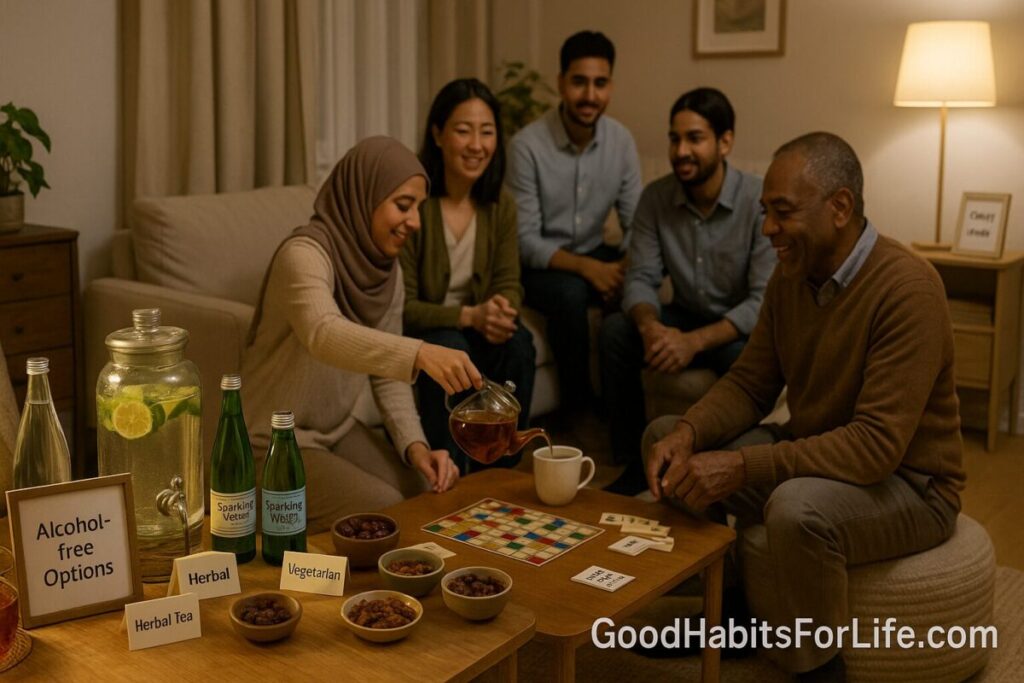
Religious & Cultural Norms: Host with Care: Dopamine Detox (2025)
Religious & Cultural Norms: Host with Care (Dopamine Detox)
Table of Contents
🧭 What & Why
Goal: Host gatherings that respect religious and cultural norms around drinking while offering a low-stimulus “dopamine detox” vibe—quiet corners, tech-light time, and connection-first activities.
Why it matters
-
Alcohol contributes substantially to global disease and injury; inclusive hosting reduces harm and widens belonging. World Health Organization+1
-
In the U.S. and elsewhere, religiously engaged people are less likely to drink; thoughtful hosts avoid making alcohol the center. Pew Research Center
-
If alcohol is present, knowing standard drink sizes and guidelines supports safer service and clear labeling. CDCRethinking Drinking
-
“Dopamine detox” isn’t a medical detox or literal dopamine reset. It’s better framed as periods of reduced stimulation to help focus on relationships and mindful fun. Harvard HealthWiley Online Library
Evidence pulse
-
WHO and partners promote “SAFER” measures to reduce alcohol-related harm; many elements translate directly to private events (e.g., availability of non-alcoholic options, marketing focus on connection, and informed choice). World Health Organization+1
✅ Quick Start: Do This Today
-
Pick an inclusive theme: “Game Night & Zero-Proof Bar” or “Tea-and-Talk” (avoid alcohol-centric titles).
-
Send a culturally humble invite: Ask about dietary needs, fasting, and abstention preferences—no pressure to explain. (Use checkbox options.)
-
Plan beverages: Build a zero-proof lineup first; if you include alcohol, label ABV + standard-drink equivalents and cap pour sizes. CDC
-
Design low-stimulus zones: Quiet corner, soft lighting, phone-free table, short conversation prompts.
-
Schedule connection activities: 15-minute rotation: card game, short walk, gratitude circle, collaborative puzzle.
-
Brief your co-hosts: No “just one” pressure; offer water/tea first; model non-drinking.
-
Post-event feedback: 3-question form: “Felt welcome?”, “Beverages worked?”, “Anything we missed (religious/cultural)?”
🛠️ 30-60-90 Hosting Roadmap
Day 0–30: Foundations
-
Map your guest community: Note common fasting periods and holidays (e.g., Ramadan, Navratri, Lent); schedule around them when possible.
-
Standardize your beverage policy:
-
Zero-proof first, then optional alcohol with clearly posted standard drink sizes. CDC
-
Water stations at multiple points; tea/coffee without caffeine options.
-
-
Create reusable assets: Inclusive invite template; RSVP intake with checkboxes for abstention, fasting, halal/kosher/vegetarian needs, caffeine sensitivity.
-
Pilot one dopamine-light event: 90 minutes, low music, conversation cards, device-parking bowl.
Day 31–60: Iterate & Scale
-
Two formats:
-
Fully alcohol-free social (mocktails, tea ceremony, board games).
-
Mixed event with guardrails: 2-hour max service window, measured pours, standard-drink signage, last 30 minutes alcohol-free wind-down. CDC
-
-
Train hosts in cultural humility: Reflect on assumptions; practice neutral language; add a “consent to pass” norm for toasts/games. Medical School
-
Collect feedback from diverse guests (especially abstainers) and adjust menus/activities.
Day 61–90: Make It a Habit
-
Calendar a monthly zero-proof night with rotating cultural beverages (e.g., jaljeera, lassi, lebnavy/ayran, hibiscus tea).
-
Publish your Host Code: Non-pressure policy, inclusive scheduling, visible labels, quiet spaces.
-
Measure success: 1–5 scale on welcome, clarity, and connection; look for ≥4.3 average and >40% repeat attendance.
🧠 Techniques & Frameworks
Cultural Humility (your superpower)
-
Definition: A lifelong practice of self-reflection, learning from others, and balancing power to honor diverse beliefs and customs. Apply it before, during, and after events. Medical School
-
In practice:
-
Before: Ask, don’t assume—use RSVP checkboxes; avoid “explain your religion” fields.
-
During: Provide alternatives (non-alcoholic toasts), label food/drink clearly, allow opt-outs.
-
After: Invite private feedback; rotate co-hosts from varied backgrounds.
-
Low-Stimulus (“Dopamine Detox”) Design
-
Aim for mindful connection, not neurochemical resets. Keep lighting soft, music low, device-light activities, and short social sprints. Harvard HealthWiley Online Library
Safer Service When Alcohol Is Present
-
Standard-drink literacy placards (beer 350 ml ~5% ABV; wine 150 ml ~12%; spirits 45 ml ~40%). CDC
-
Promote non-alcoholic options as default; universities’ inclusive-event guidance recommends ample zero-proof choices and some alcohol-free events. NYU Law
-
Share health context lightly: alcohol raises risk for injuries and noncommunicable diseases; young adults carry notable burden. CDCWorld Health Organization
-
If you include alcohol: cap servings, cut off service before closing, and always have water/food.
🧩 Audience Variations
-
Students: Earlier hours; game-forward formats; always publish zero-proof menus; campus guidance often urges alcohol-free options to keep events welcoming. University Health Services
-
Parents (with kids): Shorter windows (60–90 min), craft tables, storytelling; sparkling waters and warm milk drinks.
-
Professionals: Lunch-and-learn or tea-tasting instead of post-work drinks; zero-proof aperitifs.
-
Seniors: Quiet seating, warm beverages, clear signage, lower lighting glare.
-
Teens: Strictly alcohol-free; device-light challenges, creative stations.
⚠️ Mistakes & Myths to Avoid
-
Myth: “Everyone expects alcohol at a party.”
Reality: Many abstain for faith, health, recovery, pregnancy, or preference; inclusive hosting normalizes their choice. Pew Research Center -
Myth: “Dopamine detox” literally resets brain chemicals.
Reality: It’s a catchy term; using low-stimulus time for mindful connection is sensible, but it’s not a medical detox. Harvard HealthWiley Online Library -
Mistake: Scheduling during holy days/fasts without alternatives.
Fix: Offer alternate dates or a no-food/no-drink format with activities. -
Mistake: “Just one won’t hurt.”
Fix: No-pressure script; model offering water/tea first. -
Mistake: Unlabeled drinks and oversized pours.
Fix: Post ABV and standard-drink equivalents. CDC
🗣️ Real-Life Scripts (Copy-Paste)
Invite (WhatsApp/Email)
“We’re hosting a connection-first evening with games and conversation. A full zero-proof bar will be available; if you abstain for religious/cultural or personal reasons, you’re fully at home here. Share any dietary/fasting needs in the RSVP—no details needed.”
RSVP Checkbox Text
“I prefer alcohol-free options ☐ | I’m currently fasting ☐ | Please avoid pork/gelatin ☐ | Vegetarian ☐ | Vegan ☐ | Caffeine-free ☐ | Other needs: _______”
On Arrival
“Welcome! Water and tea are up front; zero-proof specials on the left. If you’d like wine/beer, measured pours are at the back. Quiet corner is to the right.”
When Someone Declines a Drink
“Totally fine. Can I get you sparkling water or our mango-mint cooler?”
Toast Alternative
“Feel free to raise any glass—or simply place your hand on your heart to join the moment.”
🧰 Tools & Resources
-
Menu & signage: Canva templates for “standard drink” placards; print small tent cards. (Use CDC’s sizes as your data source.) CDC
-
RSVP forms: Google Forms / Typeform with inclusion checkboxes.
-
Zero-proof ideas: Herbal teas, shrubs, salted lassi, jaljeera, ginger-lime soda, warm spiced milk.
-
Policy inspiration: University inclusive-event guidelines (ample non-alcoholic options; some alcohol-free events). NYU Law
-
Learning: Short primer on cultural humility for event teams. Medical School
📌 Key Takeaways
-
Lead with belonging: zero-proof first, clear labels, and pressure-free norms.
-
Use cultural humility at every stage—ask, don’t assume. Medical School
-
Treat “dopamine detox” as low-stimulus social design, not medical detox. Harvard HealthWiley Online Library
-
If alcohol appears, apply standard-drink literacy and safer-service guardrails. CDC
-
Iterate with feedback; publish a simple Host Code guests can trust.
❓ FAQs
1) What does “dopamine detox” mean here?
A themed, low-stimulus event (quiet zones, tech-light time, connection activities). It doesn’t reset brain chemicals or replace medical care. Harvard HealthWiley Online Library
2) Is it better to avoid alcohol entirely?
Many hosts choose alcohol-free formats to maximize inclusion and safety; if you include alcohol, provide zero-proof choices, clear labels, and measured pours. WHO and CDC highlight the health risks of alcohol; informed choice is key. World Health OrganizationCDC
3) How do I respect different religious norms without stereotyping?
Use opt-in checkboxes for needs, avoid assumptions, and schedule around major fasting periods when possible. Cultural humility—lifelong learning and reflection—beats one-size-fits-all. Medical School
4) What if guests ask for “real drinks”?
Offer them, if that fits your policy, with measured pours and standard-drink signage; keep the event’s social core alcohol-neutral. CDC
5) Do zero-proof drinks need to be fancy?
No. Water, fruit-infused water, teas, salted lassi, and a simple ginger-lime spritz are great defaults.
6) Should I post health warnings?
Keep it light: a small sign noting standard drinks and a “please drink mindfully” line is enough for private gatherings; link to credible resources in follow-up. CDC
7) What’s the minimum I must do to be inclusive?
Zero-proof first, clear labels, no pressure, quiet corner, and a feedback link.
8) Are low-stimulus events boring?
Not when they’re designed with activities, conversation prompts, and cozy spaces. The point is connection, not consumption.
9) How do I handle toasts for those who can’t drink alcohol?
Offer sparkling water or tea; invite a hand-over-heart gesture as an equal alternative.
10) Where can I learn more about safer alcohol environments?
WHO’s SAFER initiative and CDC/NIAAA resources provide solid, non-commercial guidance. World Health OrganizationCDCNIAAA
📚 References
-
World Health Organization. Alcohol – Key Facts. (2024). World Health Organization
-
WHO. Alcohol: Health Topics & Impact. (accessed 2025). World Health Organization
-
CDC. Alcohol Use and Your Health. (2025). CDC
-
CDC. Standard Alcohol Drink Sizes. (2024). CDC
-
NIAAA. Alcohol Facts and Statistics. (accessed 2025). NIAAA
-
NIAAA. What’s a Standard Drink? (accessed 2025). Rethinking Drinking
-
Pew Research Center. Americans’ Drinking Habits Vary by Faith. (2019). Pew Research Center
-
NYU Law. Planning & Hosting Inclusive Events. (accessed 2025). NYU Law
-
Tervalon, M., & Murray-García, J. Cultural Humility vs Cultural Competence. J Health Care for the Poor and Underserved (1998). Medical School
-
Harvard Health. Dopamine fasting: Misunderstanding science spawns a maladaptive fad. (2020). Harvard Health
-
Fei, Y.Y. Maladaptive or misunderstood? Dopamine fasting as a pop-psych trend. Lifestyle Med (2022). Wiley Online Library
-
Desai, D. Holistic Well-Being & Dopamine: A Literature Review. (2024). PMC
Disclaimer: This article offers general information for hosting and wellbeing and is not medical or mental-health advice. If you have concerns about alcohol use or mental health, consult a qualified professional.