
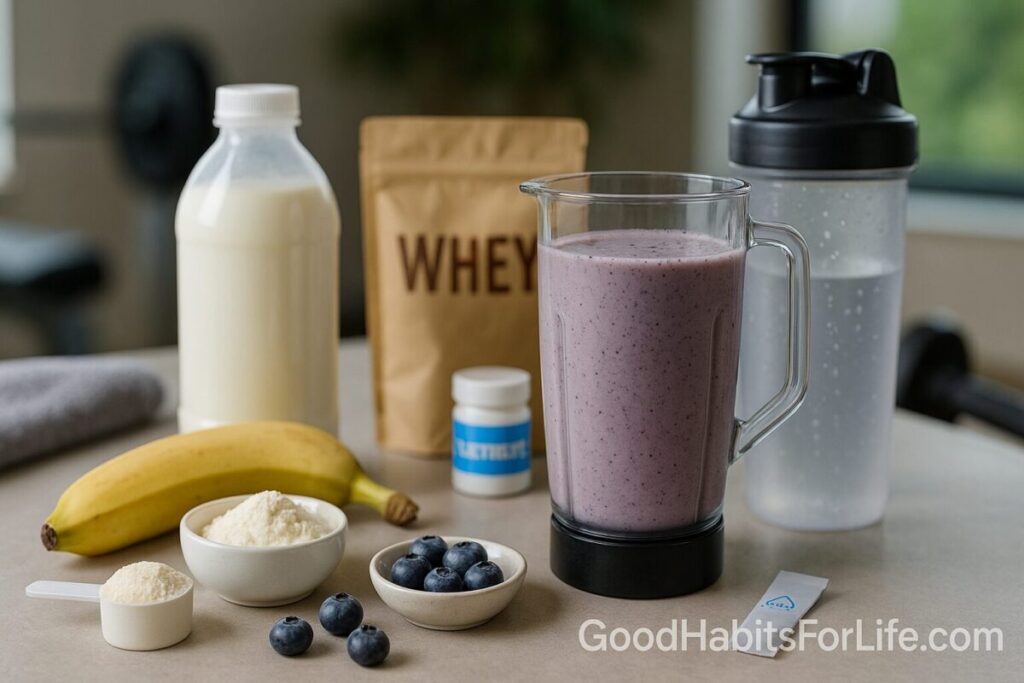
Recovery Smoothies: ProteinForward, Not SugarHeavy: Protein-Forward Plan (2025)
Recovery Smoothies: Protein-Forward, Not Sugar-Heavy (2025)
Table of Contents
🧭 What & Why
What: A recovery smoothie that prioritizes protein quality and dose with controlled carbohydrates, minimal added sugar, and electrolytes.
Why: After training, muscles are primed for repair. Evidence shows ~0.3 g/kg protein (≈20–40 g for most adults) stimulates muscle protein synthesis, especially when it includes ~2–3 g leucine (found in whey, dairy, and soy). Active people generally benefit from 1.4–2.2 g/kg/day protein distributed across meals. Carbs support glycogen, but when your next session is >24 h away, you don’t need a sugar bomb—modest carbs plus adequate protein works well for recovery while keeping total sugars in check. Hydration with sodium improves fluid retention post-exercise.
When to add more carbs: If you trained long/hard (e.g., endurance >90 min) and have another session within <24 h, consider higher carbs (≈1.0–1.2 g/kg/h for the first 3–4 h). Otherwise, keep carbs moderate and focus on protein quality.
✅ Quick Start: Make a Protein-Forward Smoothie Today
-
Choose a protein:
-
Whey isolate/concentrate (25–30 g) or Greek skyr yogurt (200 g) or soy/pea blend (30–35 g).
-
-
Liquid (200–300 ml): Milk (dairy or soy), or water if using a creamy yogurt base.
-
Carb quality (one): 100 g frozen berries or ½ banana (60–70 g) or 40–60 g oats.
-
Micros & fiber: A handful of spinach/kale or 1 tbsp ground flax/chia.
-
Electrolytes: Pinch of salt or ¼–½ scoop electrolyte mix.
-
Blend 30–45 s. Target 20–40 g protein, ≤25–35 g net carbs, ≥5 g fiber, minimal added sugar (0–5 g).
Time-boxed version (under 2 min):
-
1 scoop whey, 200 ml milk, 100 g frozen berries, pinch salt. Blend. Done.
🛠️ The Protein-Forward Builder (mix-and-match matrix)
| Slot | Options (choose 1–2) | Why it helps |
|---|---|---|
| Protein (20–40 g) | Whey/Casein (25–30 g), Greek skyr (200 g), Soy isolate/pea-soy blend (30–35 g), Cottage cheese (200 g) | High leucine; complete amino acids |
| Liquid (200–300 ml) | Milk (dairy/soy), Kefir, Water + ice | Texture + extra protein (milk/soy) |
| Smart carbs | Berries 100 g; ½ banana (60–70 g); Oats 40–60 g; Cooked/cooled rice 60 g | Glycogen support without syrup spikes |
| Fiber | Flax/chia 1 tbsp; Oat bran 1–2 tbsp; Psyllium ½ tbsp | Satiety, GI support, slows glucose rise |
| Micros | Spinach/kale handful; Cocoa 1 tbsp; Cinnamon ¼ tsp; Ginger ½ tsp | Polyphenols; flavor without sugar |
| Fats (optional) | Peanut powder 2 tbsp; Almond butter 1 tsp; Avocado 40 g | Mouthfeel; add only if calories allow |
| Electrolytes | Pinch salt; Electrolyte mix ¼–½ scoop; Low-sugar sports tab | Improves rehydration |
3 ready-to-use recipes (≈ macros per serving):
-
Berry Whey Reset — Whey 28 g, milk 200 ml, berries 100 g, flax 1 tbsp, pinch salt.
≈ 32 g protein / 26 g carbs / 7 g fiber / ~260 kcal. -
Green Soy Builder — Soy isolate 30 g, soy milk 200 ml, spinach handful, banana 60 g, chia 1 tbsp, pinch salt.
≈ 36 g protein / 30 g carbs / 8 g fiber / ~300 kcal. -
Cocoa PB Light — Greek skyr 200 g, water-ice, cocoa 1 tbsp, peanut powder 2 tbsp, oats 40 g, pinch salt.
≈ 34 g protein / 33 g carbs / 6 g fiber / ~320 kcal.
(Macros are estimates; adjust to your targets.)
🗓️ 7-Day Starter Habit Plan
Goal: Make one protein-forward smoothie within 60 min post-workout (or as a protein-rich snack on rest days).
-
Day 1–2: Use the Quick Start recipe. Track protein grams.
-
Day 3: Swap to a plant-based protein (soy/pea blend).
-
Day 4: Add electrolytes post-sweat (pinch of salt or a measured mix).
-
Day 5: Increase fiber (chia/flax) and note fullness/energy.
-
Day 6: Try the Cocoa PB Light for variety; keep added sugar at 0 g.
-
Day 7 (Review): Check averages: ≥25 g protein, ≤35 g net carbs, ≥5 g fiber per smoothie; hydration back to pale-straw urine color.
Checkpoint habit: Pre-stage the ingredients the night before. Put the blender on the counter as your visual cue.
🧠 Techniques & Frameworks
-
0.3 g/kg Protein Rule: Simple dose target for most post-exercise meals.
-
Leucine Trigger: Include whey/dairy/soy to approach 2–3 g leucine/serving.
-
Carb-Timing Dial:
-
Low-moderate (0.3–0.6 g/kg): General recovery or next session >24 h.
-
High (1.0–1.2 g/kg/h × 3–4 h): Heavy endurance or <24 h to next key session.
-
-
Hydration with Sodium: Replace sweat by drinking ~125–150% of body mass lost over the next few hours and include sodium to improve retention.
-
Sugar Guardrails: Keep added sugars minimal; prefer whole fruit, oats, dairy/soy milk.
-
Distribute Protein: Aim for 3–5 protein hits/day (≥0.3 g/kg/meal).
🧑🎓 Audience Variations
-
Students/Professionals: Pre-portion dry ingredients (protein, oats, seeds) in jars; blend with milk on return from the gym.
-
Parents & Teens: Use dairy or lactose-free milk/yogurt; keep caffeine out; mind total daily sugar.
-
Seniors: Favor casein or Greek skyr for slower digestion; add a little extra liquid if texture is thick; check meds for interactions.
-
Endurance Athletes in heavy blocks: Increase carb slot and consider banana + oats combo; still keep syrups/juice minimal.
-
Weight-management focus: Use water + skyr or whey isolate, berries, psyllium; skip nut butters.
⚠️ Mistakes & Myths to Avoid
-
“Fruit-only” smoothies = perfect recovery. Great micronutrients, but often too little protein.
-
Juice or syrup = same as whole fruit. Lacks fiber; spikes sugar.
-
All plant proteins are equal. Look for soy or pea-soy blends for a complete amino profile.
-
No salt needed post-workout. A pinch of sodium helps rehydration, especially after sweaty sessions.
-
Bigger is better. Oversized smoothies add unnecessary calories; targeted macros win.
💬 Real-Life Examples & Scripts
-
At a smoothie bar: “Can you make it with Greek yogurt and add a scoop of whey? No syrups or fruit juice, please. Use berries and a pinch of salt.”
-
Grocery swap: Replace flavored yogurt with plain skyr + your own berries.
-
Travel shaker: Keep whey/soy single-serves and electrolyte tabs in your gym bag; buy milk/soy milk on the go.
🧰 Tools, Apps & Resources
-
Kitchen: 600–800 ml blender; digital scale; single-serve containers.
-
Apps: Cronometer, MyFitnessPal (log protein & added sugar), any habit tracker (set “post-workout smoothie” reminder).
-
Electrolytes: Choose low-sugar mixes with measured sodium; avoid proprietary “mystery blends.”
📌 Key Takeaways
-
Target 20–40 g protein with ~2–3 g leucine per smoothie.
-
Use whole-food carbs; scale up only when recovery time is short.
-
Keep added sugar low; skip syrups/juice bases.
-
Rehydrate with fluids + sodium.
-
Lock the habit with the 7-Day Plan and a pre-staged setup.
❓ FAQs
1) Is whey better than plant protein?
Whey is fast-digesting and leucine-rich. Soy and pea-soy blends can match results when dosed to ≥30–35 g protein to hit leucine needs.
2) How soon after training should I drink it?
Within 0–2 h is convenient, but total daily protein and spread across meals matter most.
3) I train in the evening—too many carbs before bed?
Use berries + flax/chia and keep carbs light-moderate; prioritize 25–35 g protein.
4) Can I skip carbs entirely?
If your next session is >24 h away and the workout wasn’t glycogen-draining, yes—but include fiber and micros.
5) I’m lactose-intolerant—what now?
Use lactose-free milk, lactase-treated skyr, or soy/pea protein.
6) What about creatine or cocoa?
Creatine (3–5 g/day) is well-supported; unsweetened cocoa adds polyphenols and flavor without sugar.
7) How much salt should I add?
A pinch (≈0.3–0.5 g sodium chloride) or a measured electrolyte mix works; adjust for sweat rate and climate.
8) Will a smoothie replace a meal?
It can. Add oats + seeds + fruit for a fuller macro profile and ≥400 kcal when you need a meal-sized option.
9) Can kids/teens use these?
Yes—stick to whole foods, dairy/soy protein, and low added sugar; avoid supplements unless advised by a clinician.
10) Are “low-fat” or “no-fat” bases OK?
Yes. If you want more calories for recovery, add a small fat (peanut powder, avocado) intentionally.
📚 References
-
International Society of Sports Nutrition Position Stand: Protein and Exercise (2017). Journal of the ISSN. https://jissn.biomedcentral.com/articles/10.1186/s12970-017-0177-8
-
American College of Sports Medicine, Academy of Nutrition & Dietetics, Dietitians of Canada. Nutrition and Athletic Performance (2016). Med Sci Sports Exerc. https://journals.lww.com/acsm-msse/Fulltext/2016/03000/Position_Stand__Nutrition_and_Athletic_Performance.27.aspx
-
World Health Organization. Guideline: Sugars intake for adults and children (2015). https://www.who.int/publications/i/item/9789241549028
-
Harvard T.H. Chan School of Public Health—The Nutrition Source. Protein. https://www.hsph.harvard.edu/nutritionsource/what-should-you-eat/protein/
-
Harvard T.H. Chan School of Public Health—The Nutrition Source. Sugary Drinks. https://www.hsph.harvard.edu/nutritionsource/healthy-drinks/sugary-drinks/
-
NIH Office of Dietary Supplements. Protein Fact Sheet (Health Professionals). https://ods.od.nih.gov/factsheets/Protein-HealthProfessional/
-
National Athletic Trainers’ Association. Position Statement: Fluid Replacement for the Physically Active (2017). https://natajournals.org/doi/10.4085/1062-6050-52.7.01
-
American College of Sports Medicine. Exercise and Fluid Replacement (2007). Med Sci Sports Exerc. https://journals.lww.com/acsm-msse/Fulltext/2007/02000/Exercise_and_Fluid_Replacement.22.aspx
-
International Olympic Committee. Dietary supplements and the high-performance athlete (2018). Br J Sports Med. https://bjsm.bmj.com/content/52/7/439
-
USDA FoodData Central. Nutrient data (e.g., yogurt, milk, oats). https://fdc.nal.usda.gov/
Disclaimer: This guide provides general fitness nutrition information and is not a substitute for personalized medical or dietetic advice.