
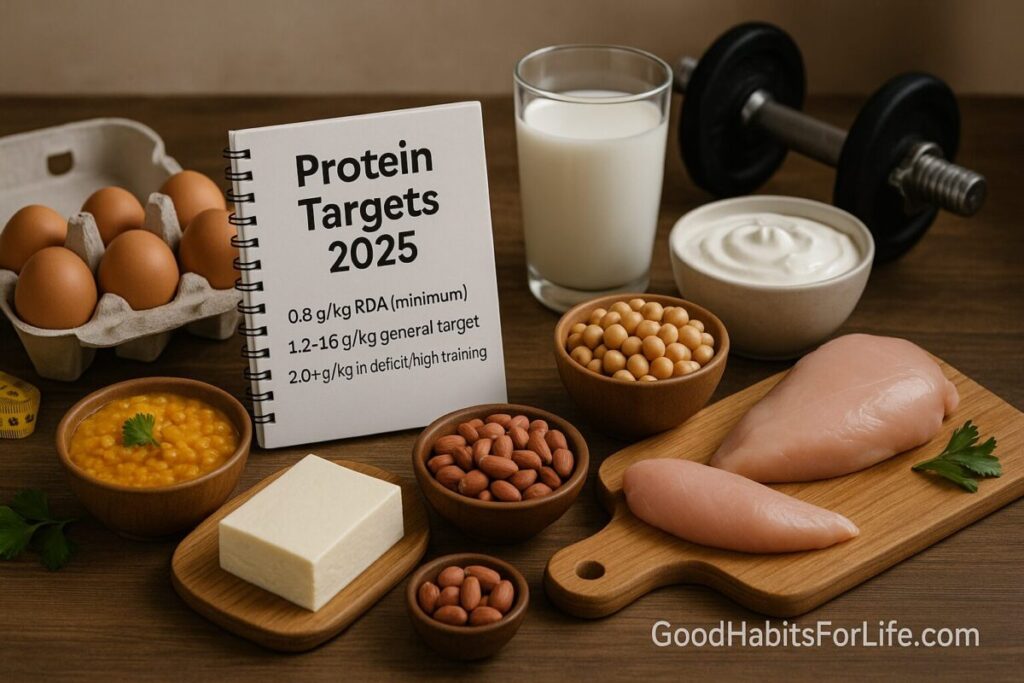
Protein Targets 2025: How Much Is Enough?
Protein Targets 2025: How Much Is Enough?
Table of Contents
🧭 What “Protein Targets” Means
“Protein targets” are practical, evidence-based ranges for daily and per-meal protein that support health goals (weight management, muscle maintenance/gain, healthy aging).
-
The long-standing Recommended Dietary Allowance (RDA) is 0.8 g/kg/day—the minimum to prevent deficiency for most healthy adults, not necessarily the optimal intake for performance, fat loss, or healthy aging. IOM/National Academies
-
Acceptable Macronutrient Distribution Range (AMDR) for protein is 10–35% of energy. IOM/National Academies
-
Many modern position stands and meta-analyses suggest higher intakes than the RDA are useful for active people, those in energy deficit, and older adults. ISSN, Morton et al., 2018
Bottom line: Think in ranges by goal, not a single number.
📊 How Much Protein Do You Need?
Use body mass (kg) × target (g/kg). (To convert lb→kg, divide by 2.2.)
Evidence-aligned daily ranges
-
General health / light activity: 1.0–1.2 g/kg
-
Active / strength training: 1.2–1.7 g/kg (often around 1.6 g/kg is sufficient) Morton et al., 2018
-
Fat loss / appetite control / physique goals: 1.6–2.2 g/kg (higher end helps maintain muscle during deficits) ISSN
-
Older adults (≥60 y): 1.0–1.2 g/kg or higher per meal dosing to overcome “anabolic resistance.” PROT-AGE
-
Pregnancy & lactation: routine target + ~25 g/day in 2nd–3rd trimester and lactation. IOM/National Academies
Example table (choose a column that matches your goal)
| Body mass (kg) | 0.8 g/kg (RDA) | 1.2 g/kg | 1.6 g/kg | 2.0 g/kg |
|---|---|---|---|---|
| 50 | 40 g | 60 g | 80 g | 100 g |
| 60 | 48 g | 72 g | 96 g | 120 g |
| 70 | 56 g | 84 g | 112 g | 140 g |
| 80 | 64 g | 96 g | 128 g | 160 g |
| 90 | 72 g | 108 g | 144 g | 180 g |
| 100 | 80 g | 120 g | 160 g | 200 g |
Tip: Most readers land between 1.2–1.7 g/kg. Push toward ~2.0–2.2 g/kg during aggressive fat-loss phases or high-volume training if digestion and labs are fine (see FAQ on kidneys).
🕒 Per-Meal Targets & Timing
-
Per meal: Aim 20–40 g protein (≈ 0.3–0.4 g/kg/meal for many adults) to maximize muscle protein synthesis (MPS). Schoenfeld & Aragon, 2018
-
Leucine threshold: Each meal should deliver ~2–3 g leucine (e.g., 25–30 g whey, 140–170 g Greek yogurt, 100–150 g firm tofu + fortified soy milk). Phillips & Van Loon, 2011
-
Distribution: Split daily total across 3–5 eating events; a before-bed 20–40 g casein-rich option can aid overnight MPS if training hard. Schoenfeld & Aragon, 2018
-
After training: The window is generous (several hours), but it’s convenient to include one protein-rich meal within 1–3 h post-workout.
✅ Quick Start: Do This Today
-
Pick your target:
-
General/active: 1.2–1.6 g/kg; fat loss/athlete: 1.6–2.2 g/kg.
-
-
Map to meals: Divide by 3–4 to get per-meal grams (e.g., 120 g/day → ~30–40 g/meal).
-
Choose three “anchor” proteins you enjoy for each meal (e.g., eggs, Greek yogurt, chickpeas; chicken, paneer, tofu).
-
Pre-log tomorrow in your tracker (Cronometer/MyFitnessPal/Yazio).
-
Shop/Prep: Buy 2–3 proteins + 2 fiber sources (veg/beans) + 1 healthy fat.
-
Track for 7 days and adjust ±10 g to hit your average.
📅 30-60-90 Day Habit Plan
Days 1–30 (Foundation)
-
Hit ≥80% of daily target 5 days/week.
-
Standardize breakfast and lunch with two go-to options each.
-
Learn two high-protein, 15-minute dinners (e.g., tofu stir-fry; egg bhurji with veggies).
-
Checkpoint (Day 30): Review average intake, weight trend, training logs, and energy.
Days 31–60 (Optimization)
-
Add per-meal leucine check (2–3 g).
-
Introduce before-bed 20–30 g protein on heavy training days.
-
Streamline batch prep: cook 1 grain + 1 bean + 1 protein twice weekly.
-
Checkpoint (Day 60): Are you within ±5 g of target most days? If yes, move to Phase 3.
Days 61–90 (Goal-specific)
-
Muscle gain: hold at 1.6 g/kg; increase calories +150–250 kcal/day.
-
Fat loss: hold 1.8–2.2 g/kg; keep fiber ≥25–35 g/day for fullness.
-
Healthy aging: 1.2 g/kg, emphasize 30–40 g per meal with resistance training 2–3×/week.
-
Checkpoint (Day 90): Compare photos, strength, and waist; adjust by ±0.2 g/kg if needed.
🍽️ Food Sources & Portions
Approximate protein per typical portion:
Animal-based
-
Chicken breast (cooked) 30–33 g / 100 g
-
Eggs 6–7 g / egg
-
Greek yogurt (strained, 170 g/¾ cup) 15–18 g
-
Cottage cheese/paneer (100 g) 14–18 g
-
Milk (250 ml) 8–10 g
-
Fish (100 g cooked) 20–25 g
-
Whey isolate (1 scoop ~30 g powder) 22–27 g
Plant-based
-
Firm tofu (100 g) 12–14 g
-
Tempeh (100 g) 18–20 g
-
Lentils, cooked (1 cup/200 g) 17–19 g
-
Chickpeas, cooked (1 cup/200 g) 14–15 g
-
Edamame (1 cup/150 g) 16–18 g
-
Soy milk, fortified (250 ml) 7–9 g
-
Mixed nuts (30 g) 5–7 g (great for extra calories, not a primary protein)
Plant-forward? Mix complementary proteins (e.g., legumes + grains) and consider soy for higher leucine. For protein quality assessment, see FAO’s DIAAS/PDCAAS guidance. FAO
🛠️ Techniques & Frameworks
-
3-Anchor Method: Pre-decide 3 protein options per meal; rotate.
-
P-F-F Plate: Build plates around Protein + Fiber + Fat for satiety and steady energy.
-
“20-First” Rule: Eat ~20 g protein first at meals; helps fullness and glycemic control.
-
Batch-Cook Backbone: Cook 1 bean, 1 grain, 1 protein twice weekly; assemble bowls fast.
-
Restaurant Rule of 2: Add one extra protein side (paneer, eggs, dal, grilled fish) and one veg side.
👥 Audience Variations
Students: Use shelf-stable options (powdered milk/whey, canned beans/tuna, UHT soy milk). Microwave eggs, tofu stir-fry kits, and Greek yogurt cups are budget wins.
Busy professionals: Default to protein-anchored lunches (grain bowl + tofu/chicken + veg) and ready-to-drink high-protein milk/yogurt when traveling.
Parents: Keep family-style proteins (dal + roti + curd; chicken + rice; tofu curry) and let kids serve themselves; model protein at breakfast.
Seniors: Prioritize 30–40 g protein at the first two meals, plus resistance training; choose softer textures (yogurt, eggs, fish, tofu). PROT-AGE
Vegetarian/Vegan: Center soy foods, lentils, chickpeas, seitan, and fortified milks; consider B12 per clinician guidance.
⚠️ Mistakes & Myths to Avoid
-
“RDA is the goal.” RDA (0.8 g/kg) prevents deficiency; many adults feel and perform better above it.
-
“More is always better.” Above ~1.6–2.2 g/kg, returns diminish for most. Morton et al., 2018
-
Ignoring distribution. One big dinner can’t fully make up for sparse daytime protein.
-
Forgetting fiber & fluids. Higher protein without fiber can cause constipation—keep produce, pulses, and water up.
-
Kidney myths. In healthy people, higher-protein diets show no harm to kidney function; those with kidney disease need personalized targets. NIDDK, Poortmans & Dellalieux, 2000
💬 Real-Life Examples & Scripts
Breakfast (30–40 g):
-
Greek yogurt bowl (200 g) + whey (½ scoop) + oats + berries.
-
3 eggs + 1 slice whole-grain toast + sautéed spinach.
-
Tofu bhurji (150 g tofu) + chapati + tomato-cucumber salad.
Lunch (30–40 g):
-
Dal (1.5 cups) + quinoa (1 cup) + raita.
-
Grilled chicken (150 g) bowl with brown rice, veggies, olive oil.
-
Chickpea-paneer masala (100 g paneer + ½ cup chickpeas) + veg.
Dinner (30–40 g):
-
Fish curry (150 g fish) + rice + veg.
-
Tempeh stir-fry (150 g) + noodles + veg.
-
Rajma (1.5 cups) + tofu (100 g) mixed into the pot + salad.
Restaurant script:
“Can you add an extra side of paneer/chicken/tofu and swap fries for salad or dal?”
Grocery script:
“Each week I’ll buy 2 proteins, 2 veg, 1 bean, 1 yogurt/soy milk—and plan three ‘anchor’ meals.”
🧰 Tools & Apps
-
Cronometer: Very accurate micronutrients; steeper learning curve.
-
MyFitnessPal: Huge database; watch for community-entered errors.
-
Yazio/Lifesum: Clean interface; habit nudges and recipes.
-
Kitchen scale (3–5 kg capacity): Removes guesswork; use 1–2 weeks, then eyeball.
-
Shakers & storage: Make hitting per-meal targets easy on the go.
📌 Key Takeaways
-
Most adults thrive at 1.2–1.7 g/kg/day; go higher for fat loss or intense training.
-
Hit 20–40 g per meal with 2–3 g leucine.
-
Spread intake across 3–5 meals and track your weekly average.
-
Pair protein with fiber and strength training for best results.
-
Adjust by ±0.2 g/kg every 2–4 weeks based on energy, recovery, and labs.
❓ FAQs
How much protein can the body use in one meal?
About 20–40 g stimulates MPS for most; larger people or older adults may need the higher end. Distribute protein across meals. Schoenfeld & Aragon, 2018
Is 2 g/kg “too much”?
For healthy adults, up to ~2.2 g/kg/day is commonly used in research without adverse effects; those with kidney issues should follow medical guidance. ISSN, NIDDK
Do women need less protein than men?
Needs scale mostly with body mass and goals, not sex. Use g/kg to personalize.
Can I hit targets without supplements?
Yes. Mix dairy/soy/eggs/legumes/fish/meat. Powders are convenient, not required.
What about kids and teens?
Children/teens have their own age-based DRIs; focus on balanced meals and adequate energy. Seek pediatric guidance for athletes or restrictive diets. IOM
Best timing around workouts?
Have a protein-rich meal 1–3 hours before or after training—total daily intake matters most.
Are plant proteins “inferior”?
They can be excellent when intake is sufficient and varied; soy performs comparably to animal proteins for MPS. Combine legumes/grains and aim for higher per-meal grams. FAO
📚 References
-
Institute of Medicine (National Academies). Dietary Reference Intakes for Energy, Carbohydrate, Fiber, Fat, Fatty Acids, Cholesterol, Protein, and Amino Acids (2005). Link
-
WHO/FAO/UNU. Protein and Amino Acid Requirements in Human Nutrition (2007). Link
-
Morton RW, et al. Br J Sports Med. 2018;52(6):376–384. Link
-
Jäger R, et al. International Society of Sports Nutrition Position Stand: Protein and Exercise (2017). J Int Soc Sports Nutr. Link
-
Phillips SM, Van Loon LJC. Dietary protein for athletes: from requirements to optimum adaptation. J Appl Physiol. 2011. Link
-
Bauer J, et al. PROT-AGE Study Group. J Am Med Dir Assoc. 2013;14(8):542–559. Link
-
Schoenfeld BJ, Aragon AA. How much protein per meal? J Int Soc Sports Nutr. 2018. Link
-
FAO. Dietary protein quality evaluation in human nutrition (Report 92). 2013. Link
-
NIDDK (NIH). Kidney Disease Information—Protein & Kidneys. Link
-
Poortmans JR, Dellalieux O. High protein intake and renal function in healthy athletes. Int J Sport Nutr Exerc Metab. 2000. Link
-
Leidy HJ, et al. The role of protein in weight loss and maintenance. Am J Clin Nutr. 2015. Link
Disclaimer: This article is educational and not a substitute for personalized medical or nutrition advice; consult your clinician or dietitian if you have health conditions or special dietary needs.