
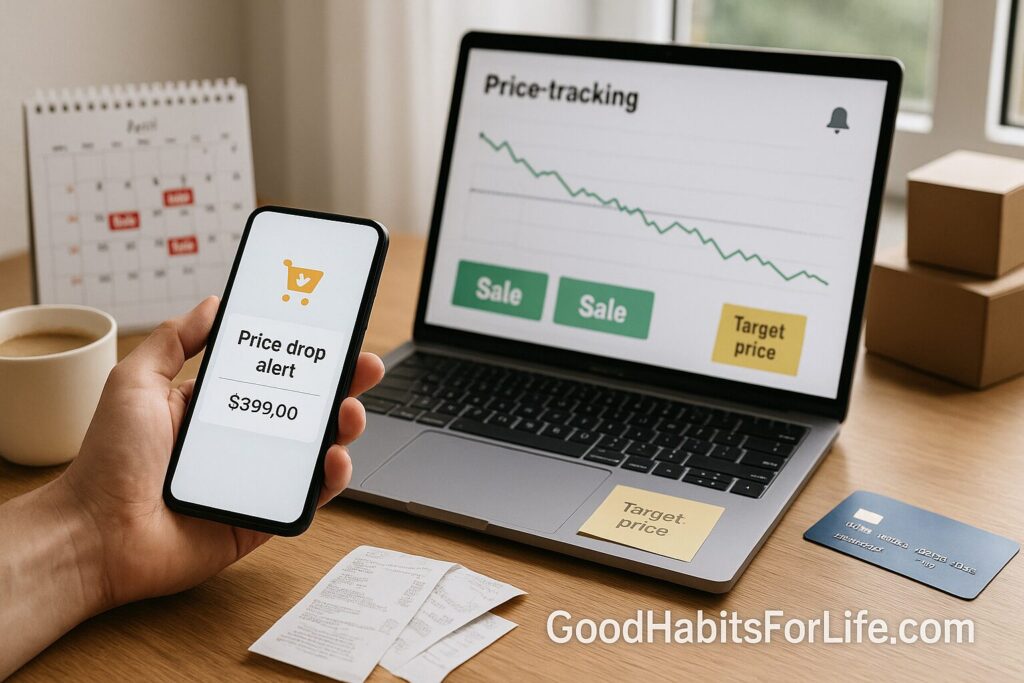
Price-Tracking Playbook 2025: Alerts, Drops & Deal Stacking
Price-Tracking Playbook 2025: Alerts, Drops & Deal Stacking
Table of Contents
🧭 What Price Tracking Is (and Why It Works)
Price tracking means monitoring a product’s real price over time and setting alerts so you buy when the price crosses your target. It works because online prices change constantly (seasonality, inventory, competition, and algorithmic/dynamic pricing). Independent research and policy bodies have also highlighted tactics like drip pricing (fees added late in checkout) and dark patterns (design nudges that push you to buy fast), so a transparent view of the total price and proper timing gives you back control. ScienceDirectOECDGOV.UK
On the safety side, consumer authorities recommend using secure sites and protected payment methods and knowing return/refund policies—especially when deals look “too good.” Building these checks into your buying habit is part of smart price tracking. Consumer Advice+1
✅ Quick Start: Your 10-Minute Setup
-
Turn on shopping insights & history (desktop Chrome).
-
Open the product page → click the Shopping Insights icon in Chrome to see price history and a typical price range. Google Help
-
-
Set up automatic alerts.
-
Use Google/Chrome price tracking or retailer wishlists (many email you on drops). On Amazon, add Keepa (extension) or CamelCamelCamel to graph historical lows and set alerts. Chrome Web Storekeepa.comcamelcamelcamel.com
-
-
Define a “buy price.”
-
Look at the 30–90-day low; set your alert ~5–10% below today’s price or at/below the recent low if you can wait. Use seasonality calendars for big items (TVs, appliances, mattresses). Consumer Reports
-
-
Create a one-page tracker.
-
In a note or sheet, list: Item | Current | 30-day low | 90-day low | Buy price | Alerts set? | Stacking options.
-
-
Stack savings in the right order (when you’re ready to buy):
-
Sale price → Coupon/promo → Store reward/loyalty → Cashback portal → Card offer (if any). Verify final price and fees before you click “Pay.” OECD
-
🛠️ Techniques & Frameworks That Save Real Money
1) The Buy-Price Formula
-
Start with history: Check the price graph (Keepa/CamelCamelCamel). Note the 30- and 90-day lows.
-
Set your buy price: target ≤ recent low (or ≤ low + shipping) unless the item is highly constrained.
-
Timing tip: Avoid hype windows where prices often spike just before “events,” then watch for the true drop. Tech outlets have documented this pattern around major sale days. WIRED
2) Rule of Three Retailers
Track the same SKU at three reputable stores. Many retailers algorithmically react to each other—alerts across stores catch short-lived dips.
3) Seasonality & Product Cycles
Appliances, TVs, outdoor gear, and mattresses have best months. Check a reputable, regularly updated calendar (e.g., Consumer Reports’ guides) and align alerts to those windows. Consumer Reports
4) Deal Stacking, Safely
-
Use one coupon-tester extension (e.g., Honey-style tools) plus a cashback portal; avoid running multiple code plugins simultaneously (they can overwrite each other’s cookies). Use private windows only if you suspect aggressive personalization.
-
Always re-price the final total—watch for shipping, handling, or service fees added at checkout (drip pricing). OECDGOV.UK
5) Travel Case Study (high volatility)
-
Flights: Turn on Google Flights tracking for routes and specific flights; Google will email alerts and show if prices are likely to rise. Google Help
-
Some apps offer price guarantees or price freezes (hold today’s fare for a period). Read the fine print—these can carry fees/limits and apply only to eligible itineraries. help.hopper.com
📅 30-60-90 Habit Plan
Days 1–30 (Foundations)
-
Install and test one history tool (Keepa/CamelCamelCamel) and enable Chrome Shopping Insights.
-
Build your tracker for 5–10 target items with 30/90-day lows and buy prices.
-
Subscribe to 1–2 trustworthy deal newsletters or store alerts; mute the rest.
Days 31–60 (Execution)
-
Add Rule of Three retailers per item; turn on alerts across them.
-
Practice stack order: sale → code → loyalty → cashback → card perk.
-
Make two real purchases only when price ≤ your buy price.
Days 61–90 (Mastery & Scale)
-
Expand to 15–20 items; set “seasonal windows” (e.g., TVs pre-Black Friday, outdoor gear end-of-season). The Verge
-
Create post-purchase checks: If a price drops within the return/price-adjustment window, request a match.
-
Document your savings; keep only the tools/alerts that actually saved you money.
👥 Audience Variations
-
Students: Track textbooks, laptops, transit passes; time buys around semester sales and clearance.
-
Parents: Use wishlists for kids’ sizes (shoes, uniforms) and set alerts on next-size-up.
-
Professionals: For work gear/tech, prefer retailers with generous price-match + fast returns.
-
Seniors: Choose retailers with clear phone support and simple returns; prioritize history graphs over coupon-hunting.
⚠️ Mistakes & Myths to Avoid
-
Myth: “Lowest price is on the big sale day.” Not always—prices can rise before events and drop for short windows. Track history, don’t trust banners. WIRED
-
Mistake: Chasing every alert. Pre-set a buy price and stick to it.
-
Mistake: Ignoring fees—shipping, service, warranty add-ons can erase “deals.” OECD
-
Myth: “Price tracking is unsafe.” Tools from reputable sources simply read public pages; still follow official safety tips and pay with protected methods. Consumer Advice+1
💬 Real-Life Scripts (Copy-Paste)
1) Price-Match Chat (during return/adjustment window)
Hi! I bought [SKU/Order #] on [date] for [price]. I see it’s now [lower price] on your site/[competitor]. Could you price-adjust or match per your policy?
2) Coupon Stack Check
Before I check out: does [LOYALTY20] stack with [FREESHIP] on order [#]? The cart shows both—please confirm my final total with taxes/fees.
3) Return-Window Re-price
My order [#] dropped by [amount] within [X] days. Could you refund the difference or credit it to my account?
🧰 Tools, Apps & Resources (Pros/Cons)
-
Chrome Shopping Insights / Google Shopping — Built-in price history and alerts for many products; lightweight; regional availability varies. Pros: no extra account needed. Cons: not all stores/SKUs. Google Help+1
-
CamelCamelCamel (Amazon) — Free Amazon price history + alerts; simple graphs. Cons: Amazon-only. camelcamelcamel.com
-
Keepa (Amazon) — Deep Amazon history (multiple marketplaces), variations, stock, alerts; powerful extension/app. Cons: Some features paid/overkill for casual buyers. keepa.comChrome Web StoreApple
-
Deal calendars & buying-time guides (e.g., Consumer Reports) — Up-to-date timing intel for big categories. Cons: Some content member-only. Consumer Reports
-
Google Flights Alerts — Route/flight price tracking with predictive notes on likely increases. Cons: Alerts don’t cover all fare types. Google Help
📌 Key Takeaways
-
Use history + alerts so the real low finds you.
-
Define a buy price from recent lows; be patient.
-
Stack savings only after you’ve confirmed the base price is truly good.
-
Watch for fees and manipulative design—verify the final total. OECD
-
For travel, let Google Flights track routes; evaluate any “freeze/guarantee” offers carefully. Google Helphelp.hopper.com
❓ FAQs
1) Do price-tracking tools violate store rules?
Reputable extensions read public pages and display price history; you still agree to each store’s terms. Use well-known tools and keep your browser updated. Chrome Web Store
2) Is it true that prices go up before big sale events?
It can happen; tech outlets have documented pre-event spikes and “illusory” discounts. That’s why history graphs matter. WIRED
3) How long should I wait for a drop?
For mainstream items, give it 2–6 weeks unless inventory is tight; set alerts at your buy price and let them work.
4) What’s the safest way to pay when chasing deals?
Use credit cards or trusted payment systems that offer dispute protections; keep receipts and understand return policies. Consumer Advice+1
5) Can I track prices on flights and hotels, too?
Yes—turn on Google Flights tracking for routes and flights; some apps offer price freeze/guarantee features with caveats and fees. Google Helphelp.hopper.com
6) Are dark patterns and drip fees really common?
Regulators and international bodies have issued guidance and reports on these practices. Always check final totals and opt-outs. GOV.UKOECD
7) Keepa vs. CamelCamelCamel—what’s best?
CamelCamelCamel is great and free for quick Amazon history; Keepa offers deeper data (variations, more marketplaces, robust alerts)—better for power users. goaura.com
📚 References
-
U.S. Federal Trade Commission — Online Shopping: Consumer Advice (secure payments, returns, records). Consumer Advice
-
U.S. FTC — Buying From an Online Marketplace (safer payment methods, dispute options). Consumer Advice
-
OECD — Dark Commercial Patterns (report on manipulative design in e-commerce). OECD
-
UK Government (CMA) — Draft guidance for businesses on price transparency (drip pricing). GOV.UK
-
Google Support — Shopping Insights in Chrome (price history & range). Google Help
-
CamelCamelCamel — Amazon price history & alerts. camelcamelcamel.com
-
Keepa — Amazon Price Tracker (site + Chrome extension + apps). keepa.comChrome Web StoreApple
-
Consumer Reports — Best Time to Buy Things (seasonality guide). Consumer Reports
-
Wired — Why the Run-Up to Prime Day Is the Worst Time to Shop on Amazon (pre-event price behaviour). WIRED
-
The Verge — How to shop like a pro during Black Friday/Cyber Monday (tooling & timing tips). The Verge
-
Google Travel Help — Track flights & prices (email alerts, likely-to-rise insights). Google Help
-
Hopper Help Center — Price Freeze for Flights (how it works/limitations). help.hopper.com
Disclaimer: This guide is educational and not financial advice; always review a retailer’s and tool’s terms before purchasing.