
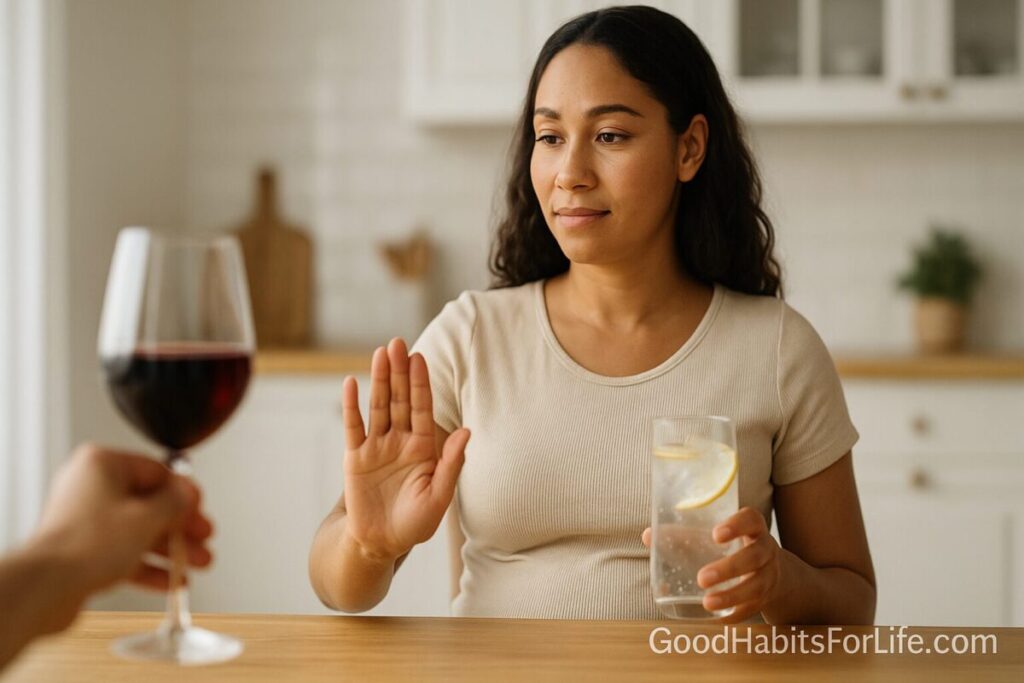
Pregnancy & Alcohol: Why No Thanks Is the Norm: Zone 2 + NEAT (2025)
Pregnancy & Alcohol: Why “No Thanks” Is the Norm
Table of Contents
🧭 What “No Thanks” Really Means—and Why
Bottom line: Leading health bodies agree there is no known safe amount of alcohol during pregnancy. Alcohol crosses the placenta; a fetus metabolizes it far more slowly than adults do. Exposure increases the risk of miscarriage, stillbirth, preterm birth, growth restriction, and fetal alcohol spectrum disorders (FASD), which can cause lifelong cognitive, behavioral, and physical challenges. Current guidance from ACOG, the CDC, WHO, the UK CMO, and others recommends complete abstinence throughout pregnancy and when trying to conceive.
Why the advice is absolute:
-
Studies have not established a threshold below which alcohol is guaranteed safe for fetal brain development.
-
“Just a little” varies by pour size, timing, and individual biology—the risk–benefit calculation favors zero.
-
Many pregnancies are recognized late; consistent “no thanks” reduces accidental exposure early on.
What about before you knew? If you drank before realizing you were pregnant, the guidance is to stop now and talk with your healthcare provider. Many healthy babies are born after early exposure ends quickly—ending alcohol use as soon as you know is what matters most.
✅ Quick Start: Do This Today
-
Make abstinence the default. Remove wine/spirits from visible places; stock tasty 0.0% options (check labels—aim for true 0.0%).
-
Write two short scripts for common situations (see “Scripts” later). Put them in Notes.
-
Set one “if-then” rule: If I’m offered a drink, then I order sparkling water with lime immediately.
-
Tell your inner circle. Pick one supportive person (or your partner) to be your accountability buddy.
-
Schedule gentle movement. Book 20–30 min of Zone 2 (easy, conversational pace) or a 3–4 km relaxed walk tomorrow; add NEAT (stairs, light chores, short strolls).
-
Use a one-line tracker: Each evening jot “AF ✅ / triggers / win of the day.”
Zone 2 & NEAT in pregnancy: With your clinician’s okay, moderate-intensity activity (you can talk but not sing) is linked to better sleep, mood, fitness, and healthy weight gain. NEAT = all movement outside formal exercise; sprinkle it through the day for gentle energy and circulation.
🛠️ 30-60-90 Habit Plan (with Zone 2 + NEAT)
Days 1–30 — Foundation
-
Environment: Remove alcohol; stock 0.0% beers, alcohol-free mocktail bases, herbals.
-
Plan A / Plan B:
-
A: Order AF drink on arrival; hold it visibly.
-
B: Leave early with a pre-written excuse if triggers rise.
-
-
Movement: 4–5×/week Zone 2 (20–30 min) + daily NEAT (6–8k steps, light mobility).
-
Skills: Practice 3 scripts; use urge surfing (ride the craving like a wave for 90 seconds).
-
Sleep & meals: Regular meals with protein + complex carbs; bedtime wind-down.
Days 31–60 — Confidence
-
Social systems: Hosts/bars you frequent know your go-to AF order.
-
Trigger audit: Identify top 3 triggers (e.g., Friday fatigue, dinners out). Create matching if-then plans.
-
Progression: One longer Zone 2 session/week (35–40 min) if comfortable; add light strength (bodyweight, bands).
-
Reflection: Weekly check-in with partner/buddy; celebrate streaks.
Days 61–90 — Lifestyle Integration
-
Resilience drills: Attend an event with alcohol intentionally; execute your plan, debrief after.
-
NEAT upgrade: Add “movement snacks” every 60–90 min (2–3 min walk, gentle stretches).
-
Post-birth plan (early thoughts): Discuss feeding choices and future alcohol questions with clinician; learn about breastmilk & alcohol timing.
Always follow your clinician’s guidance—adjust activity for symptoms, complications, or contraindications.
🧠 Techniques & Frameworks That Work
-
Habit Loop (Cue → Routine → Reward): Replace the routine (wine) with a similar-feeling reward—cold 0.0% drink in your favorite glass, plus a tiny treat (olive, dark chocolate).
-
Implementation Intentions: “If it’s 7 pm and I want a drink, then I’ll pour kombucha in a wine glass and start a 10-minute stretch video.”
-
Urge Surfing (90-second rule): Set a timer; breathe slowly; notice the rise-peak-fall of the craving without acting.
-
HALT Check: Hungry, Angry, Lonely, Tired amplify urges; fix the state first.
-
Temptation Bundling: Pair your AF drink with a special ritual—foot soak + podcast, or balcony time.
-
Partner Support Protocol: Partner keeps alcohol out of sight, mirrors AF choices in solidarity at home, and runs interference at events.
👥 Audience Tips
Partners/Co-parents
-
Be the logistics lead: stock AF options, learn the scripts, drive when out.
-
Consider reducing your own drinking—modelling supports adherence and reduces pressure.
Busy Professionals
-
Default AF meeting drink: sparkling water + citrus.
-
Guard sleep; schedule morning Zone 2 to anchor the day.
Students
-
Pre-game with AF options; arrive late/leave early.
-
Choose events with activities (games, films) where drinks are not central.
Teens & Young Parents
-
If pregnancy is early/undisclosed, use neutral scripts (“on meds,” “early start tomorrow,” “training block”).
⚠️ Mistakes & Myths to Avoid
-
“A little wine is fine.” There’s no known safe level in pregnancy; abstinence is recommended by major medical bodies.
-
Non-alcoholic ≠ always 0.0%. Many “non-alcoholic” drinks are ≤0.5% ABV. Choose 0.0% where possible, especially early in pregnancy.
-
“Cooking burns off alcohol.” Not fully—significant alcohol can remain depending on method/time.
-
“Pump and dump fixes everything.” For lactation later: alcohol leaves milk as it leaves blood; time, not pumping, reduces levels.
-
Skipping meals. Increases fatigue and cravings; keep protein-rich snacks handy.
-
Going it alone. Tell at least one supportive person.
💬 Scripts You Can Use Tonight
-
At a party: “I’m good with sparkling water tonight—thanks!”
-
Persistent friend: “I’m not drinking during pregnancy, but I’d love a 0.0% option.”
-
Restaurant server: “Could I have a 0.0% lager / lime soda in a wine glass, please?”
-
Early pregnancy (not ready to share): “I’m on a short medication course—no alcohol for me.”
-
Partner to others: “We’re doing an alcohol-light home right now. Can we keep AF options front-and-center?”
🧰 Tools, Apps & Resources
-
Apps: I Am Sober (simple streaks), Drink Less (research-based self-monitoring), Reframe (CBT tools), any basic habit tracker.
-
AF Drinks: True 0.0% beers, alcohol-free spirits, kombucha (check sugar and labels), citrus soda + bitters (skip bitters if alcoholic), flavored seltzers.
-
Wearables: Basic HR monitor for Zone 2 pacing (talk test works too).
-
Home gear: 1–2 resistance bands, supportive water bottle to nudge hydration.
Pros/Cons (quick):
-
Apps: accountability + data; avoid notification overload.
-
0.0% drinks: social fit; check labels to ensure 0.0%.
-
Wearables: feedback; don’t chase numbers over comfort and medical advice.
🧩 Key Takeaways
-
Zero is safest for alcohol during pregnancy—simple, protective, and stress-reducing.
-
Build a replacement habit loop with AF drinks, scripts, and if-then rules.
-
Zone 2 cardio + NEAT (clinician-approved) support mood, sleep, circulation, and energy.
-
Partners and environments make or break the habit—design for success.
-
Track small wins daily; review weekly; adjust kindly.
❓ FAQs
Is any amount of alcohol safe in pregnancy?
No known safe level. Major organizations recommend abstinence throughout pregnancy.
Does trimester matter?
Brain development is continuous; guidance is zero alcohol in all trimesters.
I drank before I knew—what now?
Stop now and talk with your clinician. Many pregnancies proceed normally after alcohol is stopped early.
Can I have “non-alcoholic” beer?
Prefer 0.0% labeled drinks. Some “non-alcoholic” beverages contain up to 0.5% ABV; choose true 0.0% when possible, especially early.
Does alcohol in cooking evaporate?
Not completely; depending on the recipe, measurable alcohol can remain. If unsure, choose alcohol-free recipes.
Can my partner drink around me?
They can, but reducing or avoiding alcohol at home makes your goal easier and lowers social pressure.
Is light exercise safe?
With provider approval, moderate activity (the talk test) is generally encouraged in uncomplicated pregnancies.
How does alcohol affect sleep in pregnancy?
Alcohol fragments sleep and can worsen nighttime awakenings; AF choices plus gentle movement support better sleep hygiene.
What about breastfeeding later?
Alcohol enters breast milk; levels fall as they fall in blood. Timing feeds and limiting alcohol are key—ask your clinician for individualized guidance.
Do bitters in mocktails count as alcohol?
Many bitters are alcoholic; skip them or use alcohol-free alternatives.
📚 References
-
American College of Obstetricians and Gynecologists (ACOG). Alcohol and Pregnancy (Committee guidance). https://www.acog.org/
-
Centers for Disease Control and Prevention (CDC). Alcohol Use in Pregnancy. https://www.cdc.gov/
-
World Health Organization. Alcohol consumption considerations during pregnancy. https://www.who.int/
-
UK Chief Medical Officers. Low Risk Drinking Guidelines—Pregnancy advice. https://www.gov.uk/
-
Royal College of Obstetricians & Gynaecologists (RCOG). Alcohol and Pregnancy. https://www.rcog.org.uk/
-
American Academy of Pediatrics (AAP). Fetal Alcohol Spectrum Disorders guidance. https://www.aap.org/
-
ACOG. Physical Activity and Exercise During Pregnancy and the Postpartum Period. https://www.acog.org/
-
U.S. Department of Agriculture. Alcohol Retention in Cooking. https://www.ars.usda.gov/
-
March of Dimes. Alcohol During Pregnancy. https://www.marchofdimes.org/
Medical disclaimer: This article is for general education and is not a substitute for personalized medical advice—always follow your clinician’s guidance.