
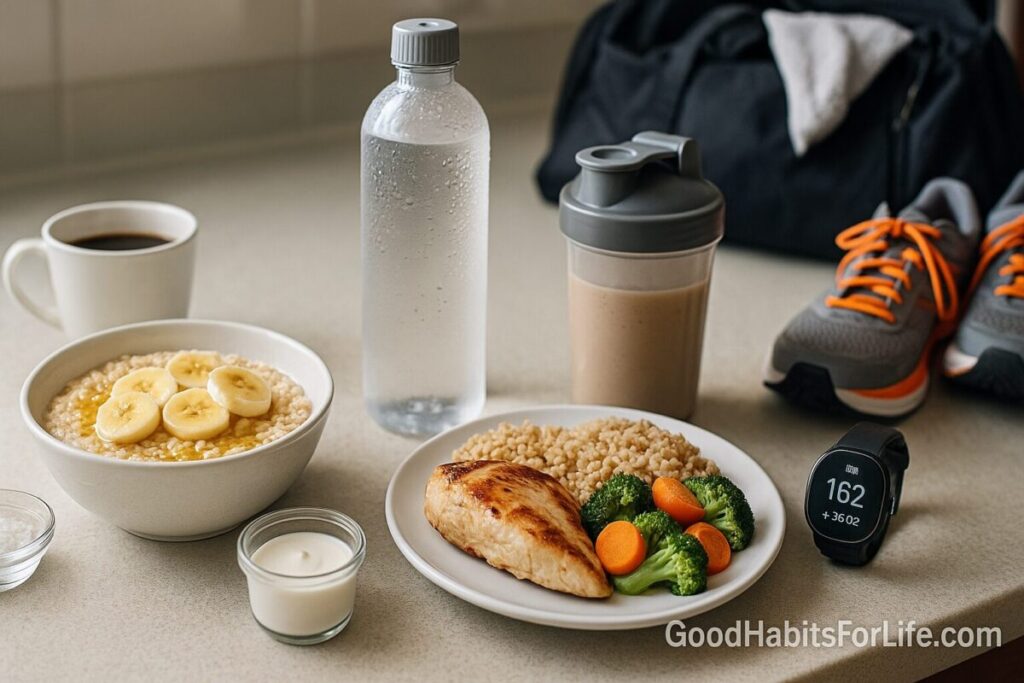
Pre & PostWorkout Fuel: Simple Templates: AI workflows (2025)
Pre & Post-Workout Fuel: Simple Templates + AI (2025)
Table of Contents
🧭 What & Why
Pre-workout fuel tops up blood glucose and carbohydrate availability so you can hit target intensity. Post-workout fuel replenishes glycogen and provides amino acids to repair and adapt. Evidence-based consensus recommends carbohydrates as the main performance fuel with adequate protein for recovery, individualized hydration, and smart supplement use where appropriate. PubMed
Key evidence (abridged):
-
Pre: 1–4 g/kg carbs taken 1–4 h before longer/harder sessions; include a moderate protein portion. BioMed Central
-
During: 30–60 g carbs/h for most >60–90 min sessions; up to 90 g/h when using multiple transportable carbs (glucose+fructose). SpringerLinkGatorade Sports Science Institute
-
Post: 1.0–1.2 g/kg/h carbs for 4–6 h after heavy work (when quick turnaround is needed) + ~0.25–0.3 g/kg protein. Sky SausportPMC
-
Hydration: Individualize to limit body-mass loss (~<2%) and avoid over-drinking; include sodium in longer, sweaty sessions. PubMed
✅ Quick Start Templates (Do these today)
Use g/kg to scale for body mass. Example body masses below: 60 kg / 75 kg / 90 kg.
Pre-workout (choose 1; 1–4 h before)
-
Standard session (60–90 min):
Carbs: 1–2 g/kg → 60–120 g (60 kg), 75–150 g (75 kg), 90–180 g (90 kg)
Protein: ~0.25–0.3 g/kg → 15–18 g, 19–23 g, 23–27 g
Examples: Rice bowl + yogurt; oats + banana + milk; potato sandwich + paneer/tofu. -
Long/Hard (≥90 min or intervals):
Carbs: 2–4 g/kg (upper end if 3–4 h out)
Protein: ~0.3 g/kg
Keep fat & fiber low in the final 2 h to reduce GI risk. BioMed Central
During (if >60–90 min or very hot/humid)
-
Carbs: 30–60 g/h (e.g., sports drink + banana).
-
Ultra/very long (≥2.5 h): Up to 90 g/h via glucose+fructose sources (gels, chews, drink mixes).
-
Fluids: Sip to thirst, guided by prior sweat-rate tests; include sodium. SpringerLinkGatorade Sports Science InstitutePubMed
Post-workout (within 1–2 h; sooner if double-days)
-
Carbs: 1.0–1.2 g/kg/h for 4–6 h if rapid recovery needed.
-
Protein: 0.25–0.4 g/kg (20–40 g) high-quality protein (e.g., dairy/soy/whey).
-
Example combos (each ≈20–30 g protein):
-
500 ml milk + peanut butter sandwich + fruit
-
Greek yogurt + granola + honey
-
Lentil bowl + rice + curd. Sky SausportBioMed Central
-
🧠 30-60-90 Habit Plan
Goal: Automate fueling so you never “wing it.”
Days 1–30 (Foundation)
-
Calculate body-mass-based carb & protein targets (use templates above).
-
Pre-log your next day’s pre/during/post in your calendar or notes.
-
Do one sweat-rate check per week (weigh before/after 60-min session; 1 kg ≈ 1 L sweat). Adjust bottle volume accordingly. PubMed
Days 31–60 (Precision)
-
Trial 30 vs 45 vs 60 g/h during; note GI comfort and performance.
-
Practice glucose+fructose fueling for sessions ≥2.5 h; aim for 70–90 g/h. Gatorade Sports Science Institute
-
Standardize post-fuel box (carb+protein snack) in your bag or fridge.
Days 61–90 (Performance)
-
Build session menus for easy/medium/hard days (see Frameworks).
-
If appropriate, trial caffeine (3–6 mg/kg 45–60 min pre) in key workouts; track response. BioMed Central
-
Optional: consider creatine monohydrate (see Supplements). Tandfonline
🛠️ Techniques & Frameworks
Macros by Session Type
-
Easy (<60–75 min): normal meals; water as needed.
-
Quality (60–90 min): Pre 1–2 g/kg carbs + protein; During 30–45 g/h.
-
Long (≥90 min): Pre 2–4 g/kg; During 45–90 g/h (glucose+fructose for upper end).
-
Strength/Hypertrophy: Pre 1–2 g/kg + ~0.3 g/kg protein; Post ~0.3 g/kg protein + carbs. BioMed Central+1
Hydration & Electrolytes
-
Target: start euhydrated; limit mass loss to ~<2%; avoid weight gain.
-
Practice: 4 h pre: drink and allow urine to normalize; include sodium for heavy sweaters/long sessions. Individualize based on sweat-rate tests. PubMed
Evidence-Backed Supplements (optional)
-
Caffeine: 3–6 mg/kg 45–60 min pre; test in training; avoid late-day use. BioMed Central
-
Creatine monohydrate: 3–5 g/day supports repeated high-intensity work and lean mass gains; safe for healthy adults. Tandfonline
-
Carb products (gels/drinks/chews): convenient way to hit 30–90 g/h; verify group-A/“permitted” status locally (e.g., AIS). Australian Sports Commission
👥 Audience Variations
-
Students & Busy Professionals: default to portable carbs (bananas, fruit buns, rice cakes) + ready protein (milk, yogurt, tofu, eggs). Batch-prep post-fuel boxes.
-
Parents: mirror kids’ sport snacks (yogurt pouches, cheese sticks, fruit, small wraps) for yourself; pack two extra portions.
-
Seniors: emphasize fluids & sodium in heat; choose softer textures (porridge, smoothies) and protein evenly split across meals.
-
Teens: same principles; avoid excessive caffeine; prioritize regular meals and dairy/soy protein for growth. BioMed Central
⚠️ Mistakes & Myths to Avoid
-
Training fasted for hard sessions. Saves calories but often caps intensity.
-
Over-reliance on fat pre-workout. Can slow gastric emptying; keep pre-meal lower-fat near start time.
-
Only protein post-workout. You also need carbs for glycogen resynthesis. Sky Sausport
-
One-size hydration. Sweat rates vary 2–3× between people and by climate; test and adapt. PubMed
-
Ignoring practice. GI comfort with 60–90 g/h carbs requires gut training over weeks. SpringerLink
💬 Real-Life Examples & Scripts
-
Office-to-Gym (evening intervals, 75 kg):
16:30 snack (90 min before): Bagel + honey (≈60 g carbs) + 200 g yogurt (≈20 g protein).
During (60 min quality): 500–750 ml sports drink (~30–45 g carbs).
Post (within 60 min): Bowl rice + eggs + veg (≈100 g carbs + 25 g protein). -
Long Ride (3 h, 60 kg):
Breakfast (2.5 h pre): Oats + banana + milk (≈120 g carbs + 25 g protein).
During: target 75–90 g/h via mix (gels+drink+chews).
Script to self/partner: “One item every 20 min—set watch beeps.” -
Strength Day (90 kg):
Pre (2 h): Rice bowl + chicken/tofu (≈120 g carbs + 30 g protein).
Post: Milk + peanut butter toast + fruit (≈90 g carbs + 30 g protein). -
Order-at-Café script:
“Could I get two bananas and a plain bagel now, and a yogurt cup to go? Thanks!”
🧩 Tools, Apps & AI Workflows
Goal: make fueling frictionless—plan once, reuse forever.
-
One-Prompt Meal Builder (ChatGPT)
-
Paste:
“Act as a sports dietitian. I’m a [body mass] kg [sport] athlete. Build a 7-day pre/during/post plan for [session types] using g/kg targets (pre 1–4 g/kg carbs + 0.3 g/kg protein; during 30–60 g/h, up to 90 g/h with glucose+fructose; post 1.0–1.2 g/kg/h carbs for 4–6 h + 0.3 g/kg protein). Output a table with grams, household portions, and a compact shopping list.”
(Tweak foods to your culture and tolerance.)
-
Auto-Portion Google Sheet
-
Columns: Body Mass (kg), Session Type, Pre g/kg, During g/h, Post g/kg, Protein g/kg.
-
Formula example (carb grams for pre):
=ROUND(A2*B2,0)where A2=body mass, B2=chosen g/kg. -
Add a Data Validation dropdown for session types to auto-fill targets.
-
Calendar + Reminders
-
Create repeating events: “Pack post-fuel box” the night before hard days; “Start sipping” 2–3 h before key sessions.
-
Batch-Prep & Label
-
Sunday: cook rice/pasta/potatoes, portion 20–40 g protein items into boxes, label with carb grams.
-
Gut Training Tracker
-
Log weekly carbs/h and GI comfort (1–5) to progress toward 60–90 g/h as needed.
🔑 Key Takeaways
-
Carbs drive performance; protein drives repair.
-
Think in g/kg and carbs per hour, not guesswork.
-
Practice fueling and fluids in training, not on race day.
-
Use AI + spreadsheets to automate plans, portions, and shopping.
-
Build the habit with the 30-60-90 roadmap—then set and forget.
❓ FAQs
1) Do I need a strict “anabolic window”?
No hard “window,” but earlier is better—especially when recovery time is short. Aim to start carbs+protein within 1–2 h, sooner if you have another session. Sky Sausport
2) What if I can’t tolerate food before early workouts?
Use smaller, lower-fiber options (banana, sports drink, yogurt) and practice; tolerance improves with gut training. SpringerLink
3) Is fasted training good for fat loss?
It can build “train-low” adaptations, but often reduces power/quality. For most performance goals, fuel the work. PubMed
4) How much protein do I really need?
Active people typically do well around 1.4–2.0 g/kg/day, with ~0.25–0.4 g/kg around training. BioMed Central
5) Are gels and chews necessary?
No—but they’re convenient for hitting 30–90 g/h during longer efforts. Real-food equivalents can work if tolerated. SpringerLinkGatorade Sports Science Institute
6) What about electrolytes?
Include sodium in long/hot sessions; exact needs vary by sweat rate. Avoid over-drinking plain water. PubMed
7) Is creatine only for bodybuilders?
No; creatine monohydrate helps repeated high-intensity efforts and may aid recovery across sports. Tandfonline
8) Safe caffeine use?
3–6 mg/kg 45–60 min pre is effective for many; test in training. Avoid high doses and late-day timing. BioMed Central
📚 References
-
Thomas DT, Erdman KA, Burke LM. Nutrition and Athletic Performance. Med Sci Sports Exerc. 2016. (Joint position: AND/DC/ACSM). https://pubmed.ncbi.nlm.nih.gov/26891166/ PubMed
-
Kerksick CM, et al. ISSN Position Stand: Nutrient Timing. J Int Soc Sports Nutr. 2017. https://jissn.biomedcentral.com/articles/10.1186/s12970-017-0189-4 BioMed Central
-
Jäger R, et al. ISSN Position Stand: Protein and Exercise. J Int Soc Sports Nutr. 2017. https://jissn.biomedcentral.com/articles/10.1186/s12970-017-0177-8 BioMed Central
-
Jeukendrup AE. Carbohydrate Intake During Exercise. Sports Medicine. 2014. https://link.springer.com/article/10.1007/s40279-014-0148-z SpringerLink
-
Jeukendrup AE. Multiple Transportable Carbohydrates and Endurance Performance. GSSI SSE 108. https://www.gssiweb.org/docs/default-source/sse-docs/sse-108-jeukendrup.pdf Gatorade Sports Science Institute
-
Sawka MN, et al. ACSM Position Stand: Exercise and Fluid Replacement. Med Sci Sports Exerc. 2007. https://pubmed.ncbi.nlm.nih.gov/17277604/ PubMed
-
Murray B, Rosenbloom C. Fundamentals of Glycogen Metabolism for Coaches & Athletes. Nutr Rev. 2018. https://pmc.ncbi.nlm.nih.gov/articles/PMC6019055/ PMC
-
Thomas DT, Erdman KA, Burke LM. Nutrition & Athletic Performance (full text excerpt). https://sky.sausport.com/wp-content/uploads/2021/02/American-College-of-Sports-Medicine_Joint-Position_Nutrition_and_Athletic_Performance_2016.pdf Sky Sausport
-
Guest NS, et al. ISSN Position Stand: Caffeine and Exercise Performance. J Int Soc Sports Nutr. 2021. https://jissn.biomedcentral.com/articles/10.1186/s12970-020-00383-4 BioMed Central
-
Kreider RB, et al. ISSN Position Stand: Safety & Efficacy of Creatine. J Int Soc Sports Nutr. 2017. https://www.tandfonline.com/doi/full/10.1186/s12970-017-0173-z Tandfonline
-
Australian Institute of Sport. Sports Nutrition Supplement Framework (Group A). https://www.ausport.gov.au/ais/nutrition/supplements/group_a Australian Sports Commission
⚖️ Disclaimer
This article provides general nutrition guidance for healthy adults. It is not medical advice; consult a qualified professional for personalized recommendations, especially if you have health conditions or take medications.