
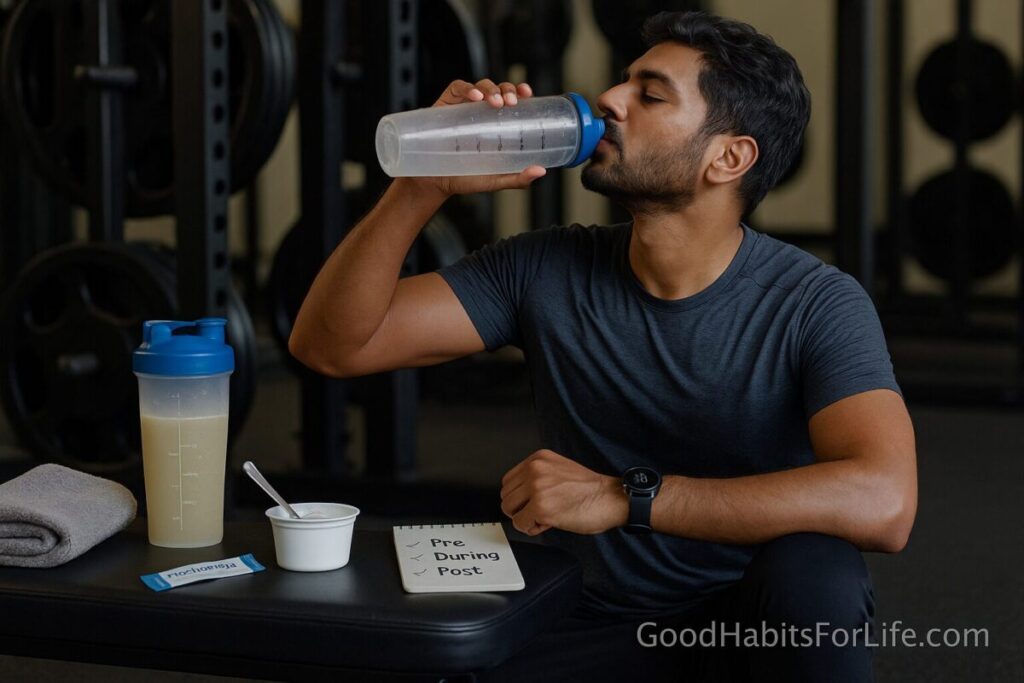
Pre During Post: A Simple Hydration Plan for Workouts: Protein-Forward Plan (2025)
Workout Hydration Plan: Pre-During-Post (Protein-Forward)
Table of Contents
🧭 What this plan is & why it works
This is a pragmatic hydration routine you can use for any gym session, run, ride, class, or match. It combines evidence-based fluid and electrolyte targets with a protein-forward recovery step so you rehydrate, refuel, and repair in one simple flow.
Why it works
-
Fluids keep plasma volume up, supporting cardiac output, thermoregulation, and sustained pace.
-
Sodium helps retain the fluid you drink and replaces sweat losses, lowering cramp and hyponatremia risk in long/hot sessions.
-
Protein (20–40 g high-quality) after training maximizes muscle repair, adaptations, and satiety; pairing it with a salty meal/drink improves rehydration.
-
Personalization (sweat-rate test + urine color) keeps it simple yet tailored.
✅ Quick Start: Today’s 10-minute setup
-
Pick your bottle(s): 500–750 mL with a clear scale. Mark lines at 100 mL intervals.
-
Log your body mass: weigh pre-workout (light clothes, after toilet).
-
Pre-drink: 5–7 mL/kg 4 h before (e.g., 70 kg → 350–500 mL). If urine still dark 2 h before, add 3–5 mL/kg.
-
During target: Start with 2–3 swigs (~150–250 mL) every 15–20 min; adjust by conditions.
-
Add sodium when needed: If session >60–90 min, heat, or you see salt streaks on clothes/skin, aim 300–600 mg sodium/hour via drink/tablets/foods.
-
Post plan: Weigh again. For each 1 kg lost, drink 1.25–1.5 L over the next 2–4 h + 20–40 g protein.
-
Log it: Note bottles emptied, conditions, and how you felt. Tweak tomorrow.
🛠️ Pre-Workout (0–2 h): fluids, sodium, protein
4 h before: 5–7 mL/kg water. Example: 60 kg → 300–420 mL; 80 kg → 400–560 mL.
2 h before: If urine is dark or scanty, add 3–5 mL/kg (60 kg → +180–300 mL).
30–60 min before:
-
Short/easy (<60 min): Optional 150–250 mL if thirsty.
-
Long/hot/hard (≥60–90 min): 250–500 mL of a light electrolyte drink (≈300–500 mg sodium/L).
-
Caffeine (optional): 1–3 mg/kg 30–60 min pre can help endurance/HIIT; test in training, not on race day.
Protein pre-workout is optional. If you trained fasted or there’s a long gap from your last meal, a small snack (e.g., yogurt or milk + banana) provides carbs and 10–20 g protein without heaviness.
🚰 During Workout: keep losses under control
Goal: Limit body-mass loss to <2% (e.g., <1.4 kg for a 70 kg athlete).
Starting target:
-
Temperate conditions: 0.4–0.6 L/hour (≈200 mL every 20 min).
-
Hot/high sweat: 0.6–0.8 L/hour (up to ~1.0 L/h if very large/heavy sweaters).
Electrolytes (especially in heat or >60–90 min):
-
Sodium: ~300–600 mg/hour (or 460–690 mg/L in the bottle).
-
Cramp-prone or very salty sweaters: consider the upper end; visible salt crystals on kit are a clue.
Carbs (for sessions ≥60–90 min):
-
30–60 g/hour via drink/gels/chews (up to ~90 g/h only for very long events using multiple carb sources).
-
Mix carbs with your fluids when convenient; protein during isn’t necessary for most, and may upset the stomach—save it for after.
Reality-check cues: If you’re sloshing, bloated, or needing bathroom breaks mid-workout, you’re likely over-drinking; back off to thirst plus plan.
🧪 Post-Workout (0–4 h): rehydrate & protein-forward recovery
-
Weigh-in: Each 1 kg body-mass drop ≈ 1 L sweat loss.
-
Rehydrate: Drink 1.25–1.5 L per kg lost over the next 2–4 hours (adds the extra needed for urine losses).
-
Sodium: Include 500–700 mg sodium via a salty meal, broth, or electrolyte drink to improve fluid retention.
-
Protein (anchor): 20–40 g high-quality protein (e.g., whey, milk, soy, or mixed plant blend) within 1–2 hours; aim for ~0.25–0.4 g/kg.
-
Carbohydrate (if training again soon): 1.0–1.2 g/kg/hour for the first 4 hours supports glycogen resynthesis.
Easy combo ideas (protein-forward):
-
500 mL low-fat milk + 30 g whey + pinch of salt + fruit.
-
250 g Greek yogurt bowl with oats, honey, and salted nuts.
-
Plant option: 350 mL soy milk + 30–35 g soy/pea blend + dates + a little salt.
🧠 Techniques & frameworks
1) Sweat-rate test (simple)
-
Weigh nude or in dry base layer before and after a typical 60-min session.
-
Account for fluids consumed (add back) and urine (subtract).
-
Sweat rate (L/h) = (Mass loss kg) + (Fluids L) − (Urine L).
-
Use this to set your during target next time.
2) Urine color check (first-morning is best)
-
Pale straw = generally well-hydrated; apple-juice color = drink more today.
3) Bottle math
-
750 mL bottle emptied in an hour = 0.75 L/h. Mark lines at 15-min intervals.
4) “Sip scheduler”
-
Set a 15–20-min timer (watch/phone). 2–3 swigs on each buzz, then ignore hydration between beeps so you can focus on the session.
5) Salt-sweat clues
-
White streaks on clothing, stinging eyes, salty taste → consider higher sodium (closer to 600 mg/h) and salty post-meal.
👥 Audience variations
-
Students/after-school sports: Carry a 750 mL marked bottle; pre-drink at last class bell; pack yogurt or milk box + banana for post.
-
Busy professionals/gym at lunch: Pre-fill two 500 mL bottles (one water, one light electrolyte). Post shake ready in fridge shaker.
-
Parents: Keep a family “hydration tray” with pre-made electrolyte ice cubes; make your post-workout protein smoothie a batch for snacks.
-
Seniors: Sensation of thirst can be blunted—use the timer method; consider smaller, more frequent sips; discuss meds/diuretics with a clinician.
-
Teens: Emphasize routine (pre-drink at homeroom/lunch). Avoid energy-drink overload; caffeine is optional and should be modest.
Hot climates/indoor heat: Push toward the upper range for fluids; prioritize sodium.
Fasting windows (e.g., religious fasts): Front-load fluids and electrolytes pre-window; train earlier in the day if possible; keep sessions shorter/moderate.
⚠️ Mistakes & myths to avoid
-
Over-drinking plain water in long events → risk of hyponatremia; include sodium and drink to plan + thirst.
-
Ignoring body mass changes → you can’t manage what you don’t measure.
-
Protein during every session → usually unnecessary; prioritize post protein.
-
Zero-sodium “electrolyte” waters → they won’t replace sweat sodium; check labels.
-
Copying a pro’s plan → your sweat rate, size, and climate are unique.
-
Assuming caffeine dehydrates you → moderate caffeine is performance-helping and not meaningfully dehydrating during exercise.
💬 Real-life examples & scripts
-
Gym day (60 min strength):
-
Pre: 300–400 mL water 2–3 h before.
-
During: 300–500 mL as thirst dictates.
-
Post: 500 mL milk-based shake (30 g protein) + salted nuts; top up another 300–500 mL water over next hour.
-
-
Hot 90-min run:
-
Pre: 500 mL light electrolyte (≈300–500 mg sodium/L).
-
During: 600–800 mL/h split every 15–20 min + 30–45 g carbs/h + 300–600 mg sodium/h.
-
Post: Replace 125–150% losses (use scale) + 30–40 g protein with a meal.
-
-
Tournament day (3 matches):
-
Between matches: 300–500 mL electrolyte + 20–30 g easy protein (yogurt drink) + 30–60 g carbs.
-
Evening: Salty dinner and fluids to meet the 1.25–1.5 L/kg lost target.
-
Script for teammates/coach:
“I’m testing a simple hydration plan to keep weight loss under 2%. I’ll sip 200 mL every 20 minutes and add ~500 mg sodium per hour in the heat. Post-session I’m hitting 30 g protein with a salty meal so I’m good for the next session.”
🧰 Tools, apps & resources
-
Marked bottles (500–750 mL) with 100 mL lines.
-
Kitchen scale + bathroom scale for protein portions and sweat-rate checks.
-
Electrolyte tabs/powders with clear sodium content (aim 460–690 mg/L in bottle).
-
Timer/watch prompts every 15–20 min.
-
Apps: Any simple habit or interval timer; food trackers can help tally protein.
-
Urine color chart (printable) as a quick morning check.
📌 Key takeaways
-
Plan fluids + sodium by condition and duration, not guesswork.
-
Keep mass loss <2%; learn your sweat rate and adjust.
-
Post-workout protein (20–40 g) + salt accelerates recovery and rehydration.
-
Use simple tools (marked bottle, timer, scale) to make it automatic.
-
Iterate weekly—your plan should feel easy, not fussy.
❓ FAQs
1) How do I know if I need electrolytes?
If your session is >60–90 min, in heat/humidity, you see salt streaks on clothing/skin, or you cramp often—use 300–600 mg sodium/hour.
2) Can I just drink to thirst?
For short/easy sessions, yes. For long/hot sessions, combine plan + thirst and validate with body-mass changes.
3) Are sports drinks necessary?
Not always. You can DIY: water + a pinch of table salt + a little juice or sugar/honey for taste/carbs.
4) Is milk a good recovery drink?
Yes—milk provides water, carbs, protein (including leucine), and sodium, which supports rehydration and muscle repair.
5) Do I need protein before workouts?
Not required if you’ve eaten in the last 3–4 hours. Post-workout protein is the priority.
6) What about creatine or BCAAs?
Creatine can help strength/power over weeks; it doesn’t change same-day hydration needs. BCAAs are optional; whole-protein sources are usually better.
7) Will caffeine dehydrate me?
In moderate doses around training, caffeine doesn’t meaningfully worsen dehydration and can improve performance for many people.
8) How much should smaller/lighter athletes drink?
Use the same framework—targets scale with body mass and sweat rate. Many lighter athletes sit near 0.4–0.6 L/h except in high heat.
9) I hate stopping to drink on runs. Tips?
Use small flasks (150–250 mL) and time sips with route landmarks or watch beeps every 15–20 min.
10) What if I’m trying to lose weight?
Hydration still matters. Post-workout, choose a 20–30 g protein option with lower calories (e.g., whey + water, or skyr/yogurt), and keep the sodium for rehydration.
📚 References
-
American College of Sports Medicine. Exercise and Fluid Replacement (Position Stand). Med Sci Sports Exerc. 2007;39(2):377–390. PubMed
-
Thomas DT, Erdman KA, Burke LM. Position of the Academy of Nutrition and Dietetics, Dietitians of Canada, and the ACSM: Nutrition & Athletic Performance. J Acad Nutr Diet. 2016;116(3):501–528. PubMed
-
Casa DJ, et al. National Athletic Trainers’ Association Position Statement: Fluid Replacement for the Physically Active. J Athl Train. 2017;52(9):877–895. Full text
-
Sawka MN, Cheuvront SN, Kenefick RW. Hypohydration and Human Performance: Impact of Environment and Physiological Mechanisms. Sports Med. 2015;45(S1):S51–S60. Springer
-
International Society of Sports Nutrition. Position stand: protein and exercise. J Int Soc Sports Nutr. 2017;14:20. Open access
-
Morton RW, et al. Protein supplementation to support strength and hypertrophy: a systematic review and meta-analysis. Br J Sports Med. 2018;52(6):376–384. BJSM
-
EFSA Panel on Dietetic Products, Nutrition and Allergies. Dietary Reference Values for water. EFSA Journal. 2010;8(3):1459. EFSA
-
CDC/NIOSH. Heat Stress—Workplace & Hydration Guidance. CDC
-
James LJ, et al. Oral rehydration solution composition for rapid rehydration after exercise-induced dehydration. Int J Sport Nutr Exerc Metab. 2019;29(5):466–473. Human Kinetics
-
Institute of Medicine. DRIs for Water, Potassium, Sodium, Chloride, and Sulfate. National Academies Press; 2005. NAP
Disclaimer: This guide is educational and not a substitute for personalized medical advice; consult a qualified professional if you have health conditions or take medications that affect fluid balance.