
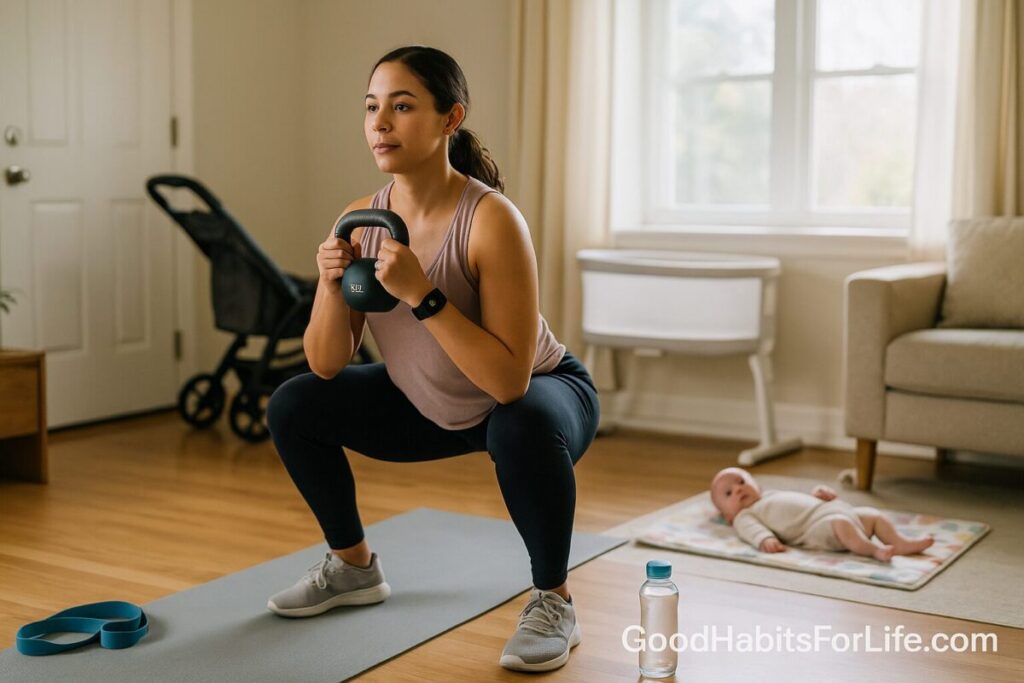
Postpartum Return to Lifting (Weeks 024): Zone 2 + NEAT (2025)
Postpartum Lifting Weeks 0–24: Zone 2 + NEAT Guide
Table of Contents
🧭 What This Guide Covers & Why It Works
This is a symptom-guided, evidence-aligned roadmap to rebuild capacity from birth to 24 weeks. We blend three levers:
-
Pelvic-floor-aware strength to restore movement patterns and gradually reload tissues.
-
Zone 2 cardio (conversational pace, ~60–70% HRmax) to boost aerobic base, mood, and recovery.
-
NEAT (non-exercise activity like walking, light chores, carrying baby) to raise daily energy expenditure without hard sessions.
Major guidelines agree that—once medically stable and symptoms allow—gradual activity is safe and beneficial postpartum, supporting mental health, cardiometabolic health, and functional recovery. See References for details.
Green-light principle: progress if symptoms stay quiet during activity and for 24–48 hours after.
Red flags (stop/reduce and consult a clinician):
-
Pelvic heaviness/dragging, bulging, or new incontinence
-
Abdominal doming/coning that you can’t modify with breath/technique
-
Sharp pain, wound pulling, fever, foul discharge, or increased bleeding
-
Dizziness, chest pain, calf pain/swelling
✅ Quick Start (Today → Next 7 Days)
Today (10–20 minutes):
-
Connection breath (3 × 5 breaths): inhale 360° into ribs/belly; exhale gently lift pelvic floor and tense abdomen like zipping up.
-
Spine & hip mobility: cat-cow, pelvic tilts, open books (1–2 sets of 6–8).
-
Supportive moves (choose 3): sit-to-stand to high box, heel raises, wall push-ups, bird dog, side-lying clams (1–2 sets of 6–8, RPE 3/10).
-
Walk 5–15 minutes at easy, conversational pace (stroller okay).
-
Log symptoms (none, mild, present; before/during/after).
Days 2–7: Repeat daily; add 2–3 minutes of walking each day as tolerated. Keep strength at RPE 3–4.
🧱 0–24 Week Habit Plan (Milestones & Checks)
Use Rate of Perceived Exertion (RPE 1–10). “Talk test” for cardio. Progress by symptoms, not just the calendar.
Weeks 0–2: Set the base
-
Goal: Daily circulation, breath, gentle mobility.
-
NEAT: 3–6k steps (adjust for fatigue/sleep).
-
Zone 2: Short easy walks, 5–15 min most days.
-
Strength (2–3×/week): bodyweight basics listed above; avoid breath-hold; exhale on effort.
Weeks 3–6: Build consistency
-
Goal: 60–90 total minutes/week of easy cardio + two mini strength sessions.
-
NEAT: 4–7k steps.
-
Zone 2: Collect 15–20 min/session; 3–4×/week.
-
Strength (2–3×/week):
-
Squat to box, hip hinge with dowel, elevated push-up, row with light band, farmer carry with light loads (baby carrier counts).
-
2–3 sets of 6–10 reps, RPE 3–4.
-
-
Checkpoint: If vaginal birth and healing normally, many will tolerate this well; C-section and complex perineal tears often require slower build and incision care.
Weeks 7–12: Return to “training”
-
Goal: 90–150 min/week Zone 2; reintroduce moderate lifting.
-
NEAT: 6–9k steps.
-
Zone 2: 20–30 min on 3–5 days/week; can split into 10–15 min chunks.
-
Strength (2–3×/week):
-
Goblet squat, hip hinge (kettlebell deadlift), split squat, chest press (DB/floor), 1-arm row, half-kneeling press, dead bug/bent-knee fallouts.
-
3 sets of 6–10 reps, RPE 4–6.
-
-
Technique: brace on exhale, avoid Valsalva; regress if doming/heaviness appears.
-
Checkpoint: If symptom-free in daily life and with moderate loads, you’re ready to load a bit more.
Weeks 13–24: Progressive strength & capacity
-
Goal: 120–180 min/week Zone 2; optional short Zone 3 intervals if symptom-free.
-
NEAT: 7–10k steps.
-
Zone 2: 30–45 min 3–4×/week. Optional: 1 short session with 3–5 × 1–2 min brisk efforts (RPE 7) separated by easy pace—only if zero symptoms.
-
Strength (3×/week or 2× if sleep-deprived):
-
Session A: Back or front squat pattern, hinge (KB deadlift/RDL), horizontal press, loaded carry.
-
Session B: Split squat/lunge, vertical pull (banded pull-down), vertical press, hip bridge/hamstring curl.
-
Session C (optional): Technique work + accessory (face pull, reverse lunge, step-up).
-
3–4 sets of 4–8 reps, RPE 5–7.
-
-
Checkpoint: Consider testing simple capacity (e.g., 5RM goblet squat with perfect form and breath, 20-min continuous Zone 2). If symptoms stay quiet now and for 48h, continue gradual load.
🛠️ Techniques & Frameworks (Practical, Research-Aligned)
Breath & pressure management
-
Exhale on effort (lifting/concentric).
-
360 ribcage expansion on inhale; avoid belly thrust.
-
“Can I still talk?” If not, intensity is too high for early phases.
-
Modify to flatter the abs: if doming appears, reduce range, load, or switch exercise (e.g., dead bug → heel taps).
RPE ladder for strength
-
Weeks 0–6: RPE 3–4 (very easy–easy)
-
Weeks 7–12: RPE 4–6 (easy–moderate)
-
Weeks 13–24: RPE 5–7 (moderate–hard, still talkable in short phrases)
Progression rules
-
Two sessions in a row symptom-free → increase one variable: load (5–10%) or reps (+2) or range.
-
Any symptom during/after → reduce one variable and retest next session.
🧠 Zone 2 & NEAT Targets (With Examples)
Zone 2 definition: sustainable, nose-breathing or conversational pace; approx. 60–70% HRmax. A simple estimate: HRmax ≈ 220 − age. New parents: use talk test first; heart rate can be elevated postpartum and during lactation, so go by feel.
Examples: steady stroller walks on flat ground, easy cycling, gentle elliptical, pool walking.
Weekly build example (age 32):
-
Weeks 1–2: 5–15 min/day easy walks (HR mostly <65% HRmax).
-
Weeks 3–6: 3 × 15–20 min Zone 2.
-
Weeks 7–12: 4 × 20–30 min Zone 2 (total 90–120 min).
-
Weeks 13–24: 3–4 × 30–45 min (120–180 min). Optional 1 short interval day if symptom-free.
NEAT nudges:
-
5-minute pram loops after feeds.
-
Phone-call walks.
-
“Laundry lunge” habit: 5 split-squat reps per basket lift.
-
1–2 standing chores blocks (10–15 min) spread through the day.
🏋️ Strength Progressions (Sample Sessions)
Choose a weight that keeps you within the target RPE and perfect technique.
Phase 1 (Weeks 3–6) — 25–35 min
-
Box squat 3×8 (RPE 3–4)
-
Elevated push-up 3×6–8
-
Band row 3×10
-
Hip hinge with light KB 3×8
-
Carry: 3 × 20–40 m easy
Phase 2 (Weeks 7–12) — 35–45 min
-
Goblet squat 3×8 (RPE 4–6)
-
KB deadlift 3×6–8
-
1-arm row 3×8/side
-
DB floor press 3×8
-
Half-kneeling press 2×8/side
-
Optional: dead bug 2×6 slow reps
Phase 3 (Weeks 13–24) — 40–55 min
-
Front squat or goblet squat 4×6 (RPE 5–7)
-
RDL 4×6
-
Split squat 3×8/side
-
Pull-down or assisted pull-up 3×6–8
-
DB press 3×6–8
-
Farmer carry 4 × 30–50 m
🧩 Variations & Special Considerations
Vaginal birth (uncomplicated):
-
Many tolerate early walking and gentle strength in days 3–7 if bleeding is stable.
-
Watch stitches/tears: prioritize comfort positions; widen stance to reduce pressure.
C-section:
-
Treat as major abdominal surgery. Early days: breath work, gentle walking indoors, posture/mobility.
-
Support incision with a pillow when coughing/laughing. Avoid lifting > baby + carrier until cleared and symptom-free.
-
Progress loads more slowly; many thrive on RPE 3–5 until week 10–12.
Diastasis recti/prolapse symptoms:
-
Prioritize pressure management and exercise selection that keeps the midline flat.
-
Choose more symmetrical stances, shorter ranges, slower tempos.
-
Consider pelvic health physiotherapy for individualized progressions.
Breastfeeding:
-
Extra fluids and +300–500 kcal/day are common needs; fuel pre-session (carb + protein).
-
High-impact work may be uncomfortable early—use supportive sports bra; time sessions post-feed for comfort.
😴 Fuel, Sleep & Recovery
-
Fuel each session: quick snack (e.g., yogurt + fruit) 30–60 min pre-workout; protein (20–30 g) within 2 h after.
-
Hydration: keep a bottle handy; aim for pale-yellow urine.
-
Sleep strategy: if nights are broken, shorten sessions (20–30 min) but keep frequency (habit beats hero days).
-
Deload weeks: every 4th week, keep exercises but reduce set count by ~30%.
⚠️ Mistakes & Myths to Avoid
-
Myth: “Wait 6 weeks, then go hard.” → Reality: Gentle movement often starts earlier; intensity increases only as symptoms allow.
-
Myth: “If you have diastasis, never lift.” → Reality: Well-coached loading can improve function.
-
Mistake: Holding breath/brace max on lifts early (Valsalva).
-
Mistake: Chasing step or calorie numbers at the cost of sleep and healing.
-
Mistake: Ignoring delayed symptom flare (24–48 h later).
🗣️ Real-Life Scripts & Checklists
Self-check before a session (10-second scan):
“Bleeding stable? Incision/perineum comfortable? Any heaviness or doming last time? Energy ≥5/10? If yes → green. If not → shorten or walk only.”
Breath cue during lifts:
“Inhale to prepare. Exhale as I stand/press, zip up gently, keep ribs stacked.”
Post-session check (evening + next morning):
“Any heaviness/leaking/back or pelvic pain? Doming today? If yes → reduce next session (load or range) and retest.”
🔧 Tools & Apps
-
Heart-rate monitor or smartwatch: objective Zone 2 range; talk test still primary early.
-
Timer apps (e.g., Interval Timer) for steady sets and rest.
-
Strength loggers (Strong, Hevy) to track RPE and symptoms.
-
Step tracker (phone/watch) for NEAT nudges.
-
Pelvic health directories: national PT associations to find a specialist.
🎯 Key Takeaways
-
Build from breath → movement → load, guided by symptoms.
-
Zone 2 and NEAT are your recovery-friendly cardio anchors.
-
Lifting returns in stages: RPE 3–4 → 4–6 → 5–7 across 24 weeks.
-
Manage pressure (exhale on effort), and watch for red flags.
-
Progress one variable at a time; consistency beats intensity.
❓ FAQs
1) When can I start lifting after birth?
Gentle bodyweight work can begin within days if you feel well and bleeding is stable. External load usually returns gradually from ~weeks 3–6, then builds through 12–24 weeks, provided you’re symptom-free.
2) Is Zone 2 cardio safe while breastfeeding?
Yes. Moderate aerobic activity is safe and may improve mood and fitness. Hydrate well and fuel adequately; time sessions after feeds for comfort.
3) How do I know if I’m overdoing it?
Watch for heaviness/dragging, leaking, doming, sharp pain, or increased bleeding during or within 48 h after sessions. If any appear, reduce load/range or switch to walking/mobility and consult a clinician.
4) What weights should I start with?
Choose a load you could do 3–4 more reps with perfect form (RPE 3–4 initially). Increase by 5–10% when two sessions are symptom-free.
5) Is diastasis recti a deal-breaker for lifting?
No. Many people with diastasis lift successfully using good pressure management and appropriate progressions; a pelvic health PT can individualize your plan.
6) I had a C-section. What’s different?
Expect a slower timeline. Emphasize breath, posture, and walking first. Avoid heavy lifting/straining until your incision is comfortable and you’re symptom-free; progress loads conservatively.
7) How many steps should I aim for?
Start where you are (often 3–6k/day early). Nudge up by 500–1,000 steps every week or two, aiming for 7–10k if energy and recovery allow.
8) Can I do intervals or running before 24 weeks?
Short brisk efforts may be added after week 12 if you’re symptom-free. Running typically resumes sometime after 12 weeks for many, but only if pelvic symptoms are absent; see a pelvic health PT for a clearance screen.
9) What if I leak a little urine when lifting?
That’s a sign to modify (lighter load, shorter range, adjust breath) and consult a pelvic health physiotherapist.
10) Does exercise affect milk supply?
Moderate exercise does not reduce supply when you hydrate and fuel well.
📚 References
-
American College of Obstetricians and Gynecologists (ACOG). Physical Activity and Exercise During Pregnancy and the Postpartum Period (Committee Opinion 804; reaffirmed). https://www.acog.org/
-
UK Chief Medical Officers. Physical Activity for Pregnant and Postnatal Women infographics and guidance. https://www.gov.uk/
-
World Health Organization. Guidelines on Physical Activity and Sedentary Behaviour (postpartum recommendations). https://www.who.int/
-
American College of Sports Medicine. ACSM Guidelines for Exercise Testing and Prescription (postpartum considerations). https://www.acsm.org/
-
Goom T, Donnelly G, Brockwell E. Returning to Running Postnatal—Guidelines for Health Professionals and Coaches (2019). https://www.returntorunningpostnatal.com/
-
Royal College of Obstetricians & Gynaecologists (RCOG). Recovery After Birth and Exercise Postnatally patient resources. https://www.rcog.org.uk/
-
American Physical Therapy Association (APTA) & Academy of Pelvic Health. Postpartum considerations & pelvic health resources. https://www.aptapelvichealth.org/
-
National Institute for Health and Care Excellence (NICE). Postnatal Care guideline. https://www.nice.org.uk/
-
U.S. Department of Health and Human Services. Physical Activity Guidelines for Americans, 2nd ed. https://health.gov/
Disclaimer: This guide is educational and not a substitute for personalized medical care; consult your clinician—especially after C-section, complex tears, prolapse, or persistent symptoms.