
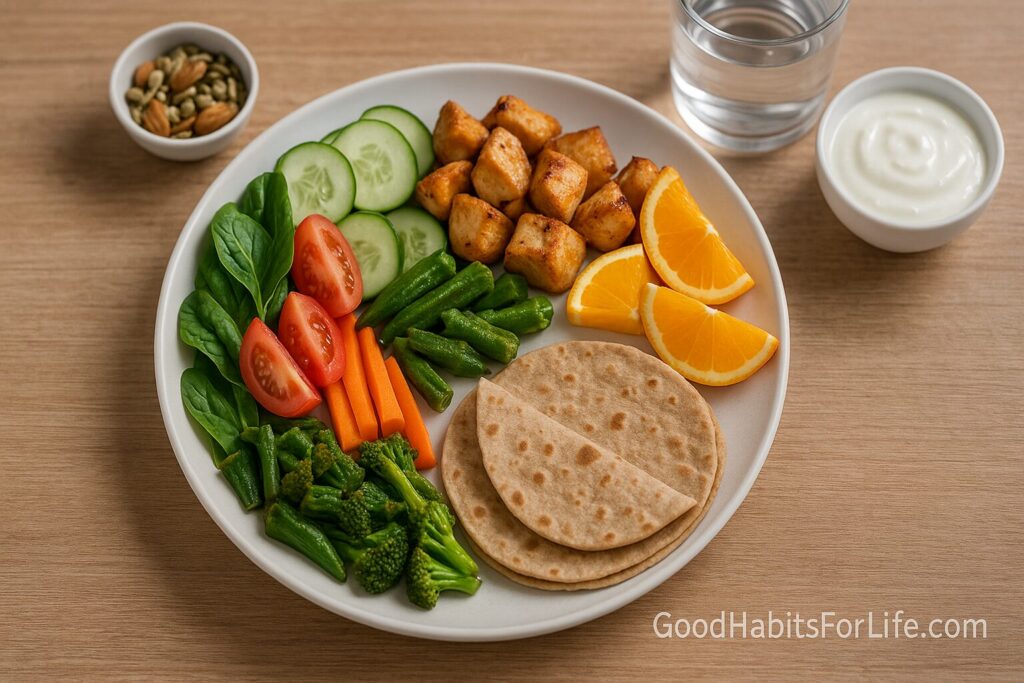
Plate Method 2025: A Simple Visual for Every Meal
Plate Method 2025: A Simple Visual for Every Meal
🧭 What is the Plate Method?
The plate method is a simple visual rule to build balanced meals without counting calories:
-
½ plate: non-starchy vegetables and fruit (aim majority veggies).
Examples: spinach, cucumber, tomato, bhindi/okra, carrots, peppers, cabbage, broccoli; fruit like berries, oranges, apple. -
¼ plate: protein (animal or plant).
Examples: eggs, fish, chicken, tofu, paneer, lentils/daal, chickpeas/chana, beans, soy chunks. -
¼ plate: whole grains or starchy foods.
Examples: brown rice, roti/chapati (atta), millets (jowar/bajra/ragi), quinoa, oats, whole-wheat pasta, potatoes, sweet potatoes, corn. -
Plus: healthy fats (small amounts) and water (or unsweetened drinks).
Fats: olive/mustard/groundnut oil, avocado, nuts, seeds; limit ghee/butter. -
Optional dairy (or fortified alternatives): curd/yogurt, milk, kefir.
This model comes from national dietary frameworks (e.g., USDA MyPlate and Harvard’s Healthy Eating Plate) and clinical plate methods for diabetes meal planning.
✅ Why it Works (and the Evidence)
-
Right proportions, automatically. The ½-¼-¼ layout nudges you toward higher fiber and micronutrients and moderates energy density—linked with better weight and cardiometabolic outcomes in population guidance.
-
Glycemic control. Plate-style diabetes education (½ non-starchy veg; ¼ protein; ¼ high-fiber carbs) helps manage post-meal glucose.
-
Simplicity = adherence. Visual rules reduce decision fatigue vs strict calorie counting.
-
Quality over restriction. Encourages whole grains, variety of plants, lean proteins, and healthy fats consistent with 2020–2025 Dietary Guidelines and international healthy-plate models.
(See References for sources.)
🛠️ Quick Start: Build Today’s Meals
Breakfast (5-minute ideas)
-
Veg omelet (2 eggs) + whole-grain toast + tomato/cucumber; fruit on the side.
-
Oats cooked in milk + chia/ground flax + sliced banana + peanuts/almonds.
-
Poha with peas + tomato/coriander salad + yogurt.
Lunch
-
2 small rotis (whole-wheat) + chana masala (protein) + large kachumber salad + sautéed bhindi.
-
Brown rice bowl: ½ bowl mixed veg + ¼ bowl rajma + ¼ bowl brown rice; drizzle 1 tsp oil; water/lemon.
Dinner
-
Grilled fish/tofu (palm-size) + millet roti or quinoa + roasted mixed vegetables; side yogurt.
-
Stir-fry paneer + veggies (light oil) + ½ cup cooked noodles (whole-wheat) or ¾ cup cooked rice.
Snack templates
-
Fruit + nuts (e.g., guava + 10 almonds)
-
Yogurt + berries
-
Roasted chana / edamame
Handy visual cues
-
Protein (¼ plate): about palm size (90–120 g cooked).
-
Grain/starch (¼ plate): about your cupped hand (½–¾ cup cooked).
-
Fats: 1–2 teaspoons oil, or a small thumb-size pat of ghee/butter if used.
🗓️ 7-Day Starter Habit Plan
Goal: Execute the plate method for one main meal daily, then scale.
-
Day 1 — Audit: Photograph your meals. Circle where veggies are missing; plan a grocery list (5 veg, 3 fruits, 3 proteins, 3 grains).
-
Day 2 — Prep: Batch-cook 2 proteins (e.g., chana + grilled chicken/tofu), 1 grain (brown rice or millet), and 3 veg (salad box, roasted mixed veg, sautéed greens).
-
Day 3 — One-Meal Focus: Apply ½-¼-¼ at lunch. Track fullness 0–10 after 20 minutes.
-
Day 4 — Add Breakfast: Include protein + fruit/veg at breakfast.
-
Day 5 — Eating Out Script: Use the “swap to half-veg” rule (see scripts below).
-
Day 6 — Variety Check: Rotate a different grain (e.g., ragi dosa, quinoa). Add legumes if animal protein has dominated.
-
Day 7 — Review & Scale: Move to two meals/day with the plate method next week. Note energy, digestion, cravings, and glucose (if monitoring).
Weekly checkpoints
-
≥ 25 different plants/week (count herbs and legumes).
-
Protein with every main meal.
-
Sugary drinks ≤ 1/wk; alcohol within local guidelines.
🧠 Techniques & Frameworks
1) The “Swap-to-Half Veg” rule
Whatever the dish, make half your plate vegetables. Add a salad, double veg sides, or choose a veg-heavy entrée.
2) Protein First
Start your meal with a few bites of protein and veg to help satiety and steady blood sugar.
3) Fiber Ladder
Upgrade carbs in steps: white rice → half white/half brown → brown rice → brown rice + legumes → millet/quinoa rotation.
4) Portion Flex (for larger or smaller needs)
-
Weight loss: keep vegetables at ½+, reduce added fats, pick lean proteins, choose water.
-
Athletic days: expand the grain/starch segment to ⅓–½ plate around training; include fruit.
-
Appetite support/weight gain: keep plate ratio but add energy-dense sides (nuts, seeds, avocado, dairy).
5) Eating Out Framework
-
Scan menu for a veg-forward main + protein-rich option.
-
Ask for extra vegetables instead of fries/rice, grilled rather than fried, and sauces on the side.
-
Share desserts; order water/unsweetened beverages.
👥 Variations by Audience & Goals
Students/Hostel life
-
Stock bowls: microwavable oats, canned beans/chickpeas, frozen mixed veg, eggs/curd, whole-wheat bread.
-
Build bowls: ½ frozen veg (steam), ¼ beans/eggs, ¼ bread/oats/rice; drizzle 1 tsp oil; fruit.
Busy professionals
-
“3×3 Mix & Match”: cook 3 proteins (e.g., paneer, chana, fish), 3 grains (brown rice, roti, quinoa), 5 veg; assemble lunches in 10 minutes.
Parents & kids
-
Use a divided plate; offer two veg choices every meal. Add fruit as dessert. Keep milk/curd plain; sweeten with fruit if needed.
Seniors
-
Emphasize protein quality (1.0–1.2 g/kg/day if appropriate) and softer textures: daal, yogurt, tofu, fish; include calcium-rich foods and hydration.
Diabetes/Prediabetes
-
Follow the Diabetes Plate: ½ non-starchy veg; ¼ protein; ¼ high-fiber carbs (whole grains/legumes). Prefer water; limit juices/sugar. Monitor with clinician guidance.
Vegetarian/Vegan
-
Prioritize legumes, tofu/tempeh, soy milk, nuts/seeds; combine legumes + grains for complete amino acid profiles across the day; use B12-fortified foods/supplement per clinician.
⚠️ Mistakes & Myths to Avoid
-
Myth: “Fruit is off-limits.”
Reality: Whole fruit fits—keep added sugars low and emphasize non-starchy veg for half the plate. -
Mistake: Treating potatoes as vegetables.
Fix: Count potatoes, yam, cassava and corn in the starch/grain quarter. -
Mistake: Skipping protein at breakfast.
Fix: Add eggs, curd, paneer, tofu, or legumes. -
Myth: “Healthy means low-fat only.”
Reality: Include small amounts of healthy fats; they improve absorption of vitamins A, D, E, K. -
Mistake: Drinking calories by habit.
Fix: Make water the default; use unsweetened tea/coffee.
🗣️ Real-Life Examples & Scripts
Home buffet
“I’ll start with a large salad and sautéed veg (half plate), add grilled paneer (quarter), and a small serving of jeera rice (quarter).”
Restaurant
“Can I have extra vegetables instead of half the rice? Keep sauces on the side, please.”
Family dinner
“Let’s put salad and cooked veg on the table first so everyone fills half their plate with those.”
Tiffin/lunchbox
-
Tier 1: salad sticks + lemon wedge
-
Tier 2: chole/paneer/tofu
-
Tier 3: 2 small rotis or ¾ cup brown rice
🧰 Tools, Apps & Resources
-
USDA FoodData Central — check nutrients of foods.
-
Portion plates or divided lunch boxes — automatic visual guidance.
-
Habit tracker (paper or app) — tick off “½-¼-¼” per meal.
-
Grocery template — veg (5+), fruit (3), proteins (3), grains (3), healthy fats (2).
Pros/Cons
-
Pros: Low cost, flexible cuisines, family-friendly, travel-ready.
-
Cons: Doesn’t track total calories precisely; may require attention to protein amount for athletes or seniors.
📌 Key Takeaways
-
Make ½ your plate vegetables (plus fruit), ¼ protein, ¼ whole grains/starches; add healthy fats and water.
-
Use visual cues and simple swaps; you can apply this at home, at work, and when eating out.
-
Customize for goals (weight, performance, glucose control) and dietary patterns (vegetarian/vegan).
-
Batch-prep and mix-and-match components to save time and money.
❓ FAQs
1) Can I include fruit in the half-plate section?
Yes—prefer mostly non-starchy vegetables; include 1 fruit serving as part of the half or on the side.
2) How many rotis or how much rice fits the ¼ plate?
Typically 1–2 small rotis or ½–¾ cup cooked rice (about a cupped hand). Adjust for activity and appetite.
3) Are potatoes allowed?
Yes, but count them as starch/grain, not vegetables. Try roasting/boiling and pair with protein/veg.
4) What oils are best?
Use small amounts of unsaturated oils (olive, mustard, groundnut). Limit butter/ghee; keep total added fat modest.
5) Can I use the plate method for weight loss?
Yes. Keep vegetable half generous, choose lean proteins, pick whole grains, and stick to water/unsweetened drinks.
6) How does this differ from calorie counting?
It’s a visual guide. You can still lose weight and improve quality without weighing foods; pair with mindful eating.
7) Is it OK for kids?
Yes; offer smaller, frequent meals and include dairy or fortified alternatives for growth; keep sugary drinks minimal.
8) I’m vegetarian—will I get enough protein?
Yes with planning: combine legumes, soy products, dairy (if used), nuts/seeds across the day; consider B12 from fortified foods/supplements if vegan (talk to a clinician).
9) What about eating out?
Ask for extra vegetables, grilled options, sauces on the side, and water. Share mains or desserts if portions are large.
10) Can athletes use it?
Yes—expand the grain/starch portion to ⅓–½ plate around training; keep protein adequate and include fruit.
📚 References
-
U.S. Department of Agriculture & U.S. Department of Health and Human Services. Dietary Guidelines for Americans, 2020–2025. https://www.dietaryguidelines.gov
-
USDA. MyPlate — The 5 food groups & healthy eating patterns. https://www.myplate.gov
-
Harvard T.H. Chan School of Public Health. Healthy Eating Plate & Pyramid. https://www.hsph.harvard.edu/nutritionsource/healthy-eating-plate/
-
American Diabetes Association. Create Your Plate (Diabetes Plate Method). https://diabetes.org/healthy-living/recipes-nutrition/healthy-plate
-
World Health Organization. Healthy diet (key facts & recommendations). https://www.who.int/news-room/fact-sheets/detail/healthy-diet
-
Public Health England/NHS. The Eatwell Guide. https://www.nhs.uk/live-well/eat-well/the-eatwell-guide/
-
Evert AB, et al. Nutrition therapy for adults with diabetes or prediabetes: ADA consensus report. Diabetes Care. 2019;42(5):731–754. https://doi.org/10.2337/dci19-0014
-
Gibson AA, Sainsbury A. Strategies to improve adherence to dietary weight-loss interventions. Nutrients. 2017;9(8):822. https://doi.org/10.3390/nu9080822
Disclaimer: This article provides general nutrition information and is not a substitute for personalized medical advice. Consult a qualified professional for individual guidance.