
Pantry Meals Under 10 Ingredients: AI workflows (2025)
Pantry Meals Under 10 Ingredients: AI Workflows (2025)
Table of Contents
🧭 What “Pantry Meals Under 10 Ingredients” Means & Why It Works
Definition: A pantry meal is a complete dish you can make mostly from shelf-stable or long-life items (canned, dried, jarred, frozen), plus 1–2 fresh add-ins. “Under 10 ingredients” excludes water, salt, pepper, and optional garnish.
Why it works
-
Time & decision relief: fewer steps and shopping trips.
-
Budget control: staples (beans, grains, tinned fish, tomatoes) are cost-effective.
-
Nutrition potential: whole grains, legumes, veg, and healthy fats line up with mainstream dietary guidance for balanced meals.
-
Food waste reduction: planning with staples and batching reduces spoilage.
-
Food safety friendly: shelf-stable goods and freezing extend safe meal windows when cooled and stored correctly.
✅ Quick Start: Do This Today
-
Inventory (7 min). List what you have in grains, proteins, veg, sauces, and accents.
-
Pick 6–8 meals under 10 ingredients using the frameworks below (e.g., Sheet-Pan Chickpeas & Veg; Tuna-Tomato Pasta).
-
Ask AI for the shopping list (quantities + metric): “Create a shopping list to cook these 8 meals for 4 servings each.”
-
Batch once (60–90 min):
-
Cook 1 starch (e.g., 1 kg brown rice) + 1 pasta (500 g).
-
Make 2 sauces (e.g., tomato-garlic; yogurt-tahini).
-
Roast 2 trays of mixed veg (about 1.2 kg).
-
Prepare 1 protein base (e.g., 4 × 400 g cans chickpeas, drained).
-
-
Portion & store: Cool quickly, pack in shallow containers, label with date. Refrigerate 3–4 days; freeze extras.
🤖 AI Workflows that Plan, Shop & Cook for You
Think of AI as your sous-chef that understands constraints (≤10 ingredients, vegetarian, 30-minute prep, under ₹200/meal, etc.).
Workflow A — “Turn Pantry Into Meals”
Prompt:
“Here’s my pantry list (metric): 2×400 g chickpeas, 500 g pasta, 1 kg brown rice, 2×400 g chopped tomatoes, 400 g coconut milk, frozen spinach 500 g, onions, garlic, spices, olive oil, eggs. Plan 6 dinners under 10 ingredients each, 25–35 min, each with veg and protein. Give: name, ingredients (with amounts), steps (≤6), and a 3-day prep order.”
Output you’ll use: A ready menu with mini-recipes and a prep plan.
Workflow B — “Smart Shopping List”
Prompt:
“These 6 meals feed 4 each. Generate a consolidated shopping list in metric with aisles grouped (produce, tins, grains, dairy, frozen), include quantities calculated from recipes, and note swaps if an item is missing.”
Workflow C — “Batch & Re-mix”
Prompt:
“Using the same base (roasted veg, cooked rice/pasta, tomato sauce), show 10 re-mixes (bowls, wraps, soups) where each final dish uses ≤10 ingredients including the base. Add re-seasoning options.”
Workflow D — “Nutrition Nudges”
Prompt:
“For each meal, suggest 1 way to increase fibre and 1 way to reduce sodium while keeping flavour, aligned with general healthy eating guidance.”
📦 Pantry Staples & 10-Ingredient Guardrails
The Rule of Five (core slots)
-
Base starch: brown rice, whole-wheat pasta, quinoa, couscous, oats.
-
Protein: beans (chickpeas, kidney, black), lentils, eggs, tinned tuna/sardines, tofu/tempeh.
-
Vegetables: tinned tomatoes, frozen greens, carrots/onions/peppers, jarred roasted peppers.
-
Flavour core: garlic, onion, ginger, spice blends, stock cubes.
-
Booster: olive oil, yogurt, tahini, peanut butter, parmesan, lemon/lime, vinegar.
10-Ingredient guardrails
-
Count only unique ingredients; water, salt, pepper are free.
-
Prefer one pan or one pot methods.
-
Include at least one veg and one protein source.
-
Lean on spice blends (1 line item) instead of many individual spices.
-
Use frozen veg for speed and nutrition retention.
Fast Combo Matrix (mix & match)
| Base | Protein | Veg | Sauce | Accent |
|---|---|---|---|---|
| 250 g whole-wheat pasta | 1×400 g chickpeas | 300 g frozen spinach | 400 g chopped tomatoes + garlic | Lemon zest |
| 250 g couscous | 2 eggs | 1 red pepper + onion | Yogurt-tahini | Paprika |
| 300 g brown rice | 1×120 g tuna | 150 g corn + peas | Tomato-chilli | Olive oil |
| 300 g quinoa | 1×400 g lentils | 200 g mushrooms | Coconut-curry | Lime |
Each row is typically ≤9 ingredients.
🛠️ Techniques & Frameworks for Speed
-
Framework 1: Sheet-Pan (220 °C / 425 °F, 25–30 min). Toss veg + beans with oil and spice blend; roast; finish with yogurt-tahini.
-
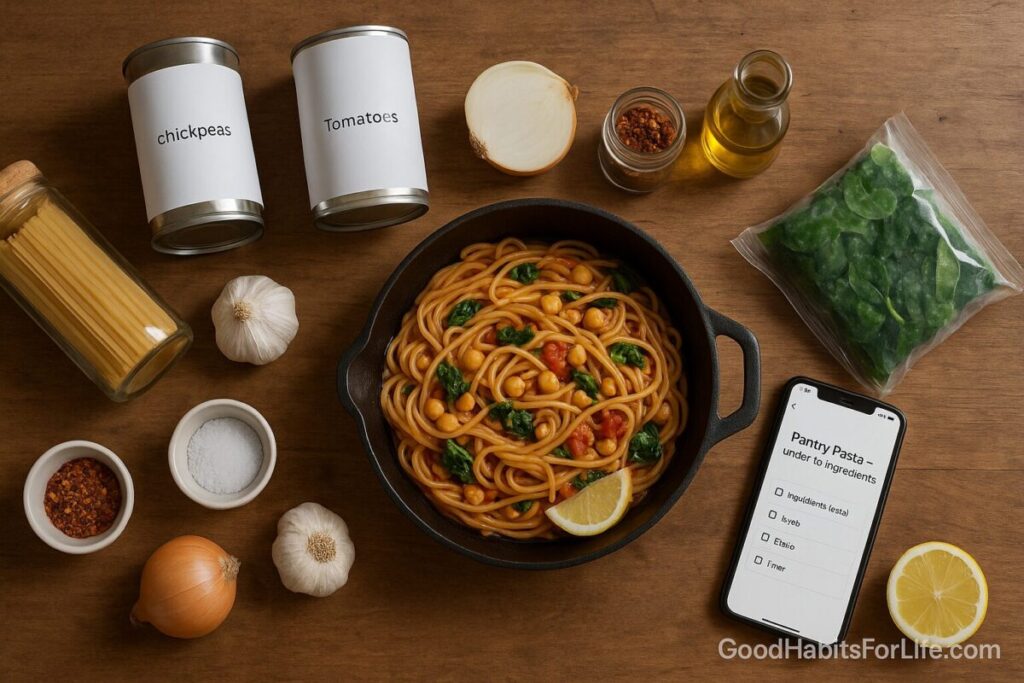
Framework 2: One-Pot Pasta (12–14 min). Simmer pasta with tomatoes, onions, garlic, water/stock; stir in greens and beans at the end.
-
Framework 3: Soup-Starter (20–25 min). Sauté aromatics → add tomatoes/stock + lentils/beans → greens → acid (lemon) to finish.
-
Framework 4: Sauce-Over-Starch. Batch-cook rice/quinoa; top with 2 sauces (tomato-garlic; peanut-chilli) and rotate proteins.
-
Framework 5: Wrap/Bowl Builder. Grain + veg + protein + sauce + crunch (nuts/seeds).
-
Batching rhythm: 30-minute roast, 20-minute simmer, 10-minute cool/portion cycles.
-
Healthy cooking swaps: bake/roast/steam; salt later, flavour earlier (garlic, herbs, acid).
🗓️ 7-Day Starter Plan (with AI Prompts)
Servings: 4 each | Prep once: Sunday | Re-use bases: tomato sauce, roasted veg, cooked grain.
-
Sun (Batch Day):
-
Roast 1.2 kg mixed veg (carrot, onion, peppers).
-
Cook 1 kg brown rice + 500 g whole-wheat pasta.
-
Make Tomato-Garlic Sauce (2×400 g tomatoes, 3 cloves garlic, olive oil).
-
Prep Yogurt-Tahini (200 g yogurt + 2 tbsp tahini + lemon).
-
-
Mon: One-Pot Tomato Chickpea Pasta (≤9 ingredients).
-
Tue: Coconut Lentil Soup (lentils, coconut milk, tomatoes, frozen spinach).
-
Wed: Roasted Veg Grain Bowls with yogurt-tahini + lemon.
-
Thu: Tuna-Tomato Quinoa Skillet (add capers/olives if on hand).
-
Fri: Sheet-Pan Halloumi & Veg (or tofu) with spice blend.
-
Sat: Speedy Wraps (rice, beans, roasted veg, salsa or tomato sauce).
AI weekly planner prompt:
“Create a 7-day dinner plan (4 servings/day) using my batch bases: tomato-garlic sauce (1.2 L), roasted veg (1.2 kg), cooked brown rice (1 kg), cooked pasta (500 g). Keep each meal ≤10 ingredients. Provide reheating guidance and a Saturday ‘clear-the-fridge’ idea.”
👥 Variations by Audience
-
Students: Use microwavable grains; buy spice blends; pick 3 recipes and repeat.
-
Parents: Double soup and pasta; freeze half in 2-portion packs; add cut fruit/veg.
-
Busy professionals: Autogenerate shopping list; schedule a 60-min Sunday sprint; keep emergency tins (lentils, tuna, tomatoes).
-
Seniors: Emphasize soft textures (soups, stews), calcium-rich add-ons (yogurt, sardines with bones), and smaller batch sizes.
-
Teens: Assign “framework nights” (one-pot Wednesday, wrap Friday); gamify with a 10-ingredient cap.
⚠️ Mistakes & Myths to Avoid
-
Myth: Frozen veg is less nutritious.
Reality: Freezing preserves nutrients and is convenient. -
Mistake: Over-salting early. Use herbs, spices, citrus, and umami first.
-
Mistake: Crowding sheet pans—leads to steaming. Use two trays.
-
Mistake: Vague storage. Label with date and “use by” (3–4 days fridge).
-
Myth: Healthy pantry meals are bland. Use spice blends, acid, and contrast (crunch + creamy).
💬 Copy-Paste Prompts & Scripts
-
“Suggest & Swap”
“Give 12 dinner ideas under 10 ingredients using: rice, chickpeas, tomatoes, spinach, onions, garlic, eggs, coconut milk, yogurt, spice blend. Mark gluten-free and vegetarian options. Offer 2 swaps per recipe.” -
“One-Pan Builder”
“Propose 8 sheet-pan dinners that use ≤10 ingredients. Include oven temp (°C) and time, and a 2-step clean-up.” -
“Budget Guardrail”
“Plan 5 dinners under ₹200 per meal (4 servings) using common pantry items in India. Show a consolidated shopping list with metric quantities.” -
“Leftover Remix”
“I have 400 g cooked rice, 250 g roasted veg, and a cup of tomato sauce. Give 5 different 10-ingredient meals I can make in 15 minutes.”
🧰 Tools, Apps & Resources
-
Recipe managers & lists: Paprika, AnyList, Tandoor, Notion, Google Sheets.
-
Pros: consolidate recipes, scale servings, generate lists.
-
Cons: initial setup time; exporting formats vary.
-
-
Hardware helpers: large sheet pans, 5–7 airtight containers (1–1.2 L), labels/marker, digital scale.
-
Food safety checkers: “FoodKeeper” guidelines for storage times.
-
Healthy cooking guidance: robust, evidence-based plate models and tips.
📚 Key Takeaways
-
Use frameworks (Sheet-Pan, One-Pot, Soup-Starter, Sauce-Over-Starch, Wrap/Bowl) to stay under 10 ingredients without boredom.
-
Let AI translate your pantry into recipes, lists, and batch schedules.
-
Stock the Rule of Five staples and rotate accents for variety.
-
Batch once, label properly, and hold 3–4 days (or freeze) to cut waste and stress.
-
Aim for whole grains, legumes, veg, healthy fats in line with recognized nutrition guidance.
❓ FAQs
1) Do spices count toward the 10 ingredients?
Use a single spice blend as one ingredient (e.g., garam masala). If you add many individual spices, count each.
2) How do I boost protein without meat?
Add beans/lentils (1×400 g can adds ~2–3 servings), eggs, tofu/tempeh, or tinned fish like sardines/tuna.
3) Are canned foods healthy enough?
Canned beans, fish, and tomatoes are nutrient-dense and convenient; choose low-sodium where possible and rinse beans.
4) How long can I keep cooked meals?
Most cooked dishes: 3–4 days in the fridge; freeze for longer. Cool quickly in shallow containers.
5) What if I have dietary needs (gluten-free, dairy-free)?
Ask AI to add constraints (“gluten-free, dairy-free, high-fibre”) and swap bases (rice, quinoa) and sauces (olive oil-herb, tahini).
6) How do I keep sodium low?
Use no-salt spice blends, acid (lemon/vinegar), and herbs; salt at the table if needed.
7) Is frozen veg as good as fresh?
Often comparable—frozen is picked ripe and processed quickly, preserving nutrients.
8) Can AI actually save money?
Yes—by consolidating lists, reusing bases, and reducing impulse buys and waste. Pair with a weekly budget cap.
9) What pans do I truly need?
One large sheet pan, one Dutch oven or deep pot, a non-stick skillet, and a sharp knife will cover nearly all recipes here.
10) How do I scale portions?
Ask AI to scale to the number of servings; most apps will auto-adjust quantities (watch salt/spices and taste).
📚 References
-
U.S. Departments of Agriculture and Health & Human Services. Dietary Guidelines for Americans, 2020–2025. https://www.dietaryguidelines.gov/resources/2020-2025-dietary-guidelines-online-materials
-
Harvard T.H. Chan School of Public Health. Healthy Eating Plate. https://www.hsph.harvard.edu/nutritionsource/healthy-eating-plate/
-
World Health Organization. Healthy diet. https://www.who.int/news-room/fact-sheets/detail/healthy-diet
-
American Heart Association. Healthy Cooking Methods. https://www.heart.org/en/healthy-living/healthy-eating/cooking-skills/preparing-healthy-meals
-
NHS. Fruit and vegetables: nutrition. https://www.nhs.uk/live-well/eat-well/food-choices/fruit-and-vegetables-nutrition/
-
FoodSafety.gov. FoodKeeper & Cold Food Storage Charts. https://www.foodsafety.gov/keep-food-safe/foodkeeper-app ; https://www.foodsafety.gov/food-safety-charts/cold-food-storage-charts
-
FAO. Food loss and waste reduction. https://www.fao.org/platform-food-loss-waste/en/
-
Harvard T.H. Chan School of Public Health. Canned Food — Nutrition Source. https://www.hsph.harvard.edu/nutritionsource/canned-food/
-
WHO. Salt reduction. https://www.who.int/news-room/fact-sheets/detail/salt-reduction
Disclaimer: This article is for general nutrition guidance only and is not a substitute for personalized medical or dietary advice.